
The complete guide
How to Choose an Ultralight Solid Fuel Stove for Backpacking
The problem with camp kitchens
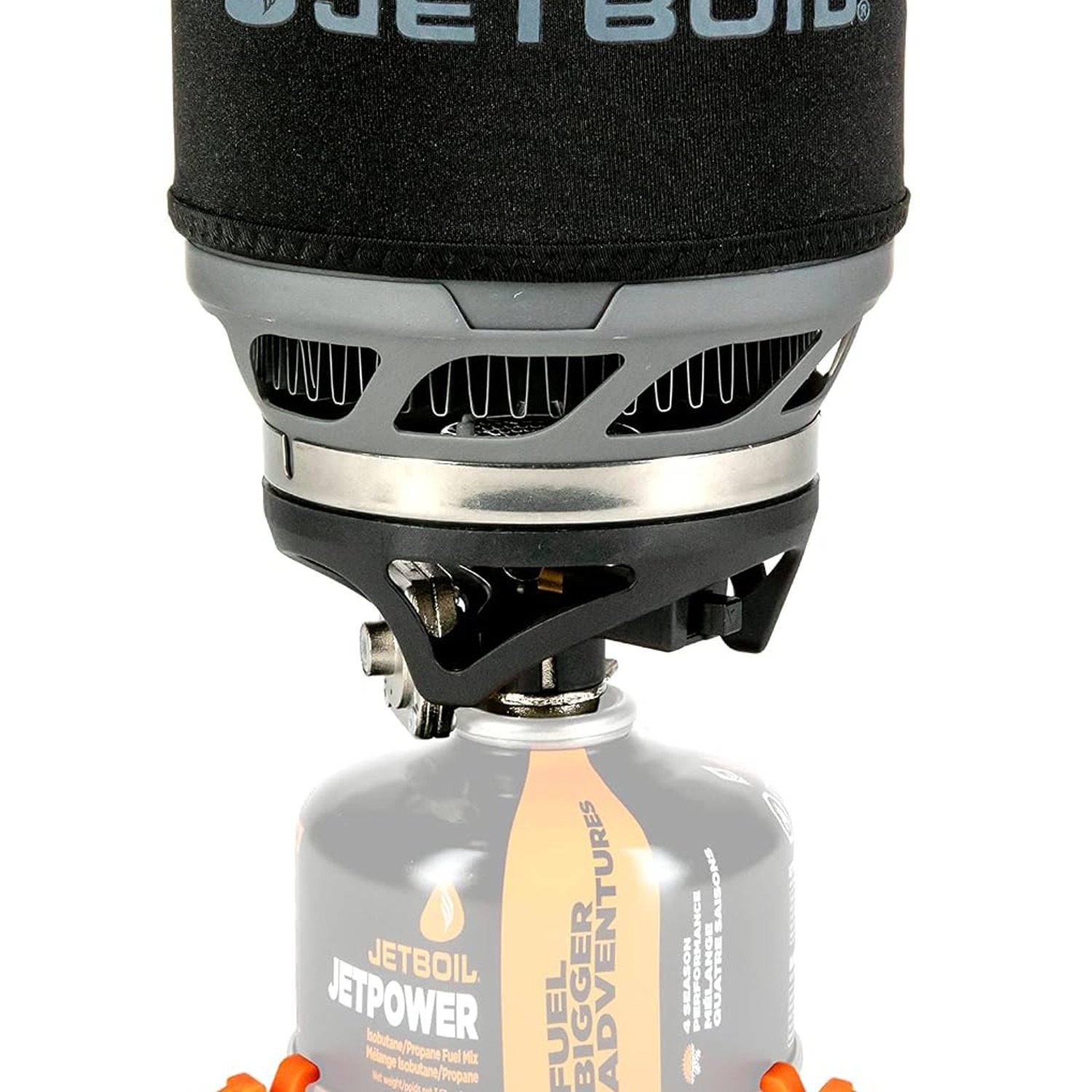
Most people start hiking with a cook kit that is far heavier than the food it heats. A gas canister, a burner, a lighter, a windshield, a pot, a pan, a spork and a scrubber. By the time it is all in the pack, you are carrying close to a kilogram of hardware so you can pour hot water on dehydrated noodles.
That makes sense for car camping or a base camp. It makes much less sense on an overnight walk, a fast two-day traverse or an adventure race where you are moving for most of the daylight hours and eating out of a bag.
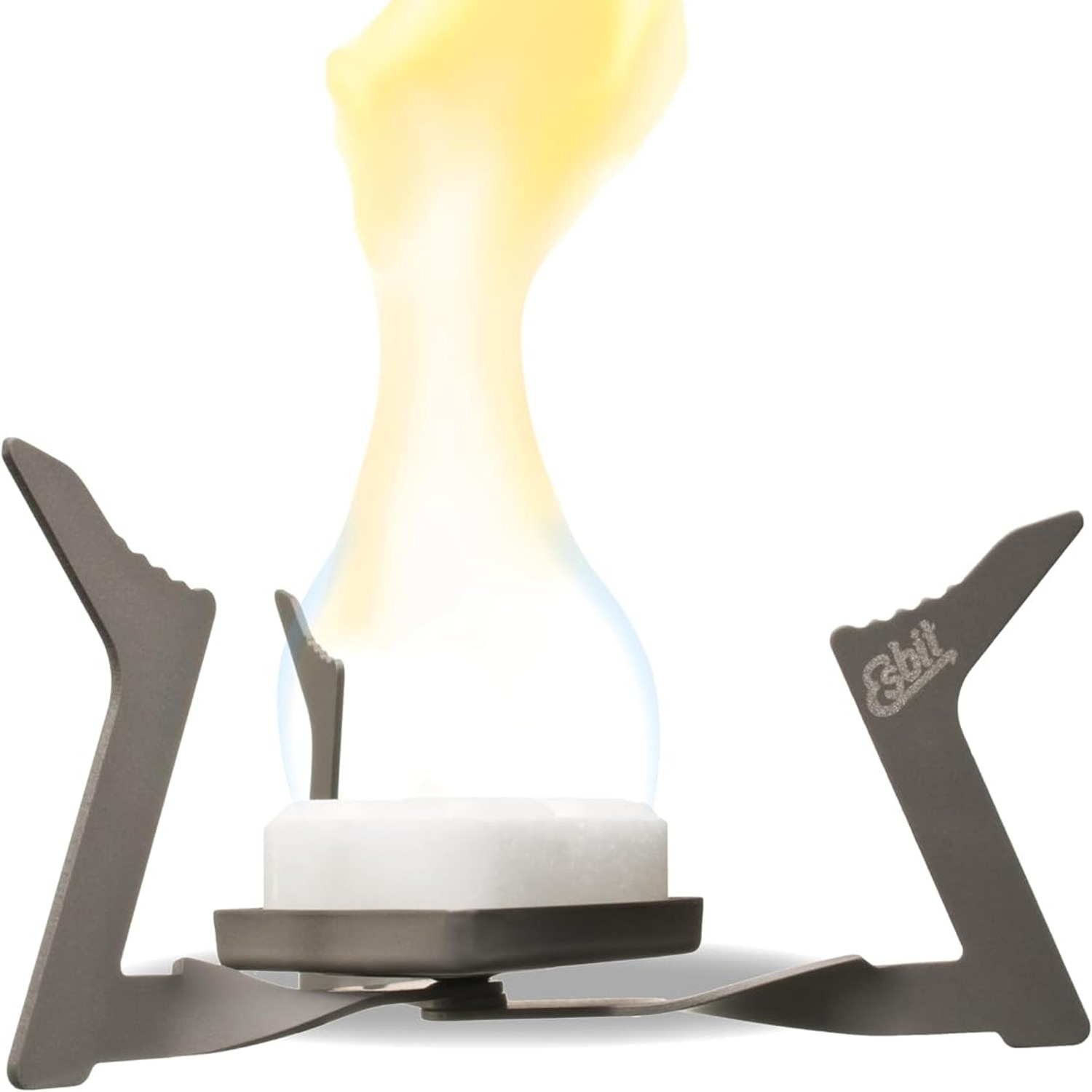
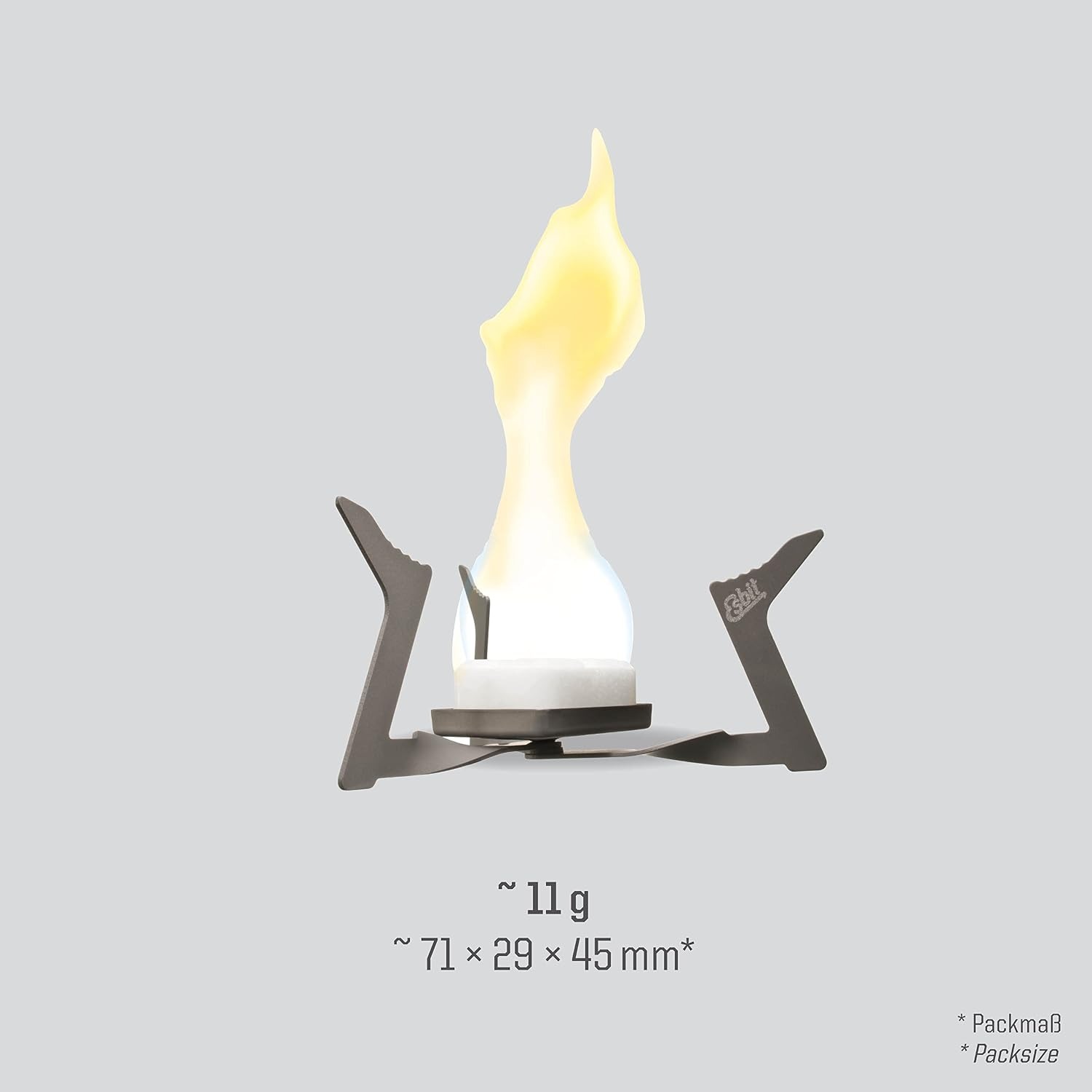
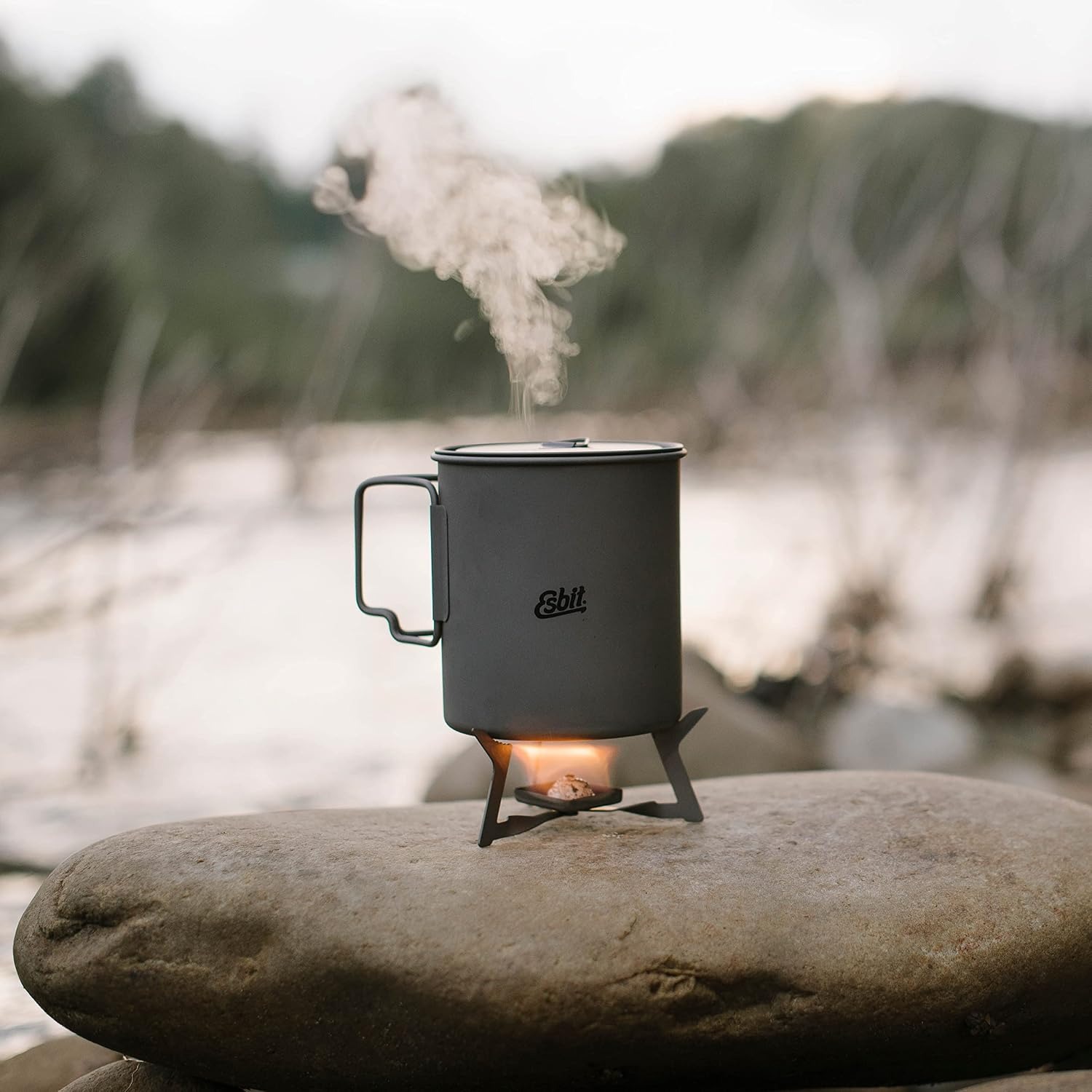
A solid fuel stove solves this by removing nearly everything. There is no pump, no valve, no regulator, no fuel line and no seal to fail. You get a flat metal platform, three legs and a fuel tablet. Light the tablet, put the pot on, wait a few minutes. That is the entire operation.
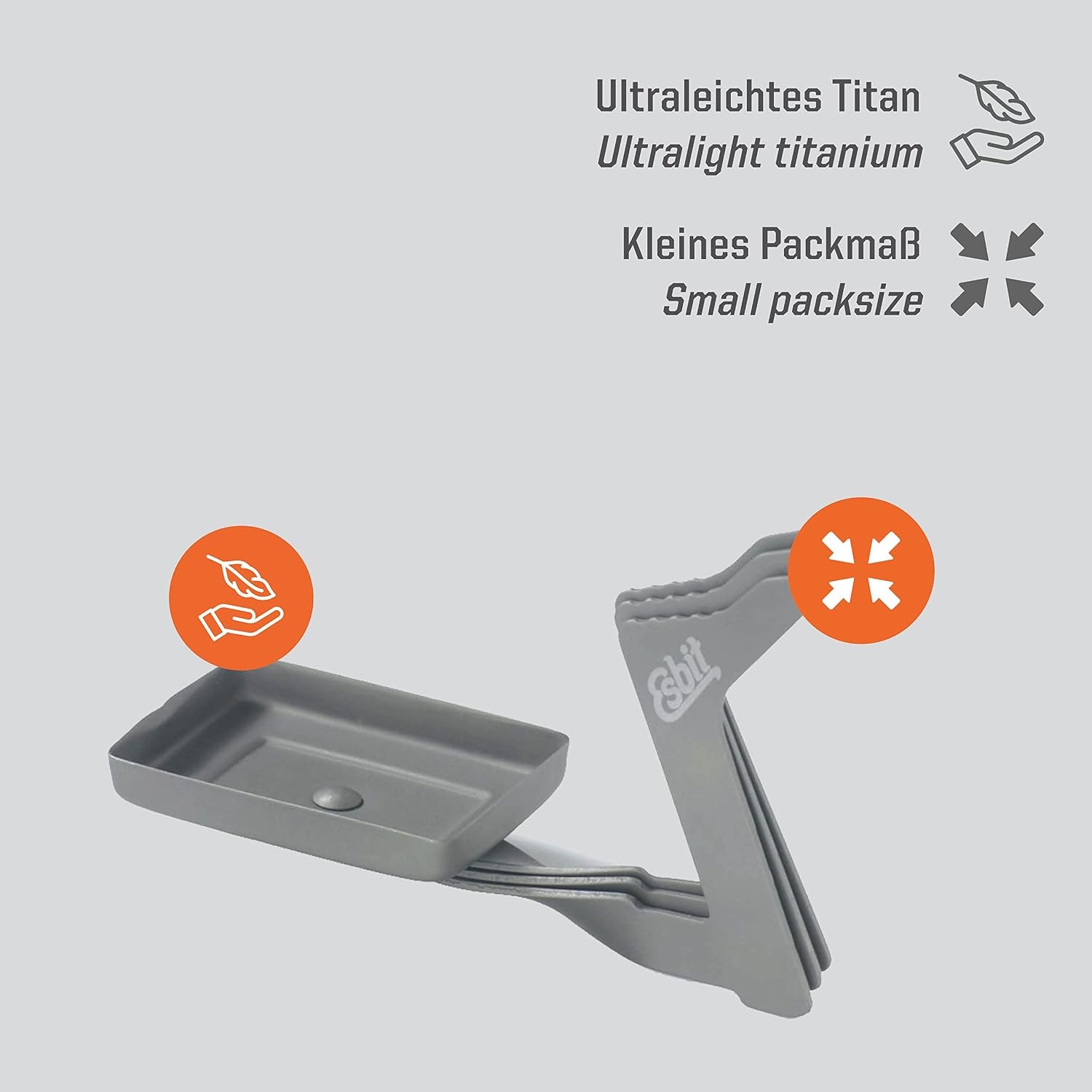
This Esbit titanium model is listed at 0.02 kg and packs to 28 x 28 x 84 mm. For context, that is smaller than most phone chargers. It will sit inside the pot you already carry, which means the stove effectively takes up no extra space either.
How a solid fuel stove actually works
A solid fuel tablet is a compressed block that burns with a steady flame once lit. It does not need oxygen pumped into it and it does not need pressure. You place the tablet in the middle of the stove, light it with a match or lighter, and the three folded-out legs hold your pot the right distance above the flame.
The distance matters more than people expect. Too close and you smother the flame and starve it of air. Too far and most of the heat escapes around the sides of the pot. This stove is built with that gap already set, which is one of the quiet advantages of a purpose-made stove over improvising with rocks.
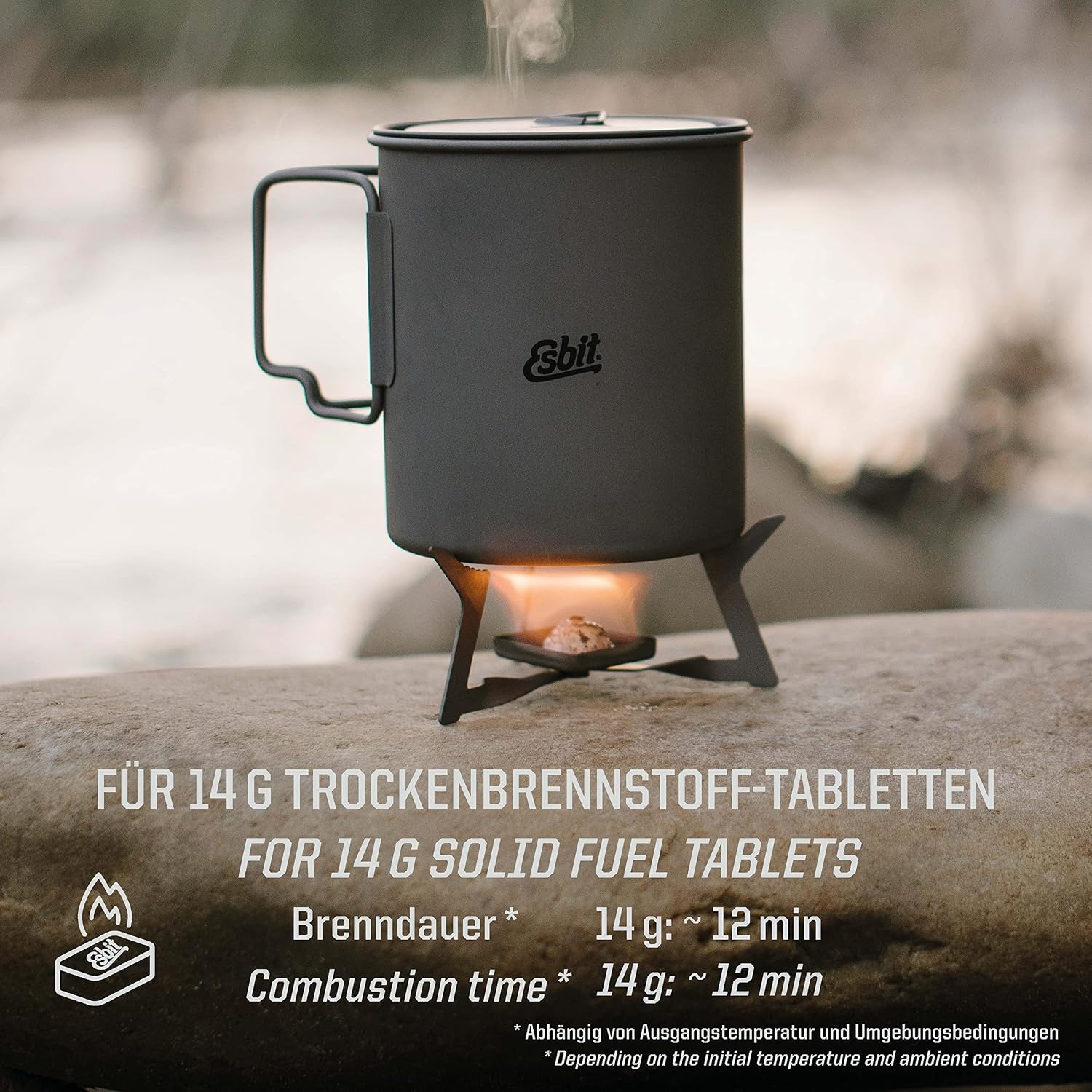
Burn time depends on the tablet. Most will run long enough to bring a mug or small pot of water to a boil in reasonable conditions. Cold water, cold air and wind all stretch that out. If you are boiling in a gale, expect to use more fuel or to shelter the stove behind a pack or a rock.
One thing worth knowing up front: solid fuel is not adjustable. You cannot turn it down to simmer a sauce. It burns at the rate it burns until it is gone. If you want to control heat, you need a different kind of stove. If you only need boiling water, this is not a limitation at all.
Who this suits
Think about how you actually eat on the trail. If every dinner is a freeze-dried pouch and every morning starts with instant coffee, you are boiling water and nothing else. That is exactly the job a solid fuel stove does well, and it is why so many people searching for the best pocket stove for hiking end up here.
It also suits people who want a backup. A canister stove can fail at the valve, a liquid fuel stove can clog, and both can run dry at the wrong moment. A titanium stove and three tablets weigh next to nothing in the lid pocket of a pack. For the same reason, it is a sensible item in a car kit, a boat, or a bug out bag, because nothing in it degrades quickly in storage.
Cyclists and bikepackers like it for packing reasons. Frame bags and feed bags are awkward shapes, and a stove that folds into an 84 mm stick fits where a canister burner will not. Scouts, cadets and anyone doing navigation exercises use solid fuel for similar reasons, plus the fact that there is very little to break when it gets handed around.
Who it does not suit: group cooking, big pots, anyone frying food, and anyone who wants a hot meal in under three minutes. Those are canister stove jobs.
Choosing the right stove for your trip
Start with weight and work backwards. If you are already carrying a 15 kg pack for a week in the hills with a dog and a camera, the difference between a 0.02 kg stove and a 300 g stove is not going to change your day much. Take the faster one. But if you are chasing a sub-6 kg base weight, the stove and fuel system are often one of the biggest savings left.
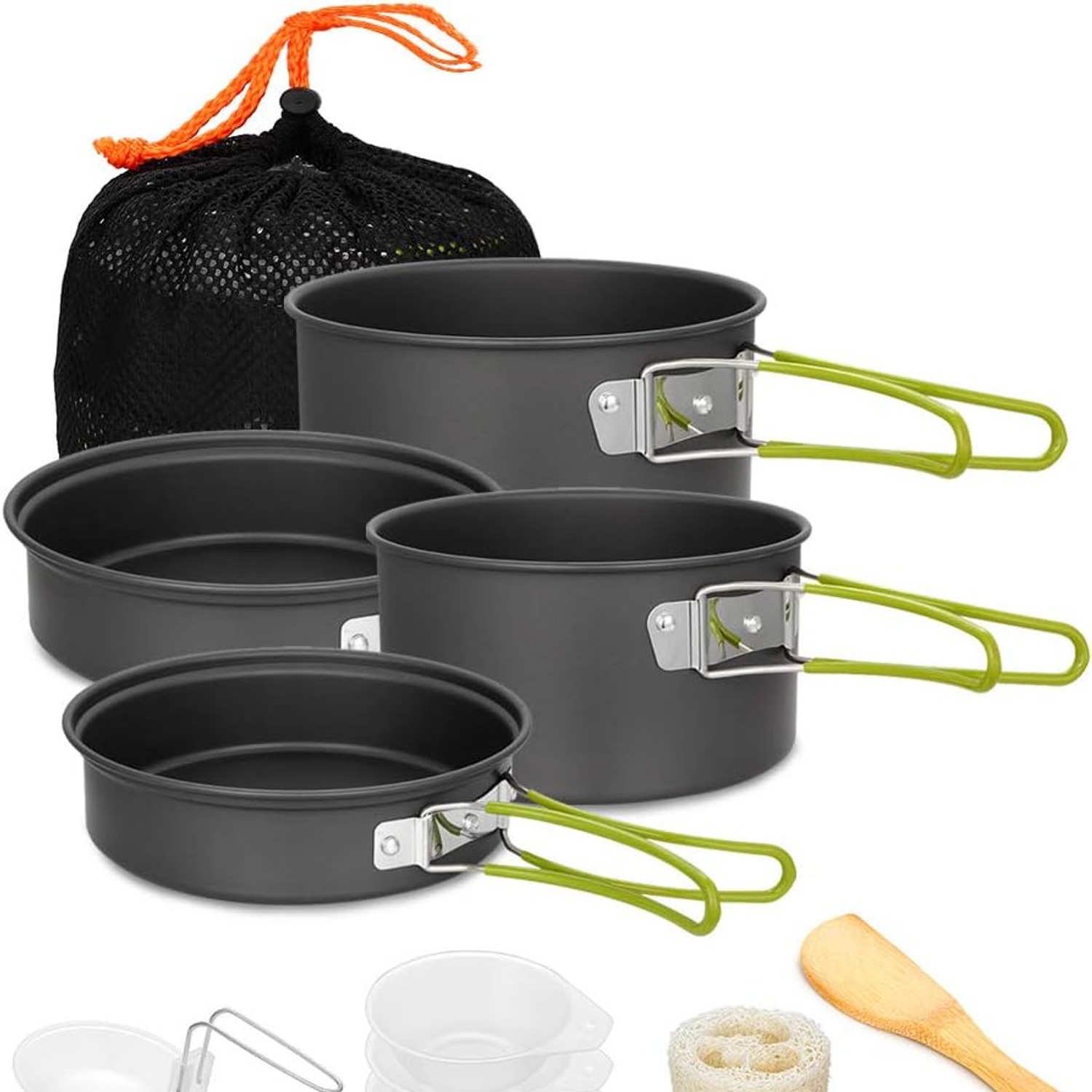
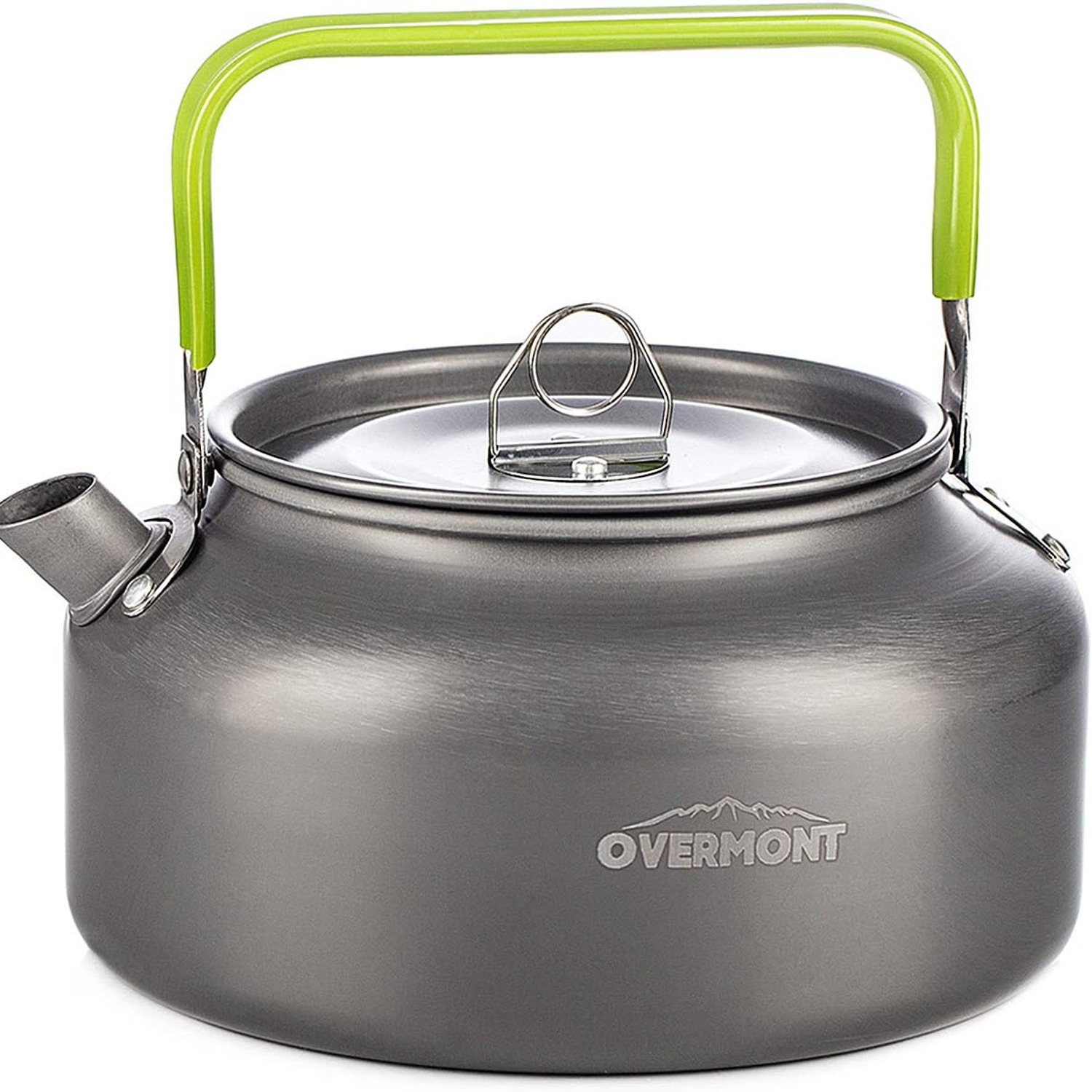
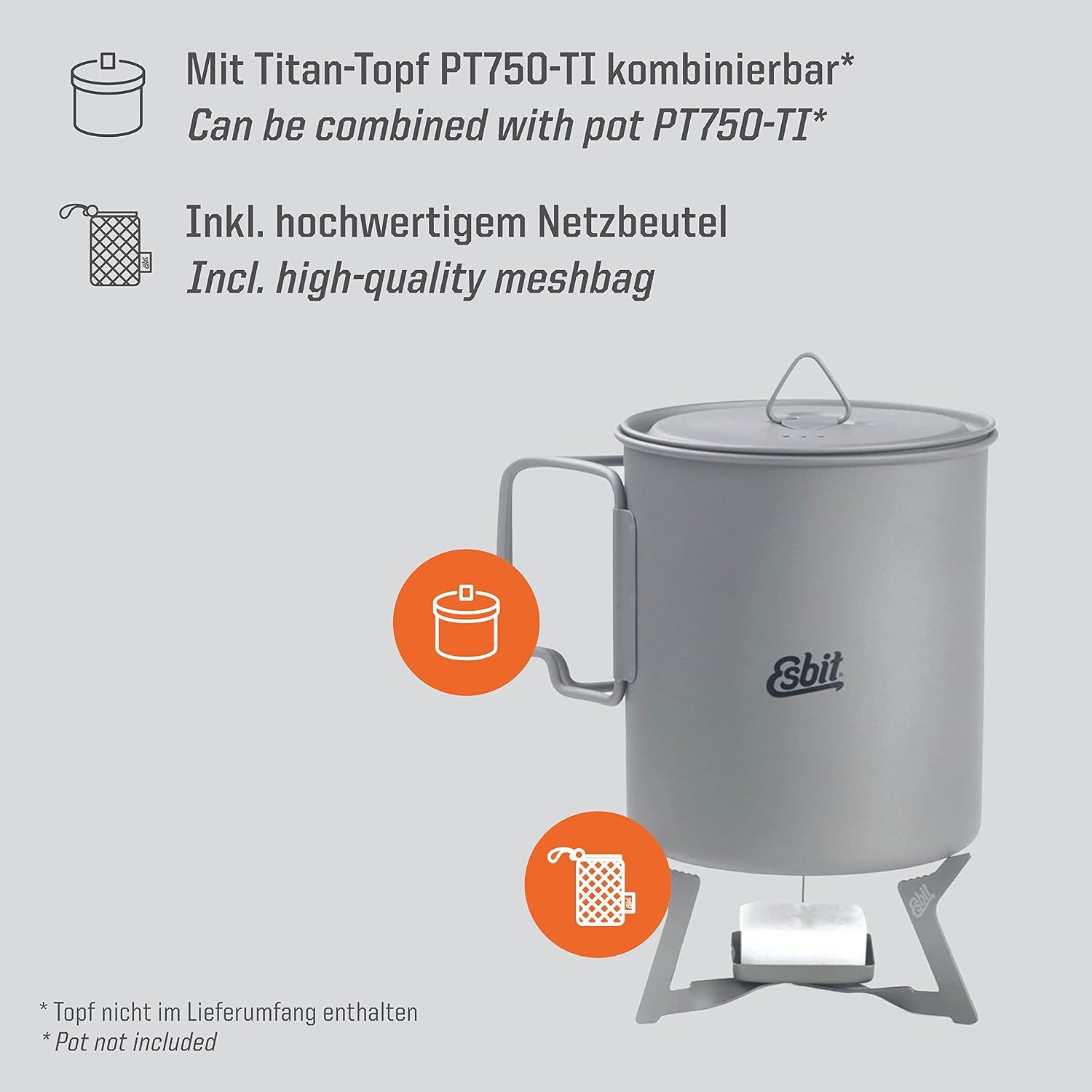
Then look at your pot. A small titanium or aluminium mug of around 500 to 750 ml is the natural match here. The stove's three legs form a small, stable triangle, which works best under a pot with a flat base of a similar diameter. A wide, heavy pan will feel unstable and is not what this is built for.
Next, think about fuel logistics. Solid fuel tablets are easy to ration because they are countable. Two boils a day for three days is six tablets plus a spare. Compare that to a gas canister where you are guessing how much is left by shaking it. Tablets are not listed as included with this stove, so order them at the same time.
Finally, consider the weather you expect. Solid fuel does not care about the cold in the way gas canisters do, which is a real advantage for shoulder-season and winter walking. It does care about wind, so a basic windscreen or a well-chosen rock is worth planning for.
Using it well
Set up on bare ground, rock or gravel. Never on dry grass, a wooden table or a tent floor. The base of the stove gets hot and tablet residue can drip. Keep it well away from your tent fabric, your sleeping bag and anything synthetic.
Light the tablet before you put the pot on, not after. It is easier to get a clean light with an open flame and no obstruction above. Once it is burning properly, place the pot down gently and leave it alone.
Put a lid on your pot. This is the single biggest improvement you can make to boil time with any stove, and it matters more with solid fuel because you have a fixed amount of energy in each tablet. A lid can cut several minutes off the wait.
If you need to stop early, smother the flame rather than blowing it out. Let everything cool properly, then bag the partial tablet separately so it does not scent the rest of your food.
Looking after it
The care routine is short. Let the stove cool completely, then wipe off soot and residue with a dry cloth. Warm water and mild detergent will clean up anything stubborn. Dry it fully before it goes back in the mesh bag, because trapping moisture against metal in a dark pack pocket is never a good idea.
Expect discolouration. Titanium changes colour with heat and the stove will develop patches of bronze, gold or blue after a few trips. This is purely cosmetic. It is also a reasonable record of how much use you have got out of it.
Before each trip, open and close the legs a few times. They should swing freely. If grit has worked into the hinge, rinse it out. If a leg is bent, straighten it gently so the stove still sits flat, since a wobbly base is the main safety issue with any small stove.
The short version
This is a 0.02 kg titanium platform that holds a fuel tablet under your pot. It folds to 28 x 28 x 84 mm, comes with a mesh bag, and has no moving parts beyond three legs.
It is a very good choice if you boil water and nothing else, if you count grams, or if you want a backup stove that will still work after two years in a glovebox. It is a poor choice if you want to simmer, cook for a group, or get water boiling in a hurry.
Buy fuel tablets at the same time, pair it with a small pot that has a lid, and you have a complete cook kit that fits in your hand.