Camping Company
Company
Shop By Category
T&Cs
Shop Online
  • Clear materials and product specifications
  • Free tracked delivery across Ireland over €120
  • 14-day returns

Thick Camping Sleeping Pad | Air Mattress With Pillow | Ultralight Sleeping Pad

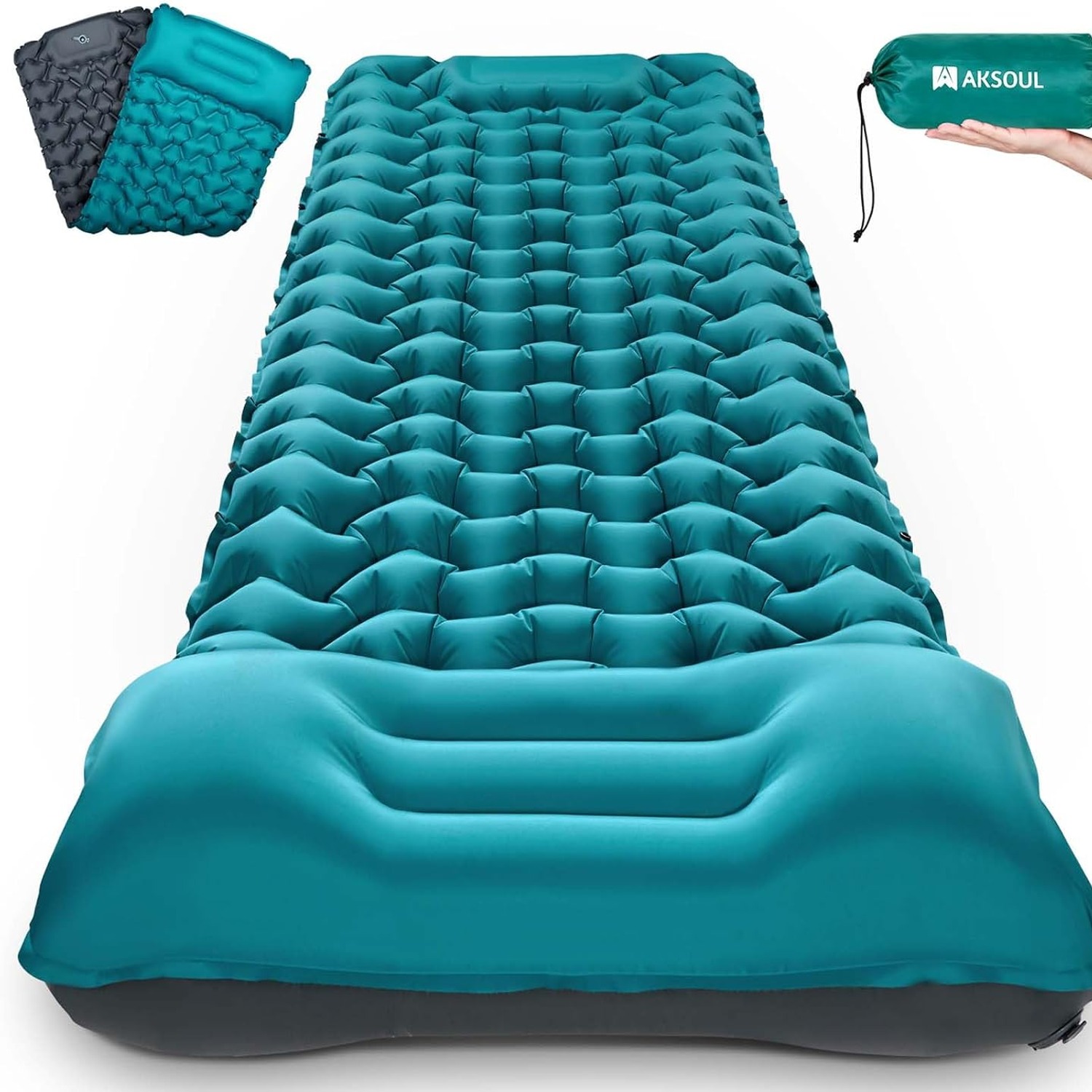
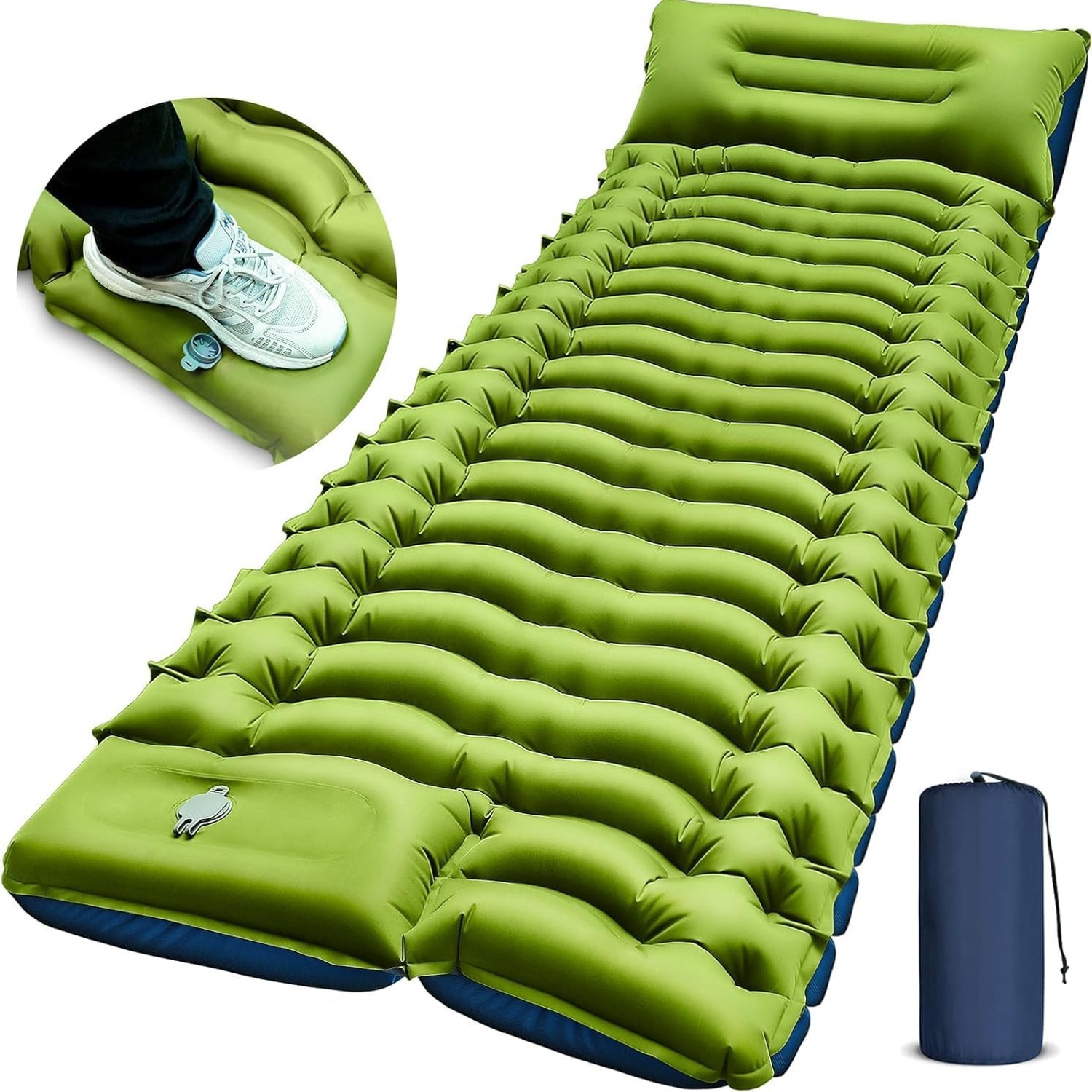
Extra Thick Camping Sleeping Pad with Built-In Foot Pump and Pillow

€87.99
  • Built-In Foot Pump
  • 9.9 cm Of Cushion
  • Snaps Into A Double
  • Packs Down Small

Price: €87.99

  • Free tracked delivery across Ireland on orders €120+, otherwise a flat €15
  • Pay by card or PayPal, handled by the payment provider
  • 14 days to change your mind, plus your statutory rights
Product specifications
BrandAKSOUL
Model NameCamping Sleeping Pad
Model NumberSleeping Mat Peacock Blue
Manufacturer Part Number03
Item TypeCamping Pad
Construction TypeAirbed Mattress
SizeDouble
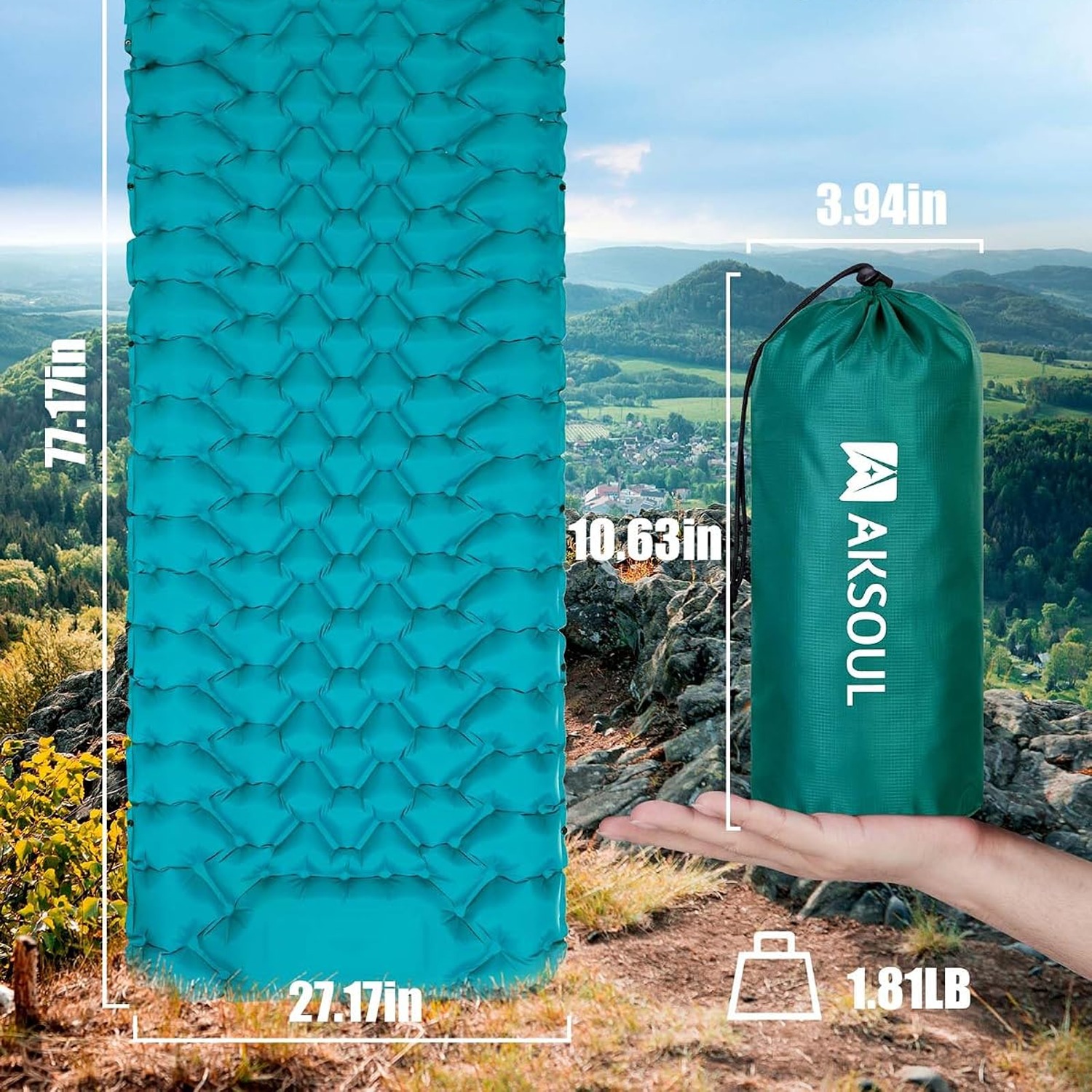
Inflated Dimensions195.8 L x 68.8 W x 9.9 Th centimetres
Item Thickness3.9 inches (9.9 cm)
Item Weight850 g
Top MaterialNylon
Cover MaterialNylon
Fill MaterialAir
Number Of Layers2
ColourBlue and Grey
FirmnessPlush
Water ResistanceWater Resistant
Weight Capacity199.58 kg (440 lb)
Included ComponentsPump
Special FeaturesCompact, Inflatable
ExtendableYes
Intended UseBed, Sleeping Pad
Target AudienceAdults, Kids, Men, Women
Number Of Items1
Number Of Packs1
CareHand Wash Only
Weight850 g
Shipping & returns

Tracked delivery anywhere in Ireland. It is free on orders of €120 or more, and a flat €15 below that.

Under the Consumer Rights Act 2022 you have 14 days from delivery to cancel for any reason, and a further 14 days to send it back in resaleable condition. We refund the price you paid, including standard delivery. You cover the cost of returning it unless the item is faulty.

If it arrives faulty, damaged or not as described, we put it right at no cost to you under the Consumer Rights Act 2022 and the EU Sale of Goods Directive 2019/771, return postage included.

Shipping details · Refunds and returns

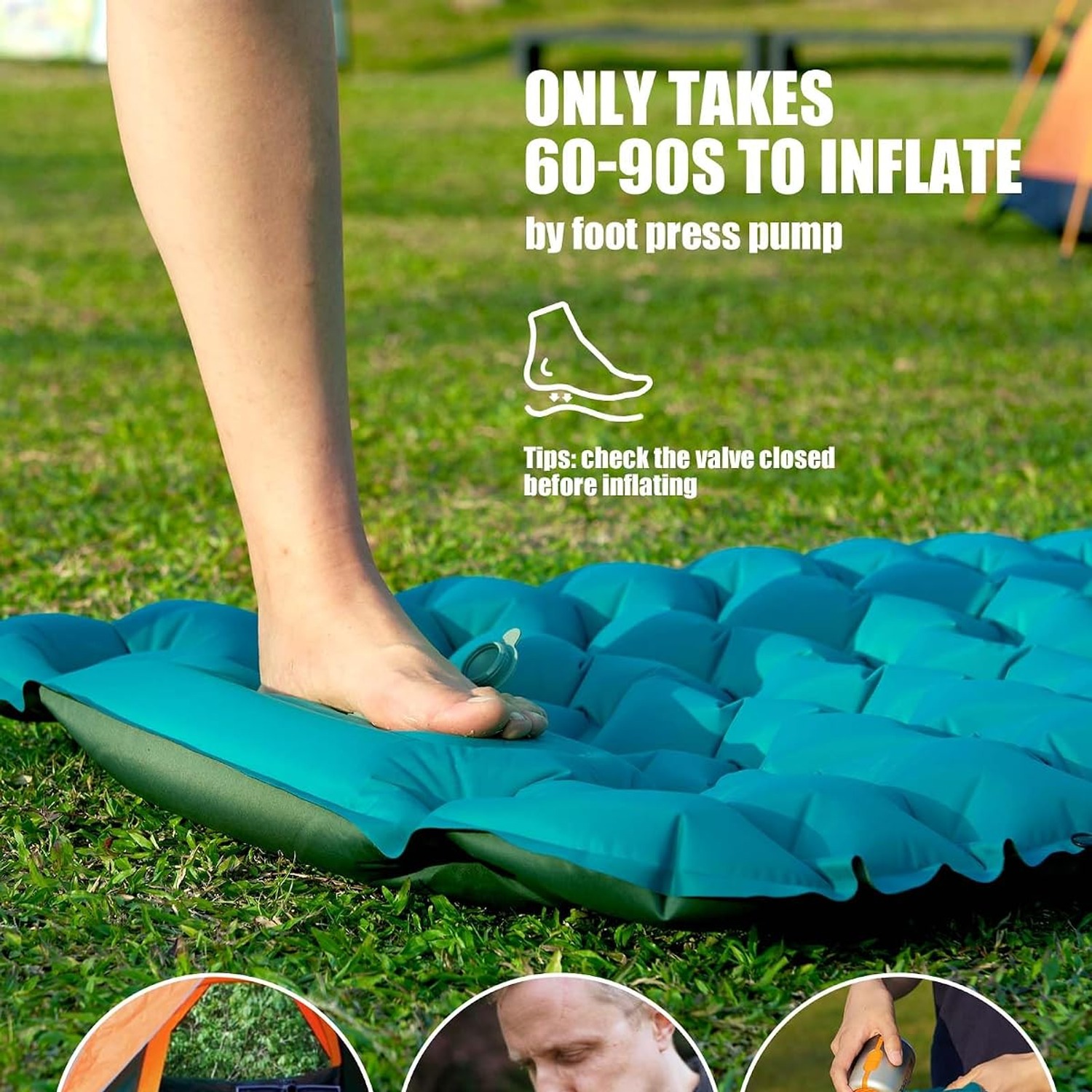
Built-In Foot PumpInflates in roughly 30 to 40 seconds with your foot, no separate pump needed.
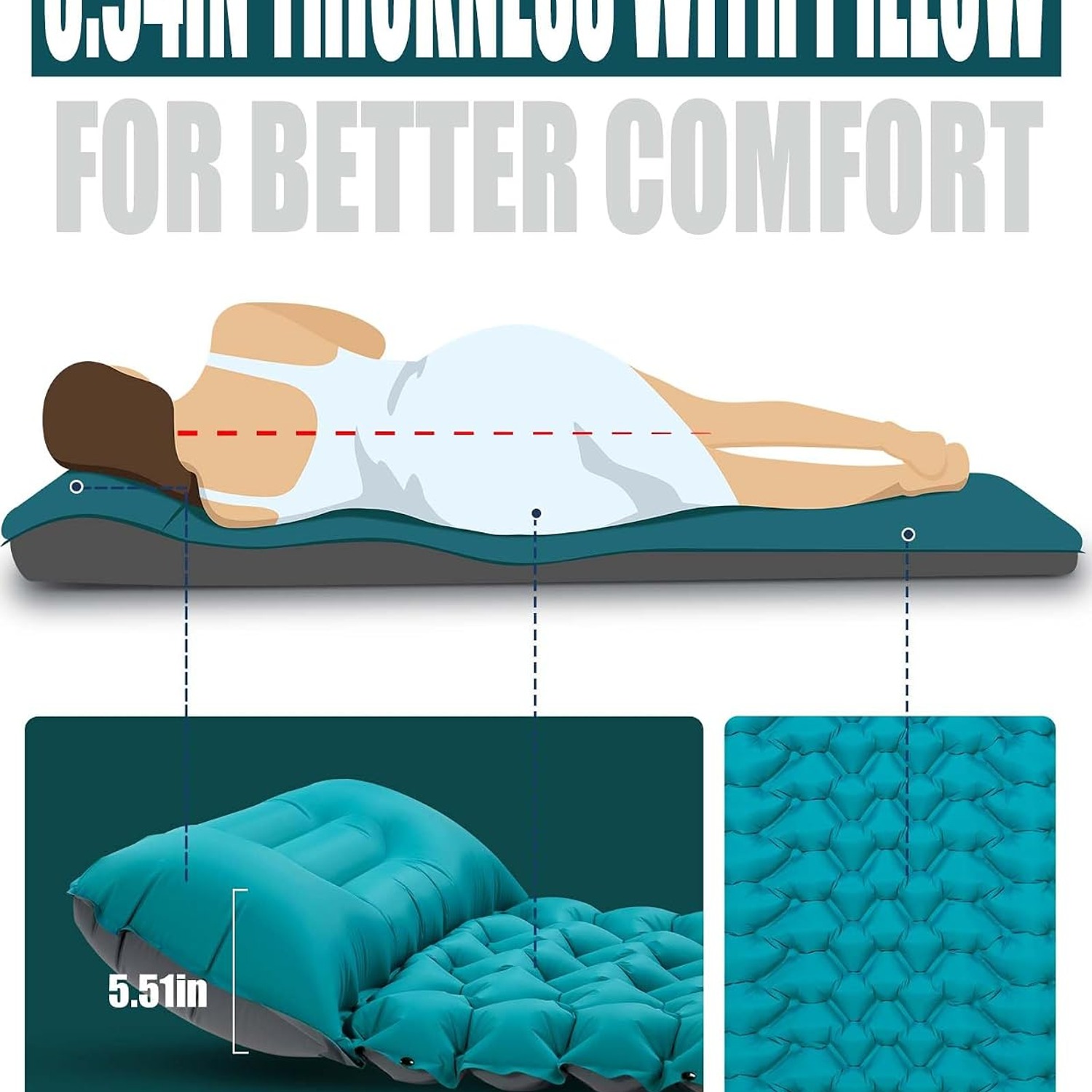
9.9 cm Of CushionNearly 4 inches of air between you and cold, lumpy ground.
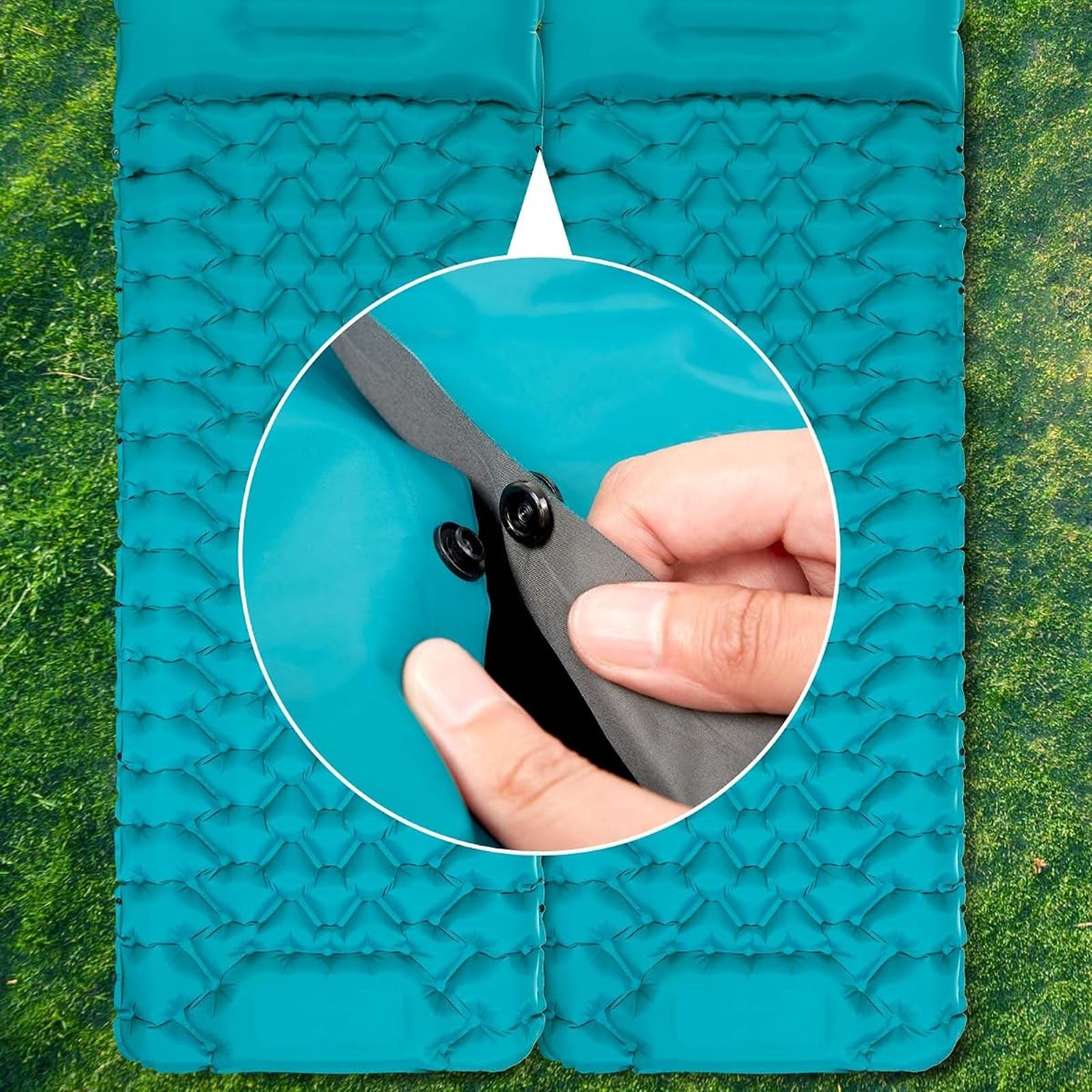
Snaps Into A DoubleSide snaps let two pads join together for a wide shared bed.
Packs Down Small850 g and compact enough to sit in a daypack or car boot.

Sleep properly in a tent again with a thick camping sleeping pad that inflates in under a minute and packs down smaller than a water bottle.

A 9.9 cm nylon air bed with a built-in foot pump, an attached pillow, side snaps for joining two pads into a double, and a 199.58 kg weight rating.

A 9.9 cm thick inflatable camping pad that puts real cushioning between your hips and the ground.

The built-in foot pump fills it in about 30 to 40 seconds, so there is no light-headed blowing and no extra gear to carry.

An attached pillow section means one less item to pack and one less thing to lose in the dark.

Snaps along both sides let you connect two pads side by side into a double bed for couples or family trips.

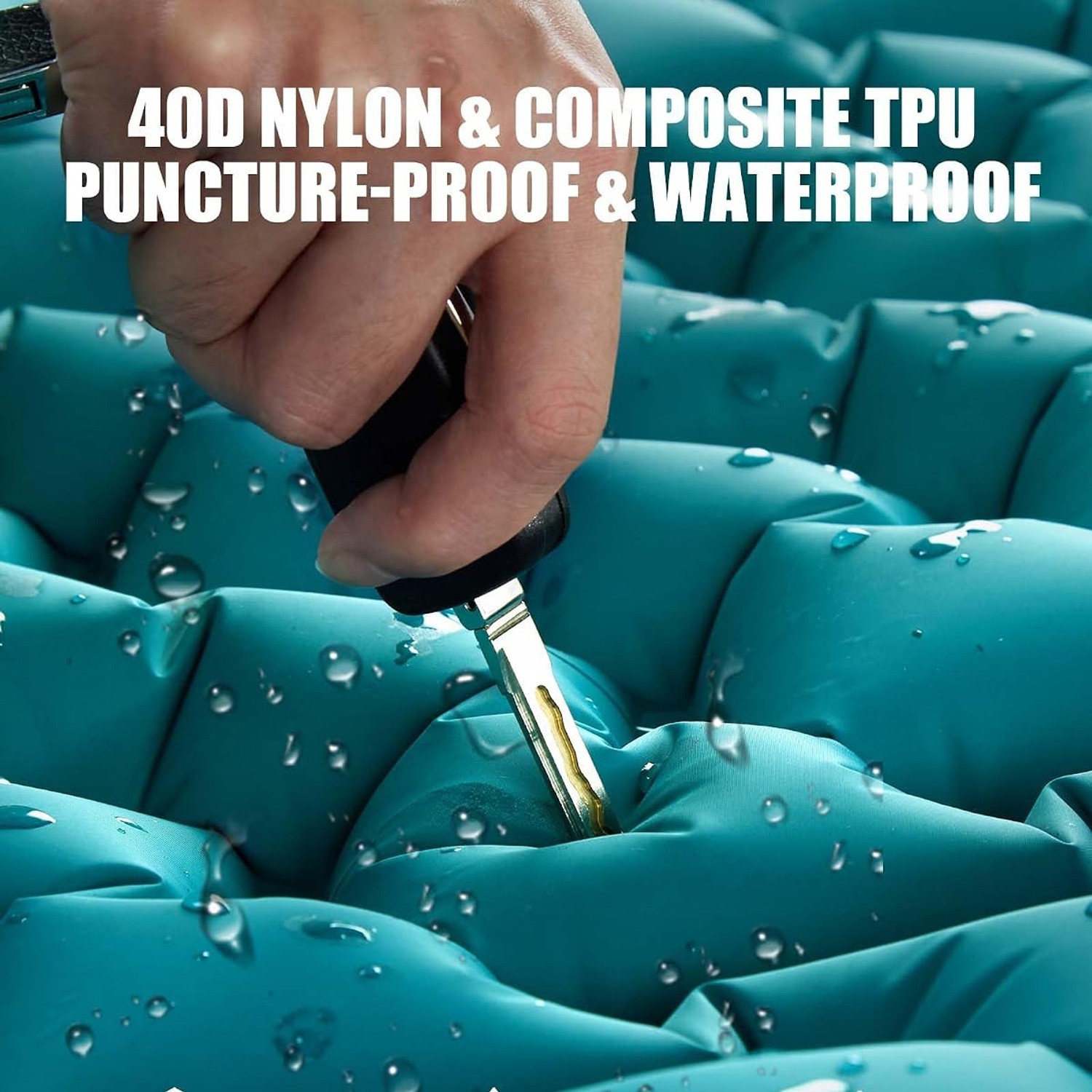
Built from nylon with a water-resistant finish and rated to hold up to 199.58 kg once inflated.

Extra Thick Camping Sleeping Pad with Built-In Foot Pump and Pillow

Anyone who has spent a night on a thin foam mat knows the problem. Your shoulder goes numb, your hip finds the one rock you missed when you pitched the tent, and the cold works its way up through the floor until you are awake at three in the morning doing sums about how long until sunrise. The fix is not a better sleeping bag. It is air, and enough of it, between your body and the ground. This pad gives you 9.9 centimetres of it.

Extra Thick Camping Sleeping Pad with Built-In Foot Pump and Pillow

The inflation system is the part people notice first. A foot pump is built into the pad itself, so you stand on it, press with your heel a few dozen times, and the mat fills in roughly 30 to 40 seconds. No dizzy mouth-blowing after a long hike, no battery pump to charge, no separate bag to lose. Because you control how many pumps you give it, you also control the firmness. Fewer pumps for a plush, sinking feel, more for a firm surface that keeps you level if you sleep on your front.

Extra Thick Camping Sleeping Pad with Built-In Foot Pump and Pillow

A pillow section is part of the pad rather than a separate accessory. That matters more than it sounds. Camp pillows roll away, get kicked into tent corners, and are always the thing left behind at the site. Having it attached means your head stays supported in the same place all night and your packing list gets one line shorter.

Extra Thick Camping Sleeping Pad with Built-In Foot Pump and Pillow

Snaps run along both long edges. Two pads clip together into one wide sleeping surface, which turns a solo setup into a double bed for couples, or lets two kids share one stable platform instead of drifting apart on separate mats. The pads do not fuse permanently, so you can split them again for a trip where you are each in your own tent.

Extra Thick Camping Sleeping Pad with Built-In Foot Pump and Pillow

The shell is nylon in a two-layer build with a water-resistant finish, and the inflated pad is rated to a maximum of 199.58 kg. Packed weight is 850 grams, which keeps it practical for backpacking as well as car camping, festivals, van trips, and the spare-bed-for-guests role it will inevitably end up playing at home.

Not sure yet? That is fine.

Camping gear has to suit your trip and your climate, and you cannot always judge that from a photograph. Under the Consumer Rights Act 2022 you have 14 days from delivery to cancel for any reason, and a further 14 days to send it back in resaleable condition. We refund the price you paid, including standard delivery.

If it turns up faulty, damaged or not as described, that is on us. The Consumer Rights Act 2022 and the EU Sale of Goods Directive 2019/771 covers you, and we pay the return postage. Read the full detail on our refunds and returns page, or ask us anything before you order.

Frequently Asked Questions

What exactly is this product?

It is an inflatable camping sleeping pad that measures 195.8 x 68.8 x 9.9 cm once filled with air. It has a built-in foot pump and an attached pillow section, and it packs down to a small bundle weighing 850 grams.

How thick is the pad when inflated?

It is 9.9 centimetres thick, which is listed as 3.9 inches. That is deep enough that most people will not feel the ground through it on normal soil, grass, or sand.

How does the built-in foot pump work?

A pump section is integrated into the pad itself. You place a foot on it and press repeatedly, and the mat fills in about 30 to 40 seconds. There is nothing extra to attach and no batteries involved.

Do I need to bring a separate pump?

No. The pump is part of the pad, which is one of the reasons this is often shortlisted as the best sleeping pad with built-in pump. You do not need a hand pump, an electric pump, or a power source.

Can I inflate it by mouth instead?

The foot pump is the intended method and it is faster and far less tiring. Mouth inflation also adds moisture inside the pad over time, which is worth avoiding.

How firm is it?

The firmness is described as plush. You can adjust the feel by how much air you put in, so fewer pumps gives a softer, more sinking surface and more pumps gives a firmer one.

Is there really a pillow included?

Yes, the pad includes a pillow as part of the design. It stays in place at the head end, so it is not something you can misplace in the tent overnight.

Can two pads be joined together?

Yes. Snaps along the side edges let you clip two pads together to make one wide double sleeping surface. If you want the best double camping sleeping pad setup, buying two and connecting them is the simplest route.

What size is the pad listed as?

The size is listed as Double, with inflated dimensions of 195.8 cm long, 68.8 cm wide, and 9.9 cm thick.

Will it fit a tall person?

At 195.8 cm long it suits most adults up to roughly that height. Taller sleepers can let their feet hang slightly off the end, which is normal practice with camping mats.

What is the weight limit?

The listed capacity is 199.58 kg, which is 440 pounds. That is the maximum the inflated pad is rated to support.

How much does it weigh to carry?

The item weight is 850 grams. That is light enough for hiking trips where every gram counts, and barely noticeable for car camping.

What is it made from?

The top material and cover material are both listed as nylon, with air as the fill. It is a two-layer airbed construction.

Is it waterproof?

It is listed as water resistant rather than fully waterproof. It will shrug off dew, condensation, and a spilled drink, but it is not designed to be left sitting in standing water.

What colour is it?

The colour is listed as blue and grey. The model name refers to peacock blue.

Is this suitable for backpacking?

Yes. At 850 grams and with a compact packed size, it is reasonable for multi-day hiking, and many people searching for the best lightweight sleeping mat land in this weight bracket.

Can it be used indoors as a guest bed?

It can. Plenty of people keep one in a cupboard as an overflow bed for visitors, since it inflates in under a minute and stores away flat.

Is it good for side sleepers?

Nearly 4 inches of air gives your shoulder and hip somewhere to sink, which is the main thing side sleepers need. It is a common pick when people hunt for the best sleeping pad for side sleepers.

Will it help with back pain?

Even cushioning under the hips and shoulders usually makes a noticeable difference compared with a thin foam mat. Results vary by person, so treat it as comfort support rather than a medical claim.

Can children use it?

Yes. The target audience listed covers adults, kids, men, and women. Two connected pads also work well for siblings sharing a tent.

How do I deflate and pack it?

Open the valve, press the air out by rolling the pad from the head end towards the valve, then roll it again tightly and secure it. Getting all the air out first makes the roll much smaller.

How do I clean it?

Hand wash only. Wipe the nylon with a damp cloth and a little mild soap, rinse the soap off, then let it dry completely before you pack it.

Can I machine wash it?

No. The care instruction is hand wash only, and a machine would stress the seams and the pump section.

How should I store it between trips?

Dry it fully, then store it loosely rolled or partly deflated somewhere dry and cool. Long storage under heavy compression is harder on the material than a relaxed roll.

What happens if it gets punctured?

Small punctures in nylon air mats are normally repairable with an adhesive patch. Clean and dry the area first, then apply the patch and press it down firmly for good contact.

Can I use it on hard ground or rocky sites?

Yes, though a groundsheet or footprint under the tent is sensible on sharp terrain. Clearing stones and sticks before pitching protects any inflatable mat and is a habit worth keeping.

Is it warm in cold weather?

An air layer plus the pad body lifts you off cold ground, which helps a lot compared with sleeping directly on a tent floor. No insulation rating is specified in this record, so for genuinely cold nights pair it with a suitable sleeping bag.

How long does delivery take?

Orders are dispatched once processed and delivery times depend on your address and the carrier serving it. You will get tracking as soon as the parcel leaves the warehouse.

Does it make a good gift?

It does, particularly for someone heading off on a first camping trip or a festival. It is a practical present that gets used, and it is small enough to wrap easily.

What if it is not right for me?

Contact us and we will walk you through your options. If the pad is unused and in its original condition, we will sort out a return or exchange under our returns policy, and if something arrived faulty just send a photo and we will put it right.

How to Choose a Camping Sleeping Pad That Actually Lets You Sleep

6 min read Camping Company

The real reason you sleep badly in a tent

Most people blame the sleeping bag. They buy a warmer one, add a liner, wear extra socks, and still wake up at odd hours with a dead arm and an aching hip. The bag was never the problem. The problem is the ground.

Soil, sand, and tent floors do two things to you overnight. They draw heat straight out of your body, because solid earth conducts warmth away far faster than air does. And they refuse to give. Your shoulder and hip carry most of your weight when you lie down, and on a hard surface those two points take all the pressure with nothing yielding underneath. Twenty minutes in, you roll over. Twenty minutes after that, you roll again. By morning you have had six hours of interrupted dozing instead of sleep.

A sleeping pad fixes both problems at once. Air between you and the ground slows heat loss, and air compresses under your pressure points, so your hip sinks in instead of pressing against something unmoving. The thicker the pad, the more room there is for that to happen.

Thickness is the number that matters most

Camping mats range from about 1 cm of closed-cell foam up to 10 cm or more of inflatable air. The difference in how they feel is not subtle.

At 2 to 3 cm you are getting insulation and not much else. Back sleepers on soft grass can manage. Side sleepers cannot, because a hip needs more than three centimetres of travel before it stops pressing on whatever is underneath.

Somewhere around 7 cm things change. Your shoulder sinks in and still has material below it. At 9.9 cm, which is where this pad sits, you are at the point where the ground underneath stops being something you can feel at all on normal terrain. That is why "thick camping sleeping pad" is such a common search term. People have slept on the thin ones and worked out what they actually need.

The trade-off used to be bulk. Thick meant heavy and awkward. Modern nylon shells and air fill have mostly removed that compromise. At 850 grams, this pad weighs about the same as a one-litre water bottle while giving you nearly four inches of cushion.

Why the inflation method changes your evening

This is the part buyers underestimate until they have done it once in the dark.

Mouth inflation on a pad this size takes a long run of deep breaths. After a day of walking that is genuinely unpleasant, and it leaves you light-headed. It also blows warm, damp breath into the pad, and over months that moisture sits inside the chamber where you cannot easily dry it out.

Hand pumps and pump sacks solve the moisture issue but add another item to carry, another thing to lose, and another step between you and bed.

A built-in foot pump removes all of that. You unroll the pad, put your heel on the pump section, and press. Thirty to forty seconds later it is full. Your legs are doing the work, which they are far better suited to than your lungs, and there is nothing extra in your pack. On a wet evening when you want to be horizontal as fast as possible, that difference is worth real money.

It also gives you control. Firmness on an air pad is simply how much air you put in. Stop early and you get a soft, enveloping feel. Keep pumping and the surface goes firm and flat. Nobody else can tell you which you prefer, so being able to dial it in, and adjust it at 2am without getting up, is useful.

The pillow question

Camp pillows are one of those items that sound optional until you try sleeping without one. Your neck needs the same support outdoors that it needs at home, and a rolled-up jacket is a poor substitute that flattens within an hour.

The trouble with separate inflatable pillows is that they wander. They slide off the pad, end up under the tent wall, and get left behind at the site more often than any other piece of camping gear.

Having the pillow built into the pad removes the problem entirely. It stays where it should, it inflates with everything else, and your packing list is one item shorter. For anyone searching out the best camping air mattress with pillow, this integration is the whole point.

Connecting two pads into a double

The snaps along both long edges are easy to overlook in a spec list, and they open up more than people expect.

For couples, two connected pads make a wide shared sleeping surface that does not drift apart in the night. That drift is the classic complaint about using two separate mats: one person turns, a gap opens, and someone wakes up with a knee in the cold gap between.

For families, snapping two pads together gives kids a single stable platform rather than two that slide around. And because the connection is snaps rather than anything permanent, you can separate them again whenever you want. One pad per tent on a hiking weekend, two joined together in the van.

Matching the pad to how you actually camp

If you hike in and carry everything, weight and packed size dominate. At 850 grams this sits comfortably in backpacking territory while still giving you real thickness, which is the balance most people are after when they look for the best backpacking sleeping pad.

If you drive to the site, weight stops mattering and comfort takes over. Here the 9.9 cm depth and the double size do the heavy lifting, and the fast inflation means you are set up in under a minute after a long drive.

Festival camping is its own category. Ground is hard, flat, and usually compacted, so cushioning matters more than insulation. Something that packs small enough to carry across a field with the rest of your kit is also essential.

Then there is the use nobody plans for and everyone ends up with: the spare bed. Keep it in a cupboard, pull it out when someone stays over, inflate it in forty seconds, and put it away the next morning. It is far more comfortable than a sofa and takes up almost no storage.

Looking after it

Inflatable pads last for years if you treat them sensibly, and fail early if you do not.

Clear your pitch before you lay anything down. Sticks and sharp stones are the main cause of punctures, and thirty seconds of ground clearing is the cheapest insurance you can buy. On rough sites, use a groundsheet under the tent.

Clean by hand only. A damp cloth with a little mild soap handles mud and sunscreen, then rinse the soap off and let it dry completely. Never put it in a washing machine or a dryer. Water trapped inside a packed pad grows mould, so full drying before storage is non-negotiable.

Store it loosely rolled rather than crushed into its smallest possible bundle. Months of hard compression is harder on seams than a relaxed roll on a shelf. Keep it out of direct sun when it is not in use, since UV degrades nylon over time.

Carry a patch kit. Punctures happen to everyone eventually, and a clean, dry patch pressed firmly onto the shell will usually hold for the rest of the pad's life.

The short version

A sleeping pad is the single piece of camping gear with the biggest effect on whether you wake up rested or wrecked. Thickness is what delivers comfort, and 9.9 cm puts you in the range where the ground stops registering. A built-in foot pump means you are in bed in under a minute without getting dizzy or carrying extra kit. An attached pillow stays put. Side snaps turn two pads into a double when you need one.

Add a 199.58 kg capacity, a water-resistant nylon shell, and a carry weight of 850 grams, and you have a mat that works equally well on a hiking trip, at a festival, in a van, or on a spare-room floor. Clear your pitch, dry it before storage, and it will be doing the job for a long time.

Browse the shop

Ready for a proper night under canvas?

Order the thick camping sleeping pad today and swap sore hips and 3am clock-watching for real rest in the tent.

Ask us a question

Page summary

The AKSOUL extra thick camping sleeping pad is an inflatable nylon air mattress measuring 195.8 x 68.8 x 9.9 cm when inflated, listed in a double size and weighing 850 grams. It uses a built-in foot pump that inflates the pad in roughly 30 to 40 seconds and includes an attached pillow. Snaps on both sides allow two pads to connect into a wider double bed. Construction is a two-layer airbed with nylon top and cover materials, air fill, a water-resistant finish, a plush firmness rating, and a maximum weight capacity of 199.58 kg (440 lb). Colour is listed as blue and grey. Care is hand wash only. Country of origin and overall product material certifications are not specified in this record.