
The complete guide
How to Choose a Portable Camping Shower That Actually Works
The problem with getting clean outdoors
Camping is great right up until bedtime. You climb into a sleeping bag with sand in your socks, sunscreen on your neck and a layer of campfire smoke in your hair, and you sleep badly because of it. The usual fixes are all a bit grim. A wet wipe does not cut through sweat. A bottle of water poured over your head wastes most of itself on the ground. Solar shower bags work, but only if the sun cooperated that afternoon and only if you can find something strong enough to hang four kilos of water from.
A battery powered pump sidesteps all of that. You carry water the way you were going to carry it anyway, in a jerry can or a bucket, and the pump turns it into a shower with pressure. That pressure is the whole point. Pressure is what gets soap out of hair and sand out of skin folds, and it is what lets you finish the job in two minutes instead of ten.
How the pump works
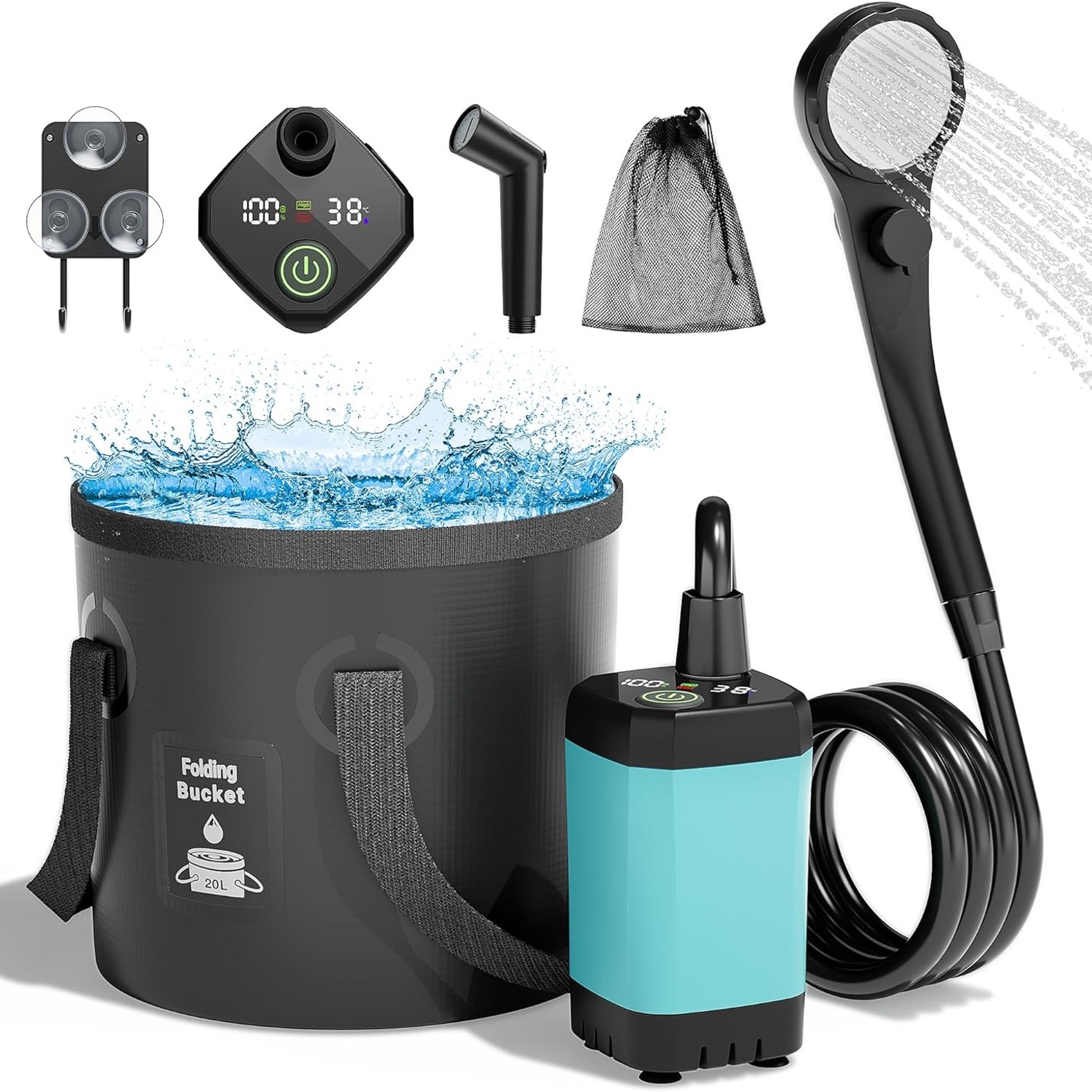
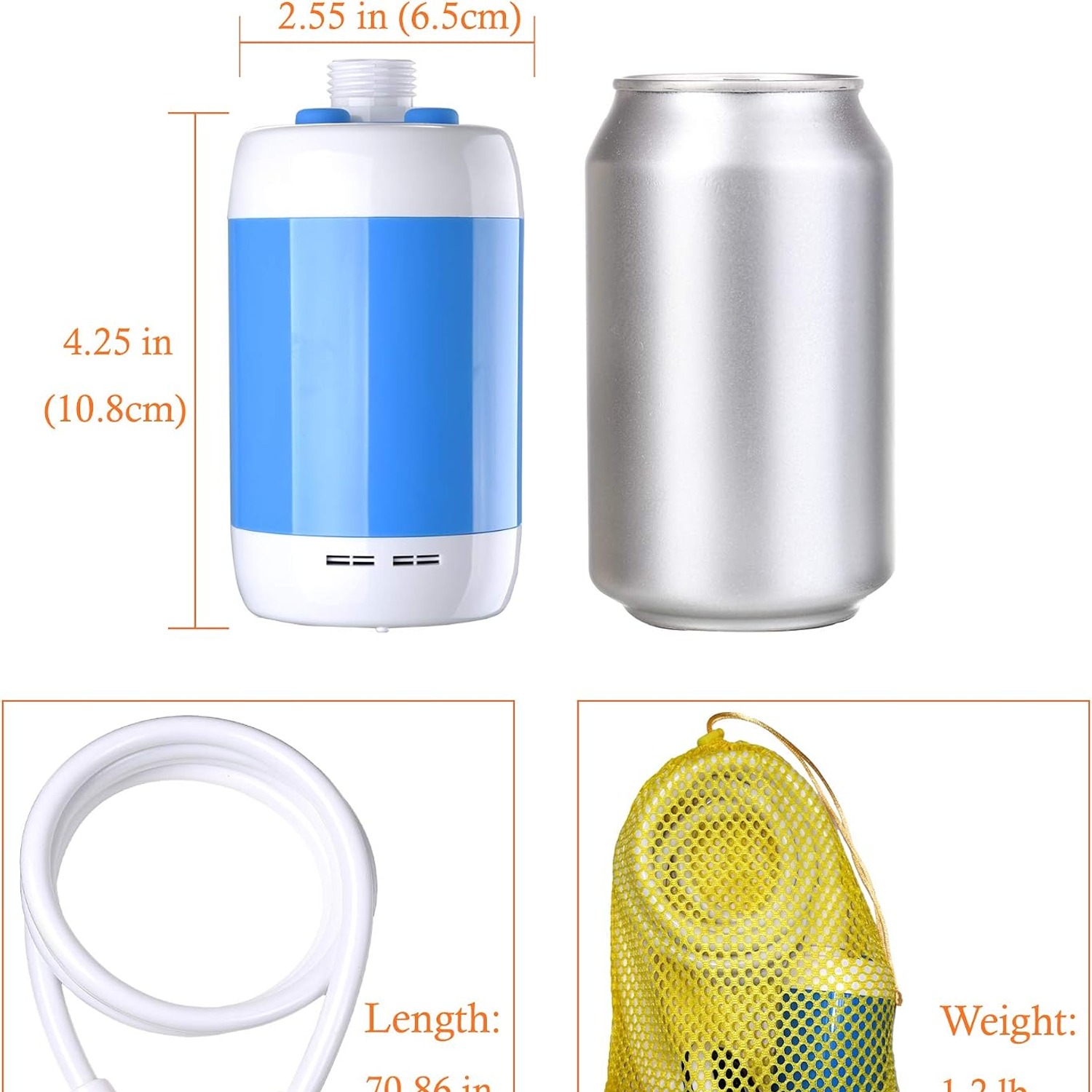
The hardware is straightforward. A small submersible pump, 65 mm across and 108 mm long, sits in your water. A hose runs from the pump to a shower head, with a total length of about 210 cm. Press the button and water moves.
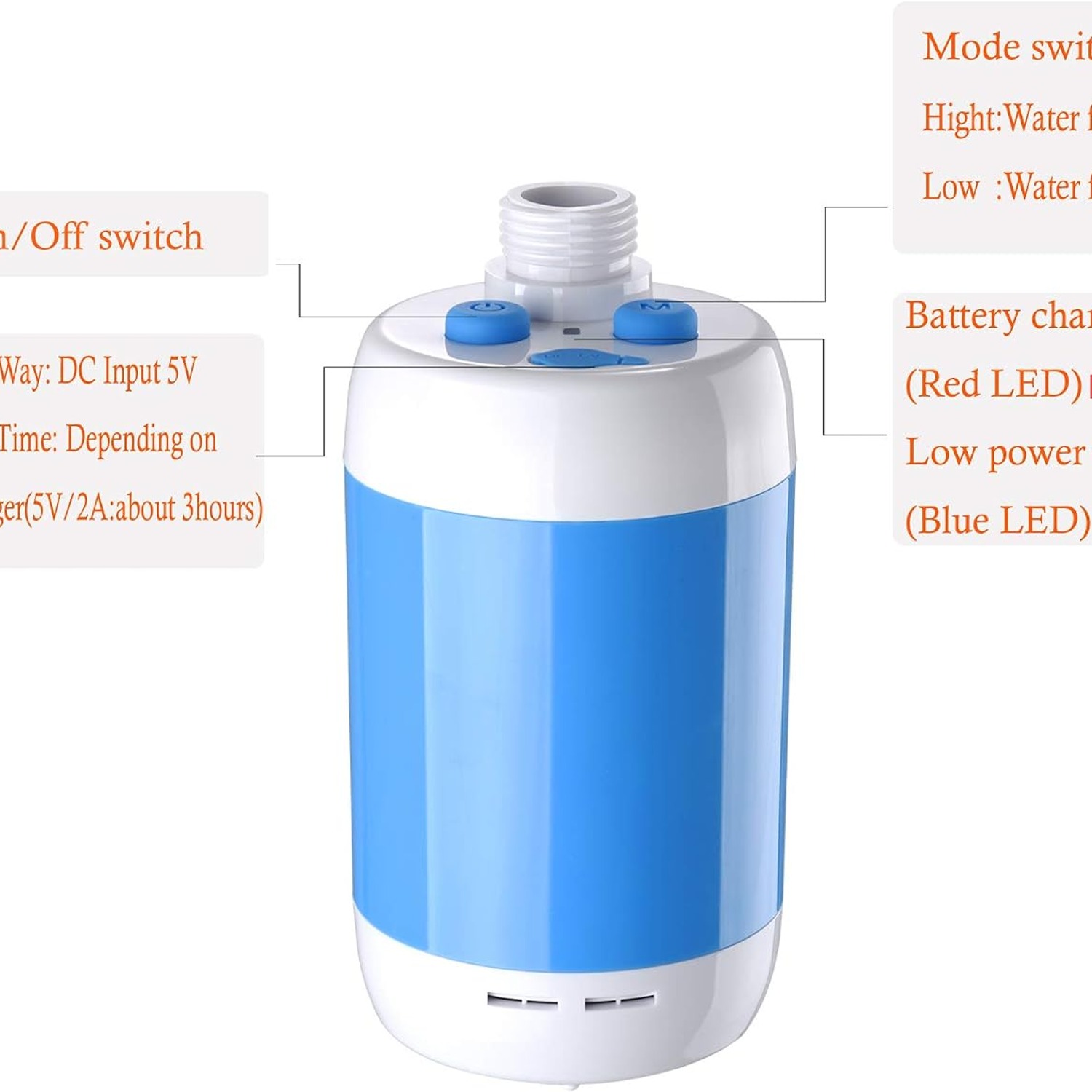
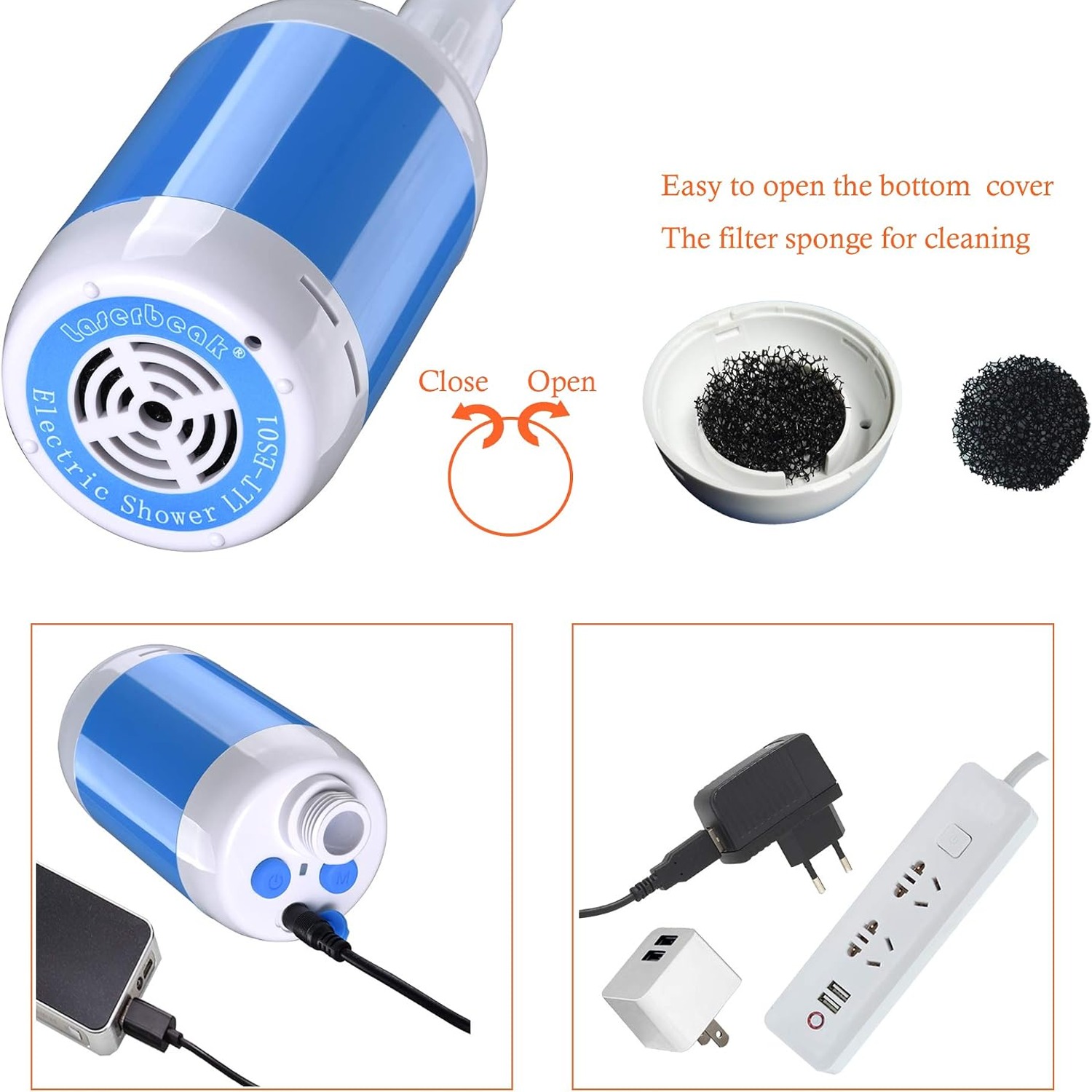
Power comes from a lithium battery built into the unit, two 2400mAh cells for a combined 4800mAh at 3.7V. You charge it over DC 5V USB, which is the detail that makes it genuinely useful away from mains power. Any power bank, car USB socket or USB solar panel will refill it. With a 5V/2A charger you are looking at roughly three hours. A blue light shows charging and a red light tells you the charge is running low, which is better than guessing.
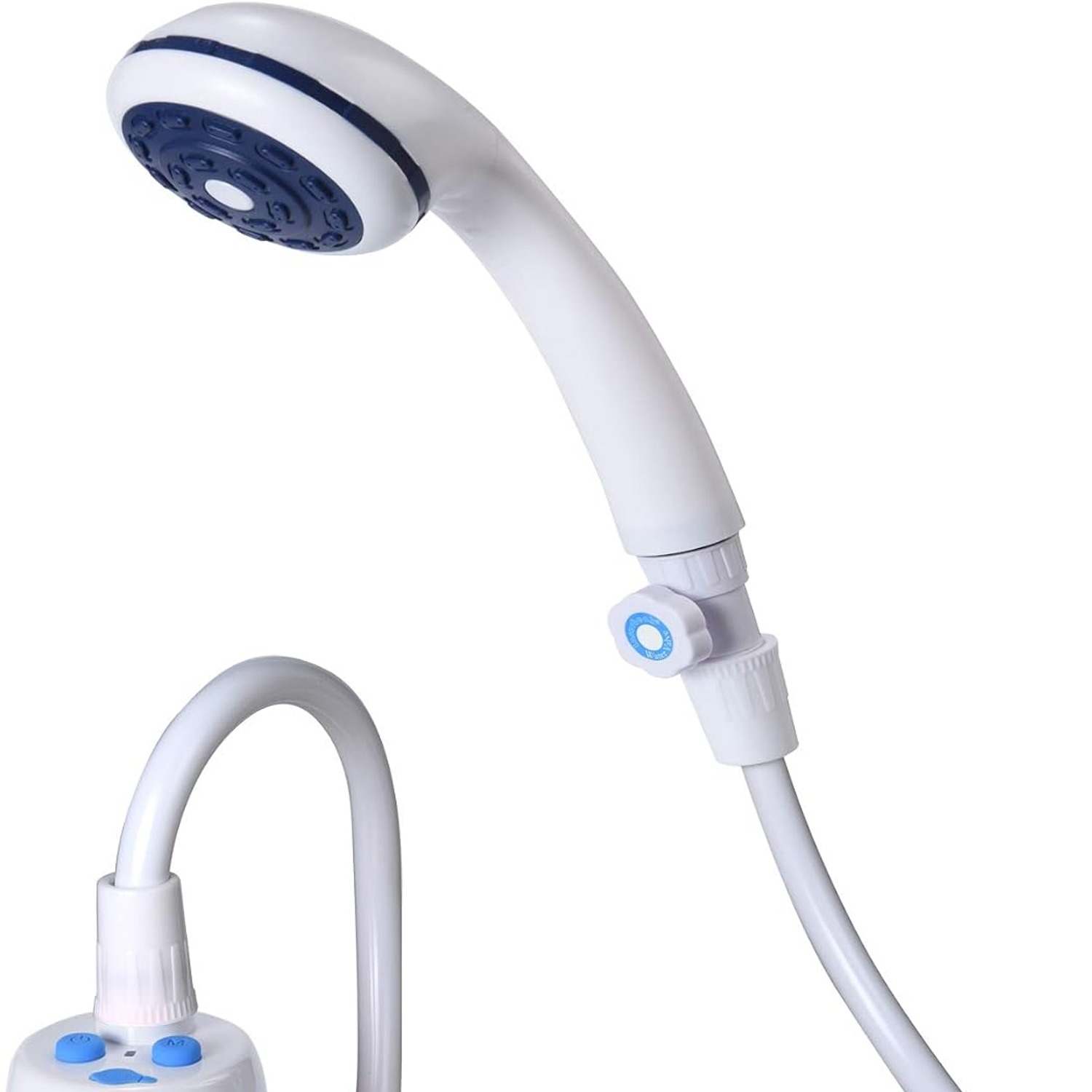
There are two flow settings. Low pushes 3 litres a minute and high pushes 4 litres a minute. Low is the one you will use most, because it is gentler on your water supply and plenty for hands, feet, dishes and dogs. High is for when you are rinsing salt off your back and want it done quickly. The shower head adds a second layer of control, with its own flow adjustment and a shut-off valve so you can stop the water entirely while you soap up.
An inlet filter sits on the pump to keep grit out of the motor. This matters more than it sounds. Bucket water at a campsite picks up sand and bits of leaf fast, and a filter is what stops that becoming a blocked shower head on day three.
Who it suits
Car campers get the most obvious benefit. You already carry water in the boot, so the pump just gives that water a job. Four-wheel drivers and beach fishers use it for rinsing salt off gear as much as off themselves, because salt is what kills zips, reels and bearings.
Surfers and paddlers love the small size. A board rinse at the car park takes under a minute, and a wetsuit rinsed before it goes in the boot does not stink by Wednesday. If you have been hunting for the best beach shower for sand, this is the sort of kit that solves it with nothing more than a 10 litre container of tap water.
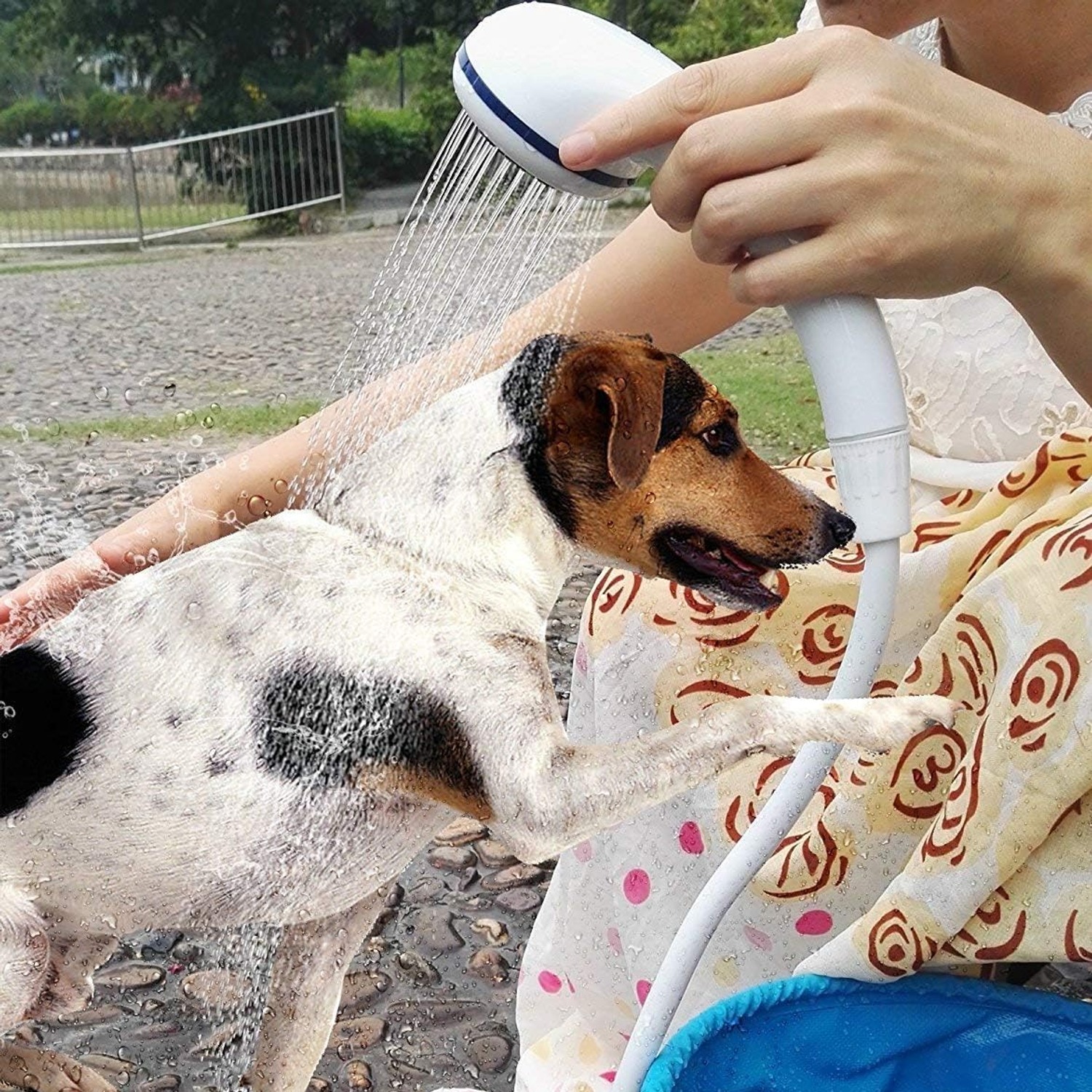
Van and caravan owners use it where plumbing would be overkill. No tank, no pump wiring, no fittings. Drop it into a container, run the hose out the sliding door, done. Dog owners buy it for muddy paws and post-swim rinses. Gardeners on balconies use it to water pots from a bucket without lugging a watering can. Parents use it at the end of beach days when three kids are coated in sand and the outdoor tap is a long walk away.
It is also handy in less fun situations. If someone in the house cannot easily get into a bath or shower, a controllable low-flow head and a bucket of warm water makes hair washing far easier.
How to choose
If you are comparing options, there are four things worth checking before price.
First, power source. A hand-pumped shower costs less but needs constant effort and gives inconsistent pressure. A 12V model needs a car socket and a cable running out of your vehicle. A rechargeable battery unit is the most flexible, and USB charging is the feature that matters most because it means a power bank is a valid backup.
Second, flow rate and control. Flow rate alone tells you how fast the water goes. Control tells you how much you waste. A shower head with a shut-off valve will stretch a bucket further than a higher flow rate ever will, because most of a shower is spent not rinsing. Two pump settings plus head control, as here, gives you four practical combinations.
Third, water resistance and protection. The pump lives in water, so an IPX7 rating is the baseline, not a bonus. Charge and discharge protection on the battery matters for a device you will be charging off whatever USB source is handy. This unit lists IPX7, RoHS and FCC.
Fourth, packed size and weight. A shower you leave at home helps nobody. At 830 grams in a 27.1 x 21.4 x 8.1 cm package, this one is easy to keep permanently in a vehicle. If you are shopping for the best travel shower for road trips, packed size tends to be the deciding factor once the basics are equal.
One more thing to plan for: water temperature. The rated range is 5 to 50 degrees Celsius. That means you can boil a kettle, mix it into cold water in a bucket and get a warm shower. Check the temperature with your hand first, because 50 degrees is hot enough to scald.
Setting up a wash
Fill a container. A 10 litre bucket does a quick rinse for one person. A 20 litre jerry can is better for two people or a thorough wash. Drop the pump in, make sure the inlet is fully under water, and switch on.
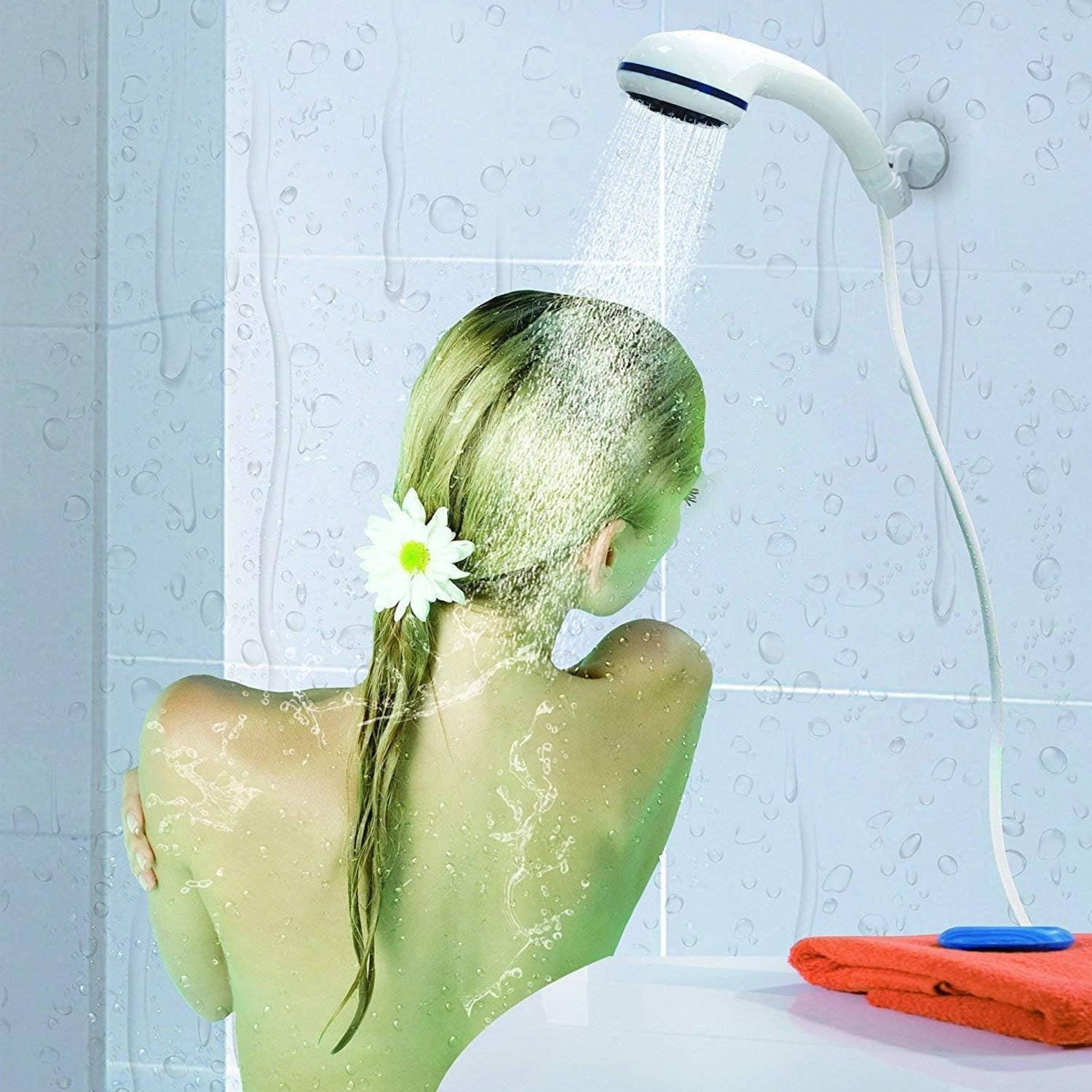
Use the suction lid if you have a flat surface to stick it to. A van panel, a tiled wall or a car window all work, and having the head held at head height frees both hands.
Wet down on low, shut the valve, soap up, then rinse on high if you need the speed. That sequence is the difference between a bucket lasting one wash and lasting three.
Looking after it
The care routine takes a minute. Run fresh water through the pump after each use. Salt water, chlorinated pool water and soapy water all leave residue, and residue is what shortens the life of seals and motors. Rinse the inlet filter so sediment does not cake on.
Let it air dry before packing. Store it somewhere dry and out of direct sun, with the shower head valve left open so the seal is not sitting compressed for months. Give the battery a partial charge every few months in storage. Lithium cells do not enjoy sitting completely empty, and a battery that has been flat all winter is a battery that disappoints you in spring.
Avoid leaving it in a hot parked car for long stretches. Heat is the quiet enemy of battery life.
The short version
This is a small rechargeable pump that turns a bucket into a shower. It runs on a 4800mAh lithium battery, charges over 5V USB in around three hours, and pushes either 3 or 4 litres a minute through a shower head with its own flow control and shut-off valve. It is IPX7 rated with RoHS and FCC marks, has an inlet filter, handles water from 5 to 50 degrees Celsius, and packs down to 830 grams.
Buy it if you camp, surf, drive beaches, travel with a dog or live out of a van, and you are tired of going to bed gritty. Keep a bucket with it, keep a power bank with the bucket, and you have a working shower anywhere you can park.