
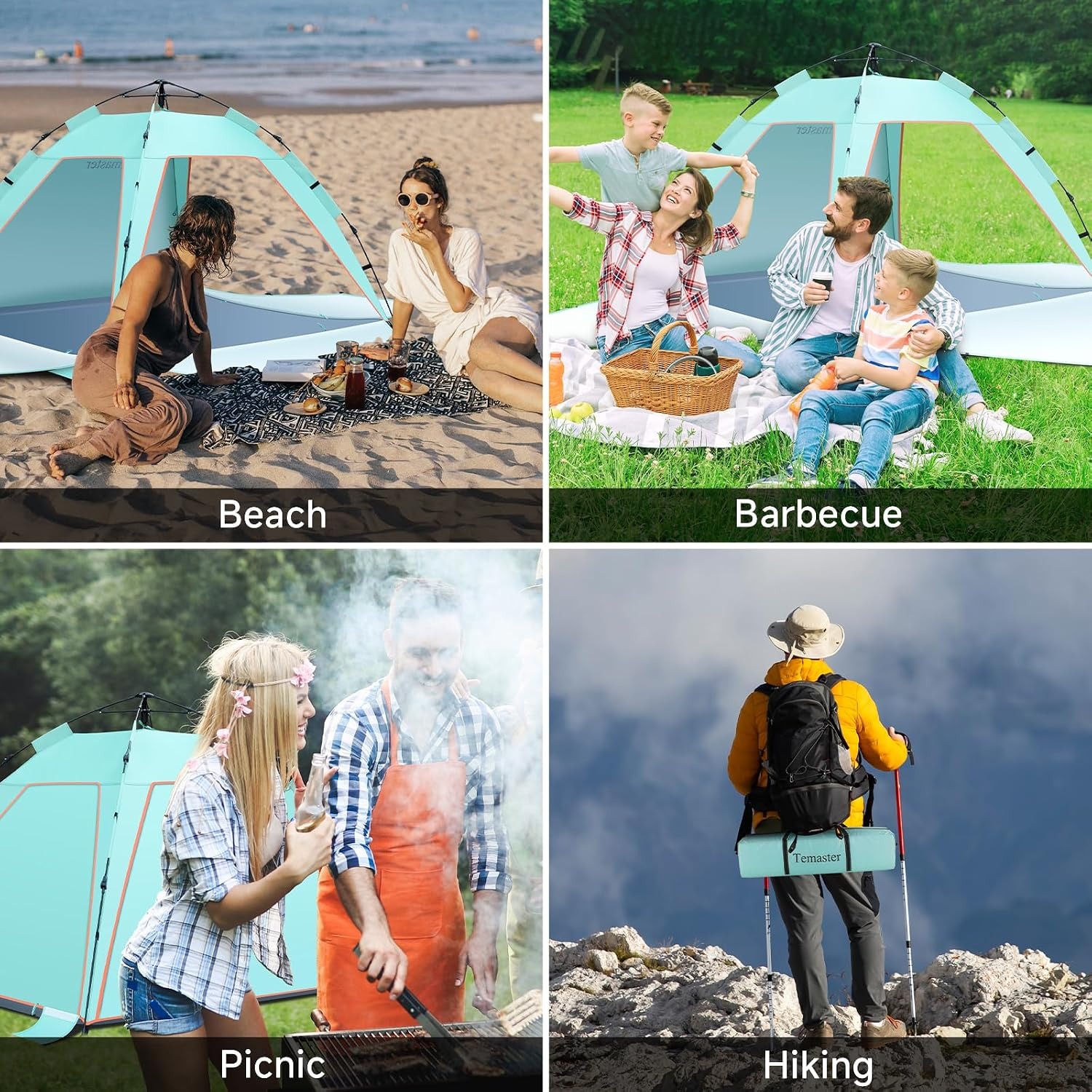
The complete guide
How To Choose A Pop Up Beach Tent That Actually Stays Up
The problem with beach shade
Beach days have a familiar rhythm. You park, you carry too much, you find a spot, and then you lose ten minutes fighting with something that is supposed to make the day easier. Umbrellas lean and skid. Old-style dome tents need poles threaded through sleeves while sand blows into your eyes. By the time the shade is up, half the group has already gone pink across the shoulders.
The other problem is what happens after setup. Plenty of beach shelters give shade but trap heat, so sitting inside feels worse than sitting outside. Others catch the wind like a sail and cartwheel down the sand while everyone chases them. Shade that is quick to put up, cool to sit in and firmly anchored is a surprisingly uncommon combination.
That is the gap a well-made automatic shelter fills. No poles, no instructions, no team effort. Lift, release, peg, done.
How an automatic pop up tent works
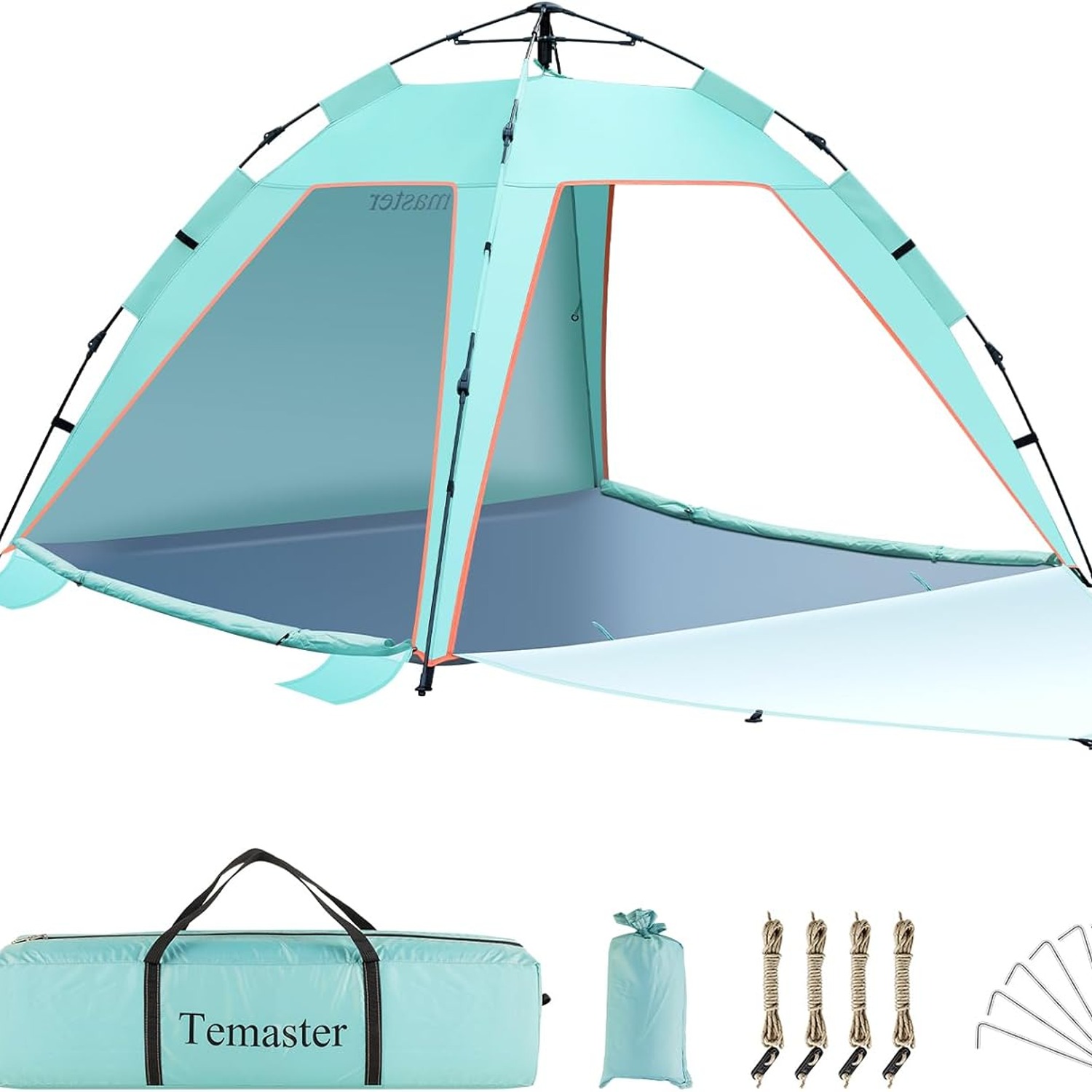
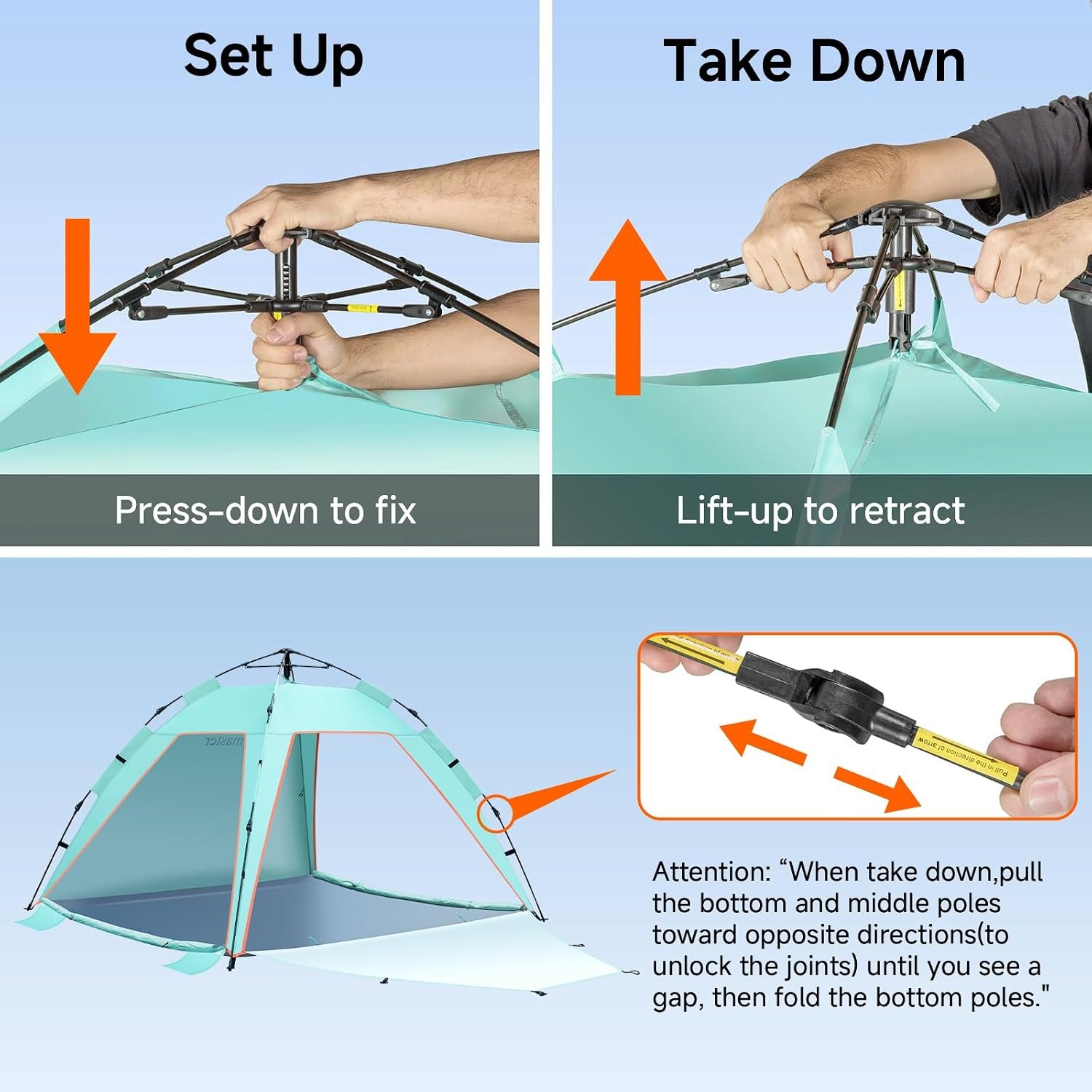
Traditional tents rely on separate poles that you feed through sleeves and bend into shape. An automatic shelter builds the frame into the canopy permanently. In this Temaster model, the structure uses a hydraulic lever system with fibreglass poles. When you release the catch, stored tension in the frame pushes the shelter open into its full shape.
Fibreglass is a good choice here because it flexes. Instead of snapping under a gust, the poles bend and spring back. It is also light, which matters when you are carrying the tent plus chairs, a cooler and three children's worth of beach toys.
Because no assembly is required, there is nothing to lose. You cannot misplace pole section four when pole section four is sewn into the roof. That alone makes the fold-down process more predictable, and most people get the knack of it on their second or third trip.
Shade that is actually cool
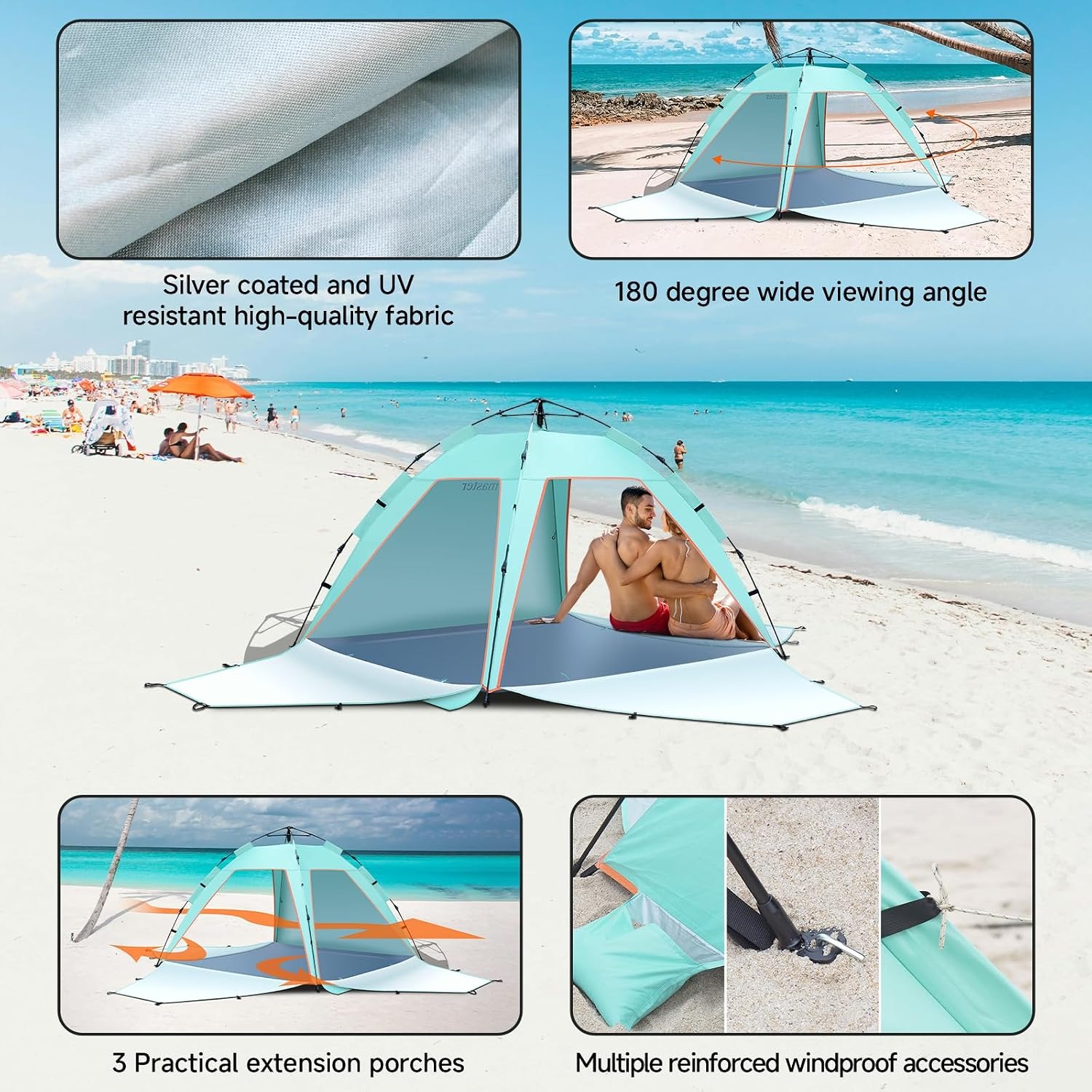
A canopy's sun rating tells you how much ultraviolet light gets through the fabric. This one is rated UPF 50+, which is the top band. The fabric is polyester with a silver coating, and the coating does two jobs. It reflects a share of the heat before it reaches the fabric, and it cuts the glare that makes you squint under thinner material.
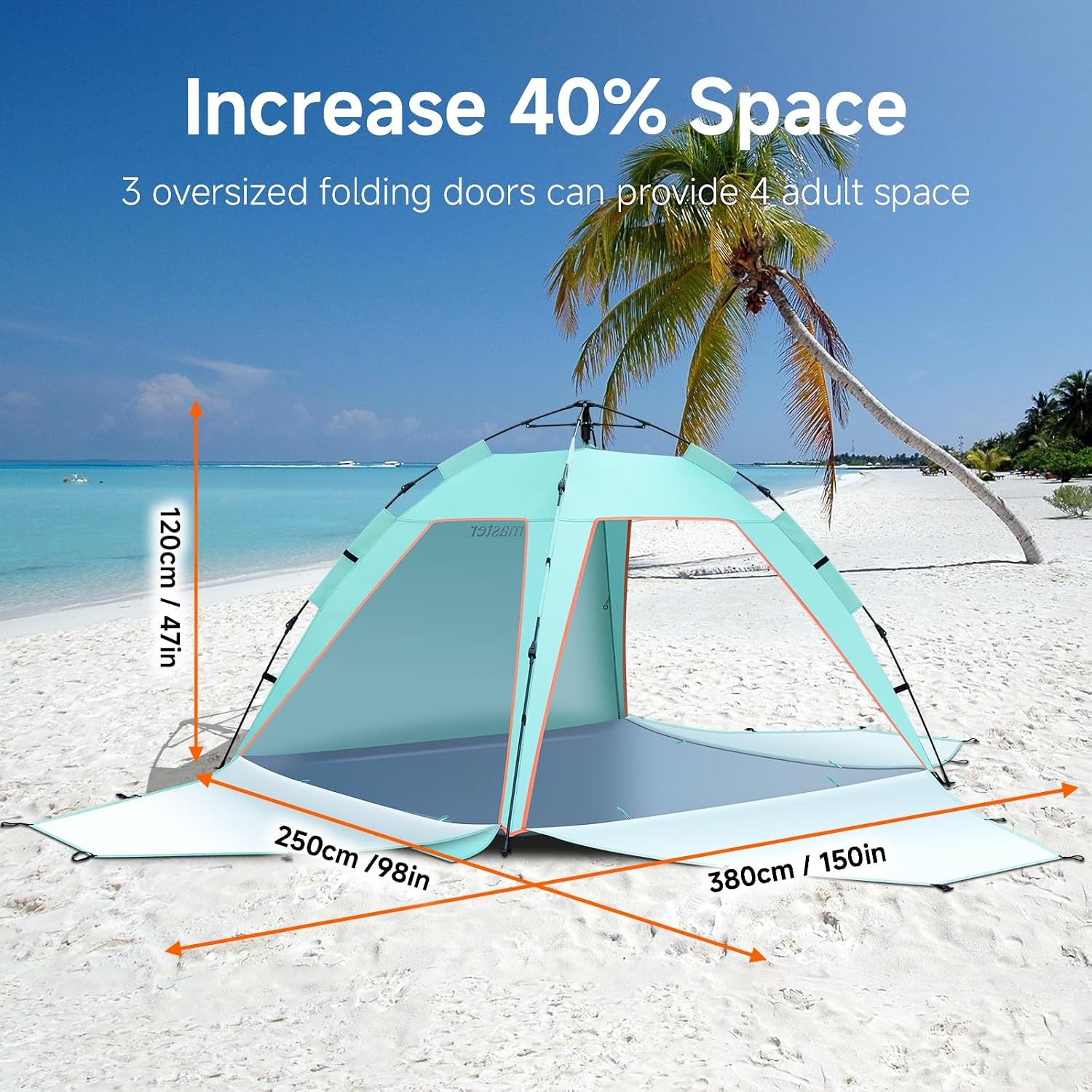
Heat is a separate matter from UV, and this is where the three expandable porch doors earn their keep. Each one can open independently. Roll all three back and air moves straight through the shelter instead of pooling inside. The light green colour helps too, since pale fabric reflects more sun than dark fabric.
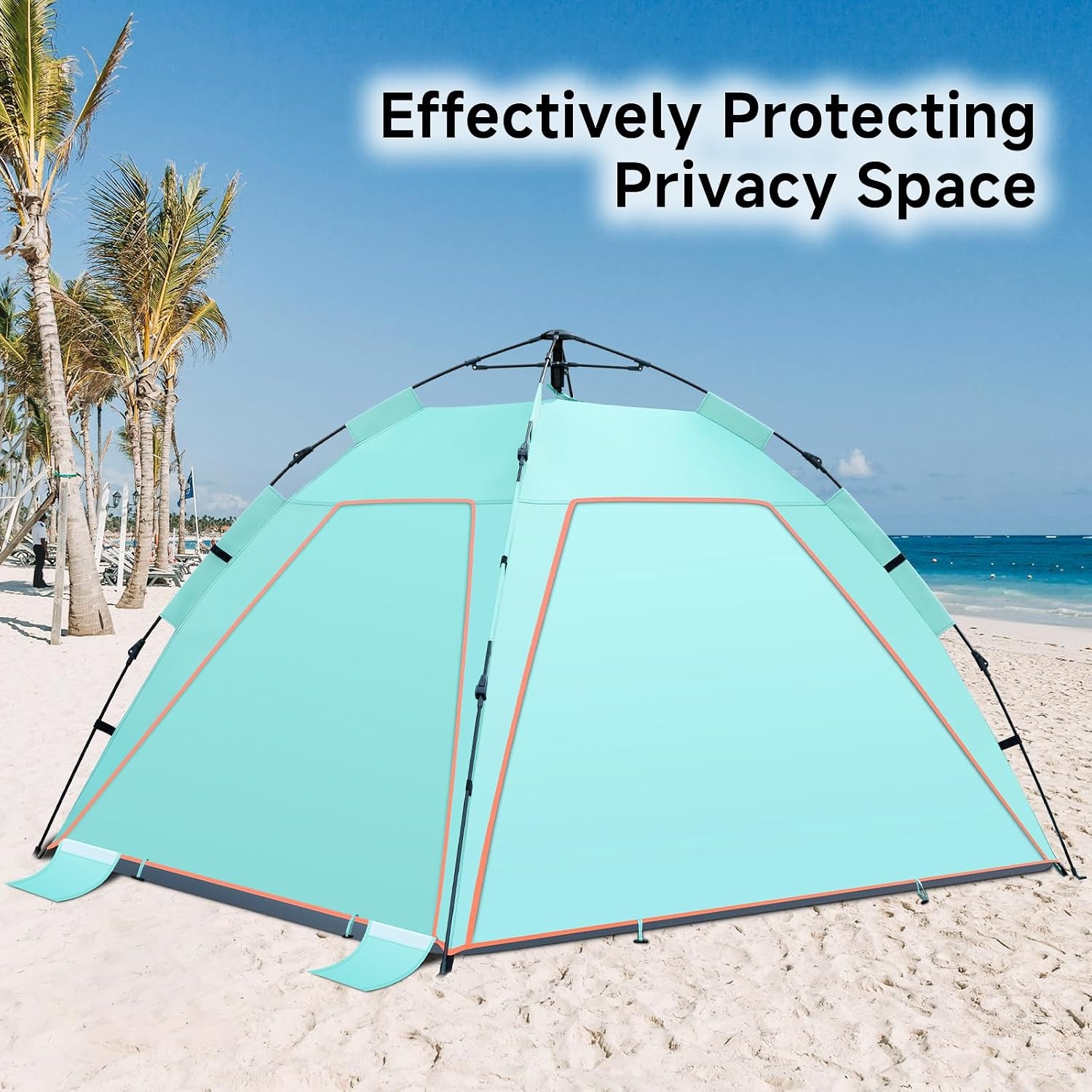
When you want the opposite, close the doors. You get a shielded space with floor mats, which is useful for changing out of wet togs, feeding a baby, or giving a toddler somewhere dim to fall asleep. Being able to switch between open and closed in a few seconds is more useful on a real beach day than either extreme on its own.
Worth saying plainly, this is a sun shelter and not a rain tent. The listing states it is not water resistant, and the maker notes it is for beach and day use rather than camping. Shade and breeze protection, yes. Overnight weather, no.
Size and who it suits
Open dimensions are 190 cm long, 170 cm wide and 120 cm high. In practical terms, that is four to five adults sitting, or a family of four with a pile of gear. The 120 cm peak means most adults can sit upright on a towel or low chair without hunching. You will not stand up inside, but standing is not what a beach shelter is for.
A few groups this suits well:
Families with young children who need a reliable nap and shade zone. Couples who want somewhere to retreat during the hottest part of the afternoon. Groups of friends who want a base for bags, food and phones rather than leaving everything on open sand.
If you are looking for the best family beach shelter in this size bracket, pay attention to the usable floor area rather than just the footprint. The expandable porches add real room, which is why you can seat five people in a shelter that packs down into a single bag.
Keeping it anchored
This is where most cheap beach tents fail. Anchoring kit here is more generous than usual. You get twelve thickened ground nails, four guylines, four reinforced wind strips built into the structure and four oversized sandbags.
The habit to build is simple. Set the shelter down facing away from the prevailing wind. Peg the windward side first. Run the guylines out and peg them at an angle, not straight down. Then fill every sandbag completely, not half way, and set them at the corners. Two minutes of this is the difference between a relaxed afternoon and chasing your tent along the shoreline.
On firm grass or packed dirt, the ground nails do most of the work. On soft, dry sand, the sandbags matter more, because pegs pull out of loose sand easily. Bury the bags slightly for extra grip. If the wind picks up past a comfortable breeze, take the shelter down. No beach shelter at any price is designed for a gale.
Care and storage
Sand is the main thing that shortens the life of any beach gear. Before you fold, shake the canopy out properly and brush grit away from the zips and fabric folds. Grit left in a fold grinds against the coating every time the tent moves in the bag.
Salt and sunscreen are next. Both will sit on polyester and dull the surface over time. A rinse with fresh water at the end of a beach trip, then a wipe with mild soapy water on any marks, keeps the fabric in good shape. Skip the washing machine, bleach, tumble dryer and iron. None of them are friends of a coated canopy or a fibreglass frame.
Drying matters more than people expect. Even a shelter that has only seen sun will pick up moisture from damp towels and sea air. Open it in the shade at home, let it dry fully, then pack it away. A tent stored damp develops a smell that is hard to shift.
Keep it in its carry bag somewhere cool and dry. Avoid leaving it in a hot car boot for weeks between trips, and keep it well away from barbecues, fire pits and citronella candles.
Buying questions worth asking
Before you commit to any shelter, run through a short checklist. Does it open without assembly, or are you threading poles? Does the canopy have a stated UPF rating, or just a vague claim about sun protection? Can the doors open for airflow and close for privacy? How much anchoring hardware actually comes in the box?
Price is worth weighing against how often you will use it. A shelter that comes out most weekends across a long summer earns back a better frame and better fabric quickly. One that comes out twice a year does not need the same spend.
Finally, be honest about what you need. If you want something for overnight trips in changeable weather, buy a camping tent. If you want the best instant beach tent for day use, where speed and shade and airflow matter most, this type of automatic shelter is the right category.
The short version
The Temaster pop up beach tent opens in seconds on a hydraulic fibreglass frame, no assembly needed. The UPF 50+ polyester canopy with silver coating keeps strong sun off a group of four to five adults inside a 190 x 170 x 120 cm space. Three expandable porch doors let you choose between a cross breeze and a private corner. Twelve ground nails, four guylines, four wind strips and four oversized sandbags keep it planted. It is a day shelter, not water resistant and not made for camping, so use it for beaches, picnics, sports days and the back garden. Peg it properly, rinse off salt, dry it fully, and it will handle a lot of summers.