
The complete guide
How To Choose A Folding Camping Chair That You Will Actually Carry
The problem with sitting on the ground
Most camping trips start well. You get the tent up, the kettle on, and then you look around and realise there is nowhere good to sit. A log if you are lucky. A cooler lid if you are not. Within half an hour your lower back is complaining, your legs are going numb, and ants have found the crisps.
A chair fixes that, but only if it is a chair you will actually bring. Heavy, bulky camp chairs have a habit of staying in the shed. They take up too much boot space, they are awkward to carry from the car park, and they feel like more trouble than they are worth for a single afternoon. So the real question is not just whether a chair is comfortable. It is whether it is comfortable and light enough and small enough that you never leave it behind.
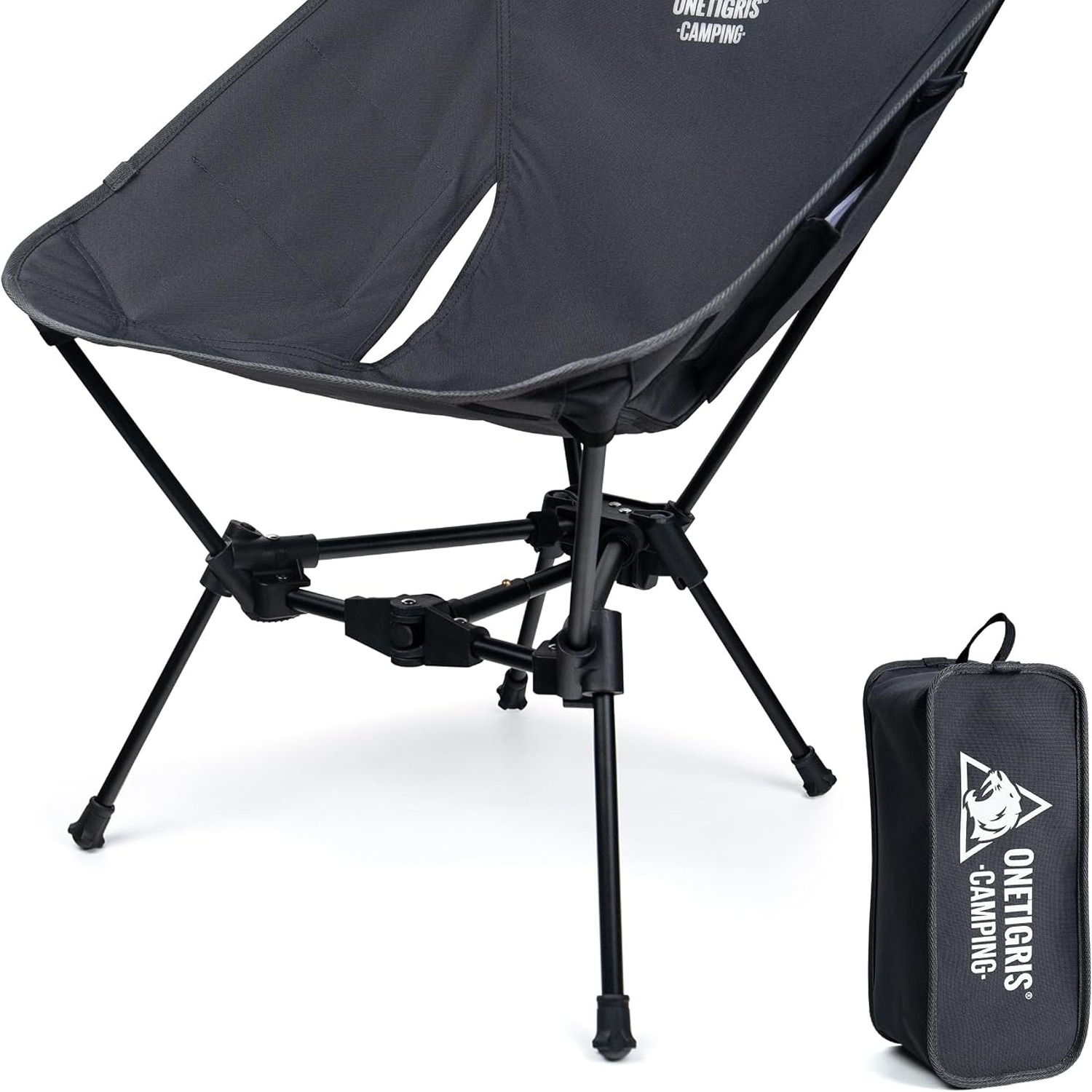
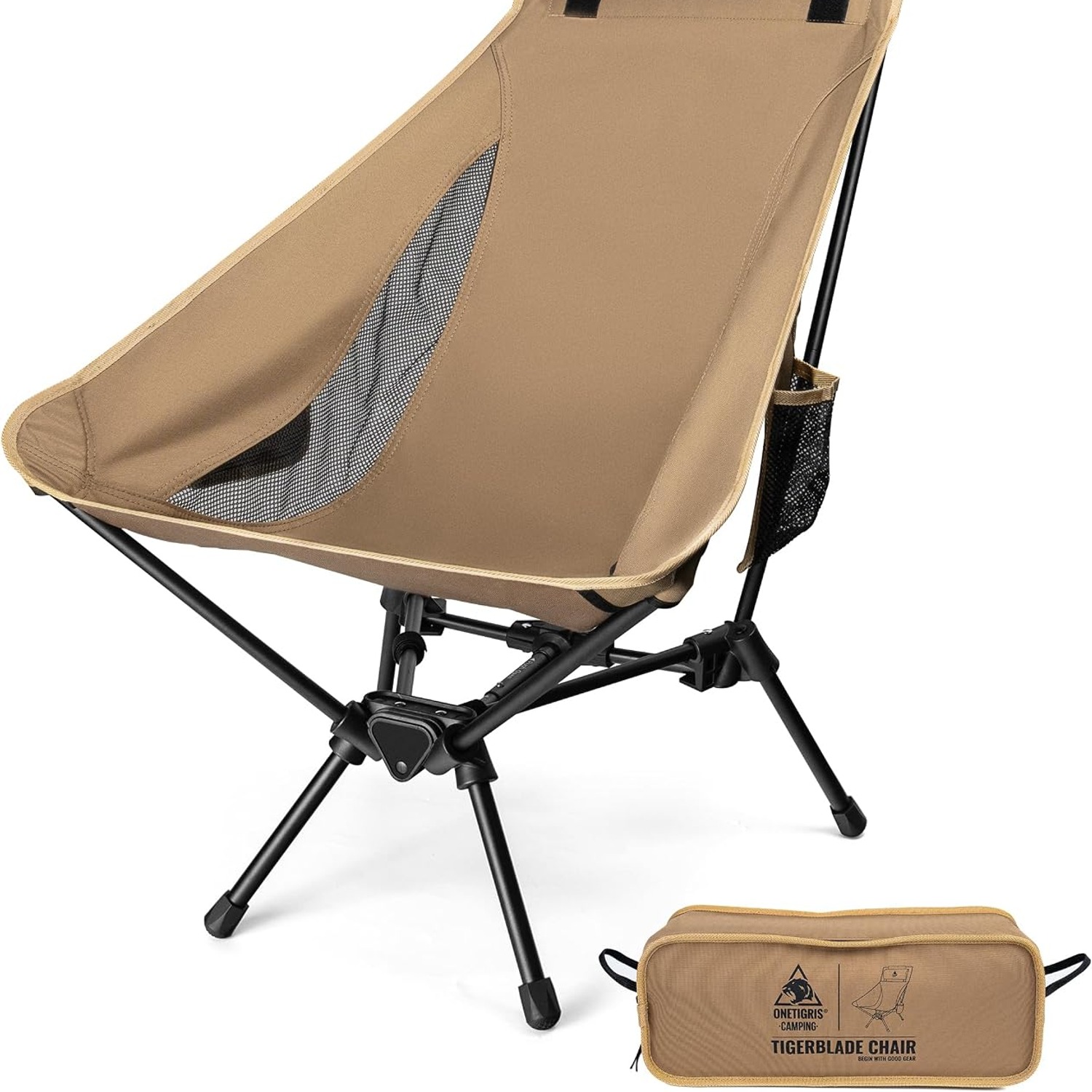
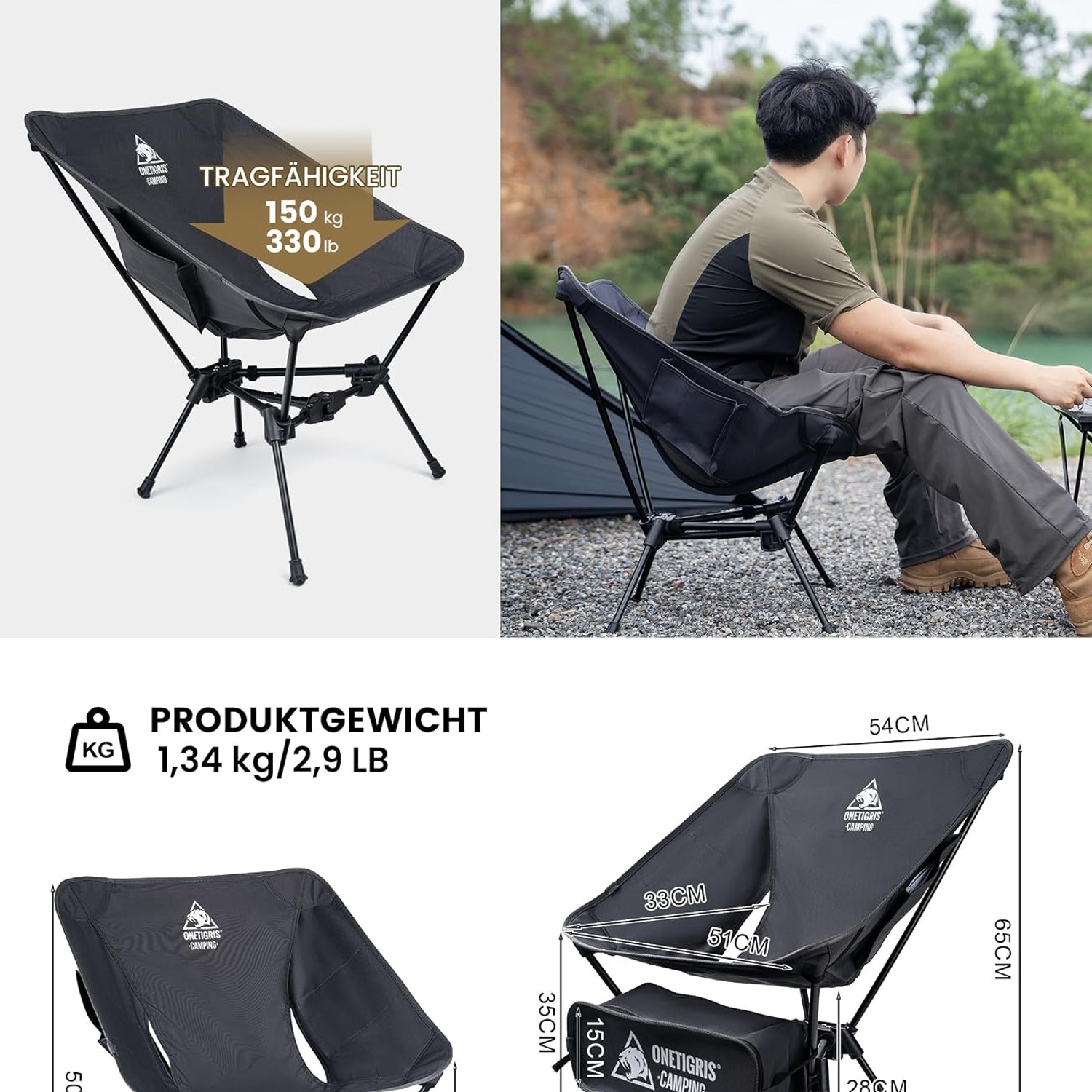
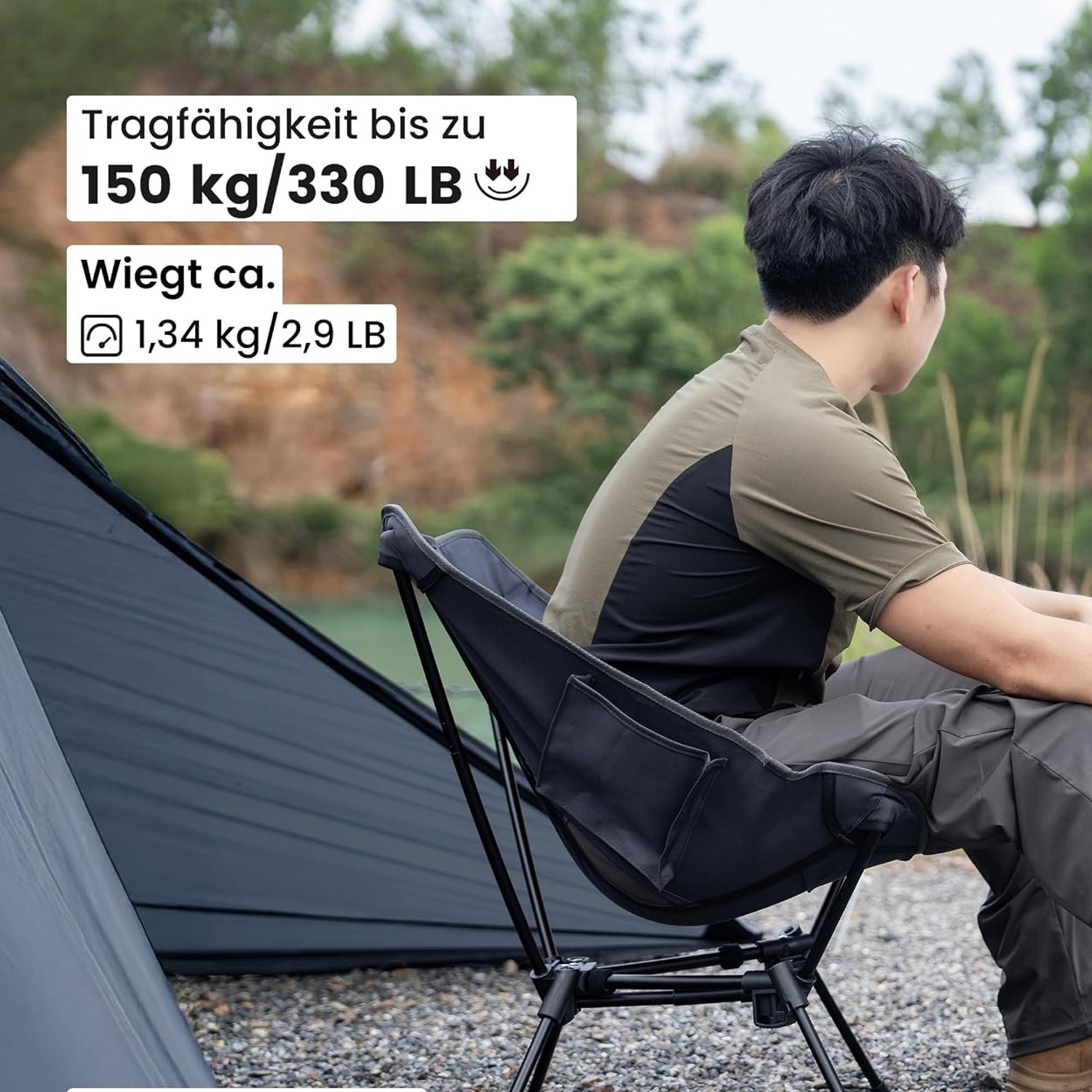
This OneTigris folding camping chair sits in that middle ground. The frame is aluminium, the seat and back are polyester, and the whole thing weighs 1.4 kg with a storage bag included. It is rated to a maximum recommended weight of 150 kg, which covers most adults.
How a folding camp chair works
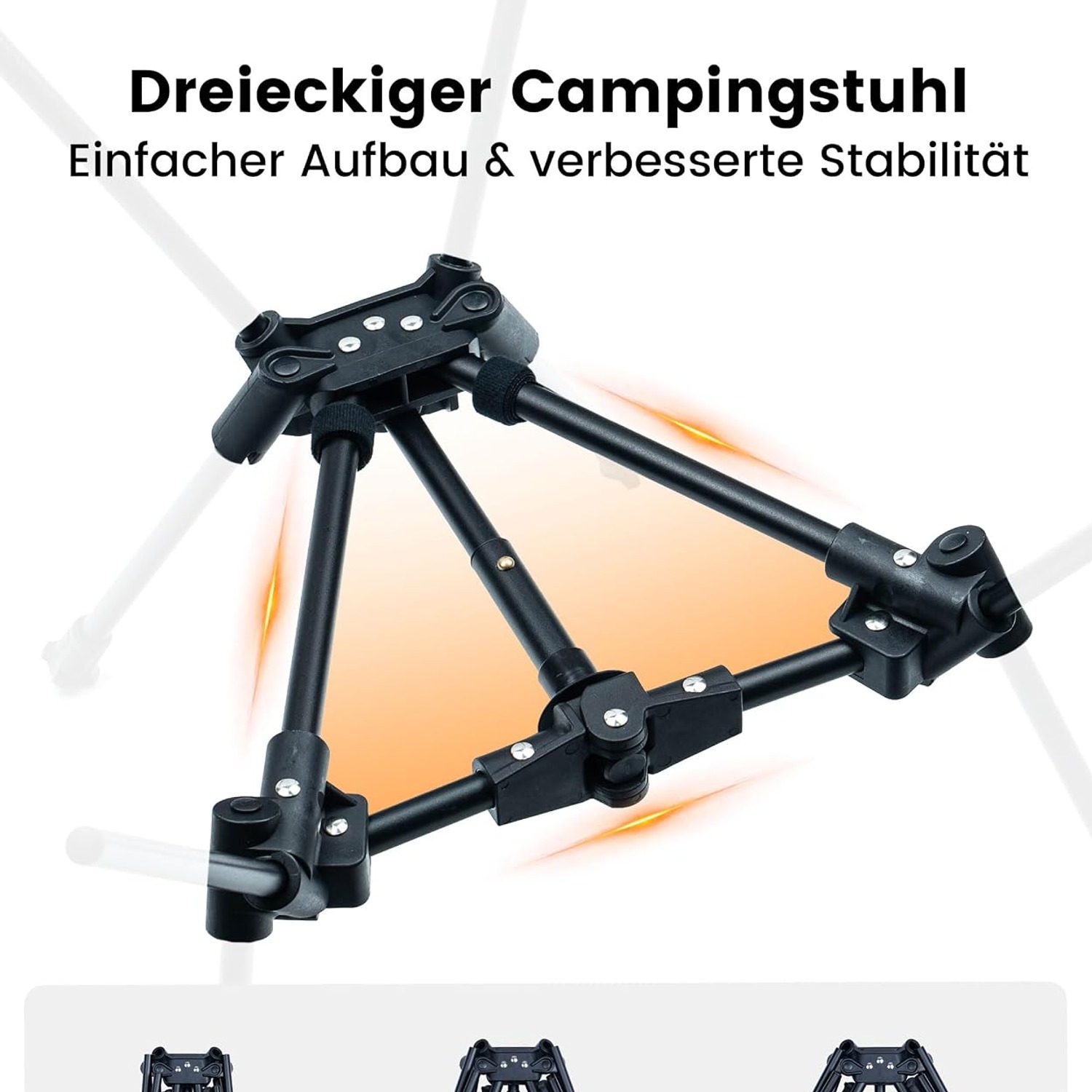
Nearly all packable camp chairs follow the same logic. A set of lightweight poles clips or slots together to make a frame, and a fabric seat stretches over the ends. The tension in the fabric is what gives the chair its strength, not the poles alone. When you sit down, your weight pulls the fabric tight and pushes the leg ends outward, and the whole structure locks up firm.
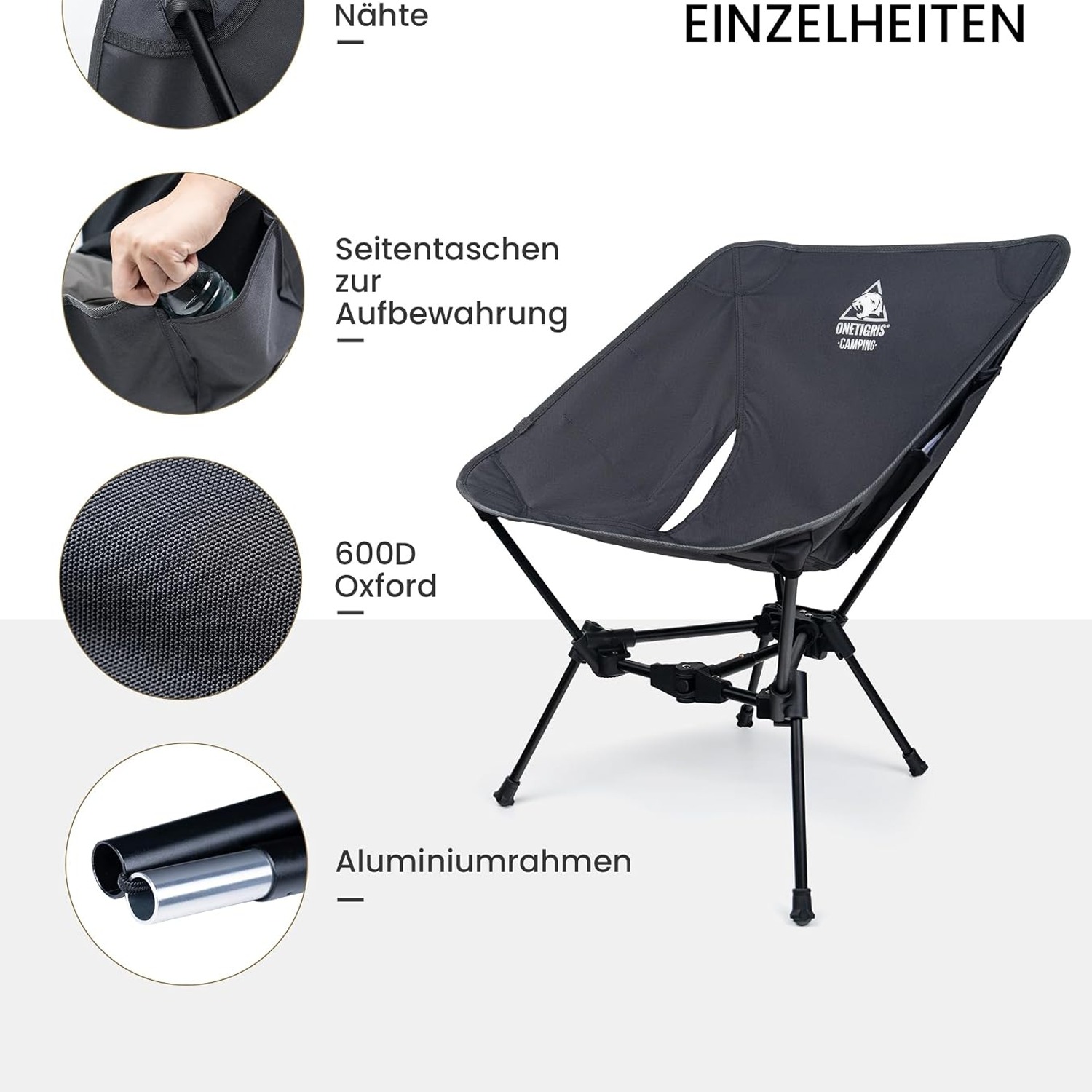
That is why the fabric matters as much as the metal. Polyester is the common choice because it holds its shape under tension, dries fast after rain, and does not rot the way natural fibres can when packed away slightly damp. On this chair, the seat, the fill and the general material are all listed as polyester.
The frame here is aluminium. It is the standard trade-off material for outdoor gear, light for its strength and resistant to rust in a way steel is not. Combined, those two choices are what get the chair down to 1.4 kg.
Assembly is required, which sounds more involved than it is. You put the frame together and fit the seat over it. Once you have done it twice you stop thinking about it.
Who this chair suits
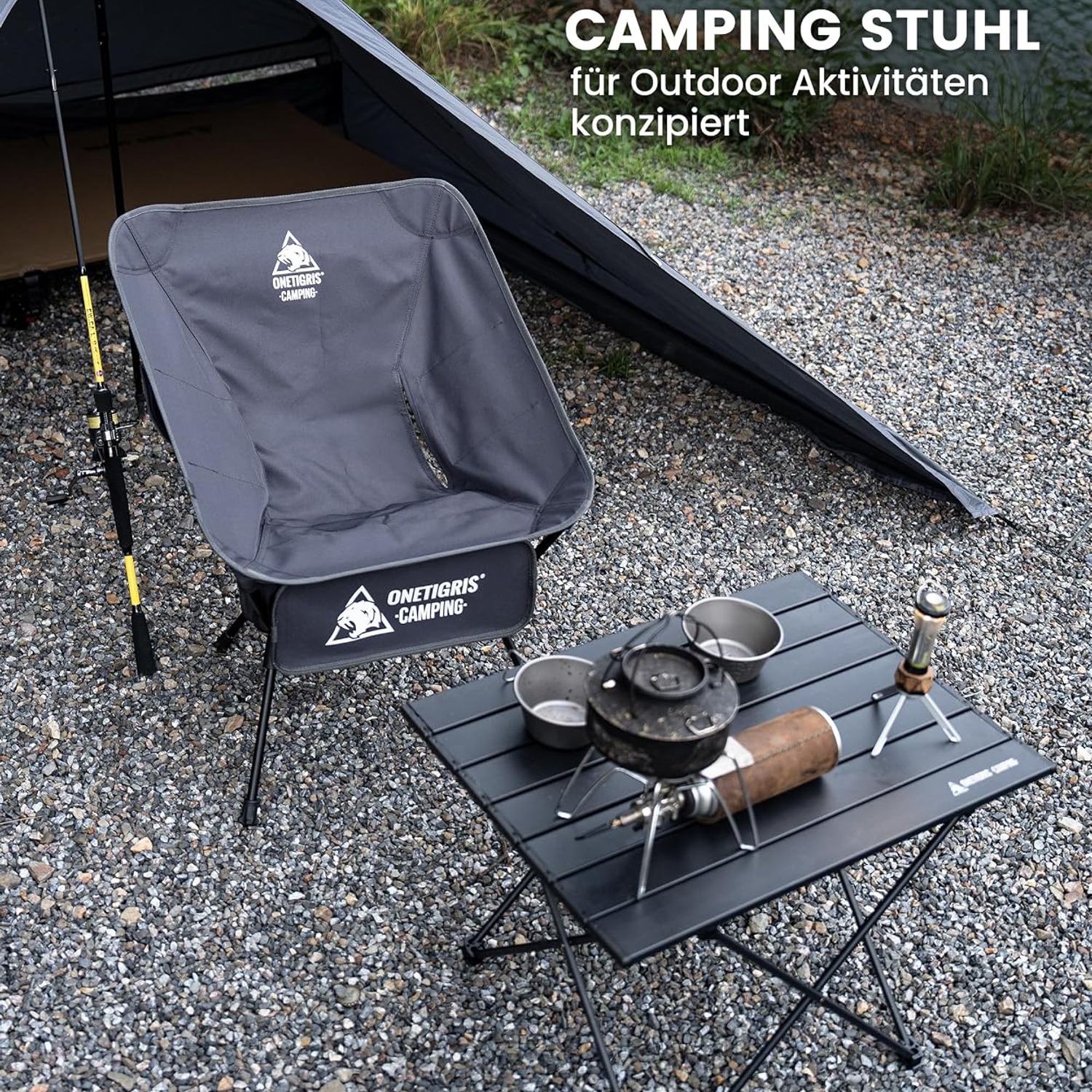
If you drive to a campsite, park nearby and set up for a weekend, this chair does the job easily. Carry it from the boot, unfold it, and you have a seat by the fire.
It also suits people who move around. Anglers who walk the bank looking for a better spot. Parents on the sideline at junior sport. Anyone who ends up at a market, a car boot sale or an outdoor film night and wants a seat that does not dominate the back of the car. The best compact outdoor chair is usually the one that fits in beside everything else rather than dictating what else fits.
For hikers, the honest answer is that 1.4 kg is reasonable but not featherweight. Dedicated ultralight backpackers chasing the best backpacking chair will find lighter options, usually at a higher price and with a smaller seat. For short walks in and overnighters, this is a sensible carry.
Where it is less ideal is anyone wanting a recliner. The reclining position count is one, so the chair holds a single fixed angle. If you want to tilt back and nap, this is not that chair.
How to choose, feature by feature
Weight. Be realistic about the distance you carry gear. If the car parks ten metres from your pitch, weight hardly matters. If you walk five minutes with a cooler in the other hand, every kilogram counts. At 1.4 kg this chair is in easy-carry territory.
Load rating. Check the number, not just the look of the frame. The maximum weight recommendation here is 150 kg. Chairs are tested for a seated adult, so avoid standing on the seat or letting two people share it.
Arms or no arms. Armless chairs are lighter, easier to get out of, and easier to pack. This one is armless with a solid back. If you like resting your elbows, you will notice their absence, so think about how you actually sit.
Back height. The set-up height is 65 cm. That gives support up to the middle of the back for most people rather than full shoulder-to-head support. For eating, chatting and sitting by a fire it is plenty.
Seat width and depth. Listed at 51 cm wide and 33 cm deep, with an overall listed size of 54 x 40 x 65 cm. Wider seats feel more relaxed but pack bigger, so there is always a compromise.
Pockets. Two side pockets here. It sounds minor until you are hunting for your phone in the dark. A best chair with side pockets stops small items disappearing into the grass.
Packing. The storage bag is included, which matters more than it sounds. A chair with a bag stays together. A chair without one sheds a pole eventually.
Setting up well
Pick your spot before you unfold. Look for flat, firm ground and clear away sharp stones and sticks that could press into the fabric or snag the feet. On a slope, turn the chair so you face downhill rather than sitting sideways, which keeps you from tipping.
On sand, press the legs into damp compacted sand rather than dry loose sand. The flattened leg design helps here, spreading contact rather than sinking on a point. On soft grass after rain, expect some sinking and shift position if one leg goes down further than the others.
Sit down with control the first few times. Lower yourself rather than dropping into the seat. Sudden loads are what stress frames and fabric most.
Looking after it
Care for this kind of chair is simple and mostly about moisture and grit.
Wipe the fabric with a damp cloth and a little mild soap when it gets marked. Let it dry fully in the shade before you pack it, because polyester packed damp will smell within a few days and can grow mildew in a warm boot.
Shake out sand and brush the joints before folding. Grit in a hinge is the single most common cause of a stiff or sticky frame. After a trip to the coast, rinse the frame with fresh water to clear salt spray.
Store the chair in its bag, out of direct sun. UV is slow but relentless on outdoor fabric, and a chair kept in a shed or boot will outlast one left on a patio year round.
If a pole bungee cord loosens over time, that is normal wear on any folding frame. Keeping the chair clean and dry slows it down considerably.
Getting the most from it
Small habits make a cheap chair feel better. Throw a packable cushion or a folded fleece on the seat for long sessions and you add real comfort for almost no weight. Use the side pockets properly, one for your phone and one for whatever you keep reaching for, and you stop putting things on the ground.
If you camp as a group, mark your chair bag with tape or a tag. Grey chairs at a campsite all look the same by the second evening.
And keep it in the car. Genuinely, that is the trick. A best portable chair for events is only useful if it is with you when the event happens, and this one is small enough to live permanently in the boot without being in the way.
The short version
This is a 1.4 kg folding camping chair on an aluminium frame with a polyester seat and back, rated to a recommended 150 kg. It is armless, has a solid back, one fixed sitting angle, two side pockets, and comes with a storage bag. Set up it measures 33 cm deep, 51 cm wide and 65 cm high, with a listed size of 54 x 40 x 65 cm, and the colour is grey.
Choose it if you want a light, simple seat you will carry without thinking, for camping, fishing, the beach, the garden or the sideline. Look elsewhere if you need arms, a reclining back or a sub-kilo hiking chair.
Keep it clean, keep it dry, keep it in its bag, and it will quietly do its job for a long time.