
The complete guide
How to Choose a Rechargeable LED Headlamp
The problem with most head torches
Nearly everyone owns a head torch they do not like. It sits in a drawer with corroded batteries, and when the power goes out or the dog needs a late walk, it either does not turn on or it throws a narrow yellow circle that lights a dinner-plate sized patch of ground.
There are three usual culprits. The first is the beam. Cheap lamps use a single focused LED, which is fine for spotting something fifty metres off but useless when you are trying to see your own hands. The second is power. Disposable batteries fade gradually, so the light dims without warning until you are squinting. The third is the switch, which always needs a deliberate press from a clean, dry finger at exactly the moment you have neither.
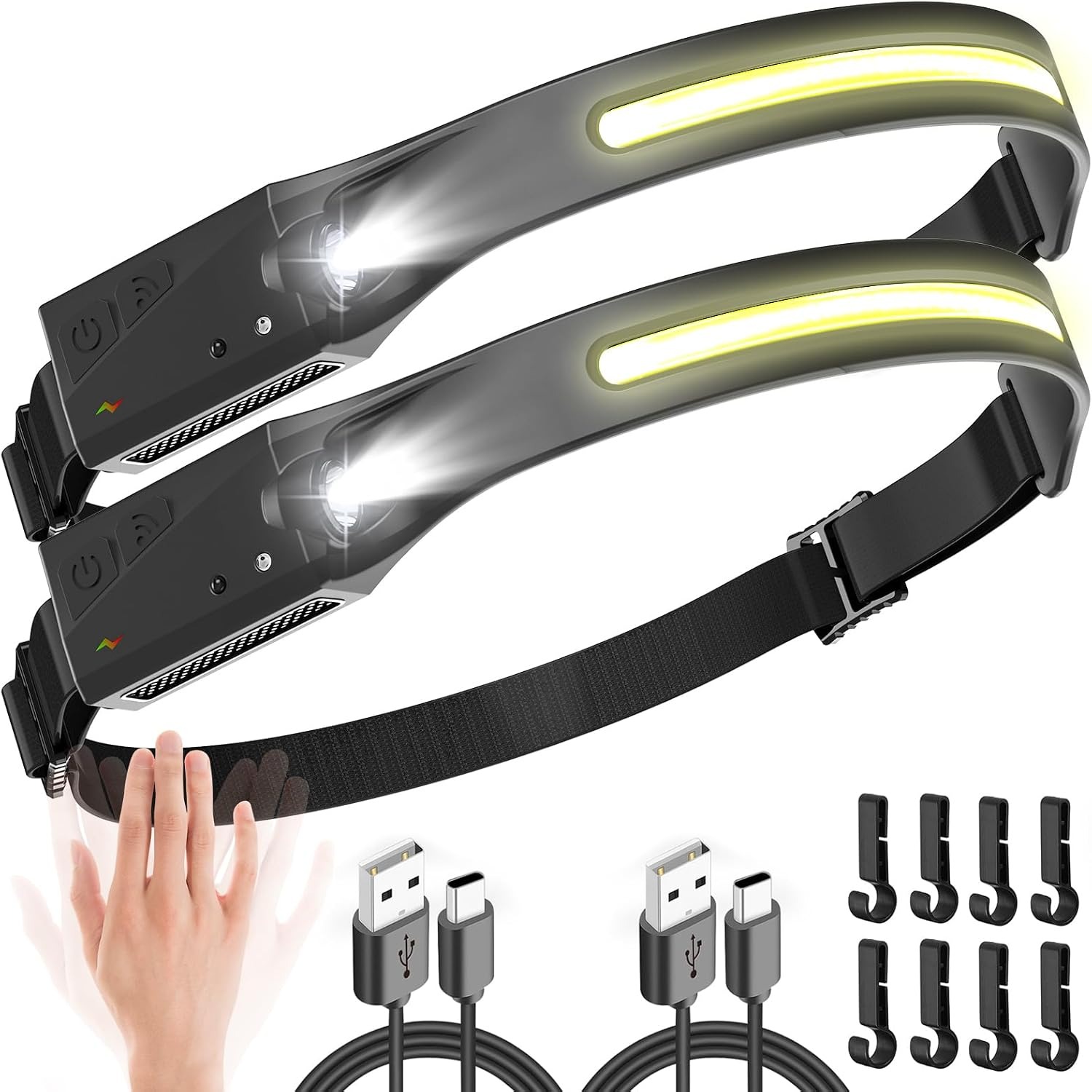
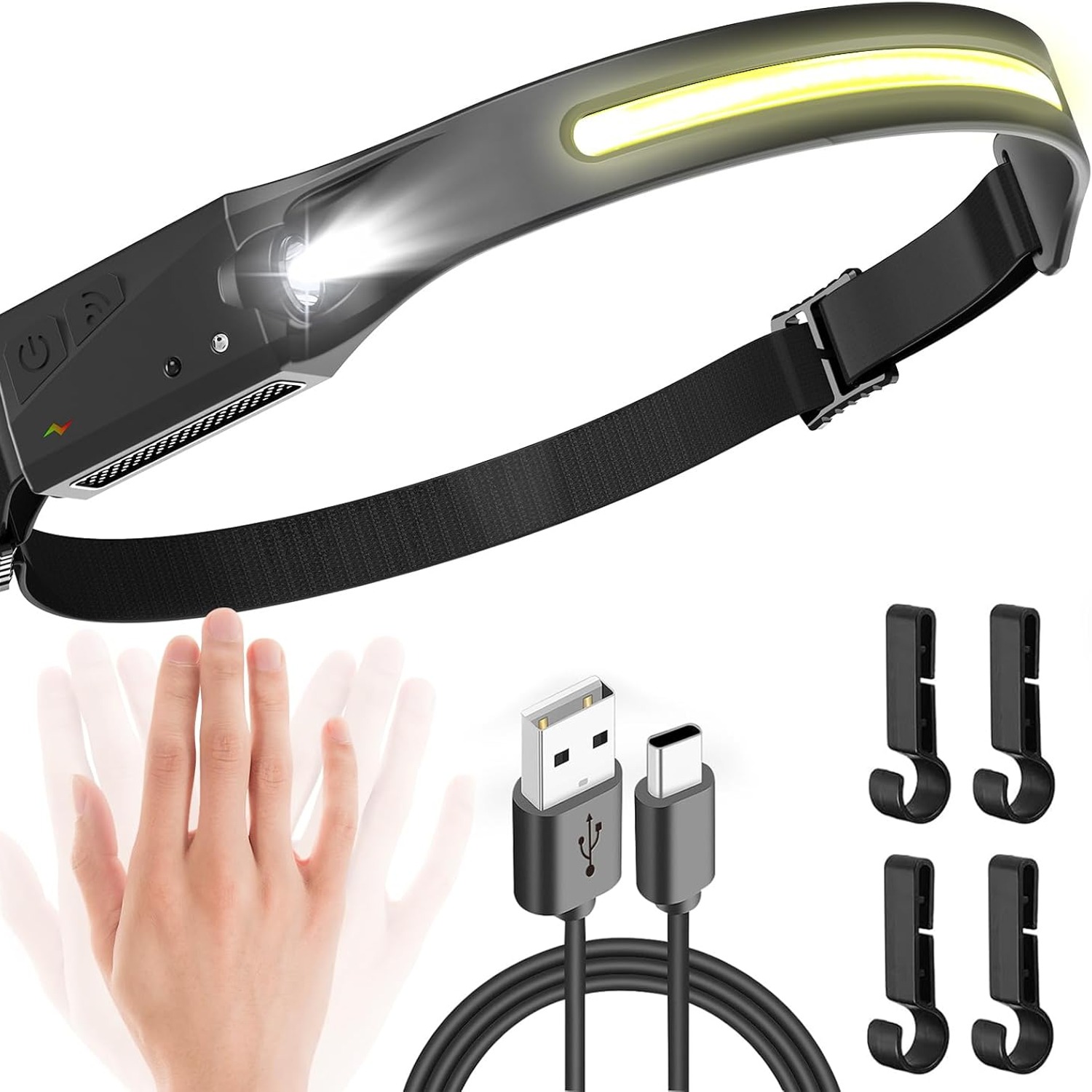
A rechargeable headlamp 2 pack like this one tackles all three. Two light sources instead of one, a built-in cell charged over USB-C, and a motion sensor so you can switch it with a wave.
How a two-source headlamp works
The lamp carries a COB LED strip and an XPE LED spotlight, and they do completely different jobs.
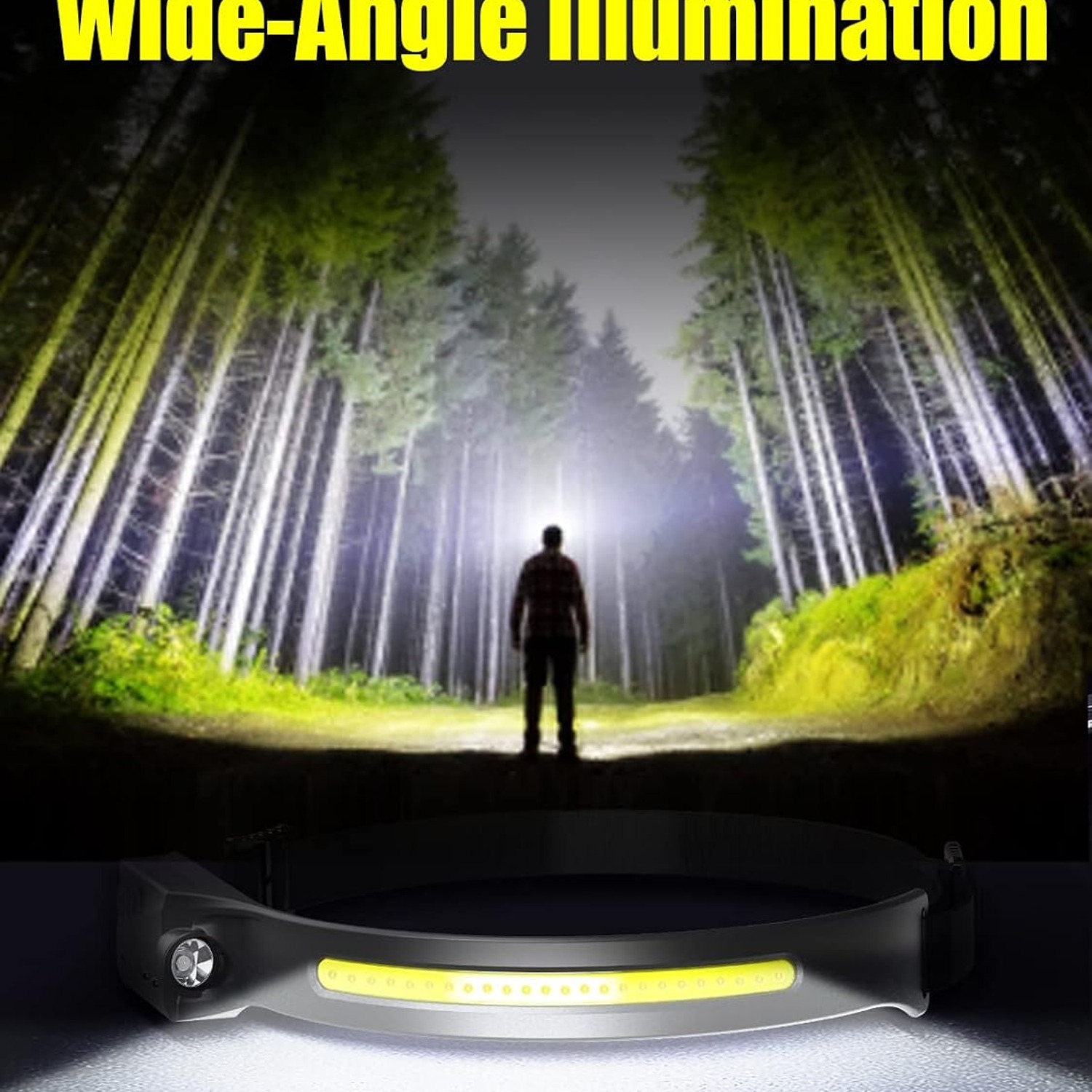
COB stands for chip on board. Instead of one point of light, dozens of small LED chips sit on a single strip behind a diffuser. The result is a flat, even wash across a 230 degree field. Nothing glares, nothing hot-spots, and there is very little of the hard shadow edge you get from a single emitter. This is the mode you want for cooking at a campsite, changing a tyre, fixing a bike chain or reading in a tent.
The XPE spotlight is the opposite. It takes the same power and squeezes it into a tight cone that reaches up to 300 metres. That is the mode for walking an unfamiliar track, scanning a paddock, checking a mooring line, or finding where the dog went.
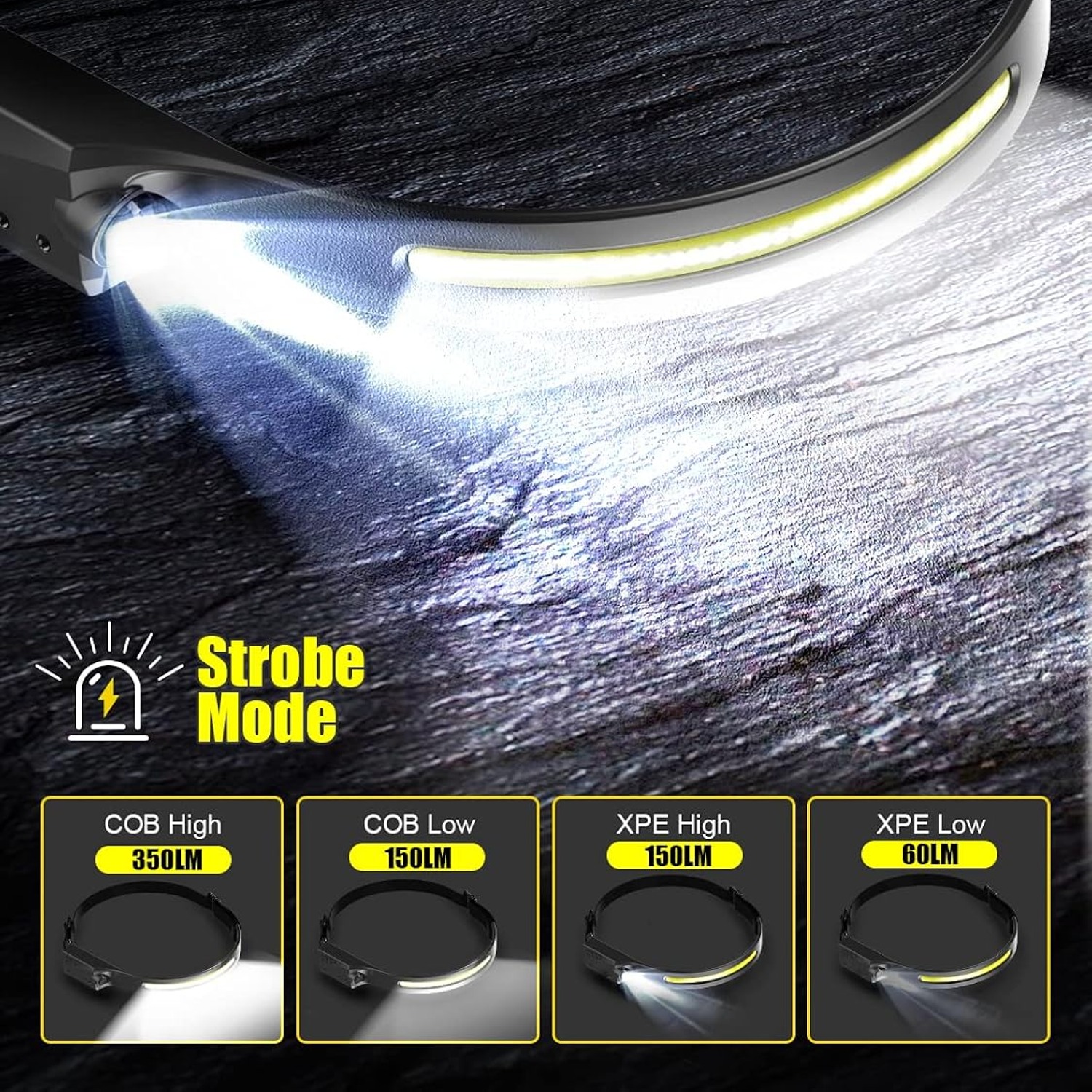
Combined maximum output is 350 lumens. Lumens are a measure of total light, not how far it throws, which is why distance and beam angle are listed separately. A 350 lumen flood and a 350 lumen spot feel like entirely different lights even though the number matches.
Five modes let you pick between them: COB at full, COB at 40%, spot at full, spot at 40%, and a flashing setting for being seen rather than seeing.
The motion sensor, and why it matters more than it sounds
On paper, a motion sensor on a torch reads like a gimmick. In practice it is the feature people mention most after a month of use.
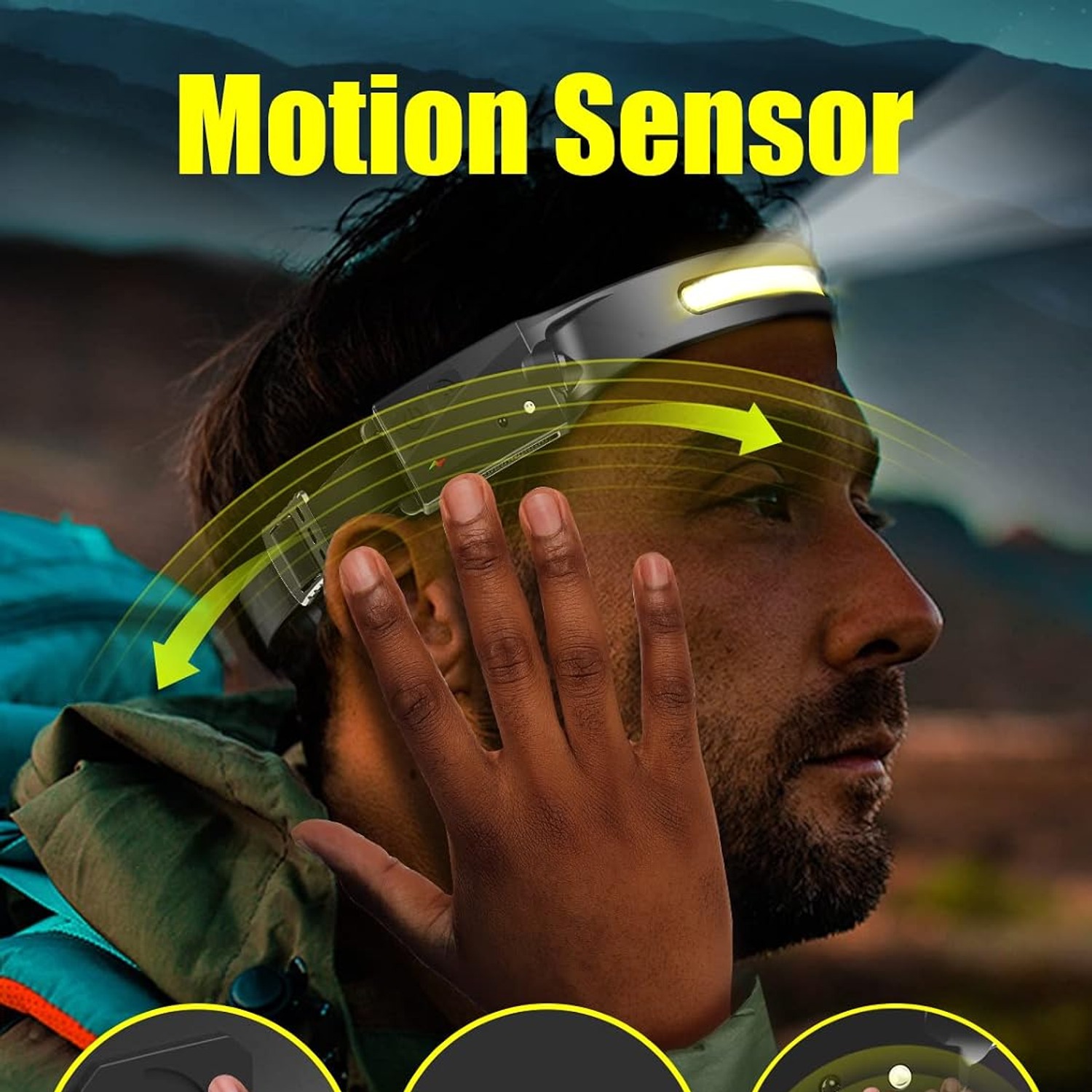
Wave a hand in front of the lamp and it turns on or off. No button, no pressure, no need to find the switch by feel. Think about when you actually use a head torch. Your hands are under a car with grease on them. You are gutting a fish. You are wearing thick gloves in the cold. You are carrying firewood with both arms. In every one of those situations, reaching up to press a button is either awkward or means stopping what you are doing.
There is a second benefit. Pressing a switch on your forehead knocks the lamp, which shifts the beam angle you carefully set. Waving does not. The light stays aimed where you put it.
Who this suits
Campers get the most obvious benefit, particularly with two lamps in the pack. One person can cook while the other sets up, and nobody is holding a phone torch in their teeth.
Anglers, especially night fishers, like the wide COB beam because it lights the whole area around their hands without blinding them off the reflection from wet surfaces. The hands-free switching is close to essential when you are handling line and tackle.
Cyclists and runners benefit from the 80 g weight. Heavy lamps bounce, and bouncing is what makes people give up on head torches for running. At 80 g with a soft silicone band, this one stays put.
Mechanics, electricians and general DIY types are arguably the core audience. A flood beam aimed at exactly where your hands are, with no need to touch the switch, beats a work lamp you have to keep repositioning.
Dog walkers, hikers and anyone who has to go outside in winter dark round out the list. And honestly, one lamp living permanently in a kitchen drawer earns its keep the first time the power drops out.
How to choose between modes and settings
A rough rule: use the lowest setting that lets you do the job.
For close work within arm's reach, COB at 40% is usually plenty. It saves the battery, reduces glare off bright surfaces, and keeps your night vision reasonably intact. Step up to COB at 100% for larger areas like a campsite table or an engine bay.
For walking, start with COB at 40% on a known path. On rough ground or an unfamiliar track, the spot at 40% gives useful reach without being harsh. Save the full spot for when you actually need to see something far off, because it drains the fastest.
The flashing mode is for visibility, not for seeing. Use it on a roadside or when you want to be spotted.
Runtime is listed at up to 8 hours, which applies to the efficient modes. If you run the full spot continuously, expect considerably less. For a night out, mixing modes is the practical approach.
Charging and battery care
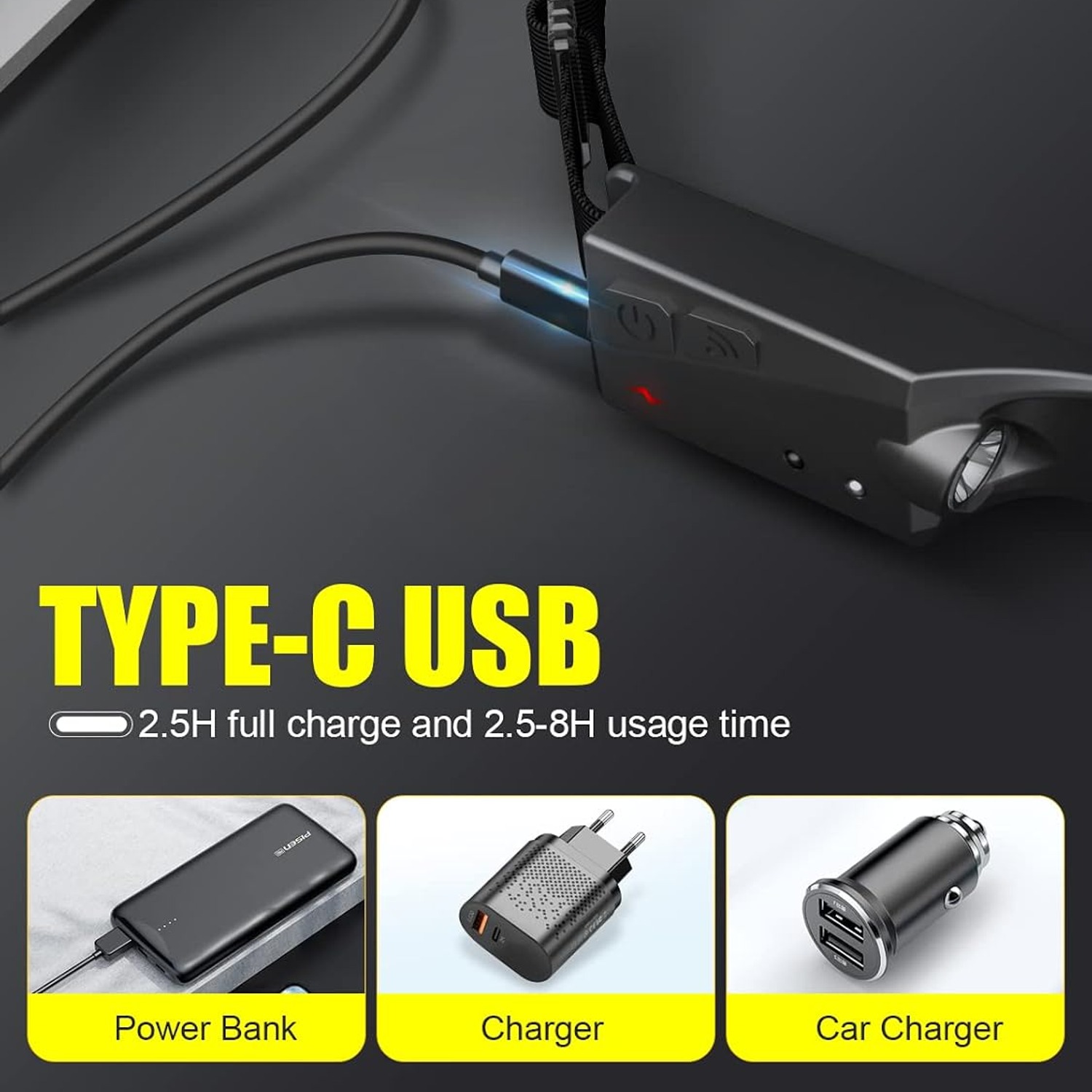
Charging is over USB-C with the included cable, taking around 2.5 hours from flat. The 1200 mAh lithium-ion cell is built in, so there is nothing to unscrew and no spare cells to buy.
A few habits make the battery last. Do not store it flat for months on end. If a lamp is going into the camping box until next season, charge it first and give it a top-up every couple of months. Avoid leaving it in a hot car, since heat is harder on lithium cells than cold is. And make sure the USB-C port is properly dry before you plug in, especially after a damp night out.
Because it charges from any USB-C source, a power bank or a car adapter keeps you going on longer trips. For a weekend away, one lamp charged and one as backup usually covers it.
Looking after the lamp
Care is straightforward. Wipe the ABS housing and the silicone band with a damp cloth and dry it before storage. Skip solvents and strong cleaners on the plastic. Rinse salt spray off with fresh water on a cloth rather than holding it under a tap.
Water resistance is rated IPX4. That means rain, spray and splashes are fine. Dropping it in a creek is not. If it does get a soaking, dry the port thoroughly before charging.
The silicone band will stretch out slowly with heavy use, which is normal for any elastic headband. Store it loose rather than stretched over a hook, and it will keep its shape longer.
The short version
If your current head torch has a narrow beam, needs batteries you keep forgetting to buy, and has a switch you cannot reach with dirty hands, this pack fixes all of that. Two lamps, 350 lumens each, a wide 230 degree flood for close work and a 300 metre spot for distance, USB-C charging, a motion sensor so you never have to touch it, and 80 g on your head.
Pick COB at 40% as your default, keep the spot for distance, and charge them every couple of months in storage. That is most of what there is to know.