
The complete guide
How to Choose an Adjustable Camping Table That Actually Earns Its Space
The problem with eating off your knees
Anyone who has camped for more than a weekend knows the moment. You have cooked a decent meal, the light is going, and there is nowhere flat to put anything down. Plates go on the ground. Drinks tip over in the grass. The stove sits on a wobbly rock and you spend the whole cook time watching it rather than enjoying it.
A small folding camp table solves a surprising amount of this for very little weight. It is not glamorous gear. It does not show up in photos the way a nice tent does. But it is the item people reach for on every single trip, which is more than you can say for half the kit in the car.
This guide covers what to look for, where an adjustable camping table beats a fixed one, and how to get the most out of a small surface.
What adjustable legs actually change
Plenty of camp tables come at one height, usually somewhere near standard dining height. That is fine if you always sit in a chair. It is less fine if you camp on a rug, use low chairs, or want the table as a stove bench instead of a dining surface.
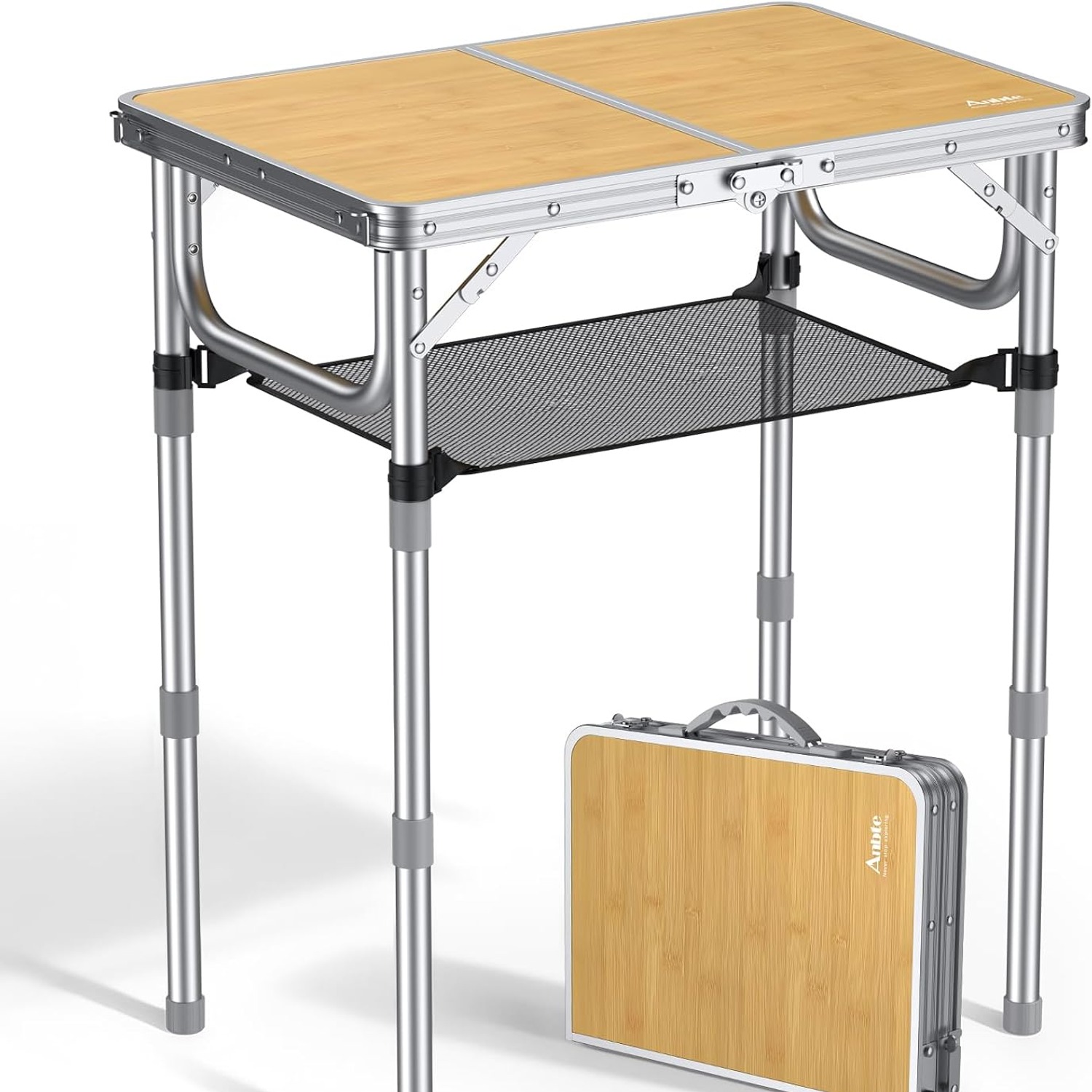
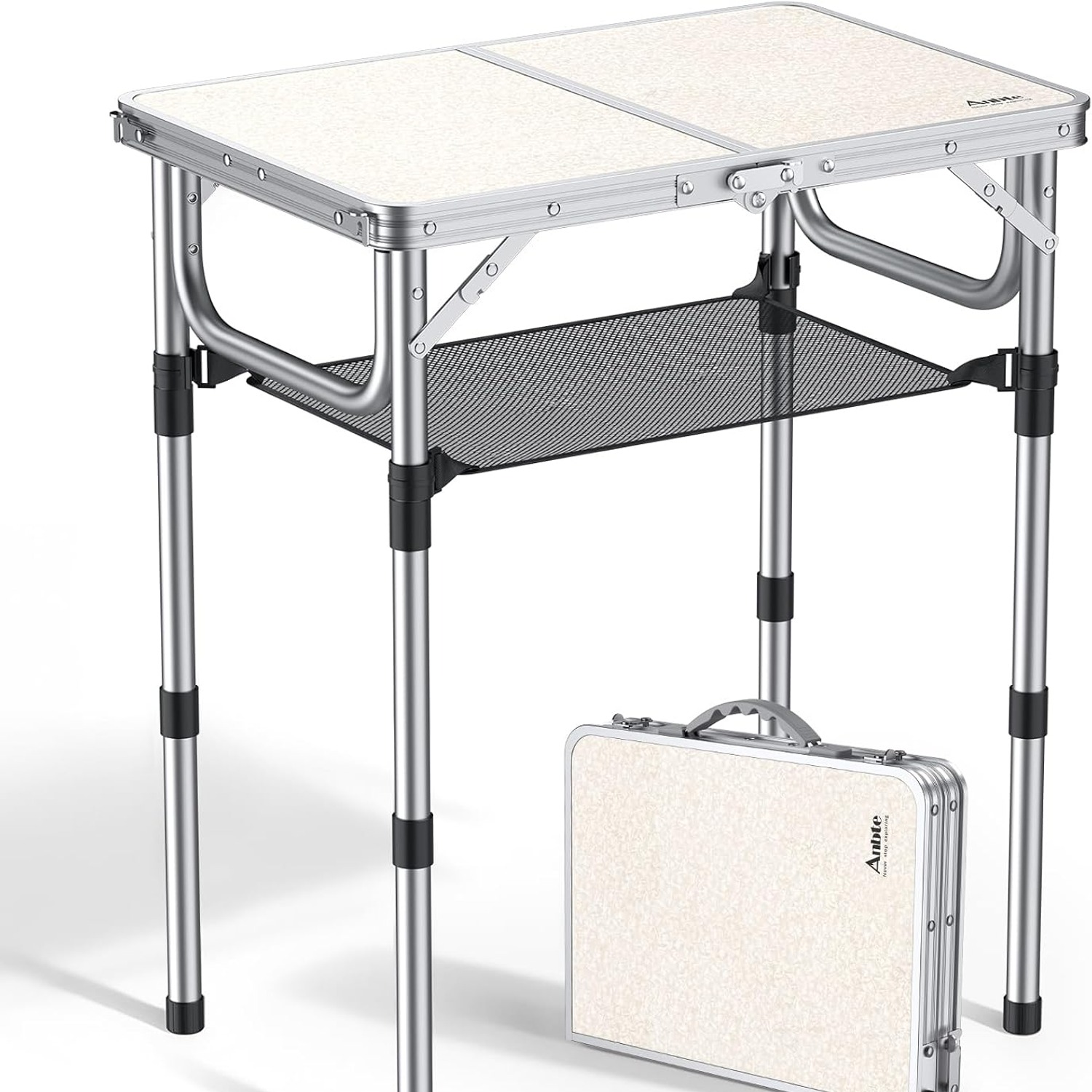
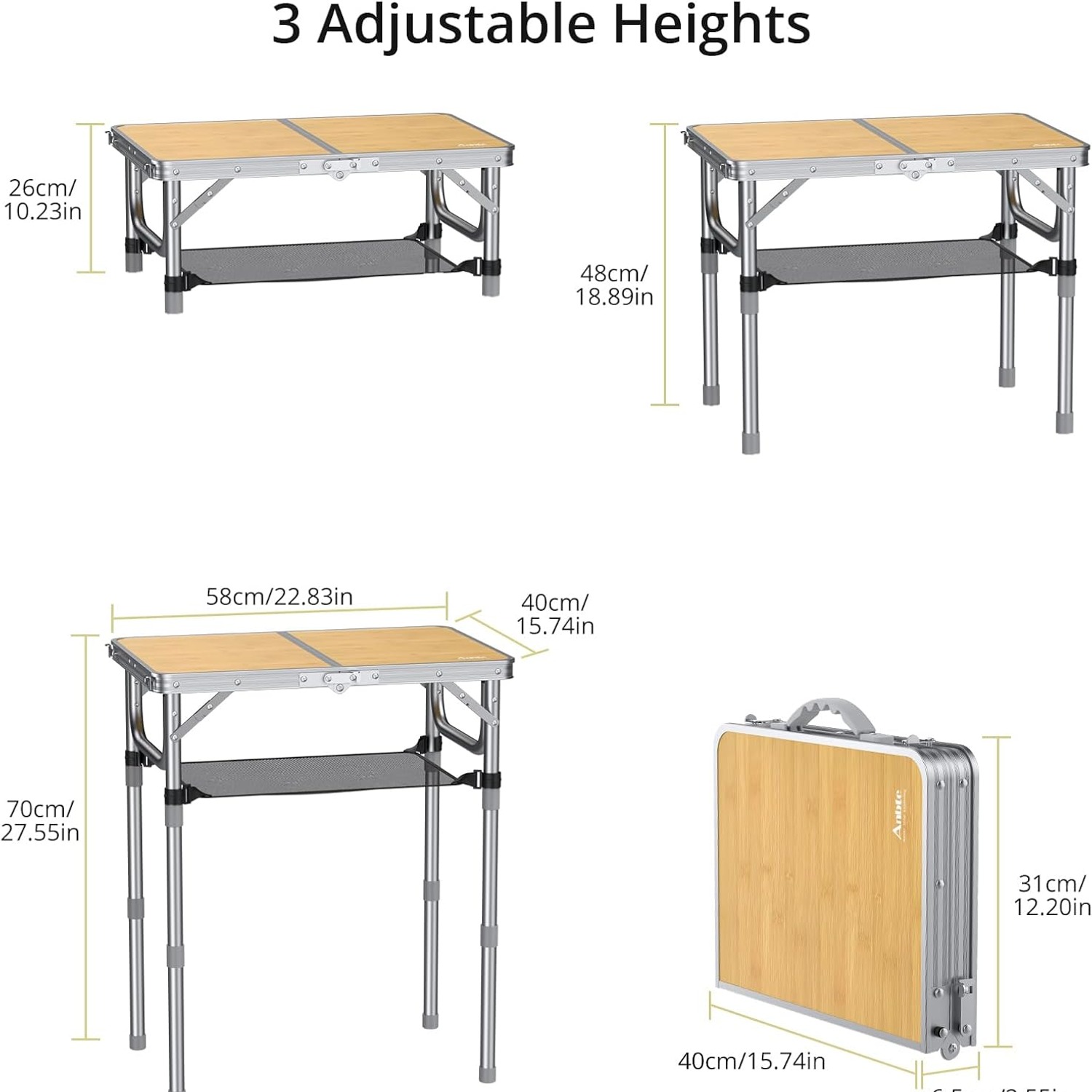
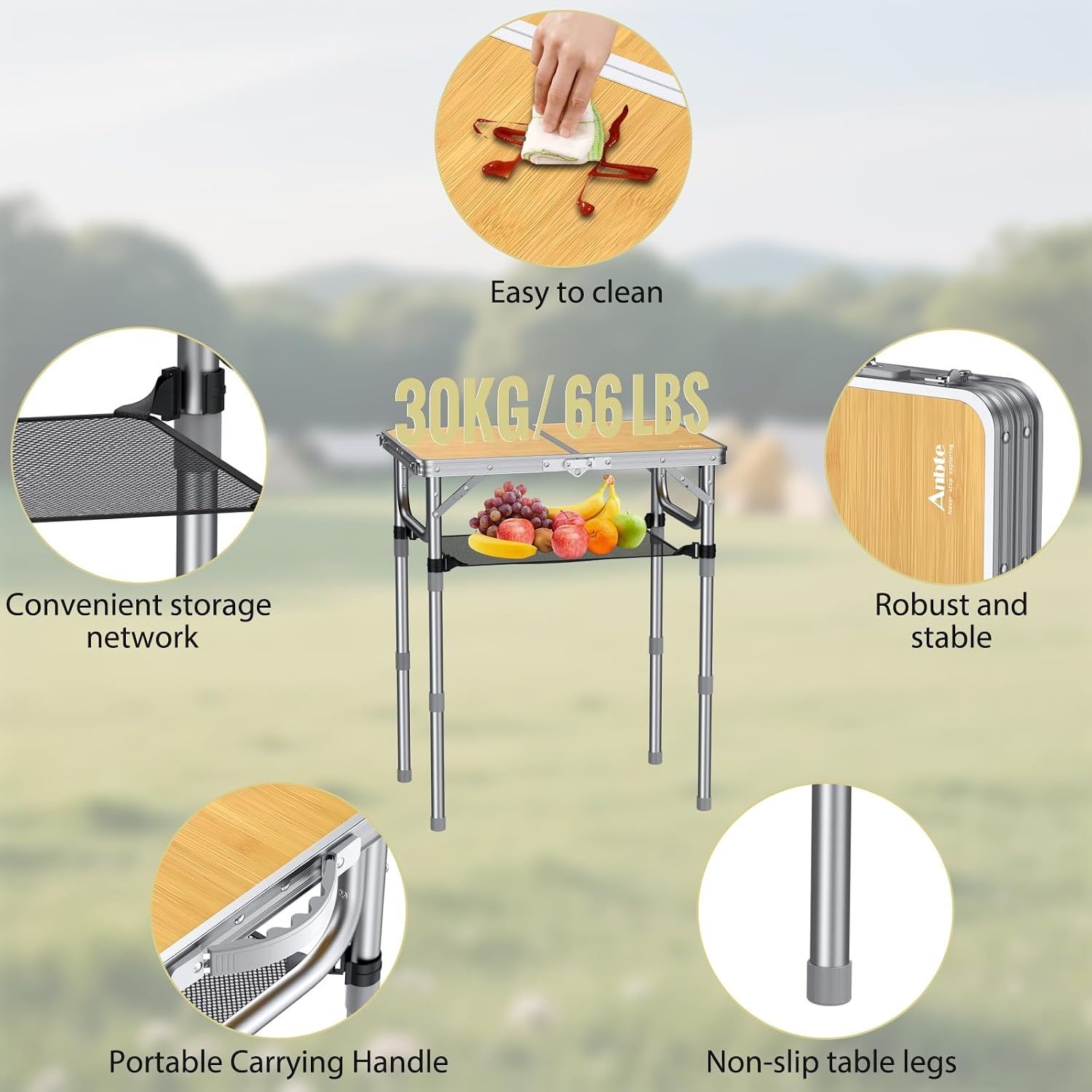
This table has three fixed leg heights, with the tallest giving an overall height of 69.9 cm. In practice that is three different tables:
Low setting. Picnic mode. Everyone sits on the ground or on a mat, and the table sits at a comfortable reach. Good for breakfast on a sunny morning, for beach days, and for kids.
Middle setting. Suits low camp chairs, the kind that sit you closer to the ground than a dining chair. Also useful as a boot-height prep bench when you are chopping or packing.
Full height at 69.9 cm. Lines up with a standard camp chair for proper meals. This is also the right setting for most portable stoves, since it puts the burner at a sensible working level.
Changing between them is a matter of pulling the legs out and reinserting them at the position you want. It takes seconds, so people genuinely do switch during a trip rather than just picking one and living with it.
Weight, size and why both matter
The table weighs 2.235 kg. That number does more work than it looks like it should. Camping gear is a tally, and every kilo you add to one item is a kilo you take from somewhere else, or a bit more fuel burned, or one more awkward trip from the car.
The set-up footprint is 57.9 cm wide by 39.9 cm deep. That is deliberately modest. It is enough for two full dinner settings, or one place setting plus a stove, or a cutting board and a bowl. It is not a family dining table and it does not pretend to be. The payoff is that it folds down small enough to live permanently in the car without arguing with everything else in the boot.
If you want a table for six people eating a roast, look at a full trestle. If you want a flat surface that shows up on every trip without being a hassle, this size is the sweet spot.
Materials and what they mean for daily use
The frame is aluminium. That is the reason the table is light while still holding a 30 kg recommended load. Aluminium does not rust the way untreated steel does, which matters for gear that spends its life in a damp boot or a caravan locker.
The top is engineered wood (MDF) with a painted finish. There are real advantages here. A solid panel gives you a genuinely flat surface, so a mug does not sit on a gap and a knife does not catch on a slat. The painted surface is smooth and listed as stain resistant, so coffee rings and sauce wipe off instead of staining.
There is one trade-off and it is worth being clear about. Engineered wood does not like being wet. The brand's own care guidance says not to use the table in wet or rainy conditions, and that is sound advice. If a storm rolls in, fold it down and put it under the awning. Dry it off after a splash. Treat it like a nice chopping board rather than a plastic tub and it will stay flat for years.
Two other care points come straight from the manufacturer. Do not put very hot items directly on the top, and keep the table away from fire. Use a trivet, a heat mat or a board under anything that has just come off a flame.
The storage net is more useful than it sounds
Under the tabletop there is a net. On paper it is a minor feature. In use it is one of the things people mention most.
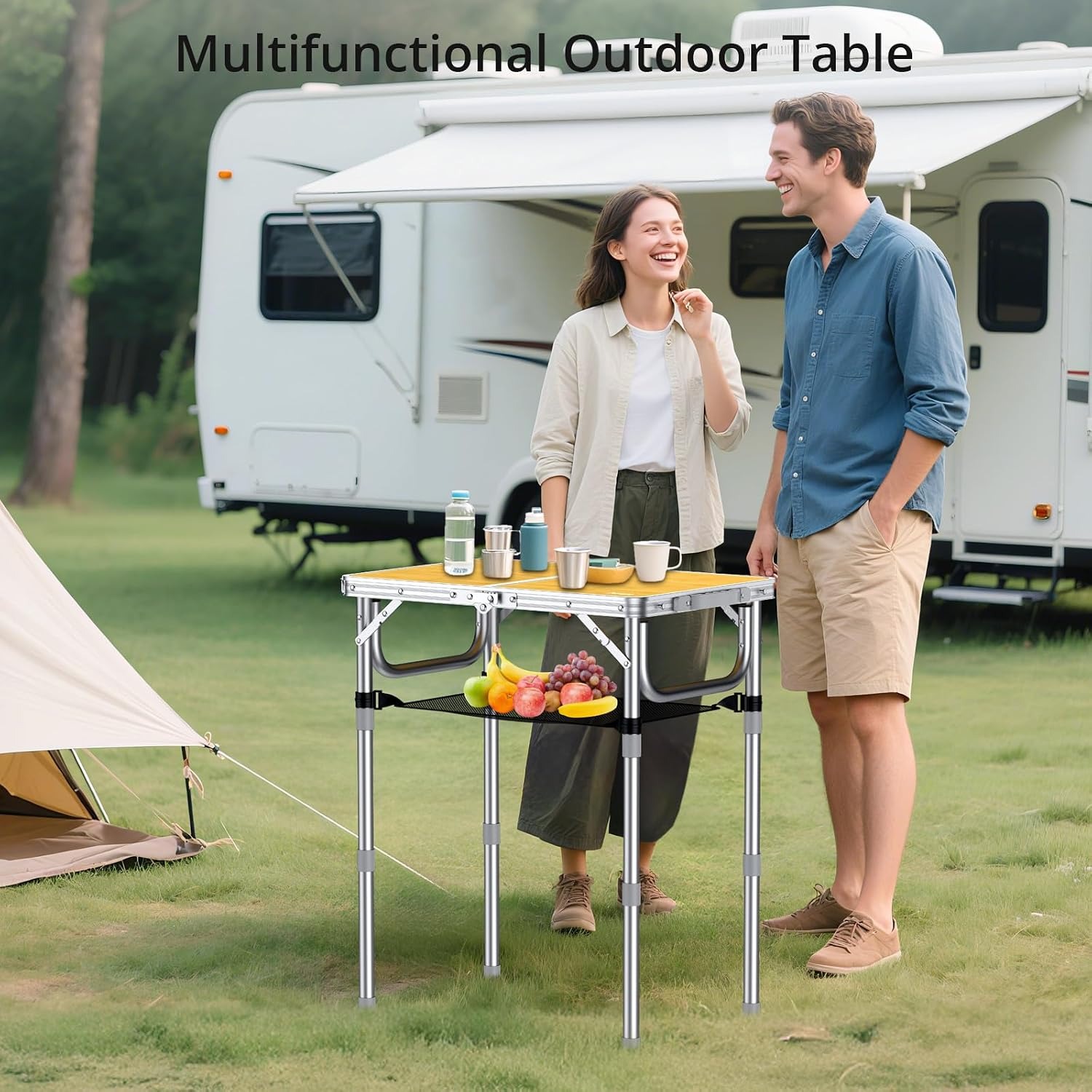
Campsites have wind, sand and sloping ground. Small items end up anywhere but where you left them. The net gives you a spot for cutlery, a lighter, a head torch, a tea towel, a phone, keys. Nothing heavy, just the handful of small things that otherwise live on the ground and get stepped on.
It also keeps the tabletop clear, which matters more than usual when the top is only 57.9 cm wide.
Who this suits
Car campers and caravanners. The obvious fit. Light, folds flat, lives in a locker, comes out at every stop.
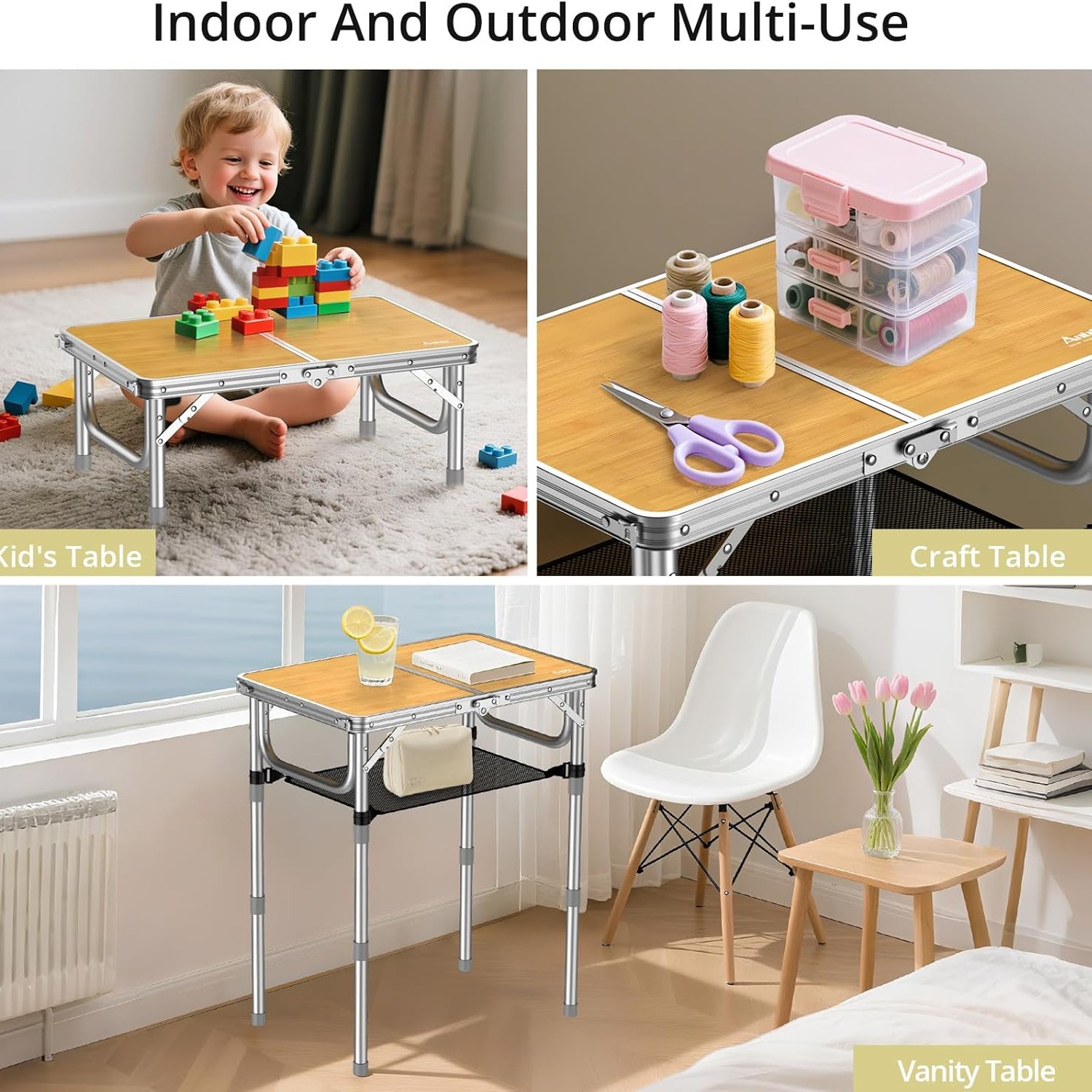
Day trippers and picnickers. Low setting, rug, done. A compact picnic table that is easier to carry than a hamper.
Anglers. Bait trays, tackle boxes and a drink off the ground. Keep it dry and wipe it down afterwards.
Tailgaters and sideline parents. Long days at sport or at an event where a flat surface is worth more than you expect.
People with small homes. Plenty of these tables end up indoors as a temporary desk, a craft surface or an extra side table that folds away.
It suits backpackers less well. Two kilos and a 57.9 cm panel is a lot to carry on your back for multi-day hiking. This is a table you drive to the site with.
Setting it up properly
Three habits make a noticeable difference to how steady it feels.
First, find level ground. Every portable table feels worse on a slope, and this one is designed for use on a flat surface. Thirty seconds spent scuffing out a level patch beats an evening of wobble.
Second, after inserting the legs, press gently in the middle of the top. That seats everything and confirms the panel has locked flat rather than sitting slightly proud.
Third, keep the load sensible. Thirty kilograms is the recommended maximum and most camp setups come nowhere near it, but weight concentrated on one corner behaves differently to weight spread evenly. Put the heaviest item, usually the stove or a full water container, over a leg rather than in the middle of a long edge.
Looking after it
Clean it after use rather than at the end of the trip. A damp cloth, a little mild detergent, then dry it. That is the whole routine.
Avoid scouring pads on the painted surface, since scratches are where moisture gets in. Brush grit off the leg ends before you collapse them so nothing grinds inside the tubes. Store it dry, out of direct sun, and do not stack heavy gear on the folded table.
Done consistently, this takes about a minute a trip and adds years to how long the table stays flat and good looking.
The short version
If you camp from a car, caravan or a day bag in the boot, a table is one of the highest value items per kilo you can carry. This one is light at 2.235 kg, sets up in roughly a minute, and gives you three heights so it works for picnics on the ground and for proper seated meals.
The aluminium frame keeps it light and rust free. The engineered wood top gives you a genuinely flat, wipe-clean surface, with the trade-off that it needs to stay out of the rain. The storage net underneath is quietly one of the best bits.
Buy it if you want a compact, flexible surface you will use on every trip. Look elsewhere if you need seating for six or a table that lives outside year round.