


The complete guide
How to Choose a Camping Air Mattress That Actually Lets You Sleep
The problem with sleeping on the ground
Most people do not give up on camping because of the weather. They give up because of the sleep. You lie down tired, and then a stone you missed at dusk presses into your shoulder blade, the cold works its way up through the groundsheet, and by three in the morning you have shifted position twenty times and given up on the whole idea.
Ground is harder than it looks and colder than it feels when you are standing on it. A thin mat does very little about either problem. What you actually need is depth, enough air between you and the dirt to flatten out the lumps and stop heat draining away. That is the job a proper camping air mattress does, and it is the single biggest upgrade most campers can make.
How a foot pump sleeping mat works
A standard inflatable pad needs lungs or a pump. Lungs are slow, leave you dizzy, and push warm moist breath into the mat where it sits for the rest of the trip. A separate pump is one more thing to carry, and the electric ones need charge you may not have.
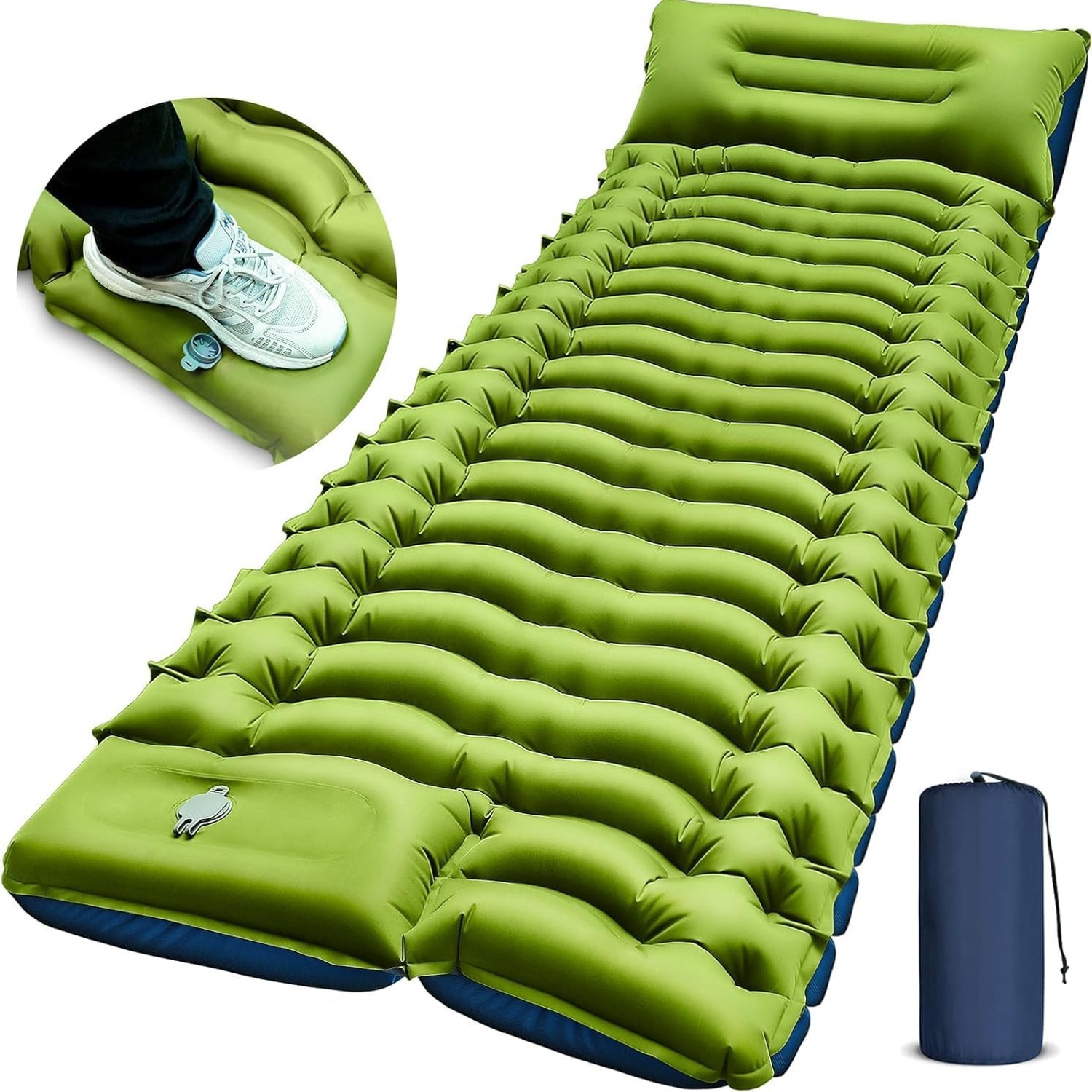
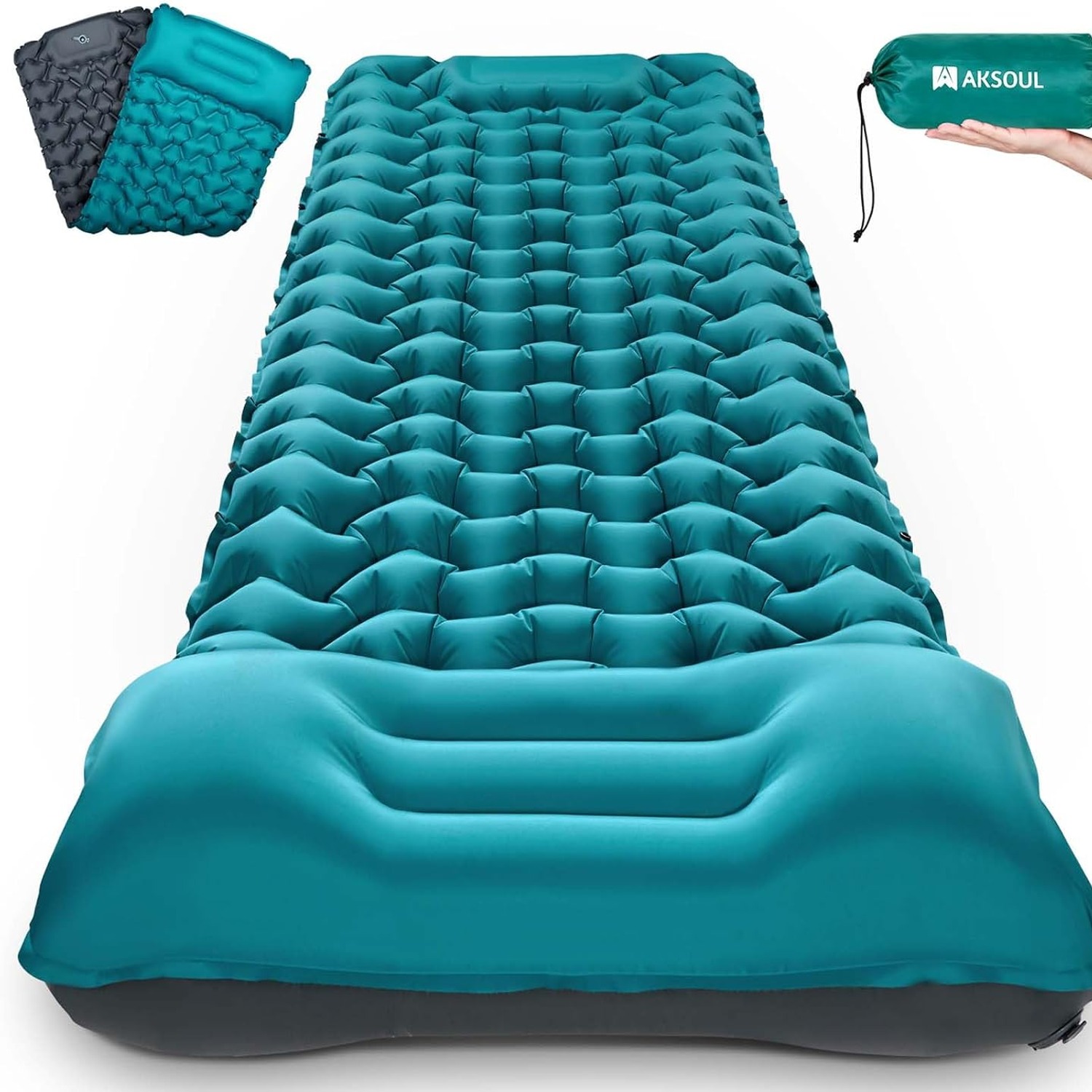
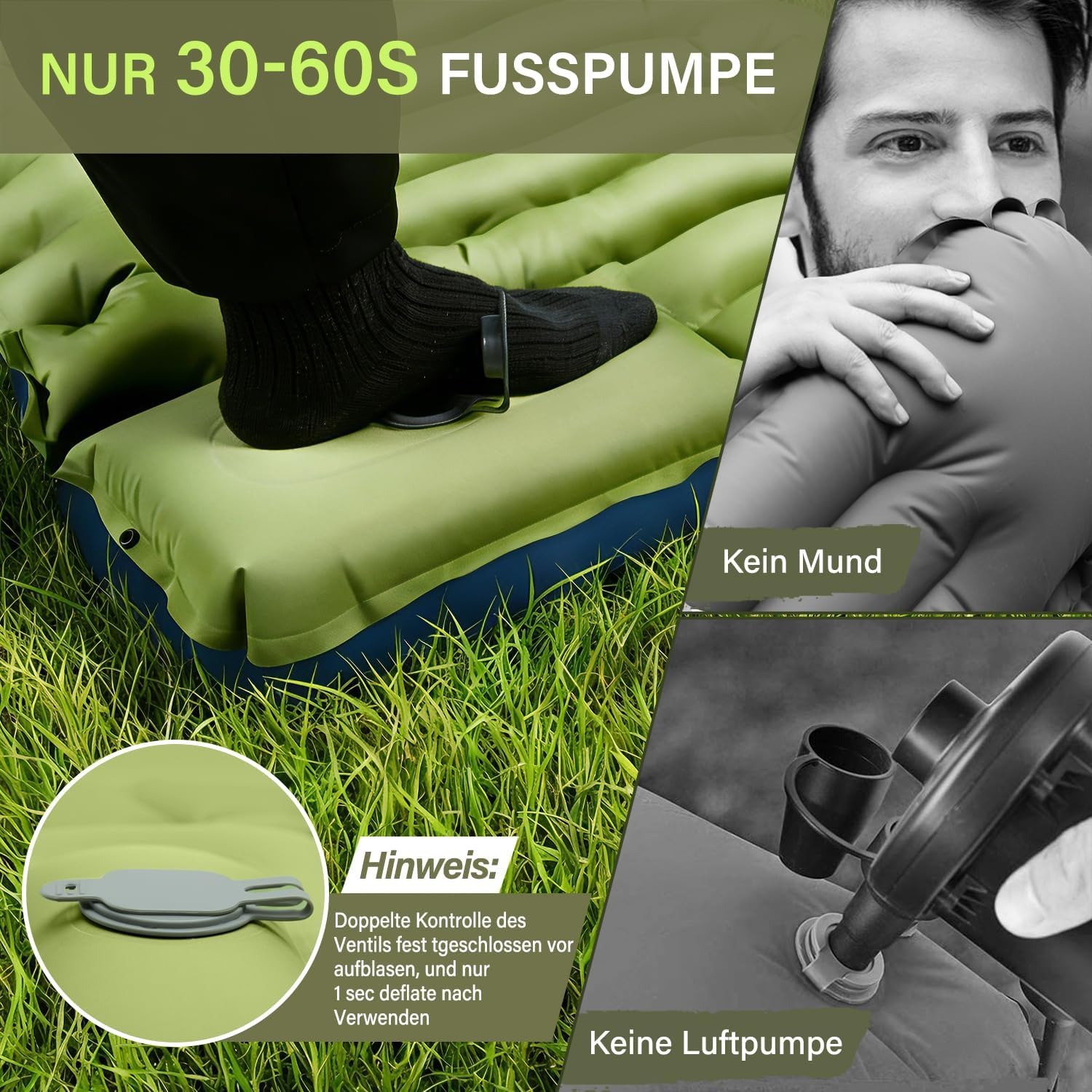
A foot pump sleeping mat puts the pump inside the mat itself. There is a pedal section you press with your foot, and each press moves a slug of air into the main body. Pedal for 30 to 60 seconds and it is full. The mat is a single-layer air cell structure, which means the inside is divided into strips rather than being one big balloon. That makes a real difference to how it feels. In a single-chamber mat, air shifts away when you lie down and gets pushed around every time you roll over. Separate cells hold air where you are, so support stays under your hips and shoulders instead of migrating to your feet.
Deflation runs the other way. Open the valve and the air leaves in about a second. On a wet morning when everything needs packing fast, that matters more than you would expect.
Thickness, width and why both matter
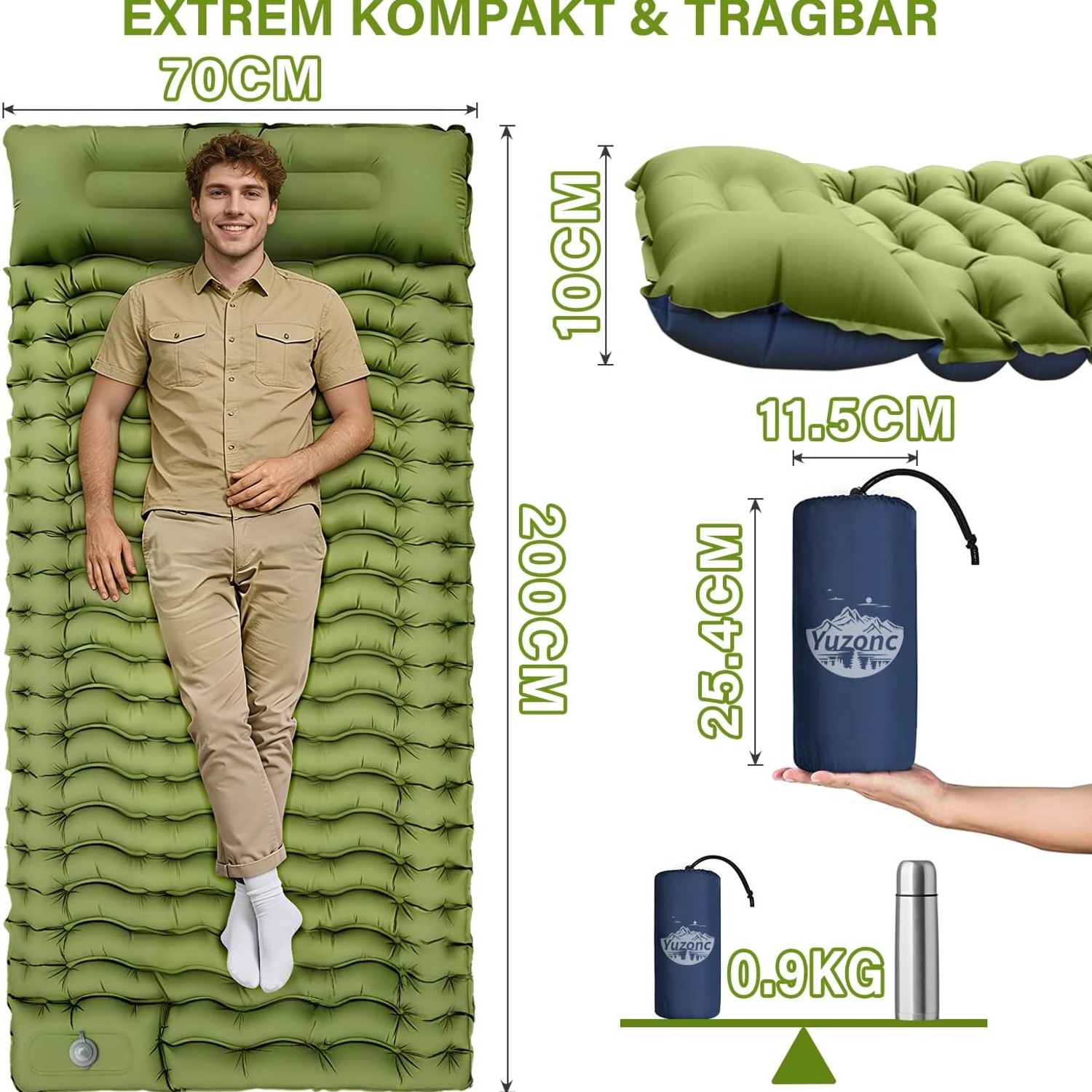
This mat inflates to 195 x 68 x 10 cm. Take those numbers one at a time.
The 195 cm length suits most adults with a little room at the ends. The 68 cm width is noticeably more generous than a minimal hiking pad, which tends to sit nearer 50 cm. That extra width is what stops your elbow from flopping onto cold nylon every time you turn. If you are a restless sleeper, width is worth more than almost any other spec.
The 10 cm thickness is the headline figure. Ten centimetres of air means that small stones, roots and the ruts left by other tents mostly stop registering. You can feel the ground shape through a 3 cm pad. At 10 cm you generally cannot, and that is the difference between waking up stiff and waking up normal. Firmness is adjustable too, so you can let out a little air for a softer surface or fill it right up for firmer support.
The built-in pillow
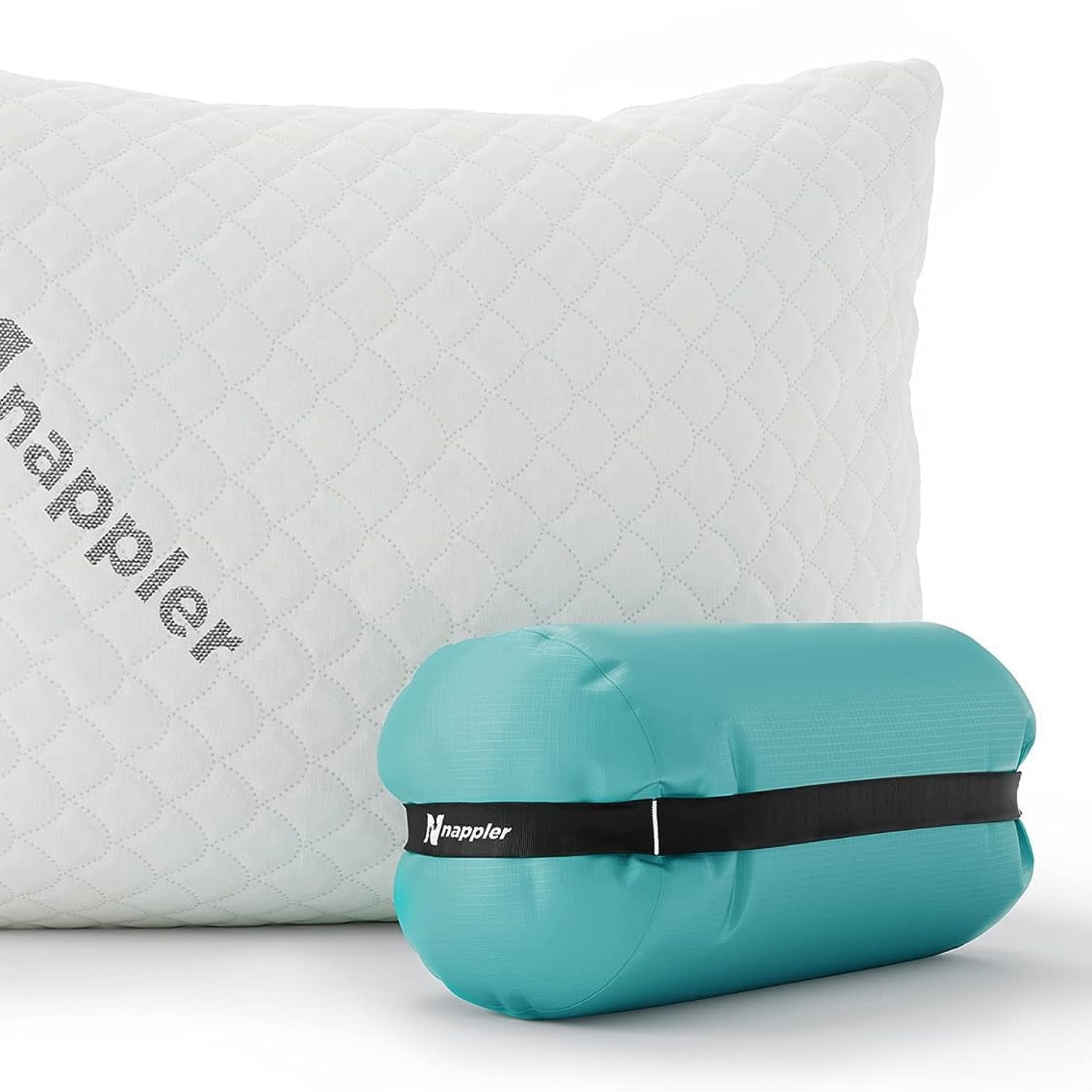
Pillows are the thing people forget. You either carry one that eats half your pack, stuff a jumper into a stuff sack, or sleep flat and wake with a sore neck.
This mat has an integrated cushion at the head end. It is part of the mat, inflates with the mat, and means there is nothing extra to remember. For most people that is enough on its own. If you are particular about neck support, you can still put a small travel pillow on top and the cushion gives it a base to sit on rather than sliding off onto the floor. Anyone shopping for the best sleeping mat with built-in pillow is really buying back pack space, and that is exactly what you get here.
Materials, water and wear
The cover and top material are nylon, and the surface is listed as waterproof. In practice that means condensation inside the tent, dew, spilled drinks and damp grass will sit on the surface rather than soaking in. Wipe it off and carry on.
Nylon also handles being dragged, folded and stuffed into a bag more gracefully than softer fabrics. It is not armour, though. The one real enemy of any inflatable mat is something sharp. Clear the pitch properly before you put the tent up. Sweep away sticks and stones, use a groundsheet, and check the tent floor for grit before you unroll. Do that and punctures are rare. Skip it and you will eventually meet a thorn.
Making it a double
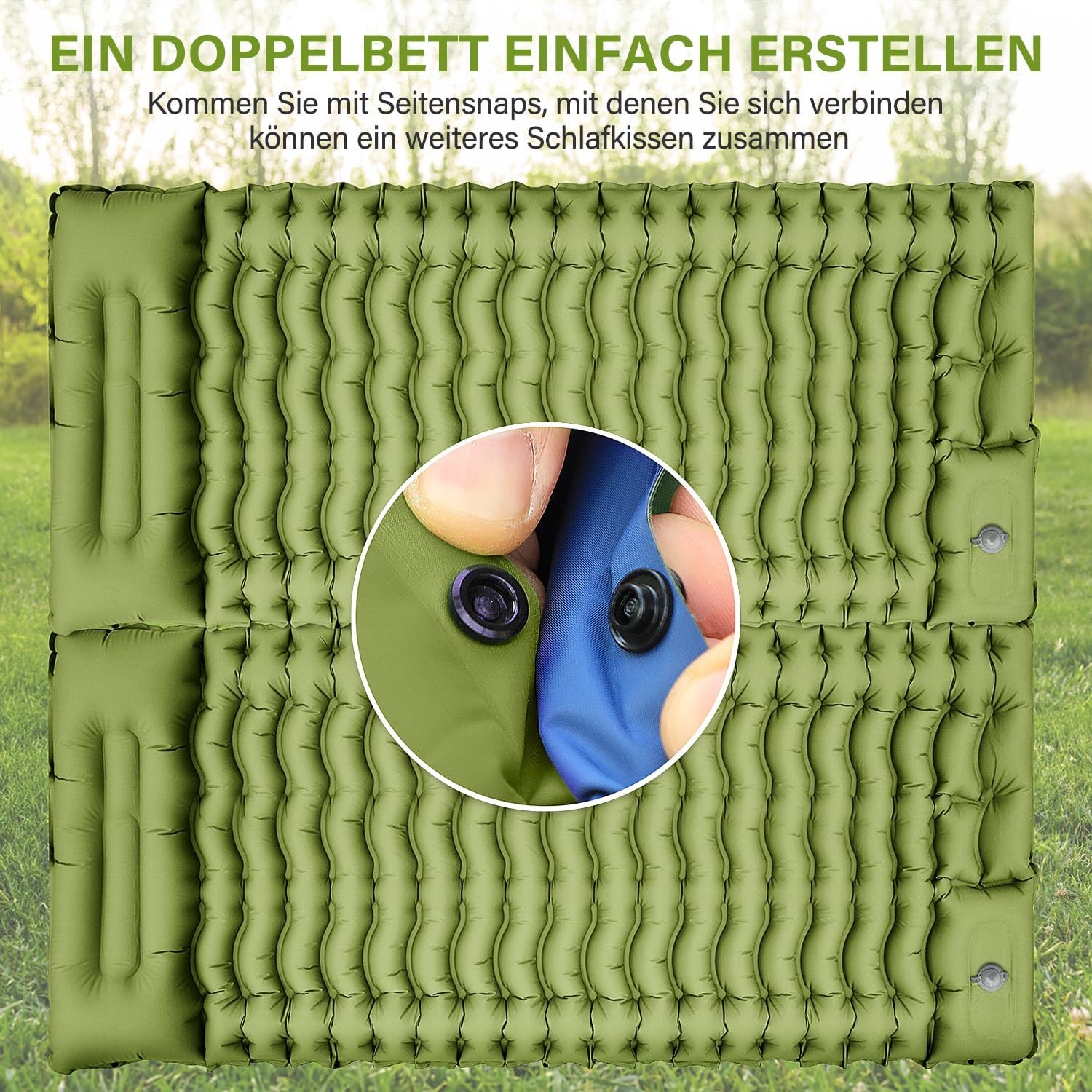
There are buttons along the side of the mat. Connect a second mat and you have a double sleeping surface that does not separate in the night, which is the usual complaint about two singles side by side in a tent.
This is worth thinking about before you buy. If you camp as a couple, two of these joined is a tidier solution than one big double air bed, because you can still split them for solo trips and each person can set their own firmness. For families, the same trick lets you build a wider sleeping area in a larger tent.
Who this suits
It fits a fairly wide range of use. Car campers like it because setup is fast and there is no pump to pack. Hikers and backpackers like it because it rolls into its own bag and goes inside the pack. Festival goers like it because the ground at a festival is always awful and nobody wants to carry an air bed across a field.
It also earns its keep at home. A rolled-up mat in a cupboard is a spare bed when someone stays over, a nap mat for the back of a van, or a floor layer for a kid's sleepover. Maximum weight capacity is listed at 250 lb, which covers most adult users comfortably.
Who it suits less well is anyone chasing the absolute lightest ultralight setup where every gram is counted, or anyone camping in genuinely cold alpine conditions where a dedicated insulated pad with a measured R-value is the right tool. For general three-season camping, travel and guest use, this does the job.
Looking after it
Care is simple. Spot clean, or wipe with a damp cloth and a little mild soap. No machine washing, no tumble dryer, no bleach, no iron.
The most important habit is drying. Open the valve, let the mat air out fully, and only then roll it. Moisture sealed inside a rolled mat is how smells and mildew start. Store it loosely rolled or flat rather than compressed hard, somewhere dry, and keep it away from sharp tools in the shed or the boot of the car.
If you do get a leak, it is usually fixable. Find it with soapy water, dry the area, and apply a standard inflatable repair patch. Most mats are retired because of neglect rather than damage.
The short version
If your camping sleep is poor, the mat is almost always the reason. This one gives you 10 cm of air, a generous 68 cm width, a nylon waterproof surface, a foot pump that fills it in under a minute, and a pillow you do not have to pack. It joins to a second mat for a double, and it rolls into a bag small enough to carry.
Clear your pitch properly, dry it before storage, and let a little air out if you sleep on your side. Do that and it should see you through a lot of trips.