
The complete guide
How To Choose A Kids Sleeping Bag That Actually Keeps Them Warm
The 2am problem
Ask any parent who has camped with young children and you will hear the same story. The evening goes beautifully. Marshmallows, torches, giggling in the tent. Then somewhere around two in the morning, a small voice says "I'm cold," and the rest of the night is spent shuffling jumpers and sharing bags.
That moment is almost never caused by a dramatic drop in temperature. It is caused by three ordinary things. The bag is too big, so the child's body cannot warm all that empty air. The head is uncovered, and heat pours out of it. Or there is nothing but a thin tent floor between the child and cold ground.
A good kids sleeping bag deals with the first two. You deal with the third by putting a mat underneath. Get those pieces right and children sleep through, which is the whole point of the trip.
Why a child's bag, not a spare adult one
The instinct is to hand a child the old adult bag from the garage. It seems thrifty. It usually backfires.
An adult bag is roughly 220 cm long. A child of 130 cm leaves nearly a metre of empty bag below their feet. Their body has to heat all of that air, and it cannot. They end up colder in a bigger bag than they would be in a smaller one.
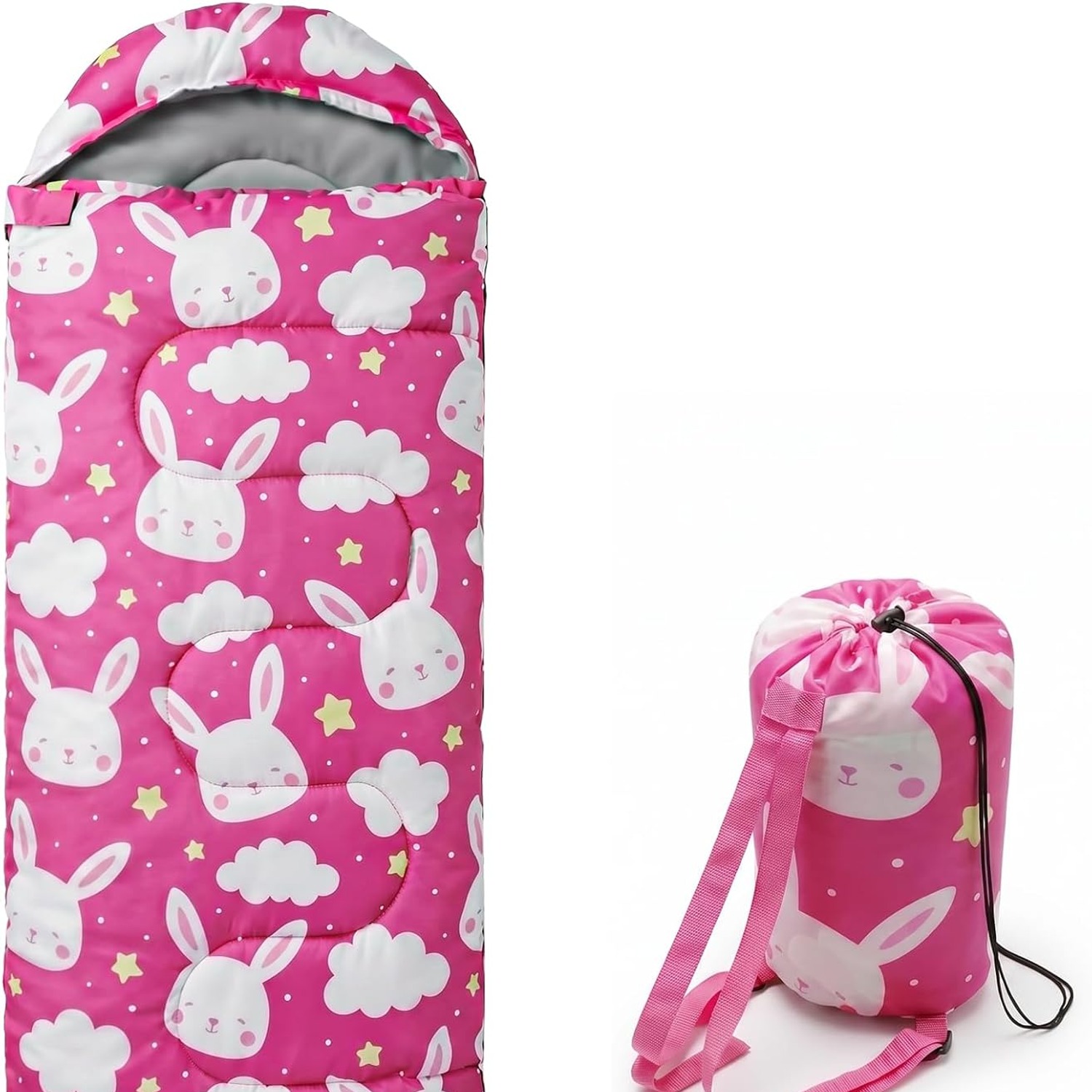
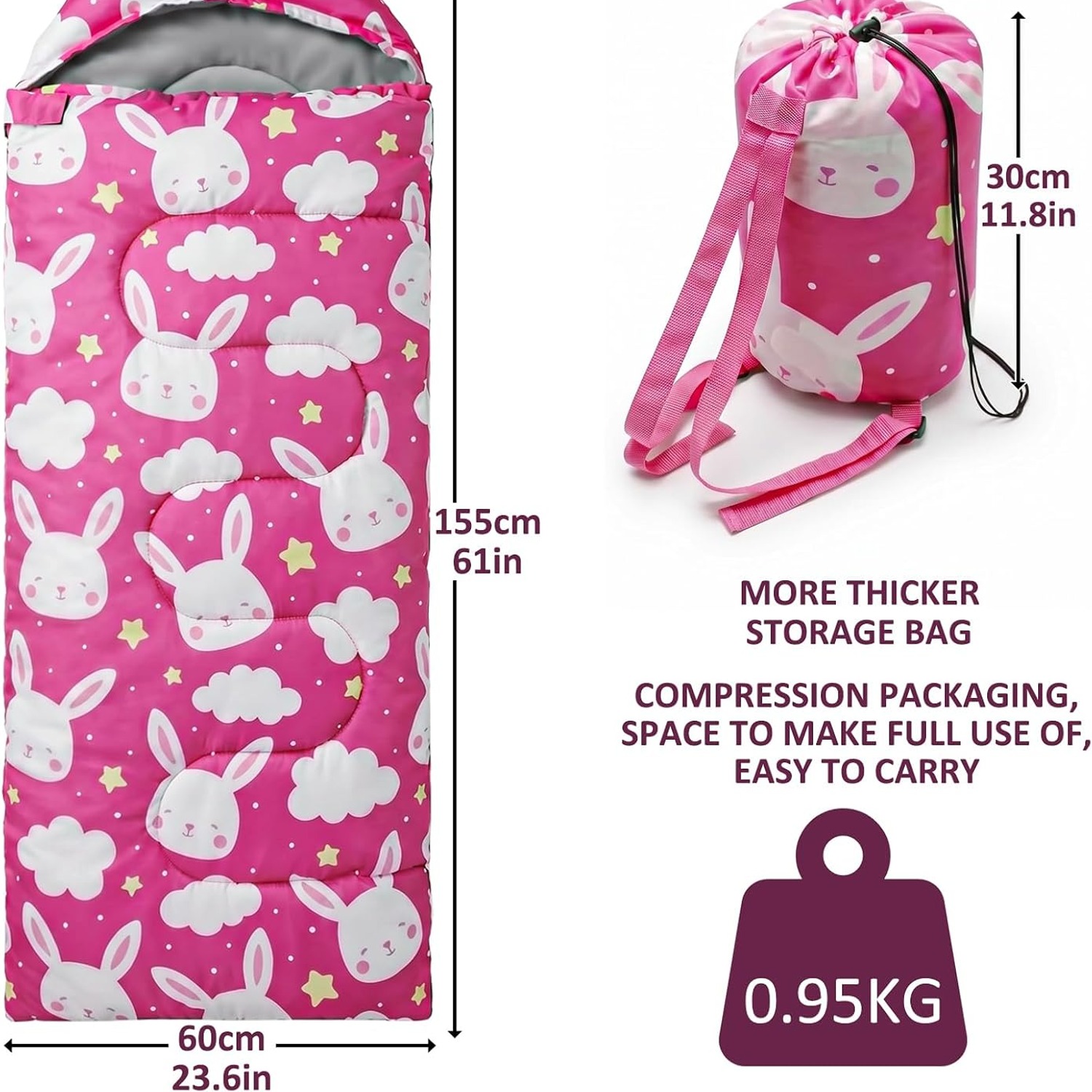
This bag is 155 cm long and 60 cm wide, sized for campers up to 155 cm tall. The dead space is minimal, so the warmth the child produces stays close to them. That single difference does more for a cold sleeper than any amount of extra fill.
The second reason is weight. At 0.95 kg, this is something a nine-year-old can strap to their own pack and carry across a campsite. Children who carry their own gear tend to care about their own gear, which is a small lesson that lasts.
What the materials actually mean
The shell, lining and fill here are all polyester. That is worth understanding rather than skipping past.
Synthetic fill like polyester has one main advantage over down for children, it keeps more of its warmth when it gets damp. And things get damp. Spilt water bottles, condensation on a tent wall in the morning, a muddy boot dragged in at the wrong moment. Down clumps and stops insulating when wet. Polyester carries on doing its job and dries faster afterwards.
The other advantage is washing. A polyester kids sleeping bag goes through a gentle cold machine cycle without specialist detergent or a trip to a cleaner. If you have ever tried to wash a down bag properly, you will appreciate how much simpler that is.
The trade-off is bulk and weight. A down bag of the same warmth would pack smaller. For children's camping, where trips are short and the pack is going in a car most of the time, that trade is an easy one to make.
Reading the three-season label
"Three seasons" means spring, summer and autumn. It is a general guide rather than a precise promise. This bag is listed with a comfort temperature rating, though a specific degree range is not given in the product details we hold, so treat it as a mild-weather bag and plan accordingly.
In practice that covers most of what families actually do. Summer holidays, school camps in the shoulder seasons, backyard tents, festivals, caravan parks. It is not a bag for frost on the tent in the middle of winter.
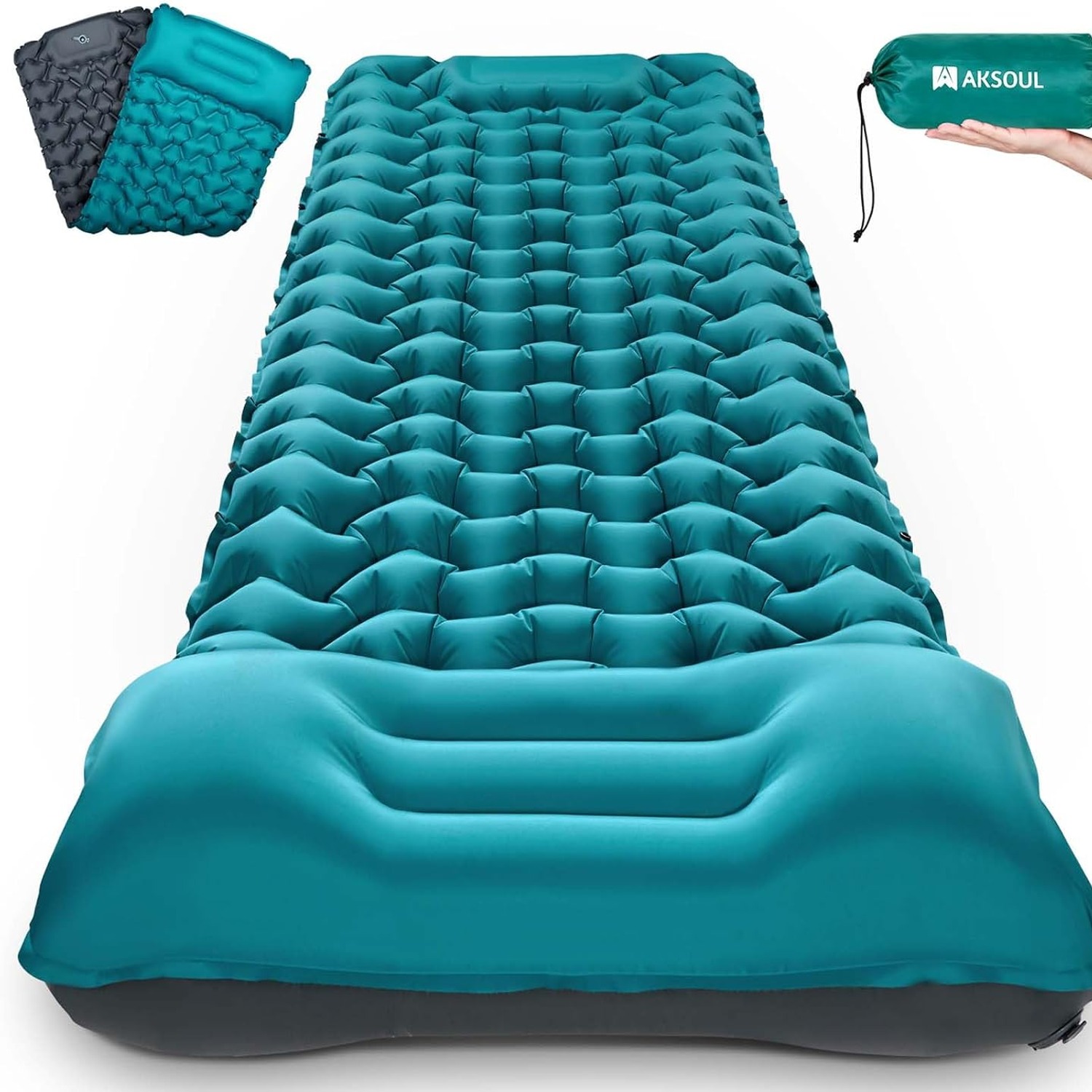
If you are heading somewhere genuinely cold, the fix is layering rather than a different bag for one trip. A thermal liner adds warmth inside the bag. Dry thermal leggings and a long-sleeve top worn to bed help a lot, as does a beanie. And a decent insulated mat underneath matters more than people expect, because the ground pulls heat out of a sleeping body all night long.
The features that earn their place
Some sleeping bag features are marketing. A few genuinely change how the night goes.
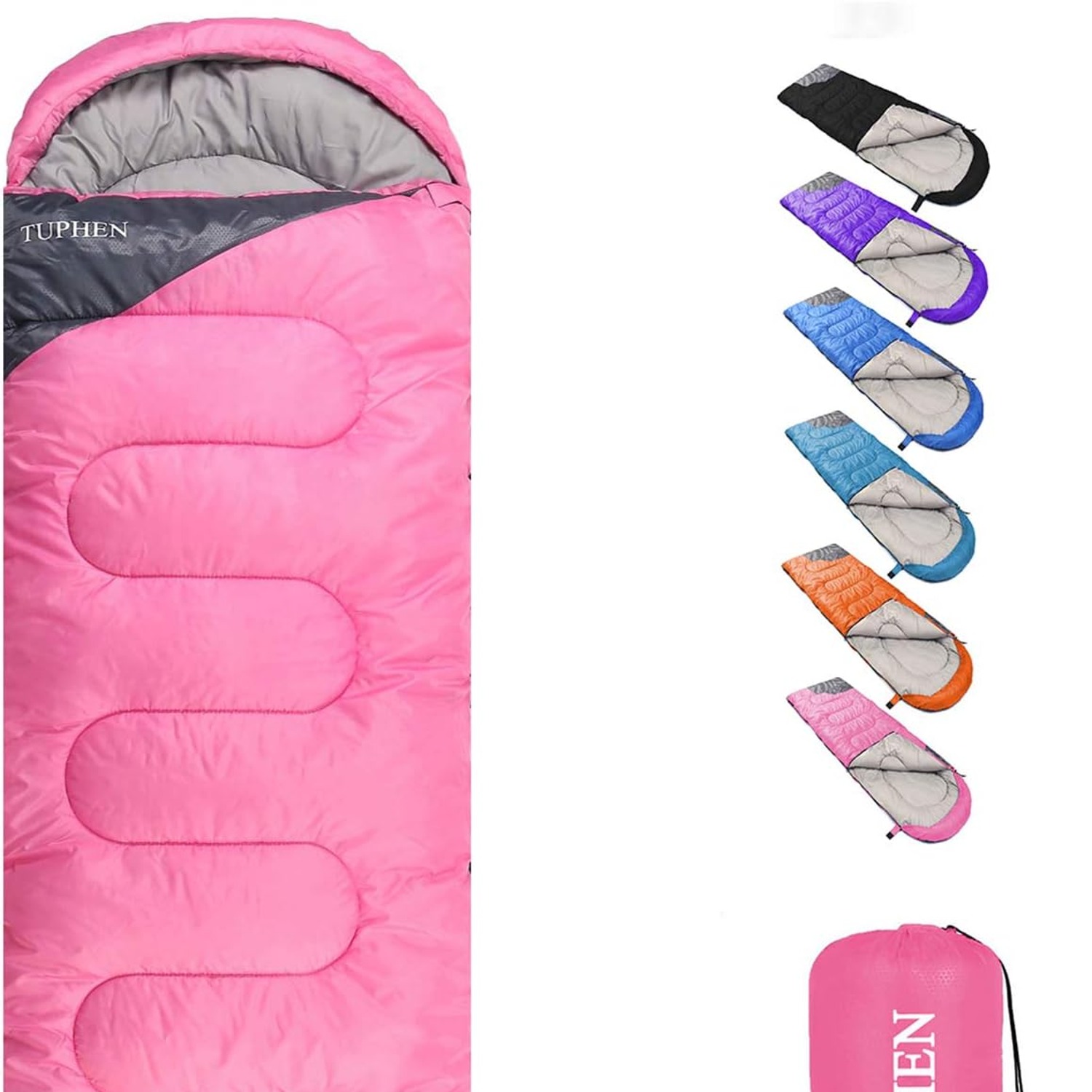
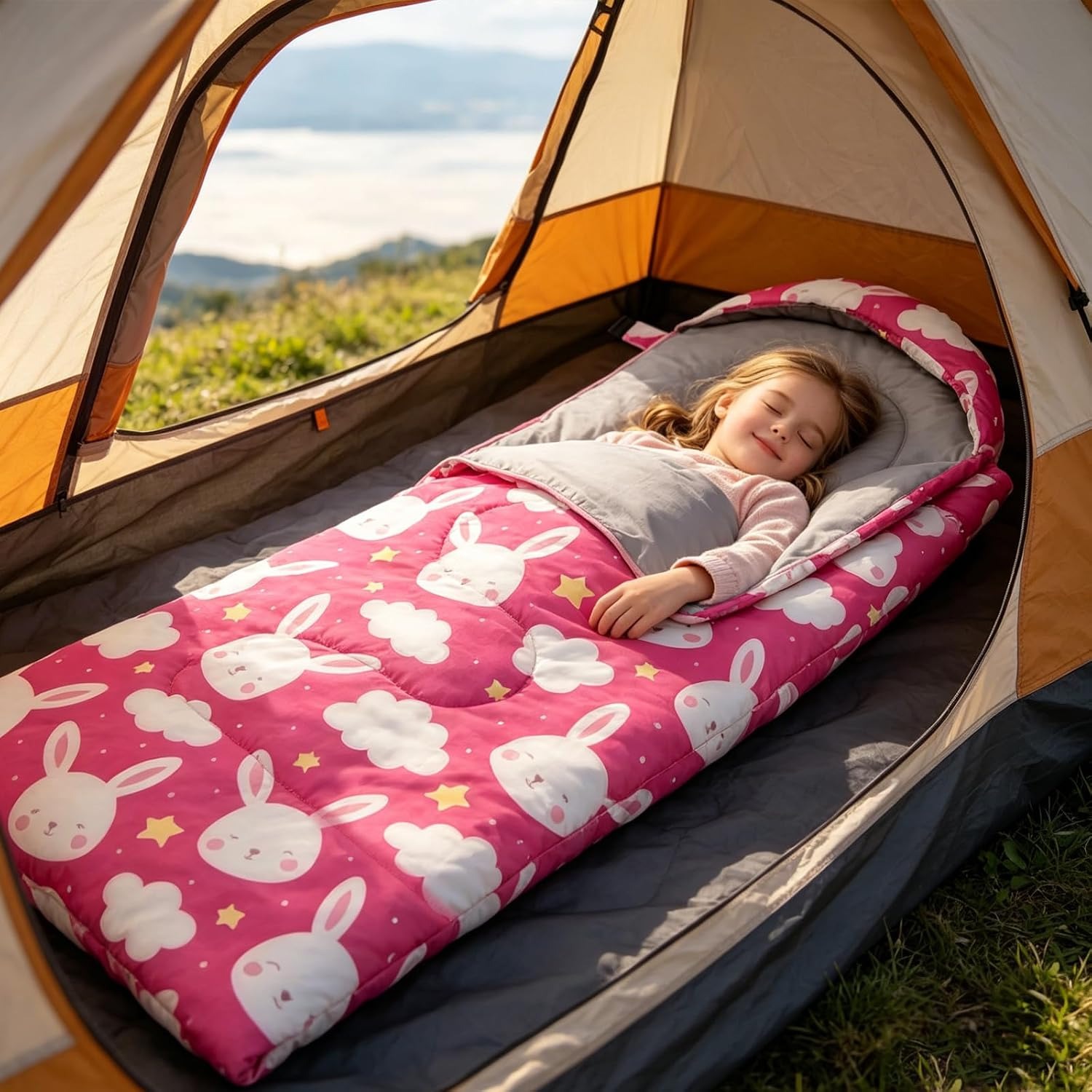
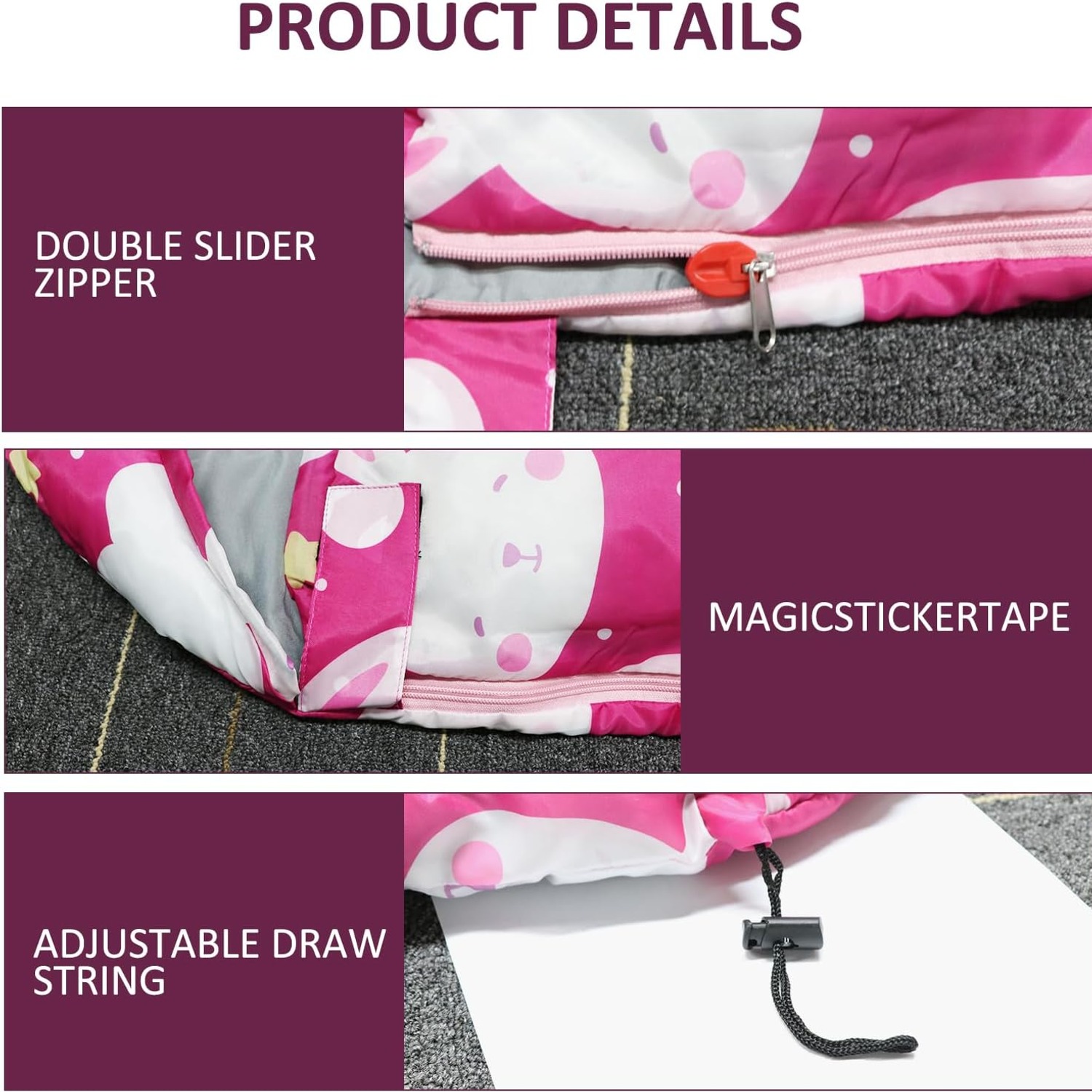
The hood is the big one. Here it is a half-round shape with an adjustable drawstring, so you can pull it in close around a child's head. Children lose a lot of heat through an uncovered head, and a hood that cinches is the cheapest warmth you will ever get.
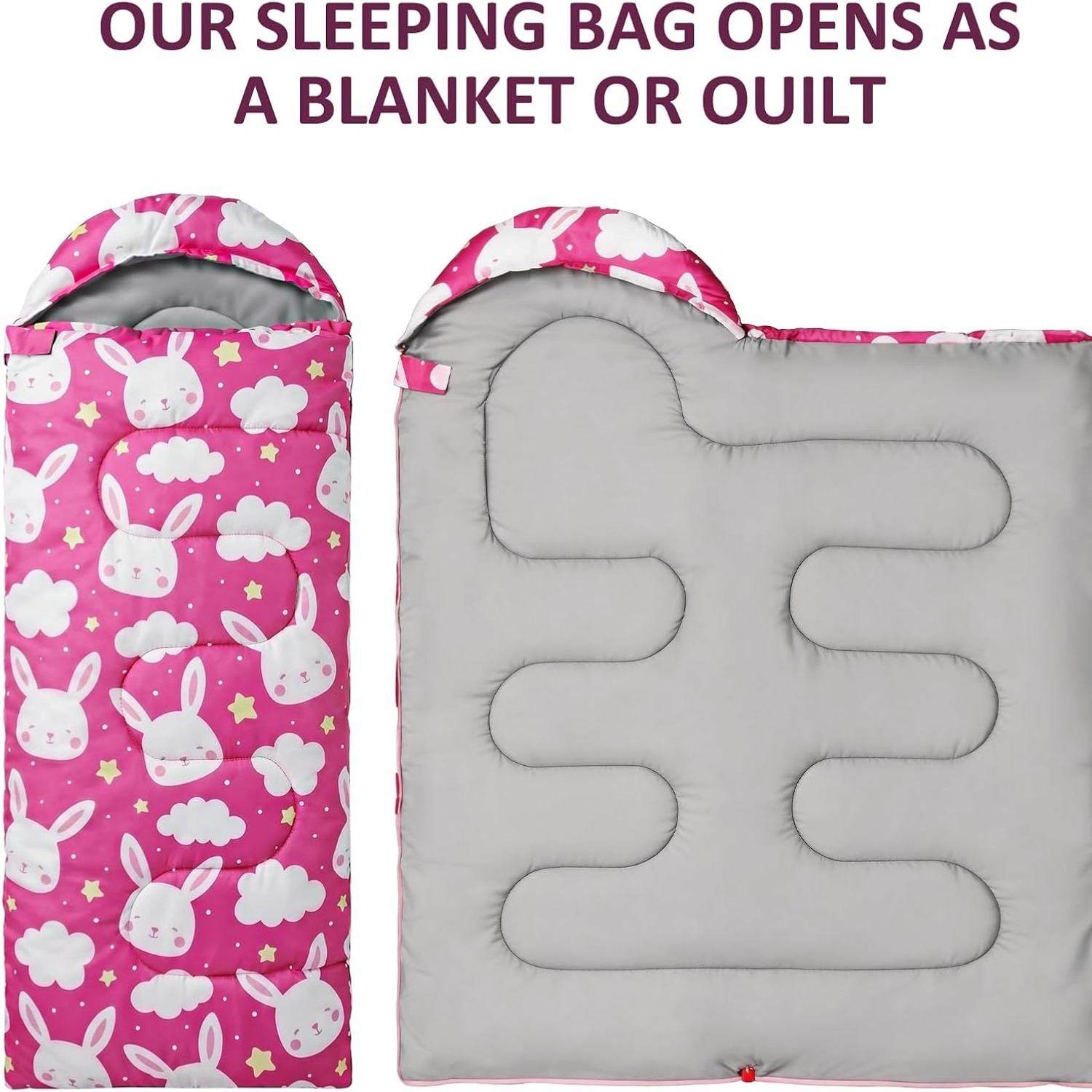
The full-length zipper matters for a different reason. It means the bag opens out completely flat. On a hot night at a coastal campsite, that turns a sleeping bag into a quilt, which is often the difference between a child sleeping and a child complaining. Indoors on a lounge-room floor, flat is usually what you want anyway.
Then there is the separate zip opening at the foot. It sounds like a small thing. It is not. Children run hot, and a child who can stick their feet out of the bottom without unzipping the whole side stays settled instead of waking everyone up. Temperature regulation at the feet is how a lot of kids self-manage overnight.
The carry sack with compression straps is the feature parents end up valuing most. Packing up on the last morning is always rushed. A sack with straps that pull the bundle down tight gets a 0.95 kg bag into the car in under a minute.
Matching the bag to the child
Think about how your child sleeps at home before you think about camping.
A child who kicks off blankets every night will want the bag unzipped or the foot vent open most of the time. They are a warm sleeper and this bag will be plenty. A child who burrows under a doona in summer is a cold sleeper, and you should plan on a liner, warm sleepwear and a good mat from the start.
Size matters too, but not the way you might think. Buying several sizes too big to "grow into" is the one mistake worth avoiding, because the extra space makes the bag colder right now. The 155 cm length here already gives a typical primary-school child plenty of room to grow before they need an adult bag.
For scout groups and school camps, check the kit list before you buy. Some groups specify a minimum temperature rating and it is easier to confirm first than to argue at drop-off.
Looking after it
Care is simple, which is most of the point of a synthetic bag.
Wash it by hand or on a gentle cold machine cycle with a mild detergent. Skip the fabric softener, it coats the fibres and flattens the loft. For everyday marks, a damp cloth is enough and saves a full wash.
Dry the bag completely before it goes away. A bag packed slightly damp develops a smell that is very hard to shift. Air drying is best, and a gentle breeze does most of the work.
Storage is where people go wrong. The compression sack is for travelling, not for the cupboard. Leaving a bag squashed for months compresses the fill and it never quite bounces back. Keep it loose under a bed, on a shelf or hanging in a wardrobe between trips and it will stay warm for far longer.
Beyond camping
Worth saying plainly, a lot of these bags barely see a tent. Sleepovers, cousins visiting, the spare room at grandparents', a long car trip, a festival, a school hall. A childrens camping sleeping bag that packs into its own sack is simply a portable bed, and children treat it as theirs in a way they never treat a borrowed blanket.
That is also why it works as a gift. It arrives complete, it needs nothing added, and it gets used within a week.
The short version
If your child is under 155 cm, camps or sleeps over in mild weather, and you want one light item that packs into its own bag, this covers it. Polyester shell and fill, 0.95 kg, full-length zipper, foot vent, drawstring hood, carry sack included.
Add a sleeping mat if they are sleeping on the ground. Add a liner and a beanie if the forecast turns cold. Store it loose, wash it cold, and it should see your child through several years of camps.