
Camping Company
Company
Shop By Category
T&Cs
Shop Online
  • Clear materials and product specifications
  • Free tracked delivery across Ireland over €120
  • 14-day returns

Heavy Duty Tent Pegs | Steel Tent Stakes | Camping Ground Pegs

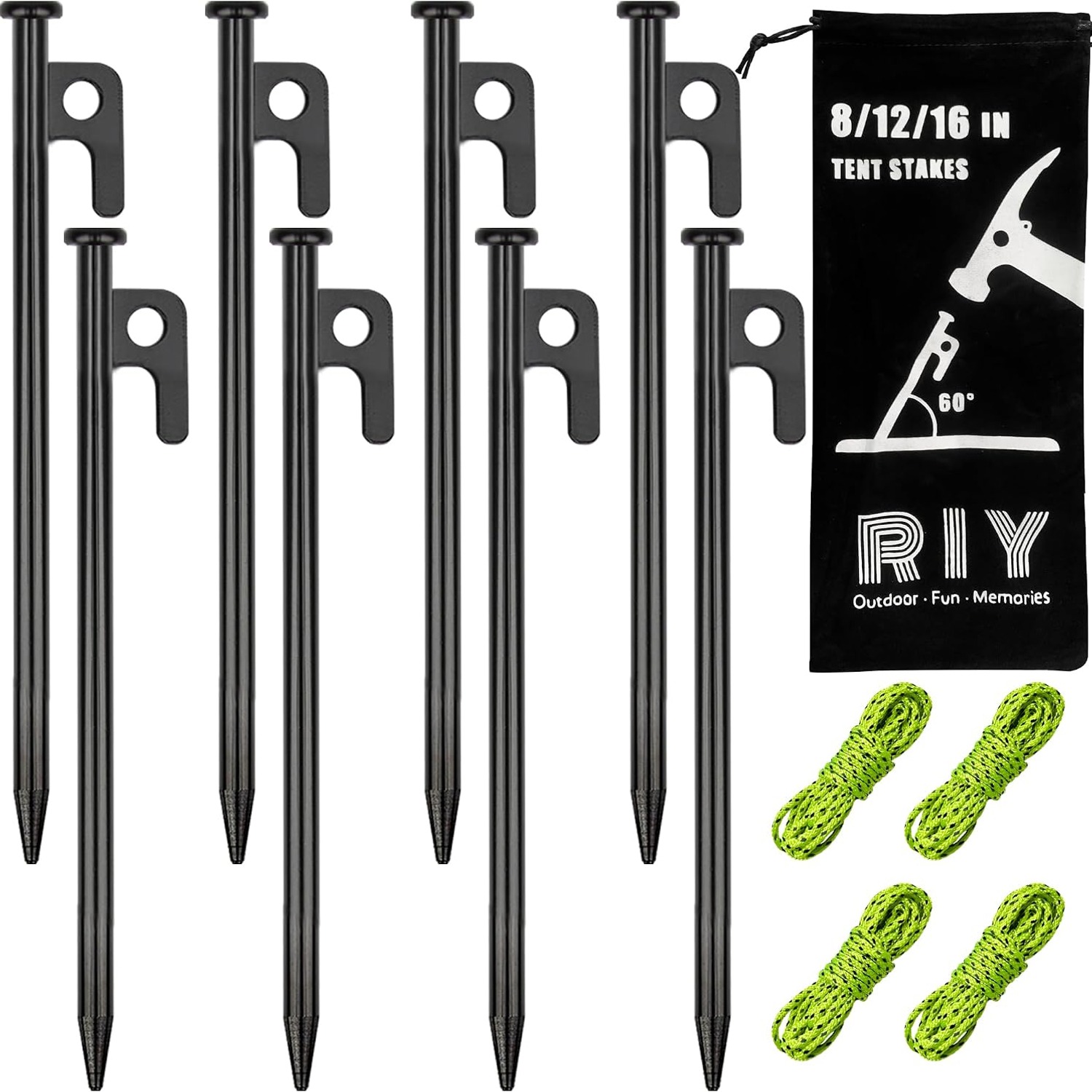
Heavy Duty Forged Steel Tent Pegs (8 Pack)

€45.99
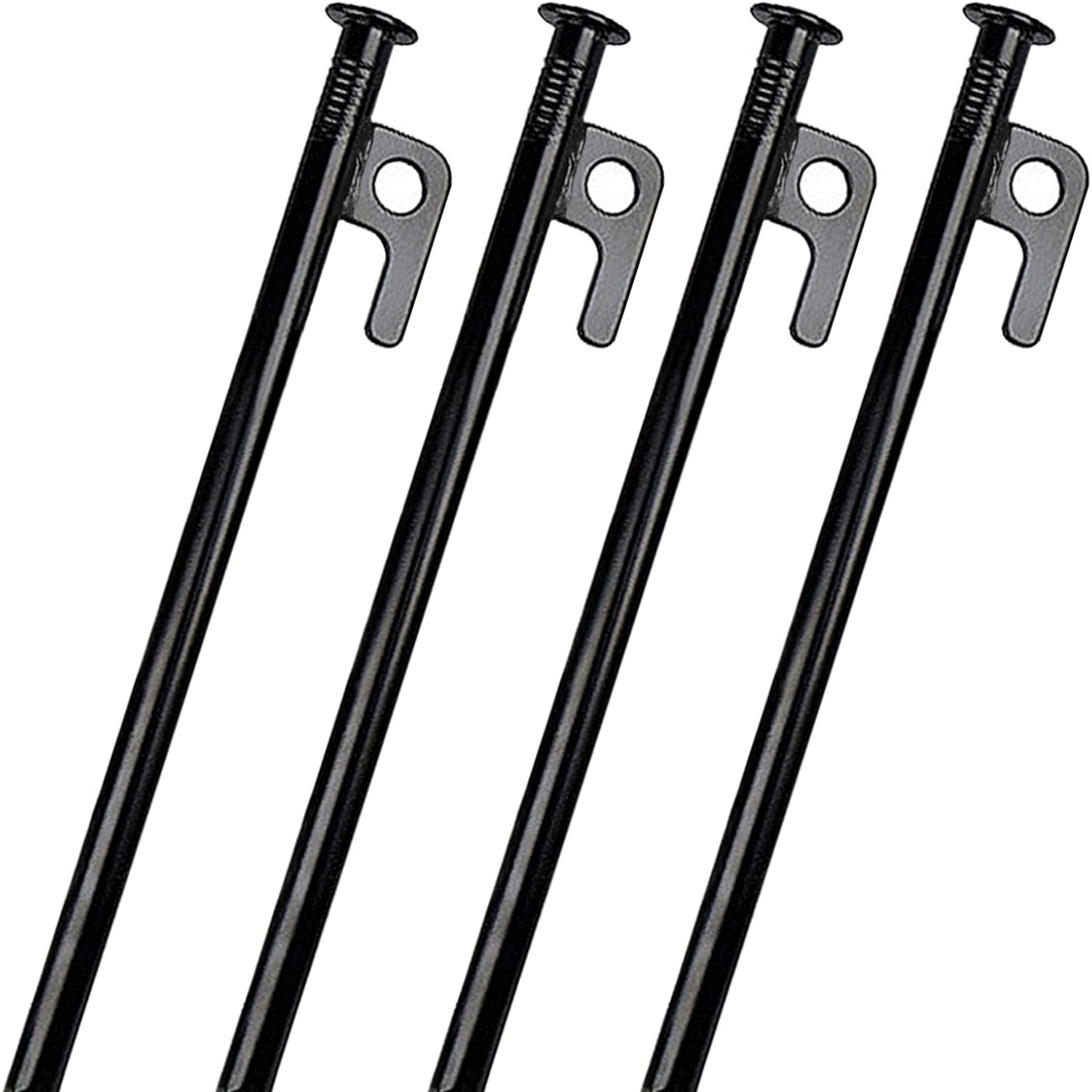
  • Forged Steel Build
  • Sharp Driving Tip
  • Wide Striking Head
  • Set Of Eight

Price: €45.99

  • Free tracked delivery across Ireland on orders €120+, otherwise a flat €15
  • Pay by card or PayPal, handled by the payment provider
  • 14 days to change your mind, plus your statutory rights
Product specifications
BrandRIY
ManufacturerRIY
Model NumberRIY-20cm-DD16
Manufacturer Part NumberRIY-20cm-DD16
StyleTent Stake
MaterialForged Steel
ColourBlack
Item Length8 inches
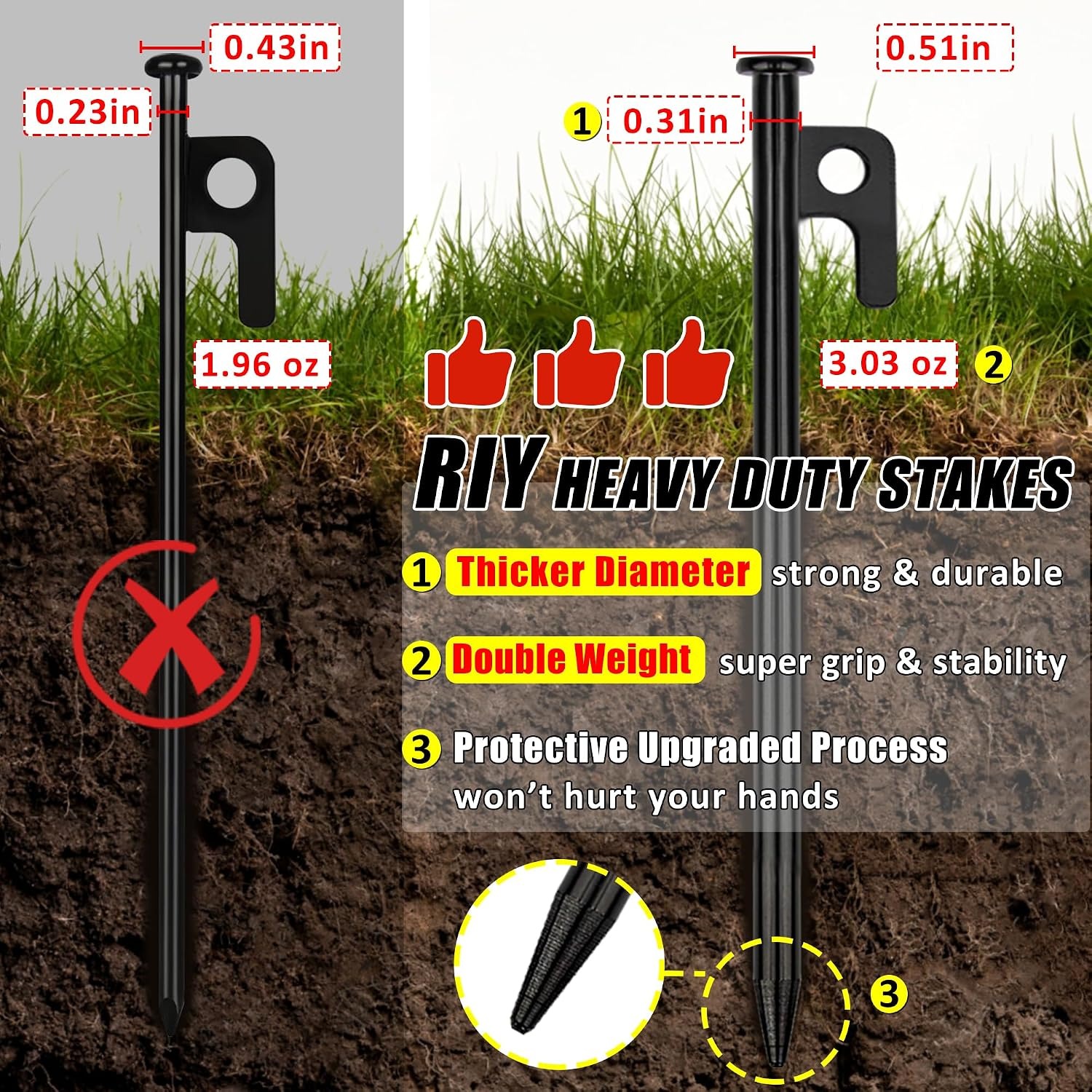
Item Dimensions (L x W)20.3cm x 1.5cm
Number Of Pieces8
Unit Count8 count
Pack Weight762 g
Special FeaturesHeavy Duty
Recommended UsesTent Stakes, Landscape Fabric, Plant Support
Weight762 g
Shipping & returns

Tracked delivery anywhere in Ireland. It is free on orders of €120 or more, and a flat €15 below that.

Under the Consumer Rights Act 2022 you have 14 days from delivery to cancel for any reason, and a further 14 days to send it back in resaleable condition. We refund the price you paid, including standard delivery. You cover the cost of returning it unless the item is faulty.

If it arrives faulty, damaged or not as described, we put it right at no cost to you under the Consumer Rights Act 2022 and the EU Sale of Goods Directive 2019/771, return postage included.

Shipping details · Refunds and returns

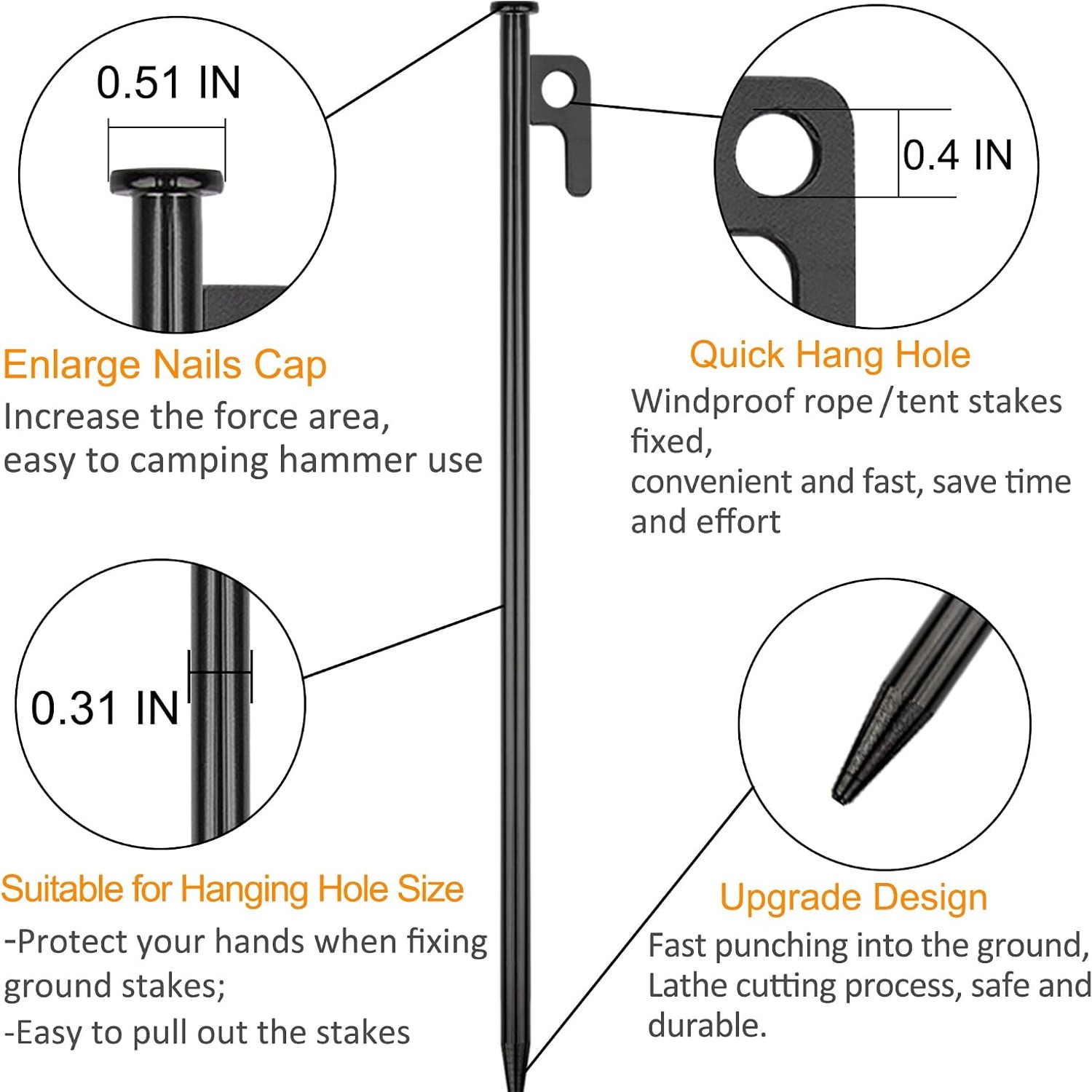
Forged Steel BuildMade from forged steel for strength under hammer blows.
Sharp Driving TipA tapered point bites into packed or stony ground.
Wide Striking HeadLarger head gives the mallet a clear target.
Set Of EightEight pegs per pack, enough for a small tent or tarp.

Pitch with confidence on hard, rocky or sandy ground using heavy duty tent pegs that drive straight and hold fast.

Eight forged steel tent stakes, each 20.3cm long with a broad striking head and a sharp point, built for tents, tarps, canopies and garden fabric.

Each pack holds eight forged steel tent pegs measuring 20.3cm long and 1.5cm across, so you get a full corner set plus spares.

The tapered tip helps the peg work its way into hard-packed dirt, gravelly soil and dry ground that bends thin wire pegs.

A broad head at the top gives your mallet something solid to hit and makes the peg easier to find when you pack up.

Useful well beyond camping, these ground pegs also anchor tarps, canopies, shade sails, garden fabric and seasonal decorations.

At 762 grams for the full set they stay light enough to carry yet heavy enough to feel serious in the hand.

Heavy Duty Forged Steel Tent Pegs (8 Pack)

Thin aluminium pegs are fine until the ground fights back. One stony patch, one sun-baked clay campsite, one hurried hammer swing, and you are left with a folded stake and a flapping corner. This set of eight forged steel tent pegs is built for those sites. The steel is solid through, not rolled from sheet, and each peg measures 20.3cm long by 1.5cm wide so there is real metal between the head and the tip.

Heavy Duty Forged Steel Tent Pegs (8 Pack)

The shape matters as much as the material. A sharpened point starts the hole and keeps the peg tracking straight instead of skating sideways across gravel. The wider head up top does two jobs at once, giving your mallet a flat surface to strike and giving the guy line or webbing loop a shoulder to sit against so it does not ride up and slip off in the wind.

Heavy Duty Forged Steel Tent Pegs (8 Pack)

Eight pegs is a practical number. It covers the four corners of a small dome tent with four left for guy lines, or it pins down a tarp with a spare or two in reserve. Many campers buy a pack to replace the flimsy pegs that came in the box with their tent, then keep the originals as backups for soft grass sites where holding power is less of an issue.

Heavy Duty Forged Steel Tent Pegs (8 Pack)

These steel tent stakes are not only for tents. People use them to anchor pop-up canopies and gazebos at markets, to hold shade sails taut, to pin down weed matting and landscape fabric along garden beds, and to stop seasonal yard decorations from wandering off in a gust. The same qualities that suit camping, strength and a point that penetrates, work just as well in a back garden.

Heavy Duty Forged Steel Tent Pegs (8 Pack)

The whole set weighs 762 grams, which is sensible for car camping, festivals, caravan awnings and backyard use. Hikers counting every gram may prefer something lighter for the trail, but for anyone who drives to the site, the extra weight buys a peg that survives repeated hammering season after season.

Not sure yet? That is fine.

Camping gear has to suit your trip and your climate, and you cannot always judge that from a photograph. Under the Consumer Rights Act 2022 you have 14 days from delivery to cancel for any reason, and a further 14 days to send it back in resaleable condition. We refund the price you paid, including standard delivery.

If it turns up faulty, damaged or not as described, that is on us. The Consumer Rights Act 2022 and the EU Sale of Goods Directive 2019/771 covers you, and we pay the return postage. Read the full detail on our refunds and returns page, or ask us anything before you order.

Frequently Asked Questions

What exactly is in the pack?

You get eight forged steel tent pegs in black. Each one measures 20.3cm long and 1.5cm wide, and the whole set weighs 762 grams.

How long are the pegs?

Each peg is 20.3cm long, which the manufacturer lists as 8 inches. That is a common mid-length for ground pegs, long enough for decent bite without being awkward to hammer.

What material are they made from?

Forged steel. Forging means the metal is shaped under pressure rather than cut from thin sheet, which generally gives a denser, stronger peg than lightweight pressed or wire stakes.

Will they work in rocky ground?

The sharp tip and solid steel body are designed for hard going, including stony and compacted soil. You may still hit a buried rock that stops a peg, in which case move a few centimetres and try again rather than forcing it.

Are these good for sandy ground?

They will go in easily, but sand gives poor holding power for any straight peg of this length. On sand or loose soil, angle the peg away from the pull, bury the head, or use a sand anchor as well.

Can I use them as camping ground pegs for a large family tent?

Yes, though a big tent usually needs more than eight points. Buy two or three packs so every corner, guy line and vestibule point has a proper steel stake.

Do I need a mallet?

A mallet or small hammer makes life much easier and is safer than stamping on the peg. The wide head on these stakes gives you a clear surface to strike.

Can I hammer them with a rock?

You can in a pinch, and the broad head helps, but a rock makes it easy to miss and hit your hand. A cheap rubber or steel camping mallet is a worthwhile addition.

Will they bend?

Forged steel resists bending far better than thin aluminium or wire pegs. Any peg can bend if struck off-centre into a rock, so aim your blows straight down the shaft.

Do they rust?

The maker describes the steel as corrosion resistant, though no coating specification is given in this record. To be safe, dry them before storage and do not leave them packed away damp.

How do I get them out of the ground?

Hook a guy line, peg puller or a second peg under the head and pull straight up while rocking slightly. Never yank sideways, as that is how pegs get bent.

Are these the best heavy duty tent pegs for festivals?

They suit festival camping well because the ground is often churned, dry and stony. Eight steel pegs will hold a small tent far better than the plastic or wire pegs packed in most budget tents.

Can I use them for a gazebo or pop-up canopy?

Yes. These work as gazebo pegs through the leg plates or with ratchet straps run to the ground. For large canopies in windy spots, add weight plates as well.

Will they hold a tarp?

Tarp pegs need to resist steady tension rather than sudden load, and these do that job well. Drive them at an angle leaning away from the tarp so the pull tightens rather than lifts.

Can I use them in the garden?

They are listed for landscape fabric and plant support. Many people use metal ground pegs like these to pin weed matting, hold edging in place or stake young plants.

Do they work on frozen ground?

The sharp point helps, but frozen ground is unforgiving and may need pre-drilling or a pilot hole. Strike carefully and expect slower going.

How deep should I drive them?

Aim to leave just the head and the lip above the surface so the line can seat properly. Burying the shaft fully gives the best holding power.

What angle should I drive them at?

Around 45 to 60 degrees, leaning away from the direction of pull. A peg driven straight down lifts out far more easily under wind load.

Are they safe around children and pets?

The tips are sharp, so store them in a bag when not in use and make sure driven pegs are not left sticking up where someone could trip. Mark guy lines with bright tape at busy sites.

What colour are they?

Black. A quick wrap of bright tape or a flash of fluoro paint on the head makes them easier to spot in grass when you pack up.

Are these too heavy for backpacking?

At 762 grams for eight, they are heavier than titanium or alloy trail pegs. For car camping, caravanning and backyard use the weight is fine, but thru-hikers usually want something lighter.

How many do I need for a two-person tent?

A typical two-person tent uses four to six pegs for the body and two to four for guy lines. One pack of eight generally covers a small tent in calm conditions.

Can I buy more than one pack?

Yes, and it is a sensible move if you have a large tent, a tarp and a canopy. Pegs get lost in long grass, so spares are never wasted.

Do they come with a bag?

No storage bag is listed in this record. A simple drawstring pouch or an old tool roll keeps the points contained and stops them scratching your gear.

How should I clean them?

Brush or rinse off soil with water, then dry them with a cloth before packing. Dry steel stored dry is the simplest way to keep a set looking good for years.

Can I sharpen the tips if they get blunt?

A few passes with a flat file will restore a point that has mushroomed slightly. Keep the original taper shape rather than making the tip too fine.

Do they suit caravan awnings?

Yes, awning pegs need to hold steady tension over days rather than hours, and solid steel handles that. On hard-standing pitches you will need a different anchoring method such as weights or wheel straps.

Are they a decent gift for a camper?

They make a practical present for anyone who camps, runs a market stall or does a lot of garden work. Good steel tent stakes are the sort of thing people are glad to own but rarely buy for themselves.

How is the order delivered?

Orders are dispatched to the address you enter at checkout and you will receive confirmation once the parcel is on its way. Delivery timing depends on your location, and current estimates are shown during checkout.

What if the pegs are not right for me?

Contact us with your order number and tell us what the problem is. If the set is unused and in its original condition we will walk you through a return or exchange under our returns policy, and if anything arrived damaged we will sort that out for you.

Choosing Tent Pegs That Actually Hold, A Practical Buyer's Guide

6 min read Camping Company

The problem with the pegs in the box

Almost every tent sold comes with pegs, and almost nobody keeps using them. They are usually thin aluminium wire, bent into a hook, light enough to post and just strong enough for a soft lawn on a still day. The first time you camp somewhere with gravel under the topsoil, two of them fold over and a third disappears into the grass.

That is the quiet cost of cheap pegs. You are not really buying a camping accessory, you are buying the difference between a tent that stands all night and one that starts slapping at 2am. Wind does not test your tent fabric first. It tests the eight small points where the tent meets the ground.

Heavy duty tent pegs solve this in an unglamorous way. More steel, a better point, and a head you can actually hit. There is nothing clever about it. It just works.

What makes a peg heavy duty

The word gets used loosely, so it helps to know what you are looking at.

Material comes first. Forged steel is shaped under pressure, which packs the grain of the metal tightly and gives a peg that resists bending and shearing. Compare that to a stake rolled or pressed from thin sheet, which tends to crease along a fold line the moment it meets resistance. The pegs in this set are forged steel, 20.3cm long and 1.5cm wide.

Shape comes second. A peg needs a point that starts cleanly and a shaft that keeps it tracking in a straight line. Blunt-tipped pegs skate off stones and end up half-driven at an angle. The tapered tip on these stakes bites and keeps going.

Third is the head. This is the part people overlook. A wide head gives your mallet a target, so you spend less time striking the shaft and bending it. It also gives the guy line or tent loop a shoulder to sit against. Pegs with a tiny head let the line creep up and flick off in gusty weather.

Length, weight and the trade-off

Longer pegs hold better in soft ground because more of the shaft is gripped by soil. Shorter pegs go into hard ground more easily because you are asking less of each hammer blow. At 20.3cm, these sit in the practical middle. They are long enough for grass, dirt and mixed ground, and short enough that you can drive them into compacted clay without spending a minute on each one.

Weight follows the same logic. The full eight-peg set weighs 762 grams, so a little under 100 grams per peg. If you drive to your pitch, that is nothing. If you are walking twenty kilometres with everything on your back, you will probably want lighter alloy or titanium pegs for the trail and keep steel ones for the car.

Most people, honestly, are car campers, caravanners, festival-goers and backyard users. For all of those, steel is the right answer.

Matching the peg to the ground

Ground type changes everything about how a peg performs.

Firm grass and loam are the easy case. Almost anything holds, and these pegs will go in with two or three taps.

Dry, compacted clay is where thin pegs die. The surface is like concrete for the first few centimetres. Here the sharp tip and solid shaft matter, and so does hitting squarely. Start the peg with a gentle tap to set it, check it is vertical, then drive with firmer blows.

Stony or gravelly ground is a lottery. You will hit rocks. The trick is not to force it. If a peg stops dead and starts to deflect, pull it and move 5 to 10cm. Fighting a buried rock is how pegs get bent.

Sand, loose soil and snow are the hardest because the problem is not penetration, it is grip. No straight peg of this length holds well in dry sand. Angle it hard, bury the head, cross two pegs in an X, or use purpose-made sand anchors alongside them. Burying a peg horizontally as a deadman is an old trick that still works.

How to drive and remove them properly

A few small habits make a set of camping ground pegs last for years.

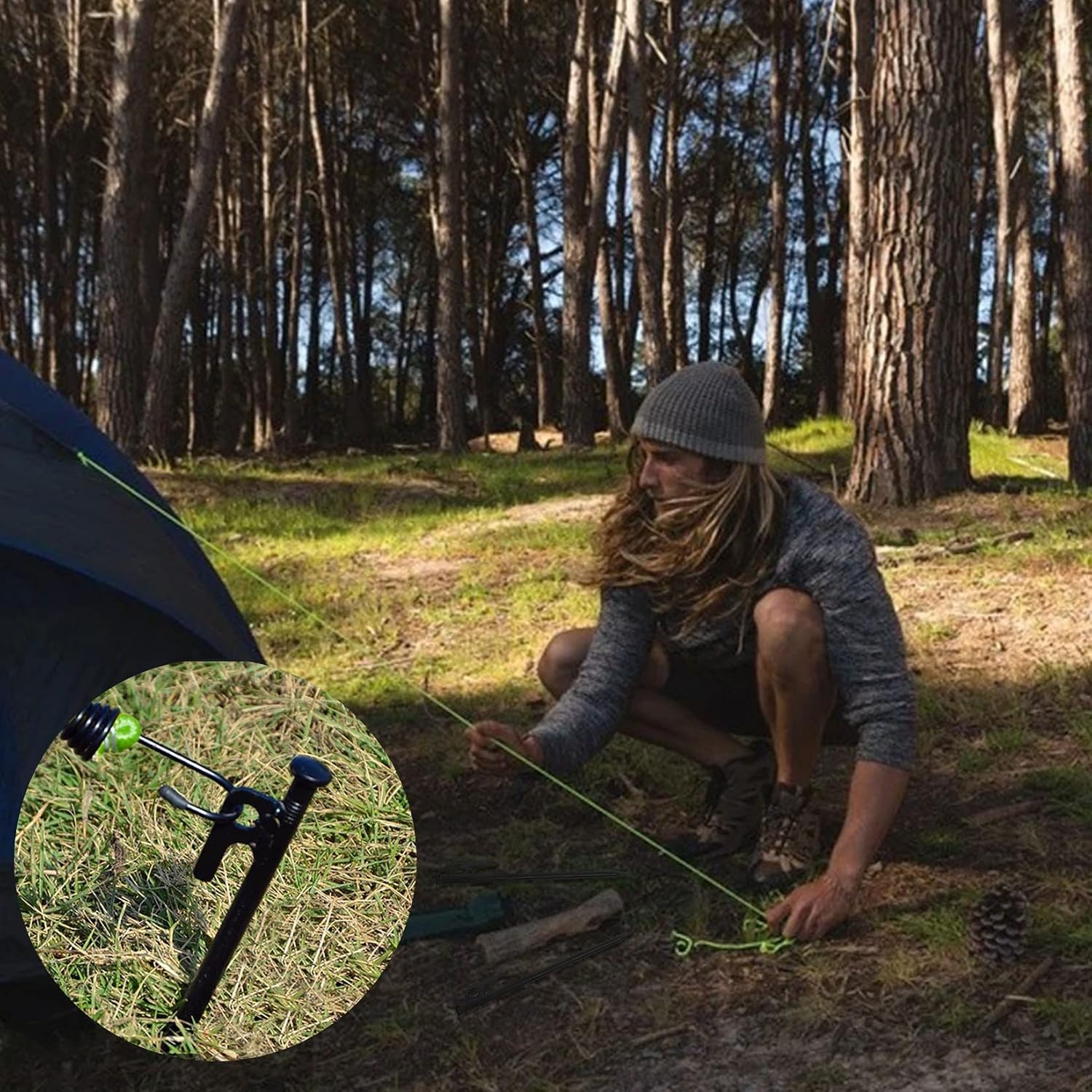
Drive at an angle of roughly 45 to 60 degrees, leaning away from the direction the line pulls. A peg driven straight down relies only on friction. An angled peg loads the soil against it, which is far stronger.

Hit straight down the line of the shaft. Most bent pegs are bent by glancing blows, not by hard ground.

Leave the head and the lip proud of the surface so the line has something to seat against, but do not leave half the shaft out. You lose holding power and gain a trip hazard.

To remove, hook something under the head and lift straight up with a small rocking motion. A spare peg, a peg puller, or a loop of guy line all work. Pulling sideways is the fastest way to ruin a stake.

Uses beyond camping

Plenty of people buy a pack of steel tent stakes and never take them camping. They are listed for landscape fabric and plant support, and that is a real use case. Weed matting needs pinning along its edges or wind lifts it, and garden ground staples made of light wire pop out within a season.

Market stallholders use them for pop-up canopies. Anyone with a shade sail uses them to anchor the lower corners. People with seasonal yard decorations use them so the inflatable snowman does not end up two streets away. Awning pegs on a caravan pitch see constant light tension for days at a time, which is exactly what solid steel handles well.

The point is that once you own eight proper pegs, you find jobs for them.

Care and storage

This part takes thirty seconds and doubles the life of the set.

Brush or rinse the soil off before the pegs go in the bag. Soil holds moisture, and moisture sitting against steel is how corrosion starts. Dry them with a cloth or leave them in the sun for a few minutes.

Store them together in a pouch, a box or an old sock. Loose pegs rattling in a tent bag will eventually puncture something. Keeping them contained also protects the points, which is what you are paying for.

If a peg takes a knock and comes out with a slight bend, straighten it between two solid objects before the next trip rather than trying to hammer a crooked peg into hard ground.

Finally, consider a wrap of bright tape around each head. Black pegs in long grass are genuinely hard to find, and most lost pegs are simply left behind at the site.

How many do you need

Count the peg points on your tent, then add the guy lines, then add two. A small two-person tent is usually happy with one pack of eight. A three or four-person dome tends to want twelve to sixteen. A big family tent with a canopy and multiple guy lines can easily use twenty.

If you are also pegging a tarp, a windbreak or an awning, each of those is another four to eight points. Buying a second pack is cheaper than the morning you spend re-pitching in the rain because you ran short.

The short version

Thin pegs are the weakest link in most tents, and they fail exactly when the weather makes failure worst. A set of eight forged steel tent pegs at 20.3cm long covers the common cases well, from grass and dirt to compacted and stony ground, and the wide head means you can hammer them with confidence instead of tapping nervously.

They are heavier than trail pegs and that is the deal you are making. For car camping, caravans, festivals, canopies and garden work, the extra grams buy a peg you will still be using in five years. Drive them at an angle, pull them straight, dry them before they go in the bag, and they will quietly do their job every single time you pitch.

Browse the shop

Ready to stop losing pegs?

Grab a set of eight forged steel tent pegs and keep your tent, tarp or canopy exactly where you put it.

Ask us a question

Page summary

This is an eight-pack of RIY heavy duty tent pegs made from forged steel, model RIY-20cm-DD16. Each peg measures 20.3cm long by 1.5cm wide (listed as 8 inches in length) and the pack weighs 762 grams. The pegs are black, described by the maker as heavy duty, and feature a sharp driving tip with a wider head for hammering. Suggested uses include tent stakes, securing landscape fabric and plant support, plus tarps, canopies and outdoor decorations. The product arrives new and in stock. Country of origin, exact steel grade certification and any warranty period are not specified in this record. GTIN is not supplied. No verified customer rating figures are recorded here.