
The complete guide
How to Choose a Personal Camping Stove (and Where the MiniMo Fits)
The problem with most small camp stoves
You get to camp late, you are cold, and you want food. So you screw a burner onto a canister, balance a titanium mug on top, and wait. The water boils eventually. Then you try to cook something that is not just water, and the bottom of the pot burns while the top stays cool. You end up eating scorched noodles and telling yourself it was fine.
That gap between boiling water and actually cooking is where most lightweight stoves fall down. They are tuned for one task. They have a valve that is either on hard or barely on at all, and the pot sits above the flame with no real connection to it, so heat leaks out sideways with every gust of wind.
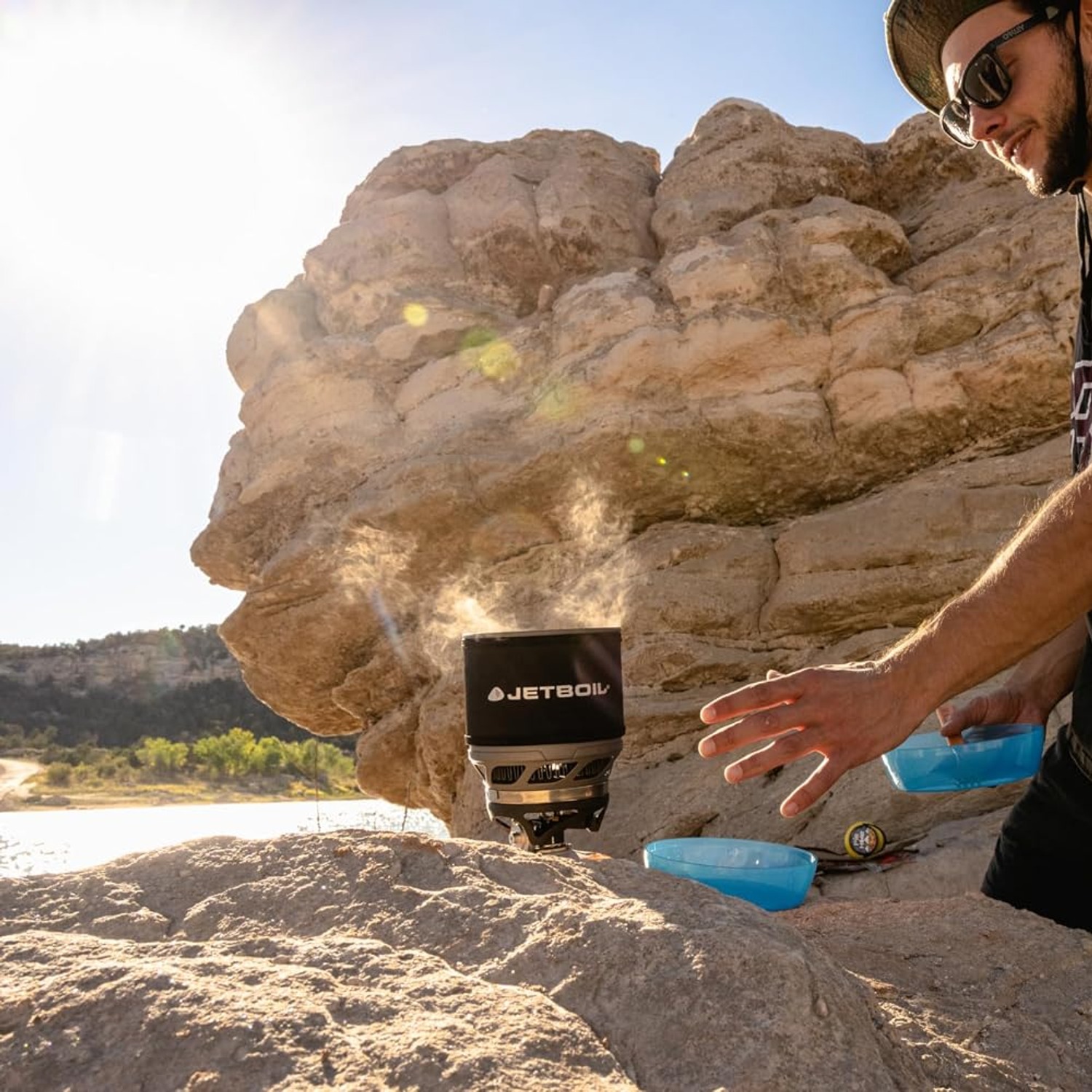
The Jetboil MiniMo was designed to close that gap without adding much weight. It is still a fast boiler. It just also lets you turn the flame down and keep it there.
How a personal cooking system works
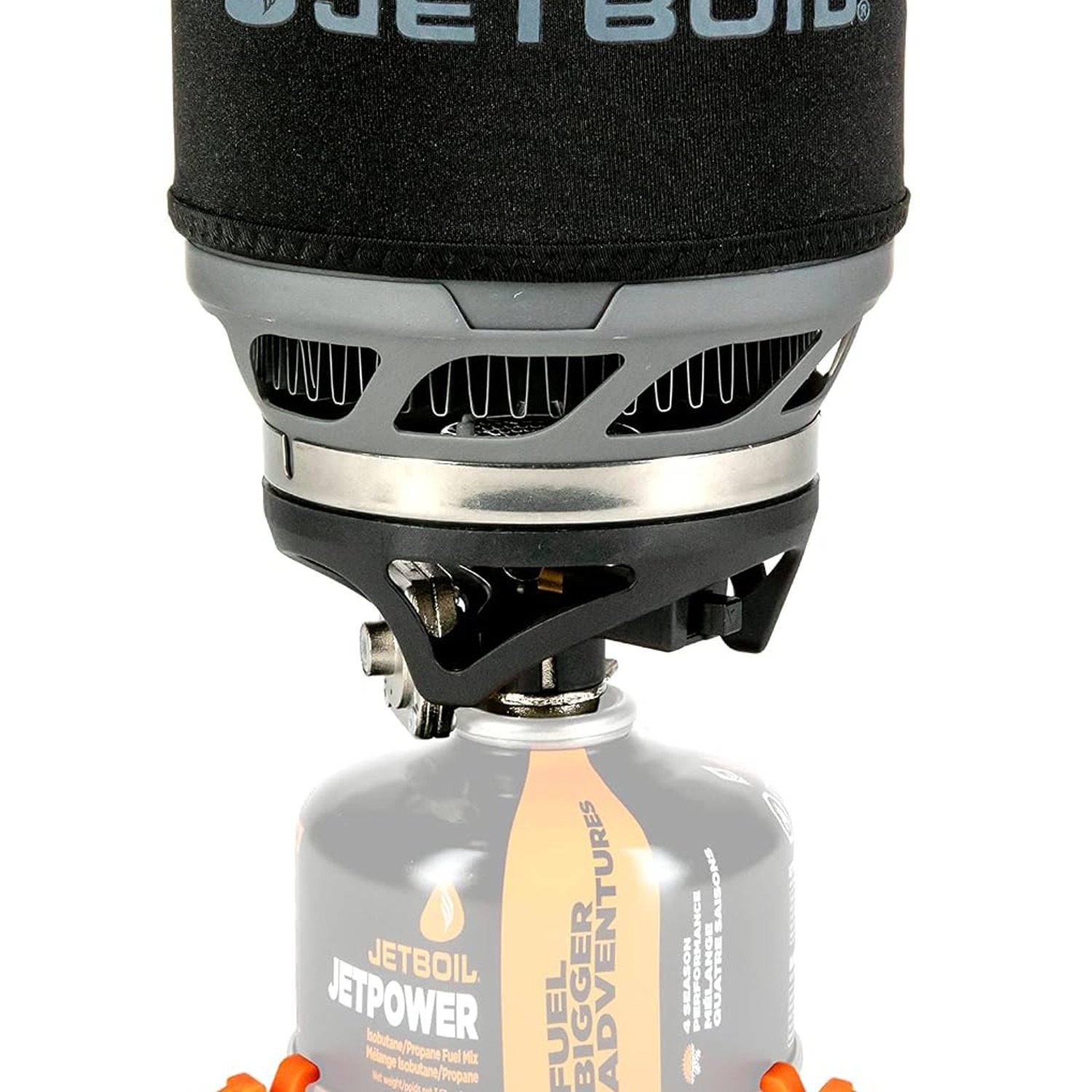
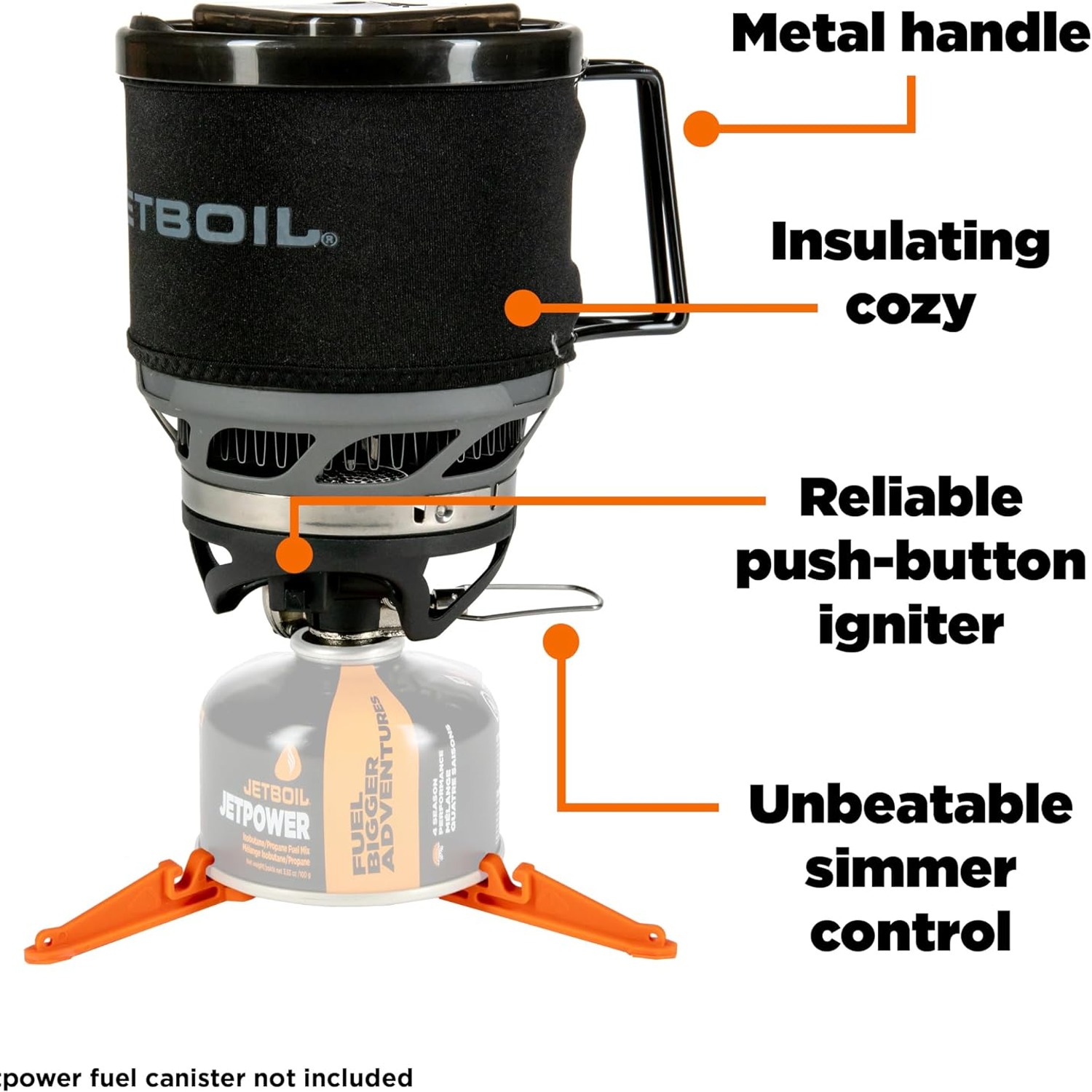
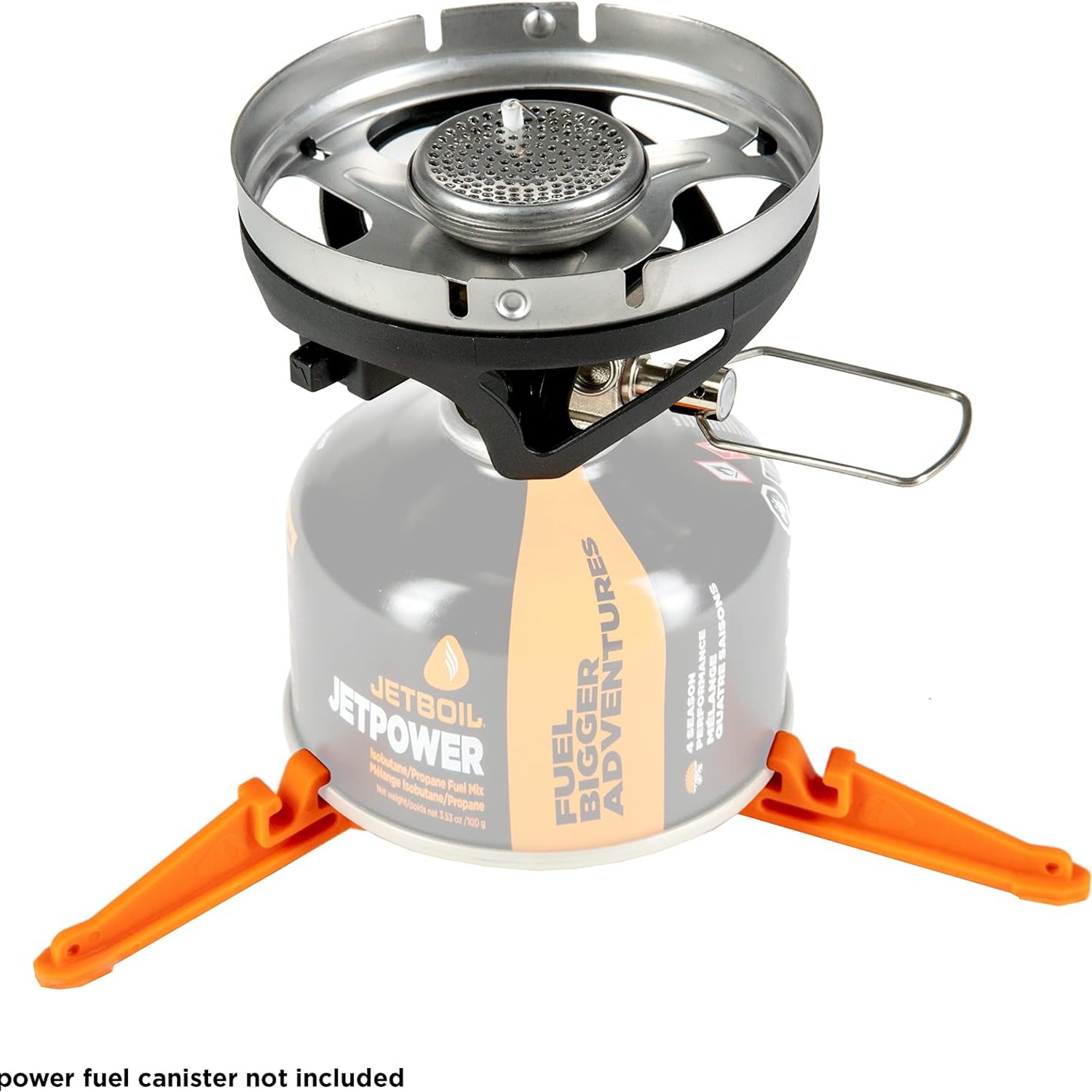
A personal cooking system means the burner and the pot are matched rather than mixed and matched. On the MiniMo, the base of the stainless steel cup carries a ring of corrugated fins, which Jetboil calls FluxRing. Those fins sit directly in the flame path and give it far more metal to heat.
This matters because an ordinary flat-bottomed pot only touches the flame across its base. Most of the heat curls around the outside and disappears into the air. With fins in the way, more of the energy ends up in your dinner. The same 2600 watt burner therefore boils faster and burns less gas doing it.
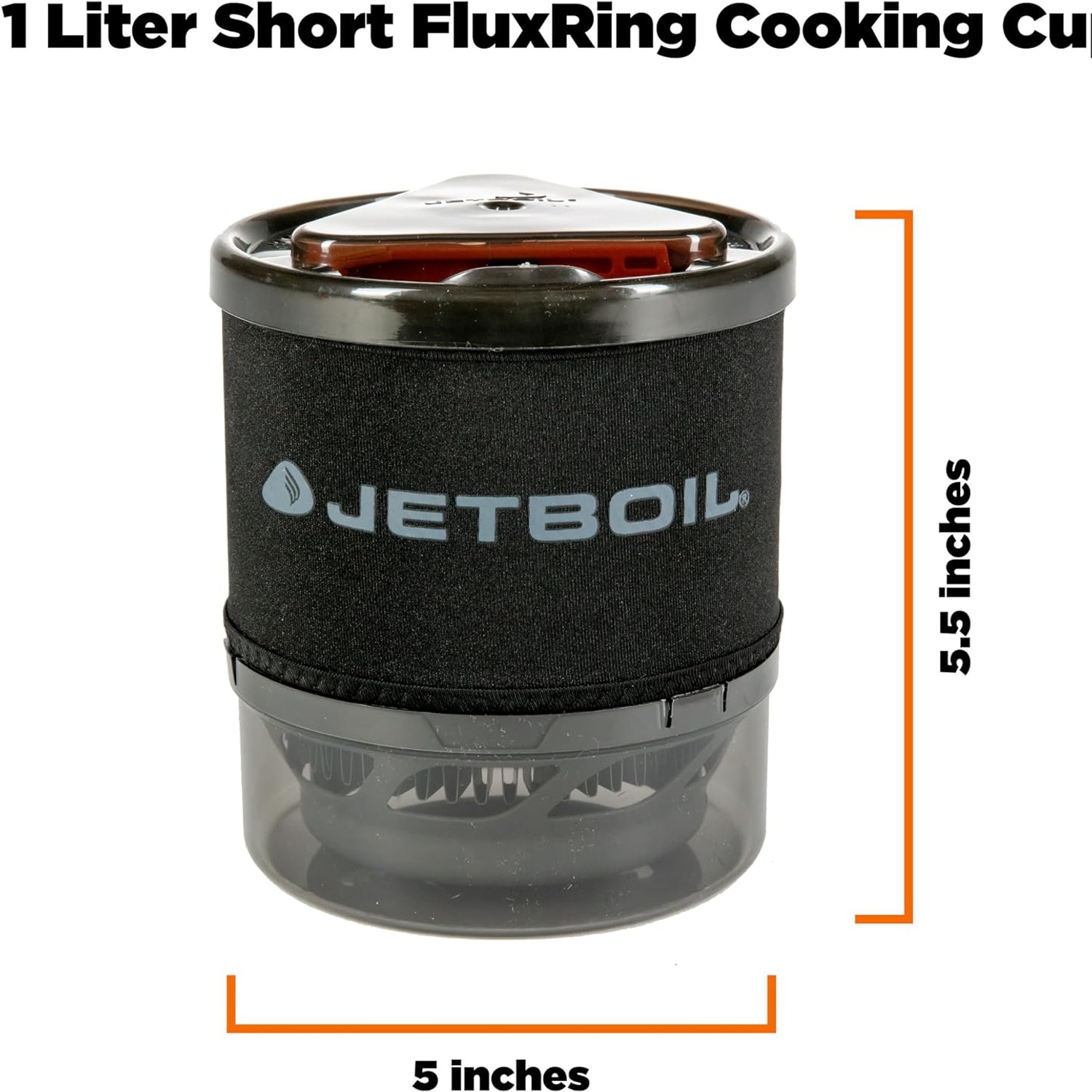
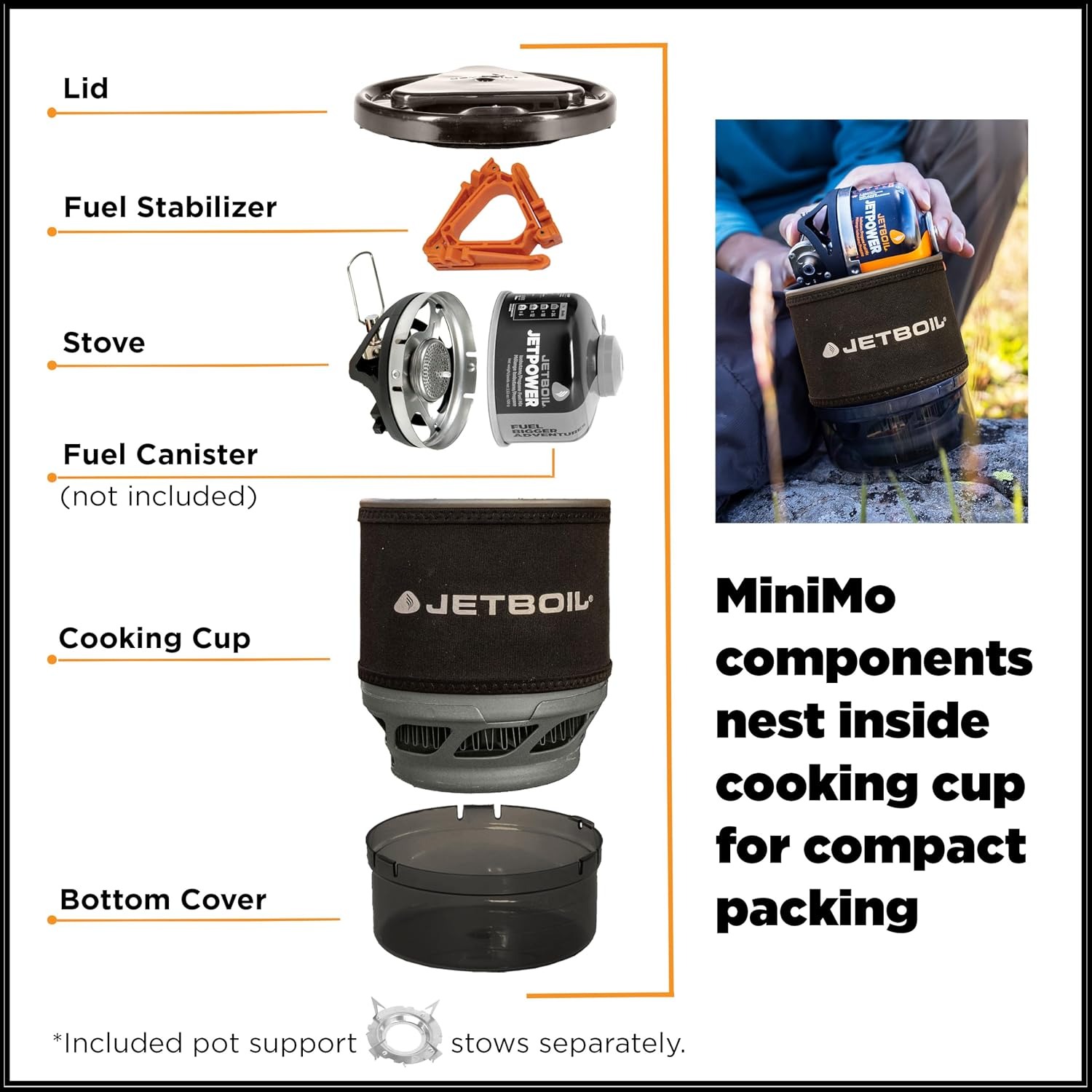
The cup locks onto the burner, so the whole assembly behaves like one unit. You are not balancing anything. When you are done, the burner stows sideways inside the cup, the cover clips on and it travels as a single 414 g package roughly 12.7 cm across and 14 cm tall.
Why the simmer control is the real story
Plenty of canister stoves will boil water quickly. Far fewer will hold a low, steady flame. The MiniMo uses a regulator valve rather than a simple needle valve, which gives you fine, incremental adjustment all the way down from a rolling boil to a gentle simmer.
In practice that means you can soften onions, thicken a sauce, warm porridge without welding it to the base, or poach an egg. It also means you can reheat yesterday's leftovers, which anyone who has car camped for a week will appreciate.
If every meal you plan is a freeze dried pouch and a cup of tea, you do not strictly need simmer control. If you ever want to cook from actual ingredients, it changes what is possible. This is the single feature that separates a simmer control camp stove from a glorified kettle.
Who it suits
Solo hikers get the most from it. One cup is sized for one person, and the weight is low enough that it does not force a hard decision about what else to leave behind.
Bikepackers and motorcycle campers like the compact shape, since it slides into a pannier or frame bag without taking a dedicated slot.
Weekend car campers use it as a fast second stove. When the main burner is busy with dinner, this one handles coffee or boiling water.
It also works well as an emergency cooking stove at home. Threaded gas canisters store for years with no maintenance, and there is nothing to prime or pump. Keep one with your blackout kit and you have hot food when the power is out.
Two people can share it, but it will mean cooking in rounds. Families and groups should look at larger systems instead.
How to choose between stove types
Start with what you cook. Boil-only eaters can get away with the simplest canister burner available. Anyone cooking actual food needs a regulator and a pot shaped for stirring, which is what a compact cooking system like this gives you.
Next, think about temperature. Canister stoves lose pressure as the weather cools, which affects every gas canister stove on the market. For three-season use in most places, that is a non-issue. For snow camping or high altitude, a liquid fuel stove holds its performance better.
Then weigh up fuel availability. Threaded canisters are easy to buy in most towns with an outdoor shop, but they can be hard to find in remote regions or impossible to fly with. Check before you travel.
Finally, consider pot shape. A tall, narrow cup boils marginally faster but is awkward to eat from. The MiniMo deliberately goes wide and low so your spoon sits at a sensible angle and you can eat straight from the cup. Metal handles make that easier than fabric, and they shrug off heat.
Getting the best out of it
Thread the canister on firmly but do not overtighten. Fit the fuel can stabiliser, especially on soft ground or when the canister is half empty, because a light canister with a hot cup on top is easy to knock over.
Light it with the push-button igniter, then bring the flame up gradually. Carry a lighter as backup. Igniters are reliable but they are the most likely part to eventually fail, and it is a cheap bit of insurance.
Shelter the stove from wind with a rock, your pack or a natural hollow. Do not wrap a windscreen tightly around a canister stove, since trapping heat around the canister is genuinely dangerous.
Cook outside. A stove in a closed tent produces carbon monoxide, and the fire risk with nylon is not worth it.
Care that actually extends its life
Let it cool fully before you touch anything. Then wash the cup by hand with warm water and a soft cloth. Avoid scourers, which dull the surface and wear the finish.
The FluxRing fins need the most attention. Food residue and grit lodge between them and reduce heat transfer, so give them a pass with a soft brush now and then. Dry everything properly before packing, because moisture trapped in the fins invites corrosion over a season.
Keep the burner out of water. Wipe it clean and check the jet and igniter for debris before each trip.
Always disconnect the canister for storage and transport, and store the kit somewhere dry and out of direct sun. The listing states a 2 year manufacturer warranty, so hang onto your purchase record.
The short version
If you only boil water, a simpler stove will do. If you want hot food you would actually choose to eat, the combination of a 2600 watt burner, FluxRing heat transfer and a proper regulator valve is hard to beat at 414 g.
It packs into itself, lights at the press of a button, and lets you eat out of the same cup you cooked in. Fuel is bought separately, so grab a canister before the trip. Beyond that, it is about as close to a one-piece camp kitchen as a single person needs.