
The complete guide
How To Choose A High Back Camping Chair That You Will Actually Sit In
The problem with most camp chairs
There is a particular kind of tired you get from a bad camp chair. You sit down, it feels fine, and forty minutes later your shoulders ache and your neck is sore from holding your head up. The chair stopped supporting you somewhere around your shoulder blades, and from there up you were on your own.
Low-back folding chairs are everywhere because they are cheap to make and they fold small. They are fine for twenty minutes at a kid's football game. They are not fine for an evening around a fire, a long afternoon on a riverbank, or three hours waiting for the sun to drop at a lookout. The moment you want to relax rather than perch, the back height becomes the whole story.
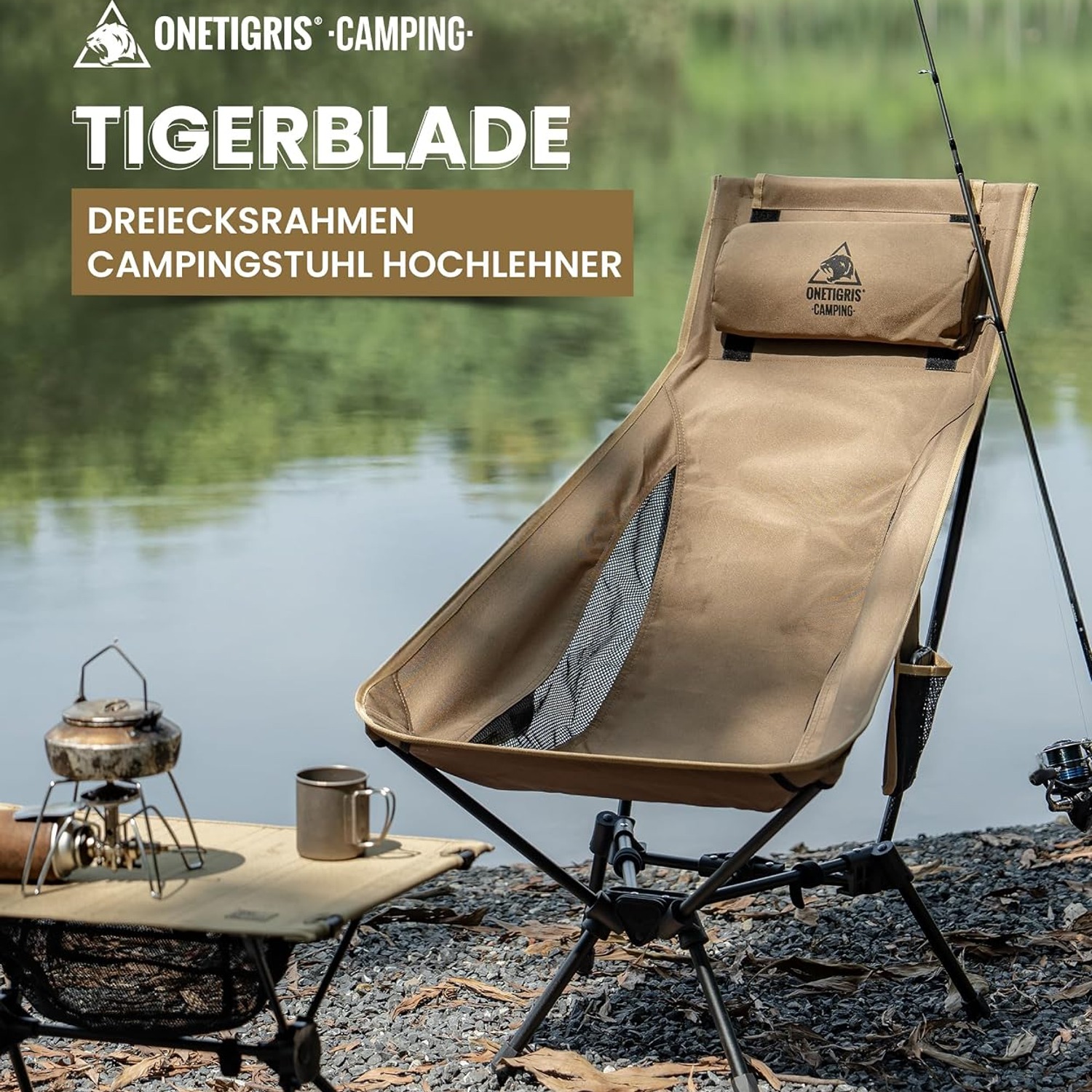
That is what a high back camping chair fixes. By running the backrest up past your shoulders and adding a headrest on top, it gives your spine and neck somewhere to go. You stop holding yourself up and start actually sitting.
How this chair is built
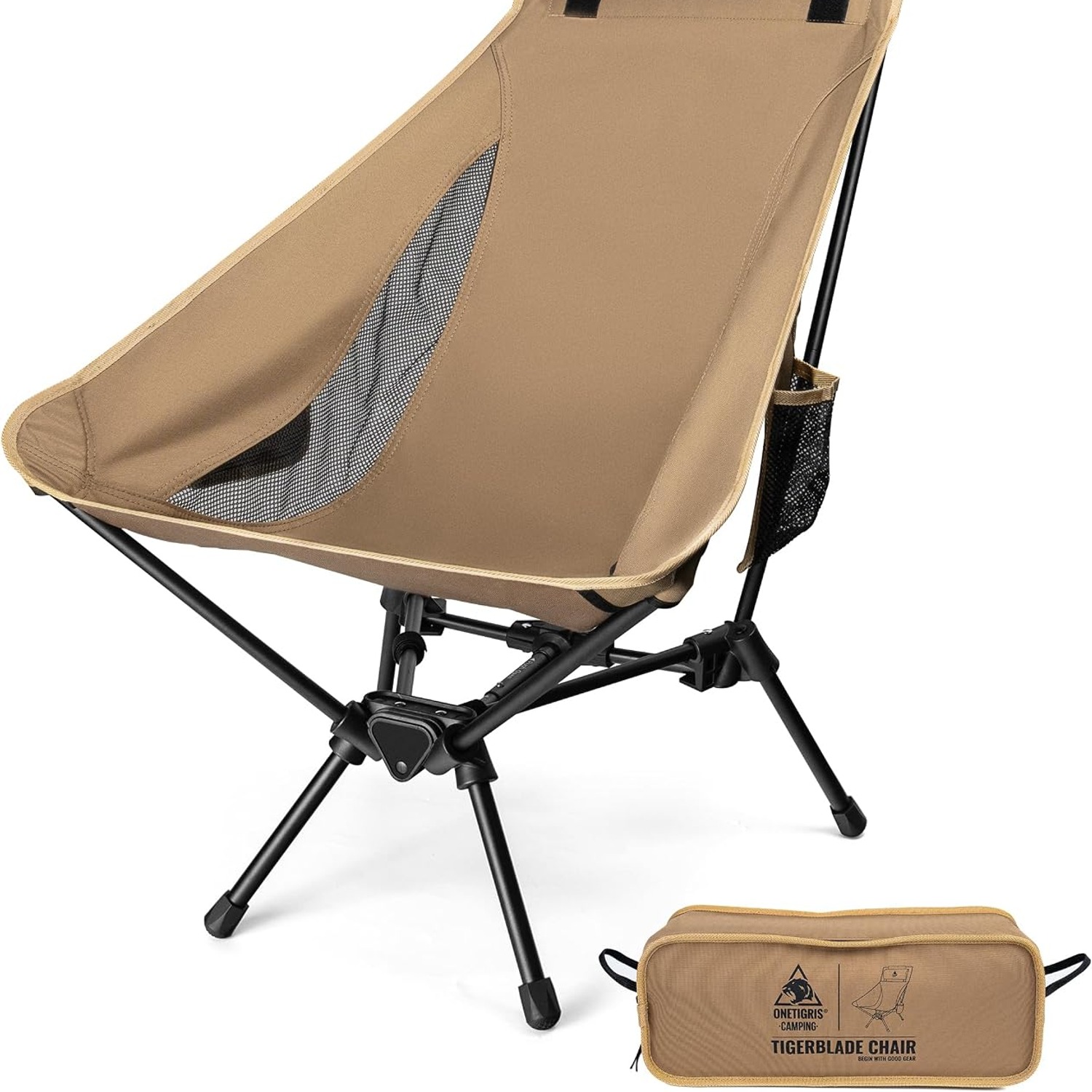
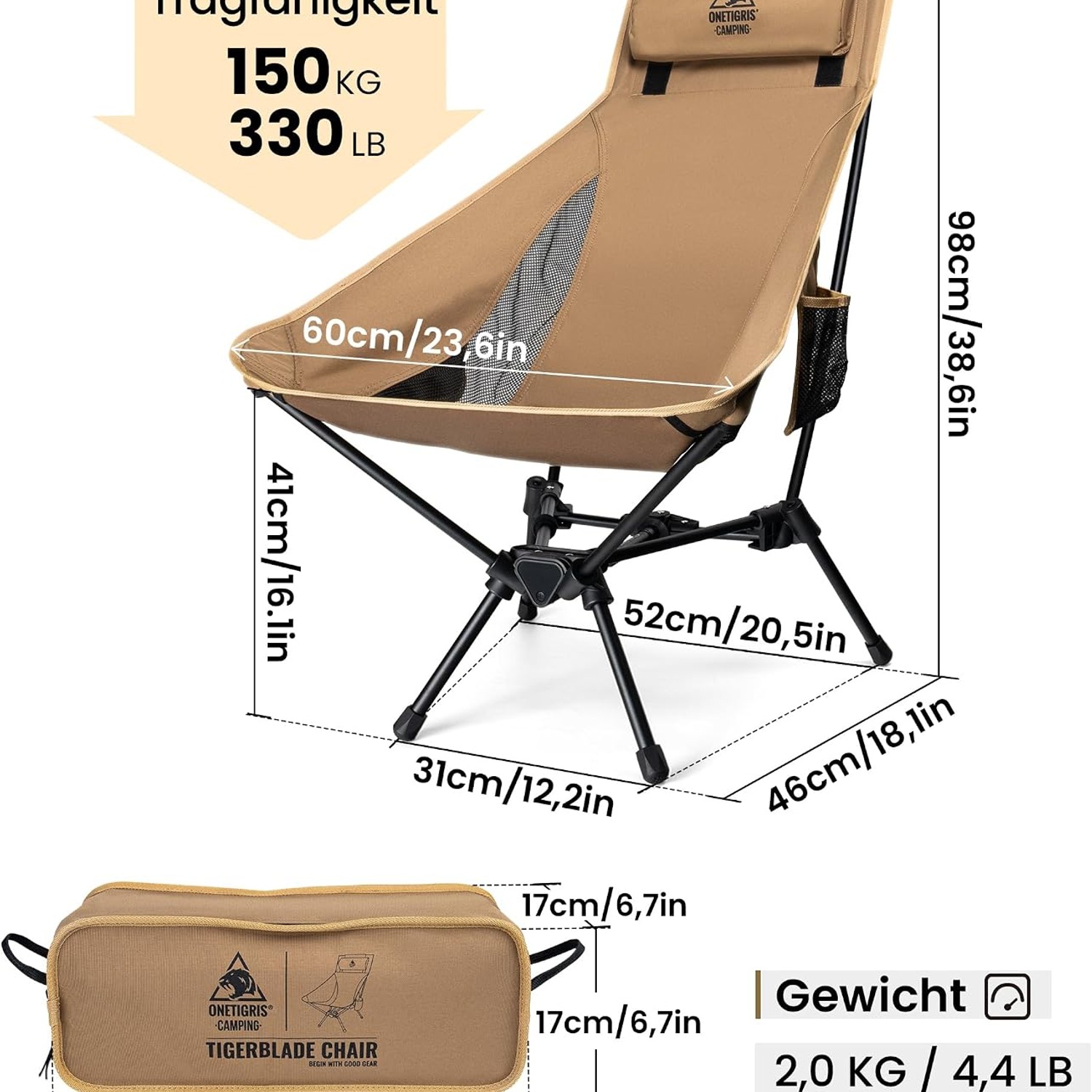
The frame is 70A6 aluminium alloy. That choice does two things. It keeps the weight down, which is why the complete chair comes in at 1.96 kg, and it means the frame will not rust if it gets rained on or carried to the beach. Steel frames are cheaper but they are heavier and they stain the moment the coating chips.
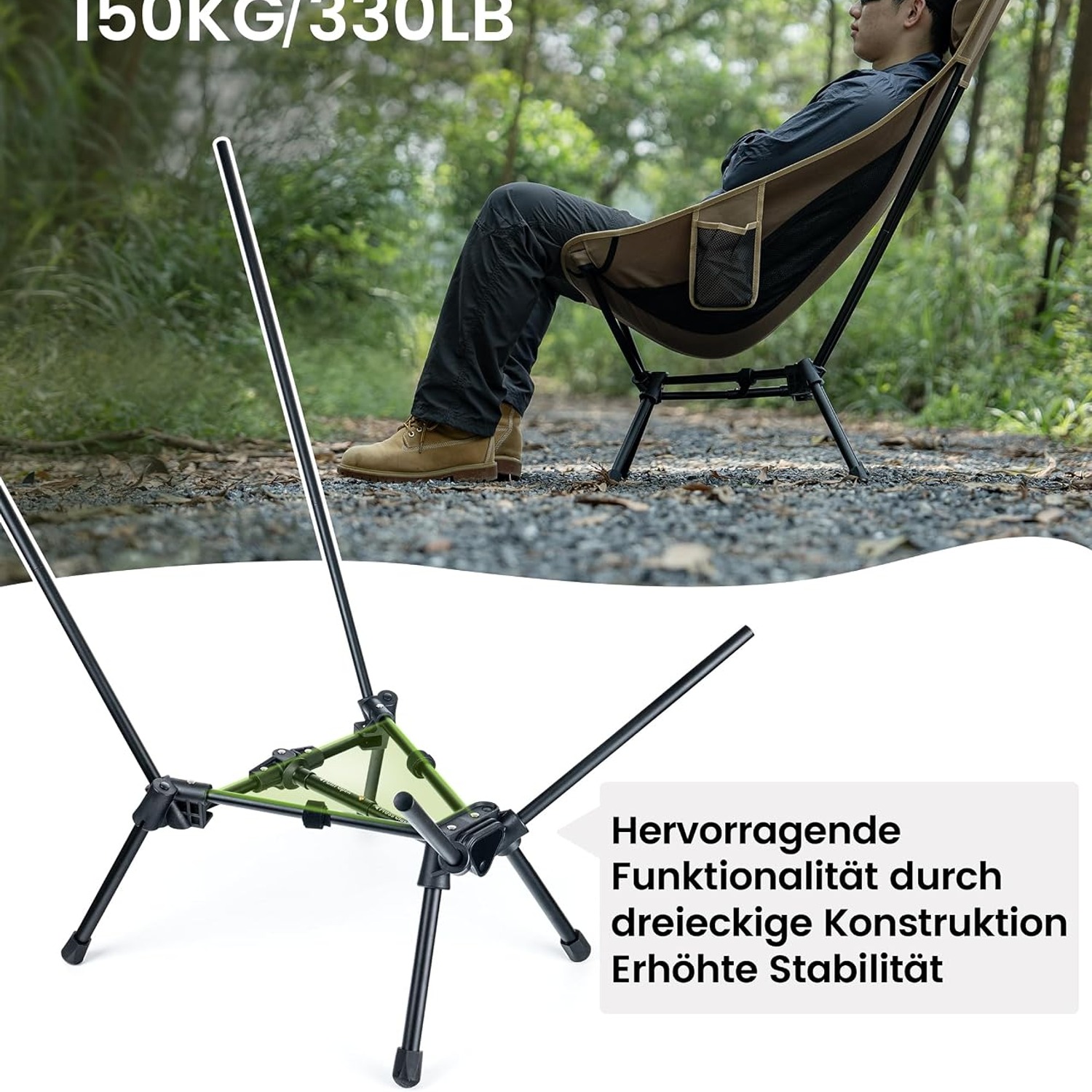
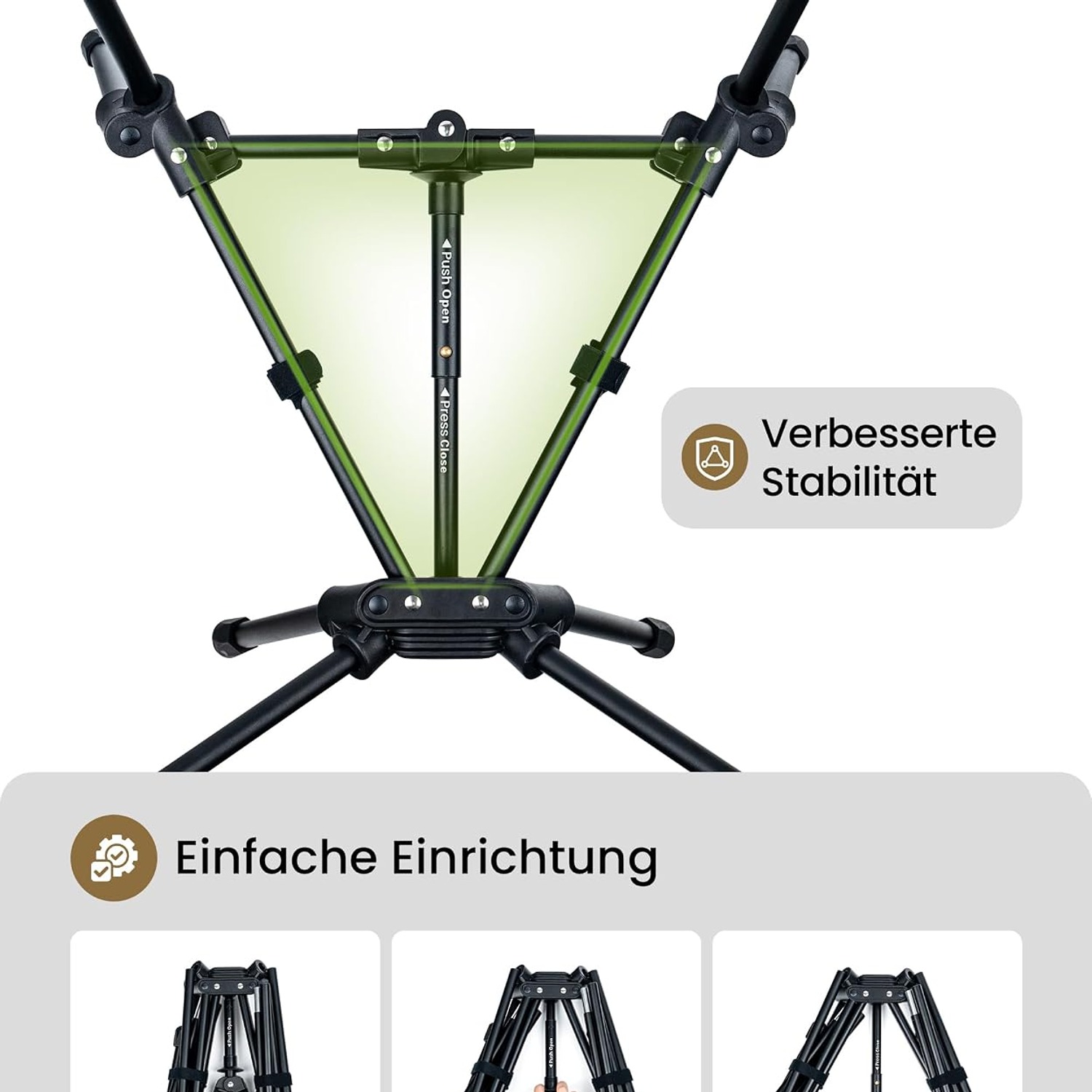
The structure uses a central connecting rod that splits the frame into two triangles. This is standard engineering sense rather than marketing. A triangle holds its shape under load where a square wants to fold flat, so bracing a light frame with triangles is how you get a 1.96 kg chair rated to take up to 170 kg. The same connector also makes set-up quick, because the legs find their position instead of you lining up four poles by feel in the dark.
Over the frame sits 600D polyester. The D number refers to the thickness of the yarn, and 600D is the practical middle ground for outdoor seating. Lighter fabric packs smaller but scuffs and tears more easily on gravel and bark. Heavier fabric lasts longer but adds weight and stiffness. The sides use breathable mesh, which is the kind of detail you only appreciate on a hot afternoon when your back is stuck to a solid panel.
Set up, the chair measures 43 cm deep, 60 cm wide and 98 cm high. Folded, it drops to 43 x 17 x 17 cm and goes into the included storage bag.
The headrest and the height settings
Two features do most of the comfort work here.
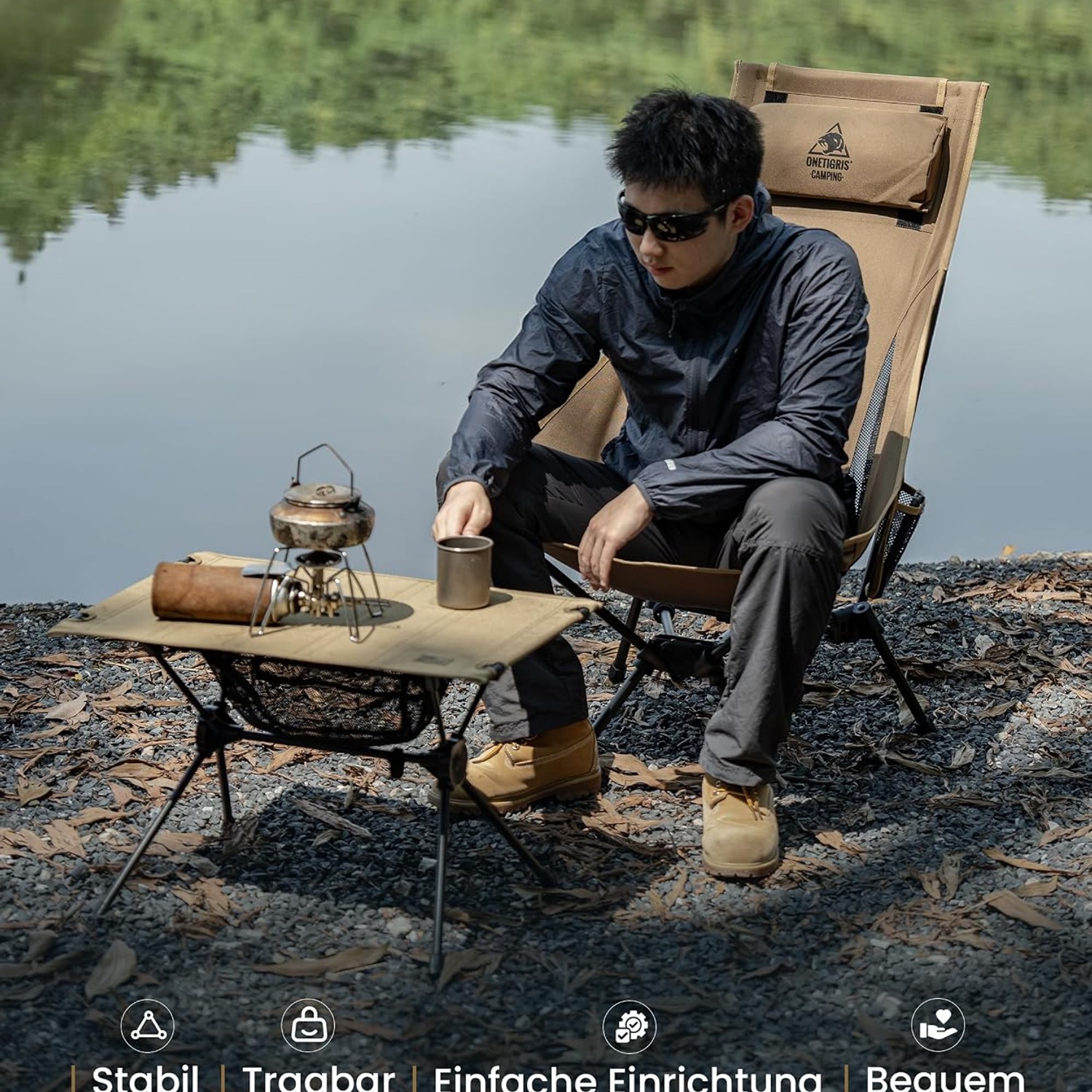
The headrest is removable. Leave it on for long, relaxed sitting and it takes the load off your neck completely, which is the single biggest difference between a chair you tolerate and a chair you look forward to. Take it off when you want a lower profile, or when you are sitting upright at a table and it would just be in the way.
The two seat heights matter more than people expect when they are shopping. The lower setting tips you into a laid-back position with your knees slightly higher than your hips. That is the fireside position, and it is lovely for an hour of doing nothing. The higher setting brings you up to a more normal chair height, which is what you want for eating at a camp table, for casting a line, and for getting out of the chair without needing a hand.
Most people end up using both over a weekend. That flexibility is why one chair can cover dinner, the fire and a morning coffee without compromise.
Who this chair suits
Car campers and caravanners get the most out of it. The folded size means you can bring two or three without filling the boot, and the weight means nobody minds carrying them.
Anglers do well with it too. The height adjustment and the two side pockets cover most of what you need on a bank, and the frame handles uneven ground reasonably well if you find a flat patch first. Anyone hunting for the best fishing chair tends to end up on something close to this spec.
Festival and event-goers use it for the same reason: it is light, it packs down, and the high back means you can sit through a long set without a sore neck. The same goes for anyone who spends weekends on the sideline of a sports field.
It also works at home. It is listed for indoor use, and plenty of people keep one in a cupboard as spare seating for when more people show up than there are chairs.
Where it is less of a match: ultralight hikers covering serious distance. Under 2 kg is light for a chair, but it is not light for a pack where every gram is counted. For a short walk-in to a riverside campsite it is fine. For a week on a trail, most people carry a foam pad and call it done.
How to choose between camp chairs
Start with back height. If you plan to sit for more than half an hour at a time, get a high back. This is the decision that changes how the chair feels and nothing else makes up for getting it wrong.
Then look at packed size against your transport. Folded dimensions tell you whether it fits your boot, your locker or the gap behind the back seat. A chair you leave at home because it does not fit is not a comfortable chair.
Check the weight rating honestly. A 170 kg rating means the frame has real margin for an average adult, and margin is what stops a chair feeling creaky after a season of use.
Look at the fabric weight and whether there is mesh. If you camp in warm weather, breathable panels are worth more than an extra pocket.
Finally, count the small conveniences. Side pockets, a carry bag and a removable headrest sound minor on a spec sheet. In use, they are the difference between a chair you grab first and one that stays in the shed.
Looking after it
Camp chairs die from neglect more often than from use. The fabric is polyester, so spot clean it with a damp cloth and a bit of mild soap, then let it dry properly in the shade before it goes back in the bag. Packing a damp chair is how you end up with mildew spots that never come out.
Keep harsh chemicals and bleach away from the seat. They break down the weave and any surface coating.
Shake grit out of the frame joints after a beach or bush trip. Sand in an aluminium joint makes it gritty and stiff, and it wears the metal over time. If you have been near salt water, rinse the frame with fresh water and dry it.
Store it in its bag, out of permanent sun. UV is the quiet killer of all outdoor fabric, and a chair that lives on a deck year-round will fade and weaken long before one that gets packed away.
The short version
This is a 1.96 kg folding chair with a 98 cm high back, a removable headrest, two seat heights and two side pockets, built on a 70A6 aluminium frame rated to 170 kg. It packs to 43 x 17 x 17 cm in the included bag.
If you have been putting up with a low-back chair and wondering why an evening outside leaves you stiff, the back height is the answer. Set it low for the fire, high for the table, and dry it before you pack it. That is most of what there is to know.