
The complete guide
How to Choose a Lightweight Travel Sleeping Bag
The problem nobody warns you about
Everyone plans the flights. Everyone plans the route. Almost nobody plans where they are going to sleep, in the physical sense of what will be touching their face at two in the morning.
You arrive at a hostel in a town you picked off a map. The room is fine. The mattress is fine. Then you pull back the blanket and you are not sure how recently it was washed, and you spend the next hour lying very still on top of the covers wearing all your clothes.
Or you stay with a friend's family and they kindly set up a sofa bed with a blanket that smells like a cupboard. You are not going to say anything. You just sleep badly.
A lightweight travel sleeping bag solves this. Not by being warm, particularly, but by being yours. One thin layer of fabric you packed, washed and control. That is the whole point.
What this bag actually is
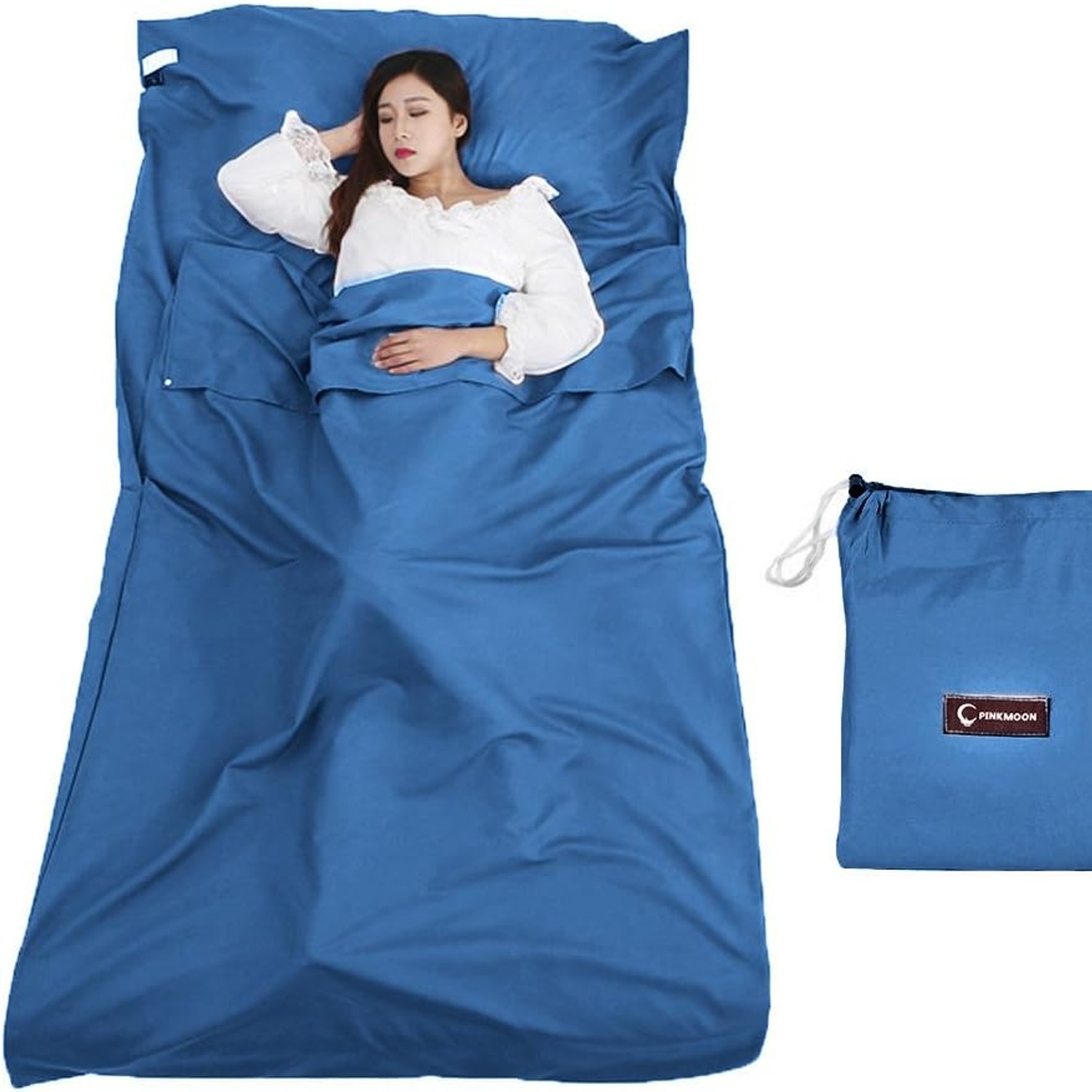
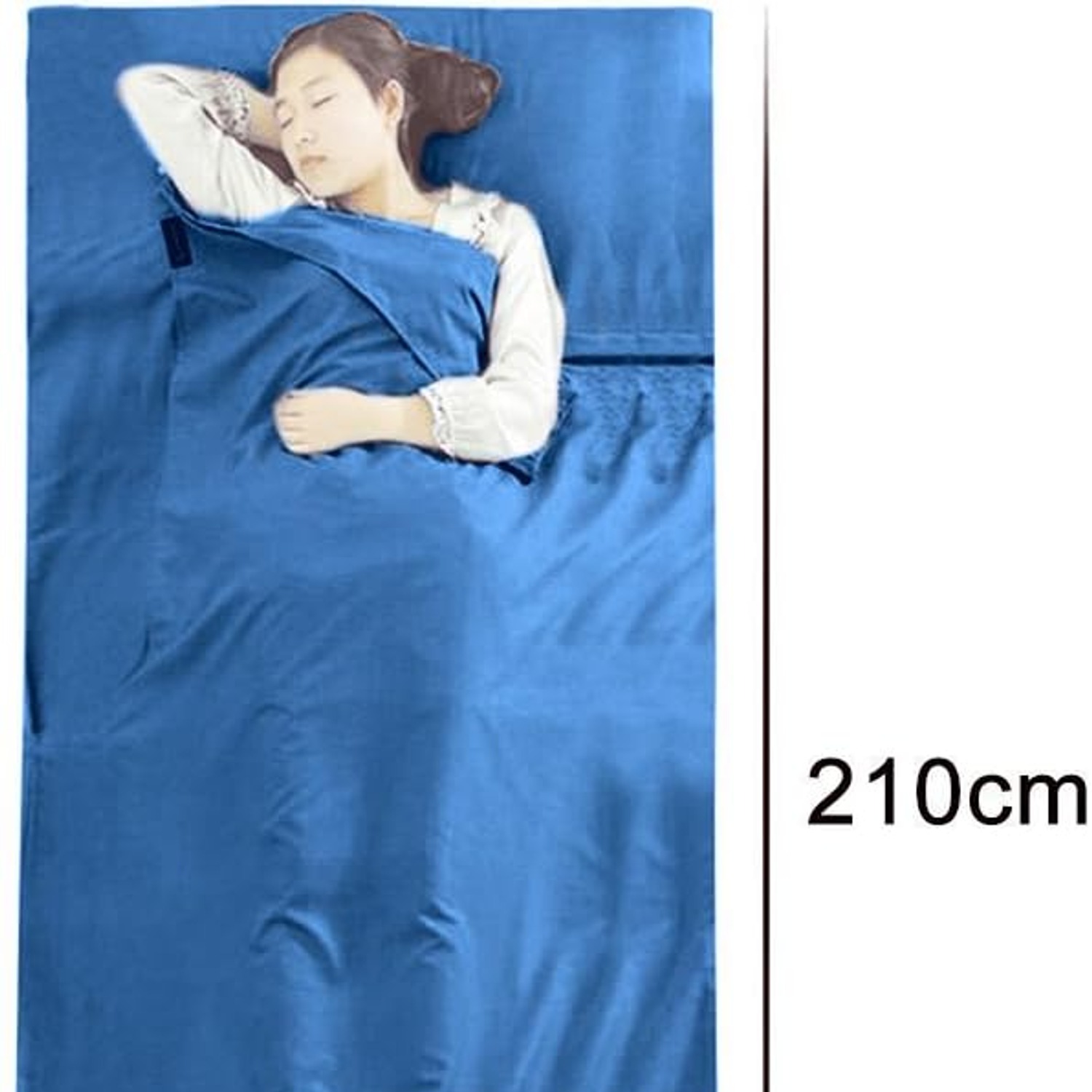
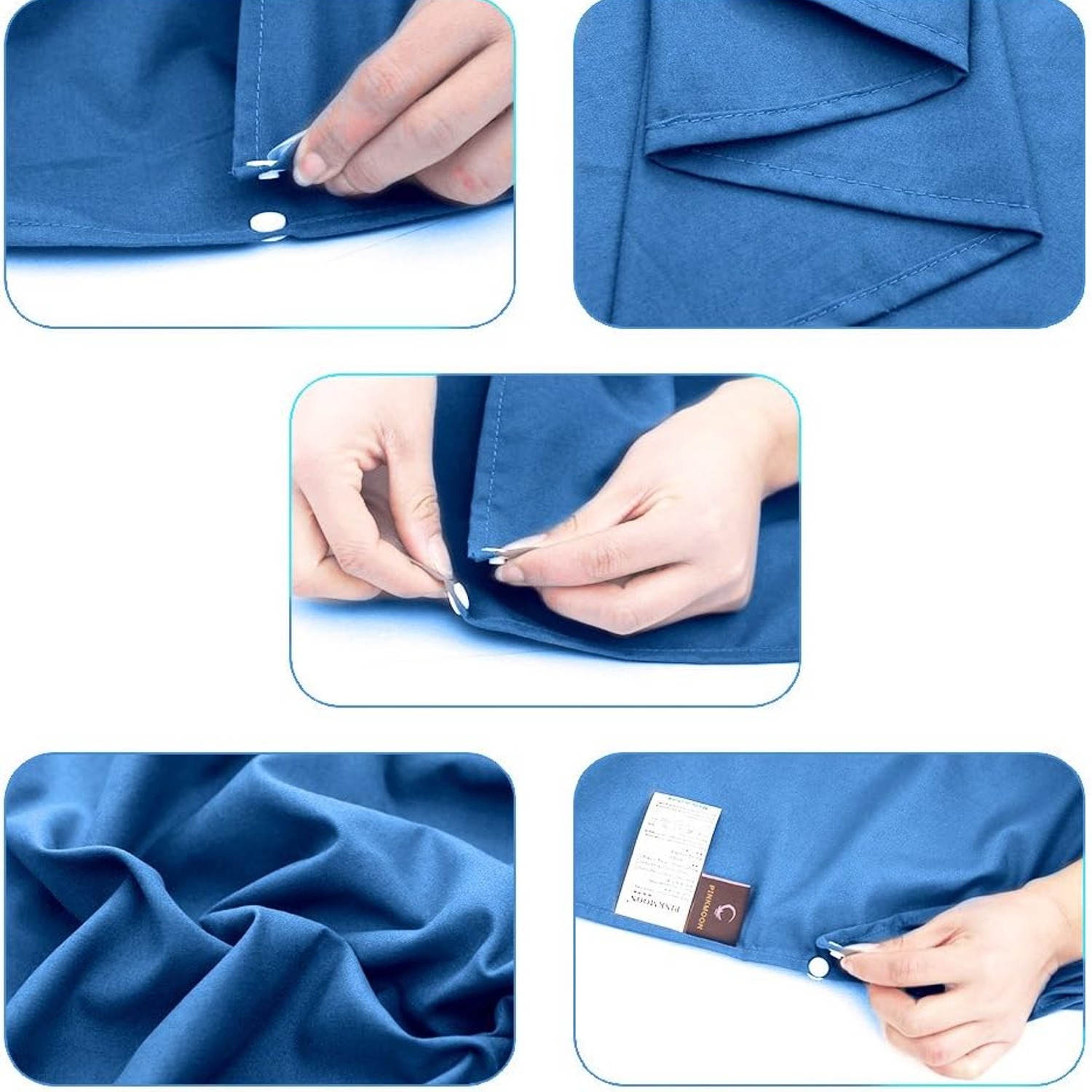
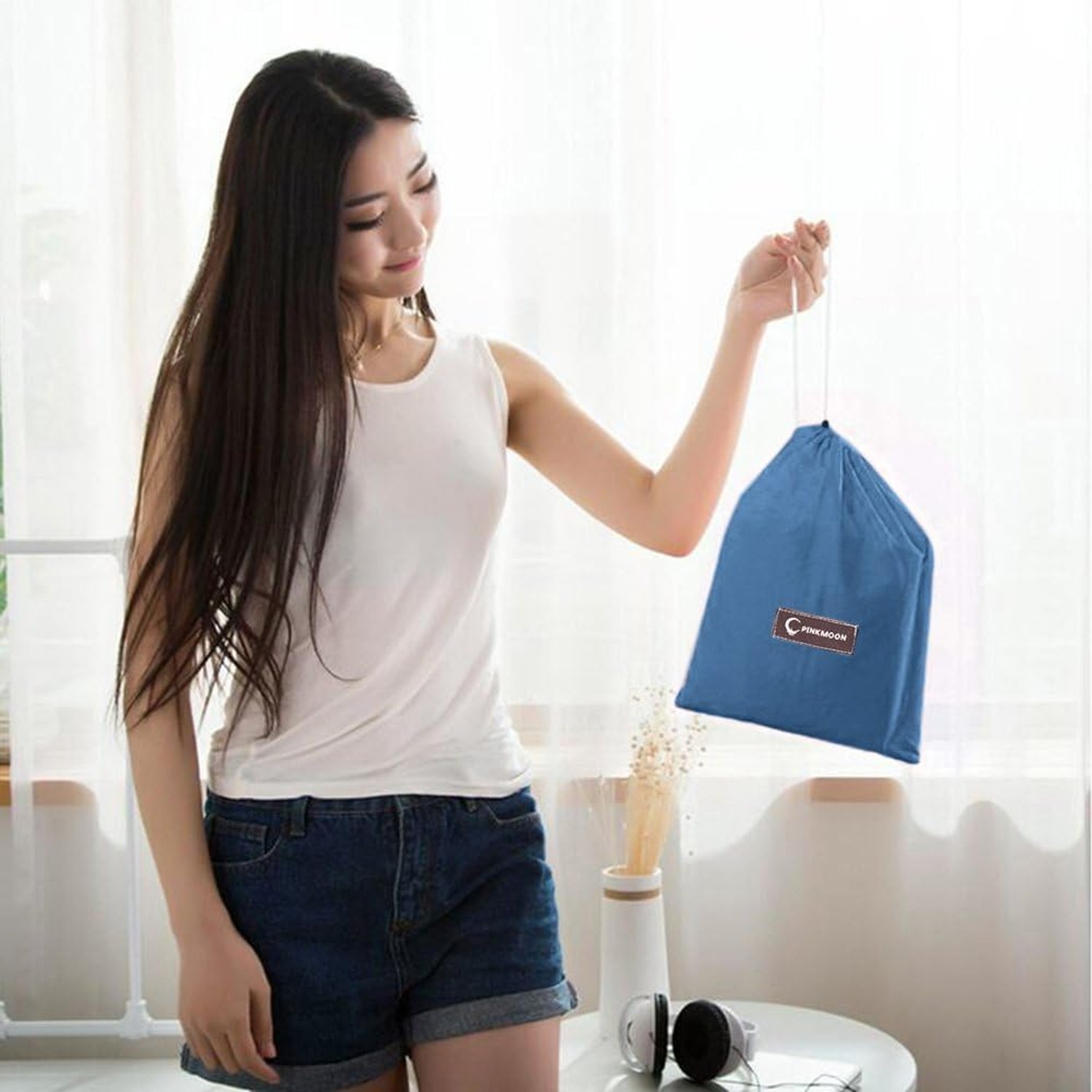
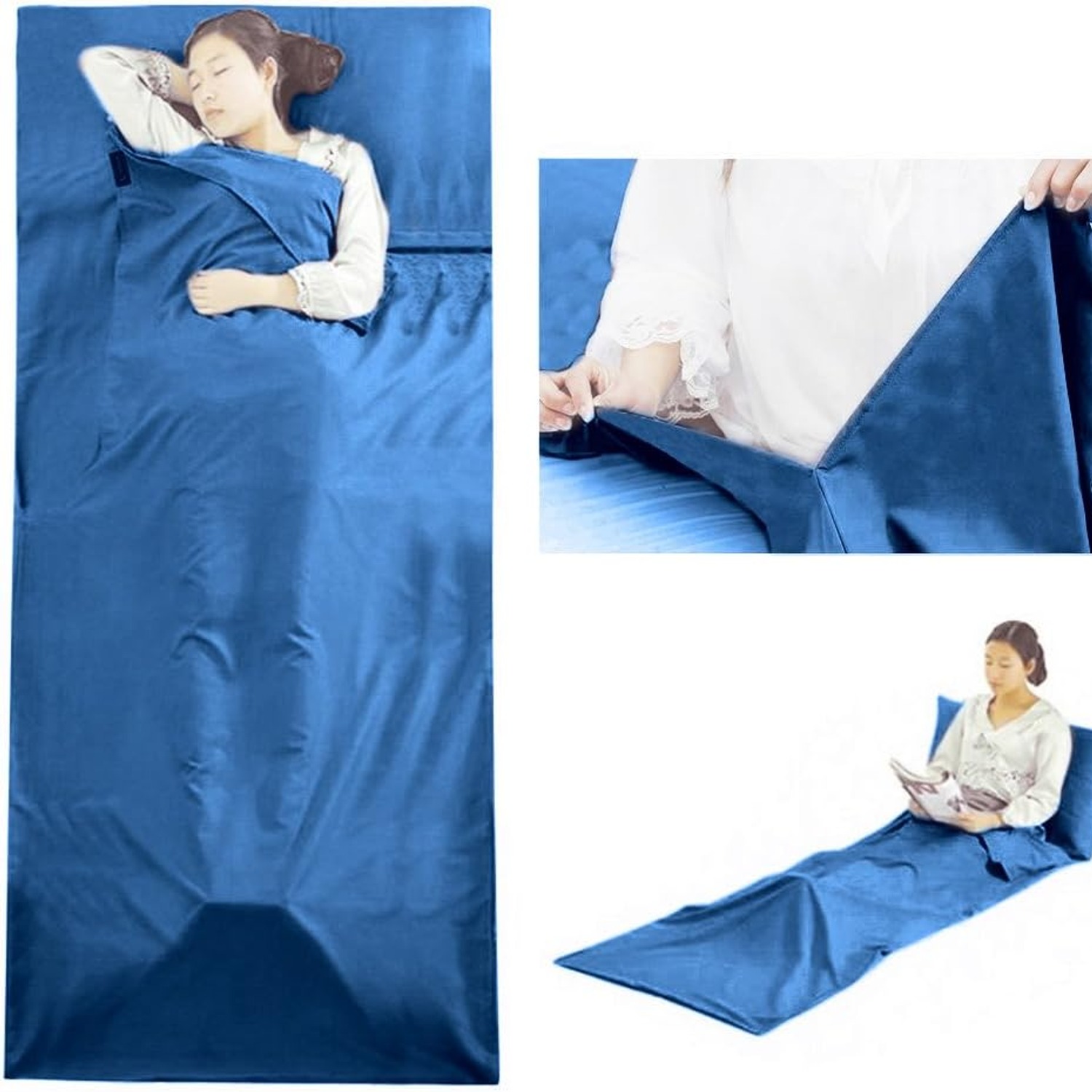
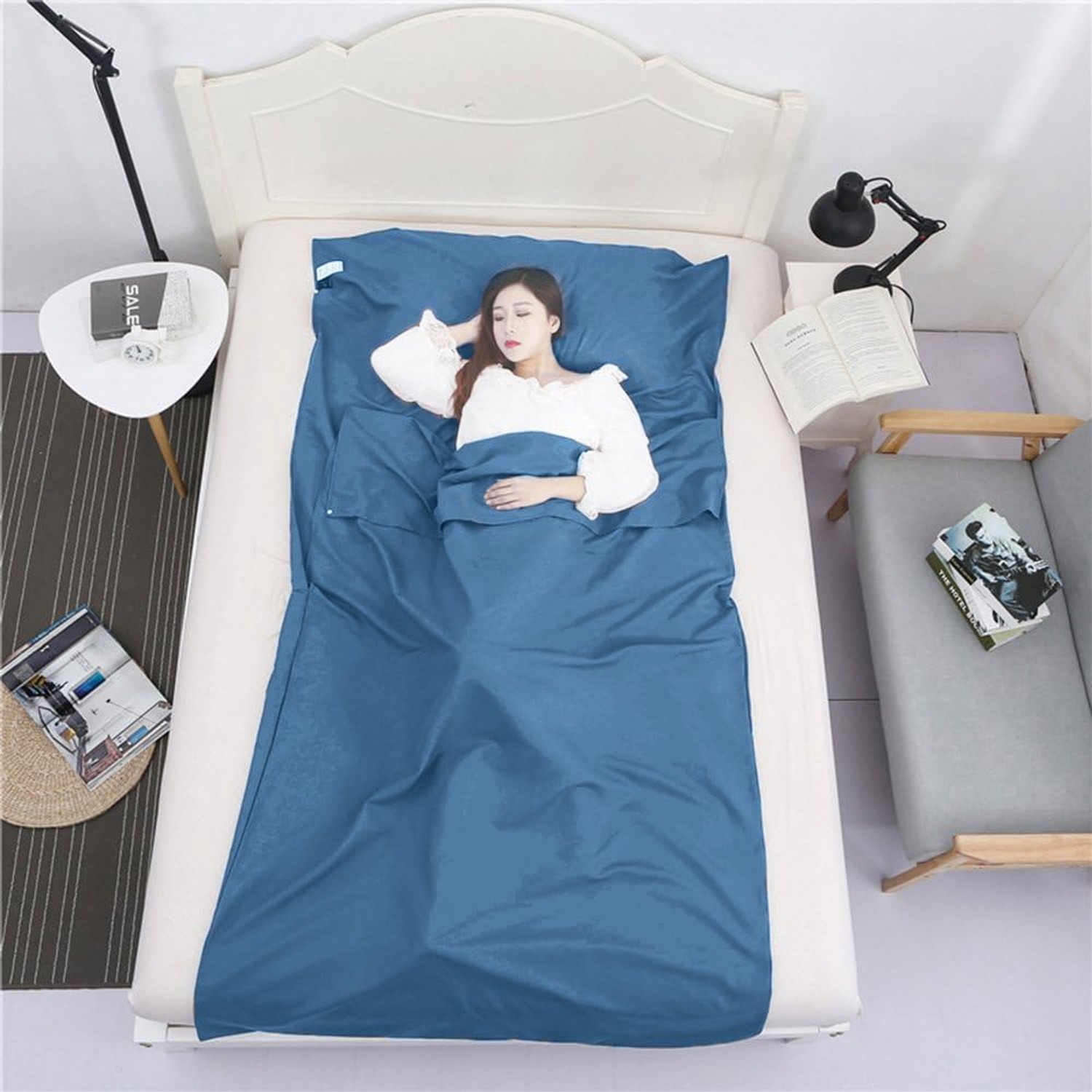
This is a microfibre rectangular bag, 210 cm long and 115 cm wide, weighing 500 g, with a zip closure and button detailing. It comes with a carry bag that packs it down to roughly 20 x 20 cm.
Think of it as the middle ground between a sheet and a proper sleeping bag. It is more substantial than a plain cotton liner, softer against skin than most technical shells, and far lighter than anything with real insulation. The colour is Mysterious Blue.
It has two jobs. First, as a standalone bag for warm nights, indoors or in a tent in summer. Second, as a liner inside a heavier bag, where it adds a soft layer and keeps the expensive outer bag clean.
The supplier record lists a temperature rating below minus 5 degrees Celsius and a season of autumn and winter. We will be straight with you: that reads as optimistic for a thin microfibre bag. Plan around it as a warm-weather bag or a liner, and you will not be disappointed.
Why microfibre matters
Fabric is the whole experience with a product like this, because it is the only thing between you and the mattress.
Microfibre is made of very fine synthetic fibres, much finer than standard polyester. That fineness is why it feels smooth rather than slick or scratchy. If you have ever used a cheap polyester liner that felt like sleeping inside a carrier bag, this is the opposite of that.
It also dries fast. On the road you will end up washing this in a sink or a hostel machine, and the difference between a fabric that dries overnight and one that is still damp at checkout is not small. Cotton liners feel lovely but they take forever.
The supplier notes the fabric resists discolouring, which is a fair claim for quality microfibre. Wash it with similar colours for the first couple of cycles anyway, as you would with anything new.
Who this suits
Hostel and guesthouse travellers. This is the core use. You get a clean, washable barrier and you stop thinking about the bedding entirely. Anyone comparing options for the best travel sleeping bag for budget accommodation lands here for a reason.
Summer campers. On a mild night in a tent, a full insulated bag is too much. This gives you coverage without overheating, and it packs to nothing.
Hut and refuge walkers. Many mountain huts provide a mattress and a blanket and expect you to bring your own liner. This fits that requirement neatly.
People who stay with family. Spare rooms, sofa beds, camp beds in a cousin's lounge. Bringing your own layer is polite and comfortable at the same time.
Anyone who already owns a warm bag. Used as a liner, it extends the life of your main bag and means you wash the insulated one far less often.
Who it does not suit: anyone heading somewhere genuinely cold with this as their only bedding. It is not an insulated bag and should not be treated as one.
How to choose between a bag and a liner
People get tangled here, so here is the simple version.
A liner is a thin fabric sack you put inside a sleeping bag. A travel sleeping bag is something you can sleep in on its own in mild conditions. This product sits in both camps, which is why it is useful, but you should still be clear which role you need.
If you are travelling indoors most nights and camping occasionally in summer, use it as a standalone bag. If you are camping in shoulder season or anywhere with real night-time cold, buy a properly rated outer bag and use this inside it.
The 115 cm width matters for the liner role. Narrow liners feel constricting inside a bag and tangle around your legs. This one is wide enough to move in, which is part of why it works in both jobs.
Shape, size and sleeping style
Rectangular bags get less attention than mummy bags, but for travel they are often the better call.
Mummy bags taper at the feet to reduce dead air and save weight. That is the right design when you are chasing warmth per gram in cold conditions. It is the wrong design when you just want to be comfortable and you are not fighting the cold.
At 210 by 115 cm, this bag gives you room to bend your knees, roll over and sleep on your side. Side sleepers in particular notice the difference immediately.
It also opens out flat. Unzip it fully and you have a 210 by 115 cm cover, which is handy on a hot night, on a plane, or when two of you want to share a blanket on a sofa.
The maximum recommended height is 180 cm. If you are taller, you can still use it, but you will probably want to sleep with it open rather than zipped up to the shoulders.
Packing and weight
Five hundred grams and a 20 x 20 cm packed size is the kind of specification that changes behaviour. At that weight, you stop deliberating. It goes in.
That matters more than it sounds. The most common reason people end up sleeping under a questionable hostel blanket is that they left their liner at home because it seemed like one more thing to carry. Half a kilogram does not trigger that calculation.
For packing, stuff it into the carry bag rather than folding. Stuffing is faster, distributes creases randomly and packs just as small. Folding the same lines repeatedly puts wear in the same places.
At home, store it loose in a cupboard rather than compressed in its sack for months. Fabric lasts longer when it is not permanently squashed.
Looking after it
The care routine is simple and you will not need to think about it much.
Machine wash cold or warm on a gentle cycle with a mild detergent. Wash it alone or with similar colours. Skip bleach entirely, and skip fabric softener too. Softener leaves a residue on microfibre that makes it feel less soft over time, which is the opposite of what you want.
Tumble dry on low or hang it in the shade. Direct sun over many hours will fade almost any dyed fabric. High dryer heat is the main enemy of synthetic fibres, so keep it cool.
Zip it closed before washing. A loose zip can catch on the fabric and on other items in the drum.
If it picks up a smell after a long trip, a wash with a cup of white vinegar and no detergent usually clears it, followed by a normal wash.
The short version
This is a 500 g microfibre travel sleeping bag, 210 by 115 cm, with a zip, button detailing and a carry bag that packs it to about 20 x 20 cm. The colour is Mysterious Blue and the brand is Queta.
Buy it if you want your own clean bedding in hostels, huts, guest rooms and summer tents, or if you want a soft liner to extend the life of a warmer bag.
Do not buy it as your only bedding for cold-weather camping. It is a comfort and hygiene layer, not an insulated bag, whatever the supplier temperature figure suggests.
Used for what it is good at, it is one of those small purchases you stop noticing because it quietly removes a problem. That is usually the best kind.