
The complete guide
How To Choose A Lightweight Portable Camping Table
The problem with having nowhere to put anything
Camping gear tends to arrive in a sensible order. Tent, chairs, sleeping bag, stove, light. The table almost never makes the first list, because it feels optional. Then you get to your spot, light the stove, and realise there is nowhere flat to put the kettle, the cutting board, the plates, your phone, or the cup of tea you just made.
So you improvise. The cooler lid becomes a bench. A flat rock becomes a stove base. The plate goes on your lap and slides when you shift. None of it is a disaster, but all of it is annoying, and it repeats every single meal of the trip.
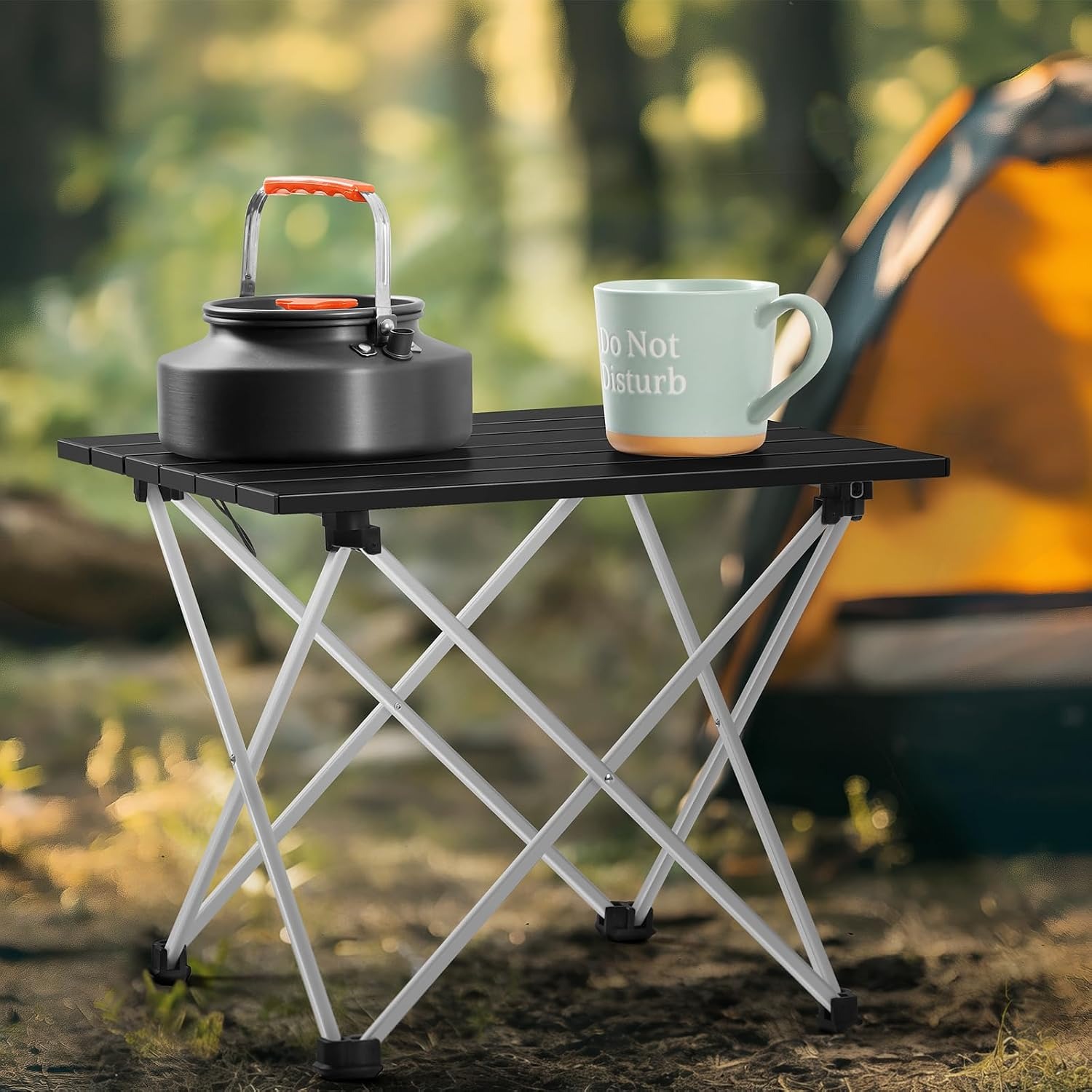
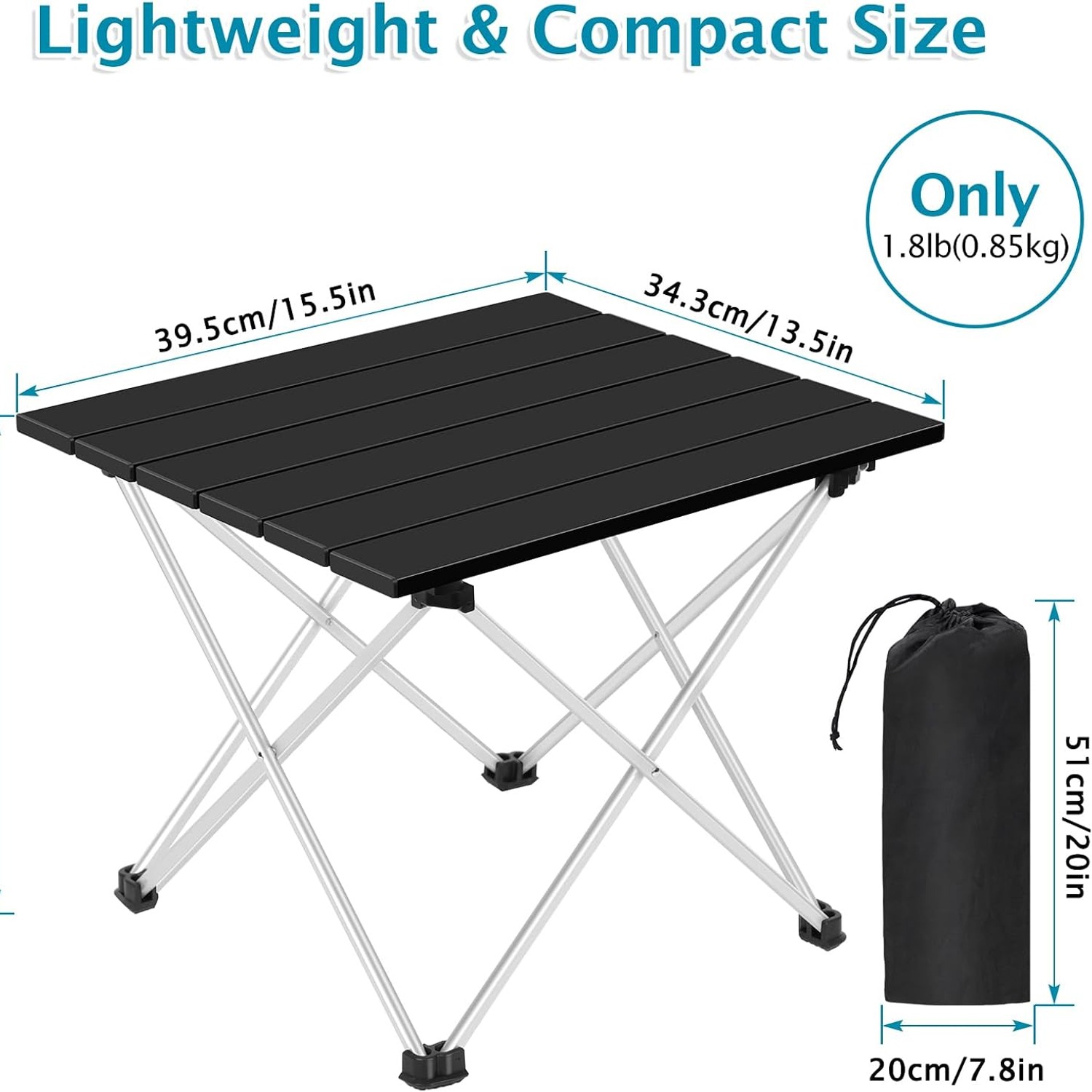
A small table fixes all of that for about the weight of a full water bottle. That is the pitch. This one weighs 780 grams and folds to 440 mm, which puts it firmly in the category of gear you stop thinking about because it never costs you anything to bring.
How this table actually works
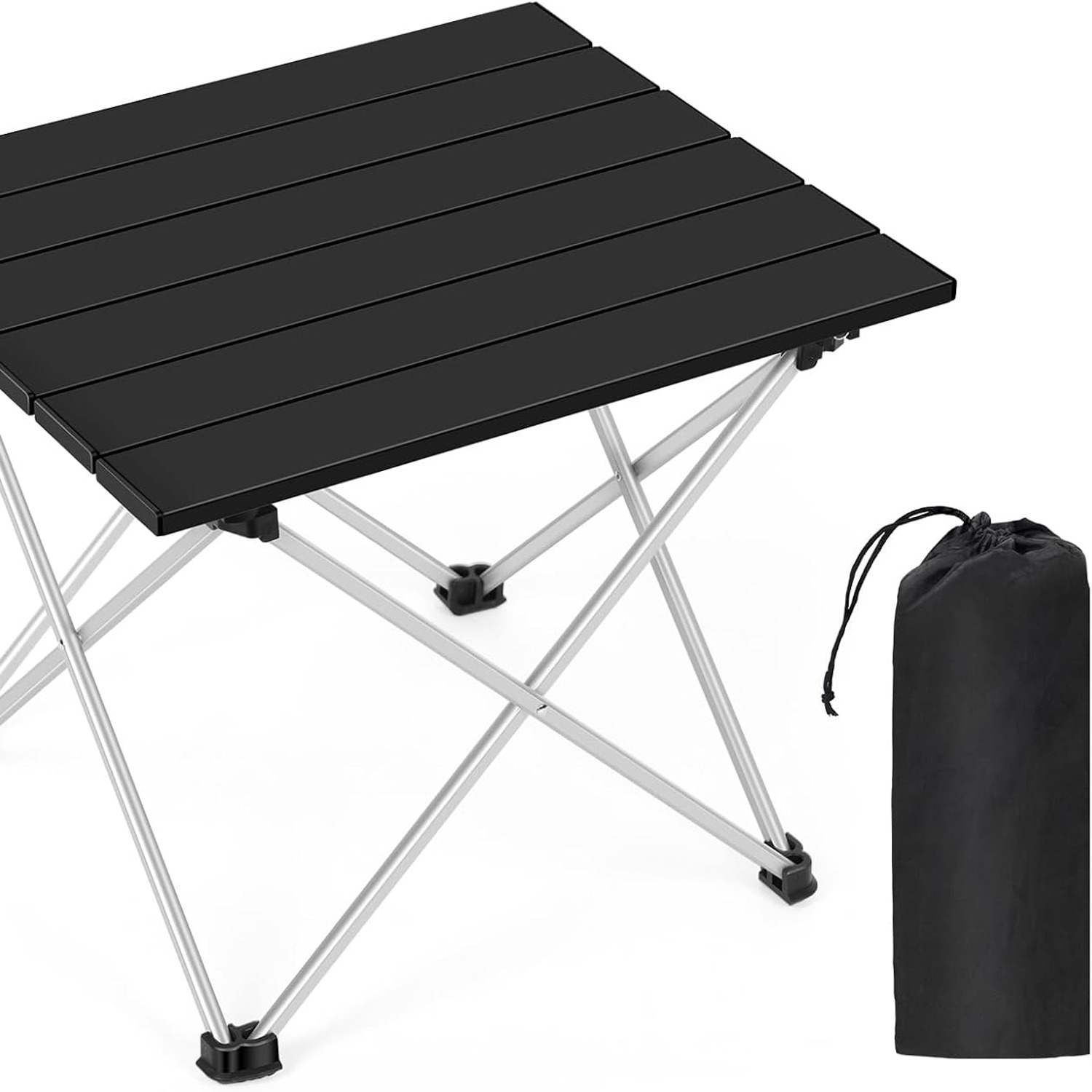
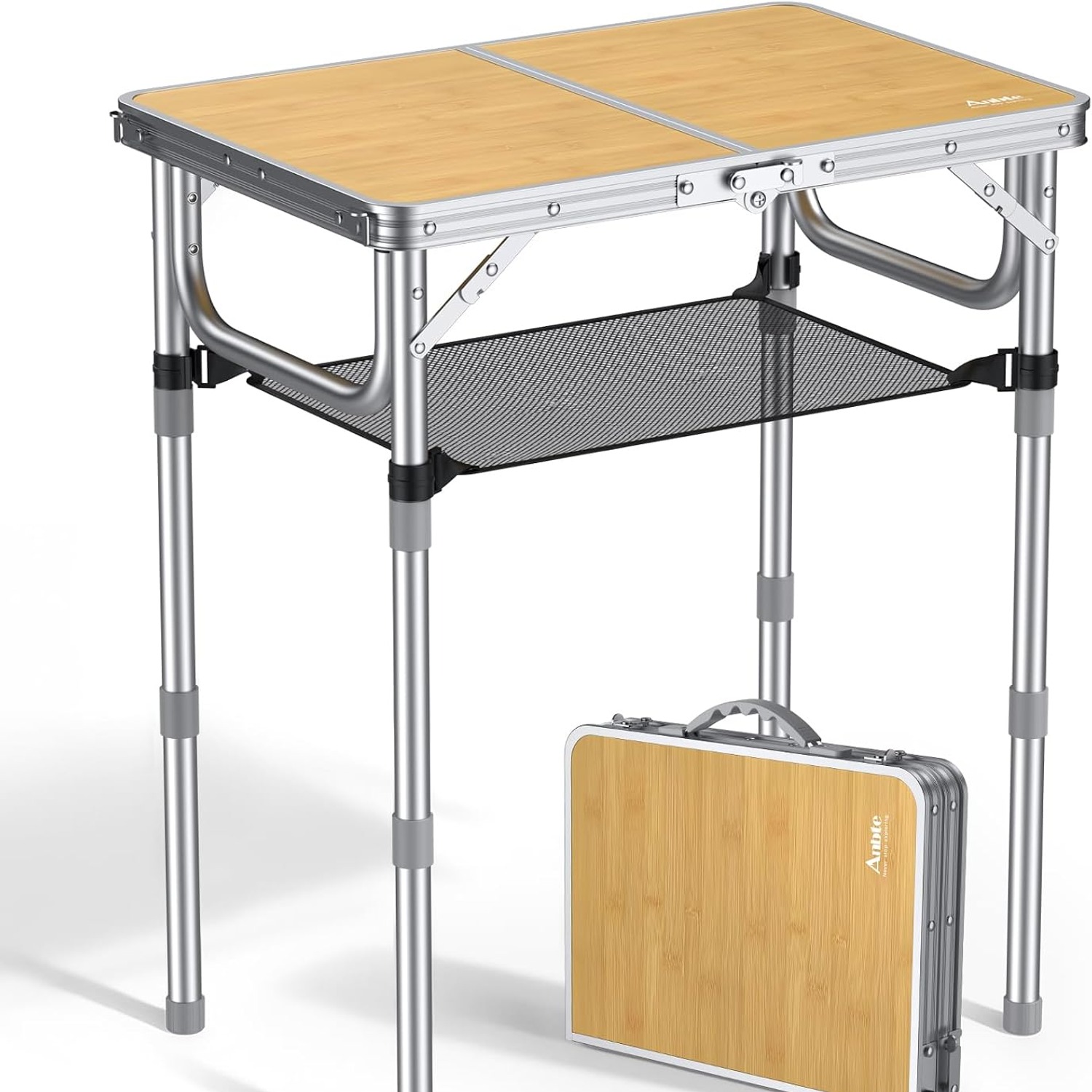
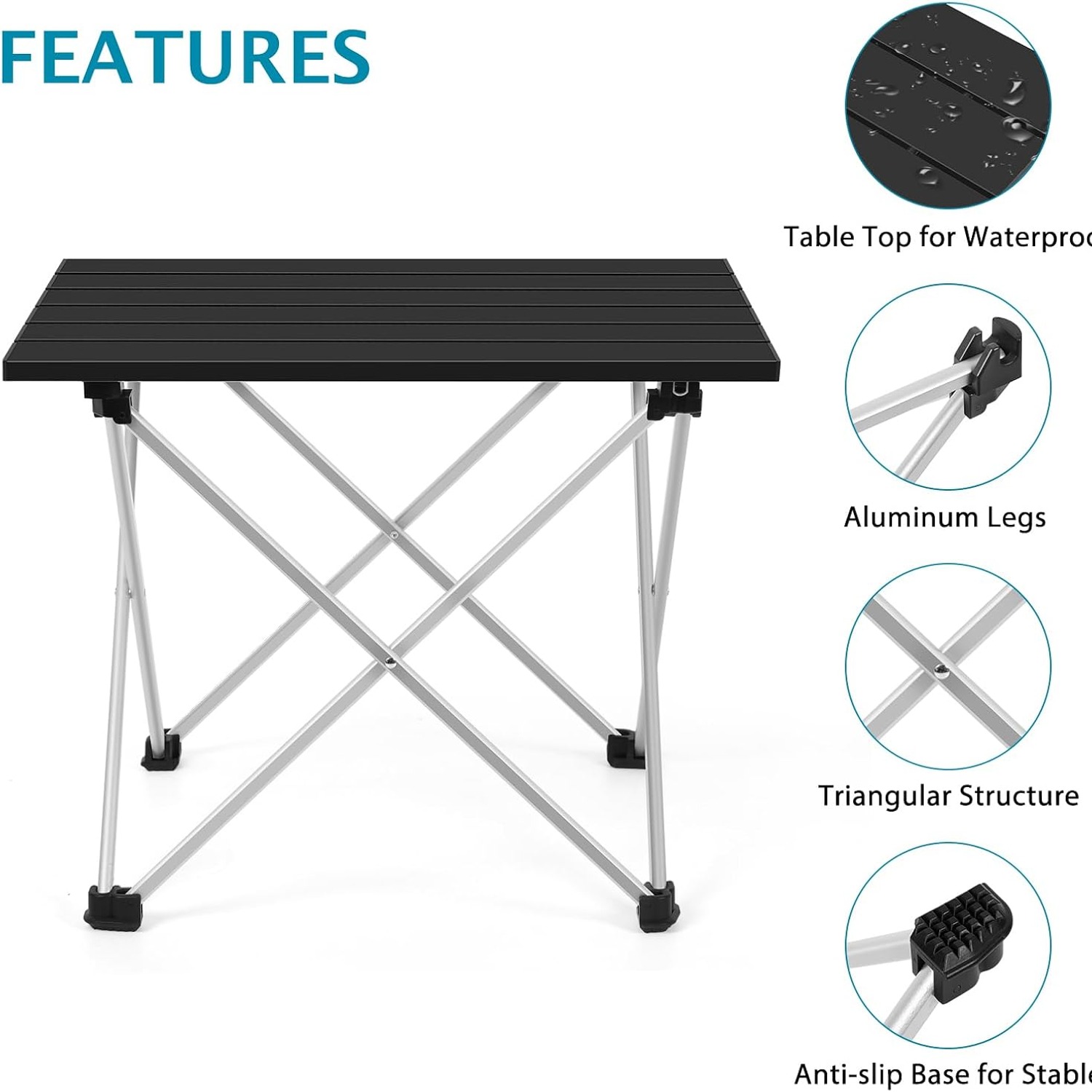
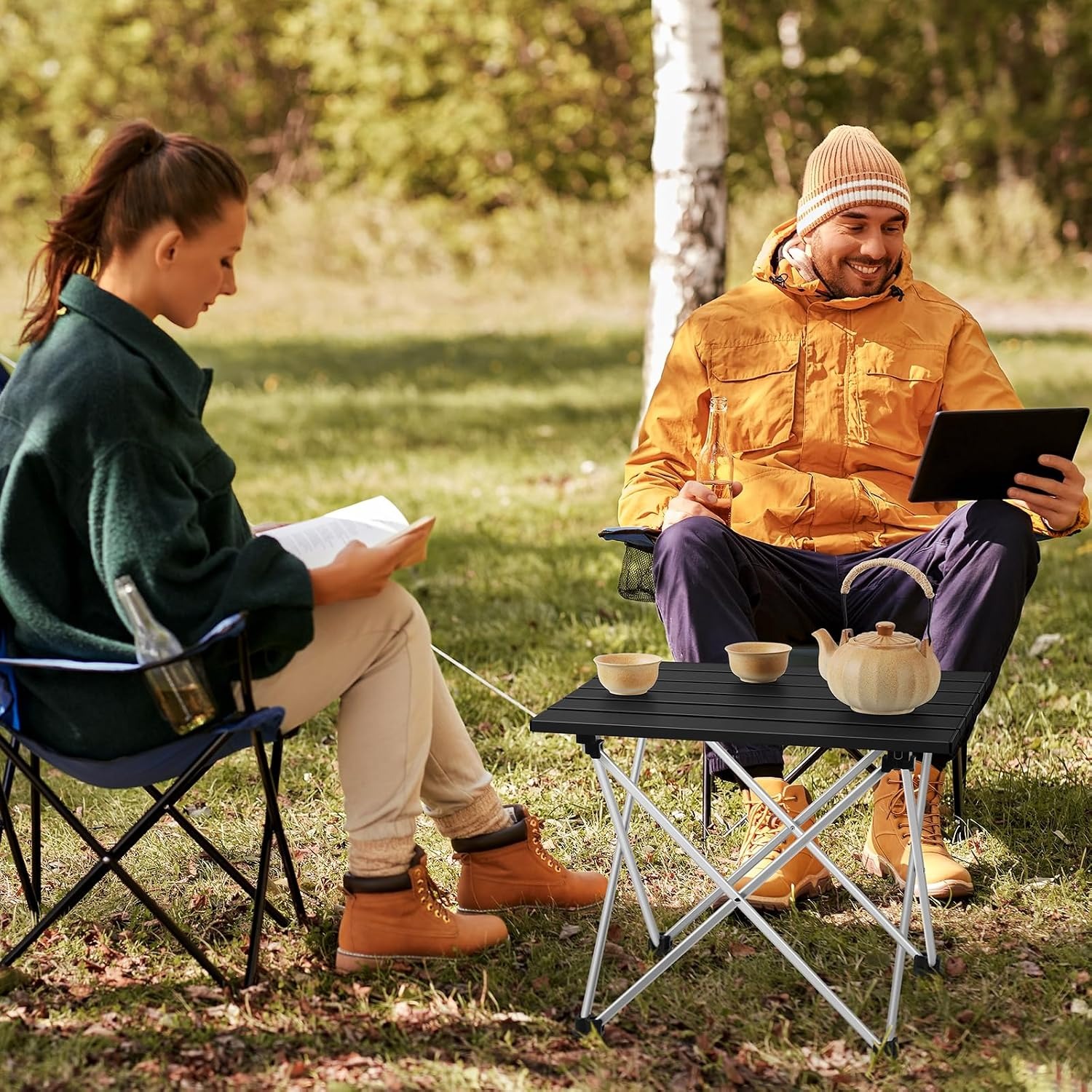
The construction is straightforward, which is a good sign in camp gear. You get an aluminium frame with a cross base, straight legs, and hinge joints where the sections meet. A plastic slat top lays across the frame to make the surface. Set up, it measures 39.6 cm wide, 34.5 cm deep and 32.5 cm high.
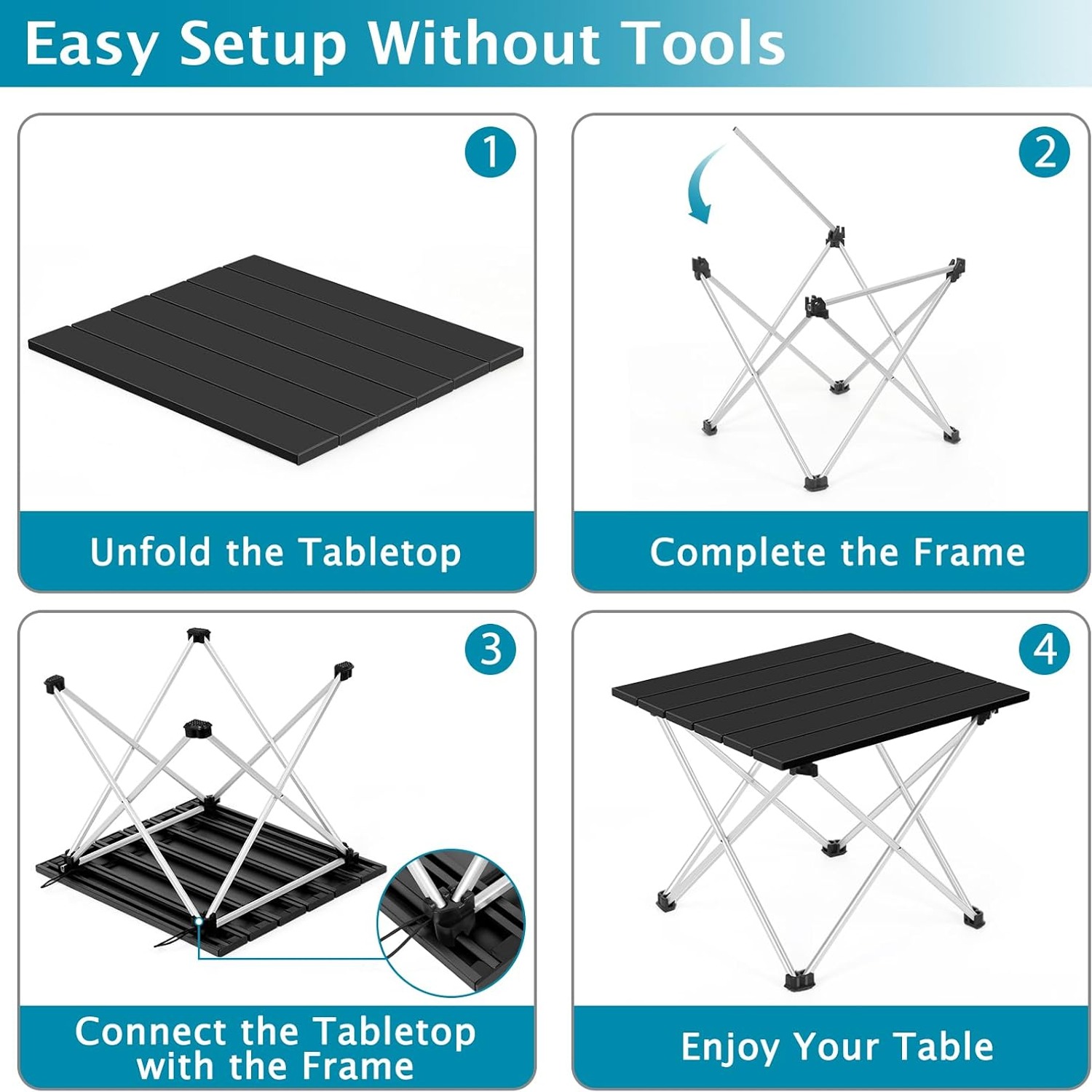
The hinges do the real work. Because the frame pivots as a connected unit rather than coming apart into loose poles, setup is a matter of opening it out and laying the top on. No tools are needed and none are supplied. You are not hunting for an allen key by torchlight at 9 pm.
Pack-down runs the same way in reverse. The slat top rolls flat, the frame folds, and the lot goes into the carry bag that comes with it. A collapsed length of 440 mm means it fits in places a rigid table never would, like the gap behind a seat or the side pocket of a roof box.
Load rating is 22.68 kg. In practice that is more than most people will put on a table this size. A single-burner stove, a kettle, a board, plates and a couple of drinks sit well within it. The thing to avoid is concentrating all of that on one corner, which is true of any lightweight folding camp table regardless of brand.
Who it suits
Car campers get the most out of it. You already have the boot packed, and this adds almost nothing to the load while removing a daily irritation.
Beach days are the other obvious fit. A low table at 32.5 cm sits at the right height next to a beach chair or a towel, and the plastic top shrugs off sand and spills in a way that a fabric surface does not. Rinse it, wipe it, done.
Anglers like a small side surface for tackle, bait boxes, a thermos and a phone. Picnickers use it for the food so the rug stays clean. Tailgaters use it as a drinks station. Plenty of people buy one as a compact picnic table purely for the park and never take it camping at all.
It is less suited to anyone who wants a proper dining table for a family of five. The footprint is small by design. If you need a surface that seats four people for a cooked dinner, look at a larger roll-top table and accept the extra weight and bulk that comes with it.
How to choose between options
Start with weight, because weight decides whether you bring it. Anything under about a kilogram tends to travel with you by default. Anything over three kilograms starts getting left behind on shorter trips. At 780 grams, this one is in the first group.
Then look at packed length. A table that folds to 440 mm fits in the awkward gaps. One that folds to a metre needs its own space, and in a loaded car that space has to come from something else.
Next, consider height. Standard dining height is around 72 to 75 cm. This table is 32.5 cm, which puts it in the low or side-table category. That pairs naturally with low camp chairs, picnic rugs and beach setups. If you sit in tall chairs and want to eat at them, a low table will feel wrong. Measure the height of your chair arms before you decide.
Surface material matters more than people expect. Plastic slats wipe clean, do not absorb liquid, and do not hold smells. Fabric tops are lighter again, but they sag under a stove and stain with sauce and fish. Aluminium slats are rigid and heat tolerant but conduct cold and can rattle. Each has a trade-off, and the wipe-clean plastic here is the easy choice for food and messy jobs.
Finally, check the load rating against what you actually put on a table. 22.68 kg sounds abstract until you add it up. A two-litre water container, a stove, a full pot and a few plates will still leave headroom.
Setting it up well
Pick your ground first. Flat and firm beats scenic every time. On grass, press the legs down gently so the base settles rather than wobbling on tufts. On soft sand, scuff a shallow flat patch and set the legs in it. On a slope, turn the table so the long edge runs across the slope, not down it.
Put the heaviest item nearest the centre. That is good practice on any portable side table outdoors, and it keeps the frame loaded evenly.
Keep hot cookware off the plastic. A folded tea towel, a cheap trivet or a small cutting board is enough. It takes two seconds and the top will still look fine after a hundred trips.
In wind, weight the table down or keep it in the lee of the car or tent. At 780 grams, an empty table will move if a gust catches the top. A full one will not.
Care that keeps it going
Wipe the top with a damp cloth after each use. That is the whole routine most of the time. The surface is stain resistant, so sauces and drinks come off without scrubbing if you get to them before they dry.
The one habit worth building is clearing grit before folding. Sand, crumbs and small stones that find their way into hinge joints are what eventually makes a folding frame stiff and noisy. A quick shake and a brush with your hand deals with it.
If the table has been out in rain or at the beach, let it dry properly before bagging it. Salt water in particular deserves a rinse with fresh water first. Aluminium handles moisture well, but no gear likes being packed away damp.
Store it in the carry bag, somewhere dry. The bag is not just for transport. It keeps the frame and top together so you never arrive at a campsite holding half a table.
Skip solvents, bleach and abrasive pads. They can dull a powder-coated finish and scratch a plastic top with no real benefit over warm water and a cloth.
The short version
This is a small, light, wipe-clean folding table that costs you almost nothing to carry and saves you a daily irritation. It measures 39.6 by 34.5 cm and stands 32.5 cm high, weighs 780 grams, folds to 440 mm, and holds up to 22.68 kg.
It suits car campers, beach days, fishing trips, picnics and tailgates. It will not replace a full-size dining table, and it is not meant to. It sits beside a chair at the right height and holds the things you keep putting on the ground.
If you already own the tent, the chairs and the stove, this is the cheap piece of kit that makes all of them nicer to use.