
The complete guide
How to Choose a Rechargeable Camping Lantern
The problem with camp light
Most people start with a torch. Then they spend the first night holding it in their teeth while they try to open a tin, and they learn something. A torch points one way. Camping does not.
When you are setting up a tent in fading light, cooking on a low table, finding a sock inside a packed bag or just sitting around chatting, you need light that fills a space. You need it to stay where you put it. You need it to be bright when you are working and soft when you are not. And you need it to still be working on night three, not just night one.
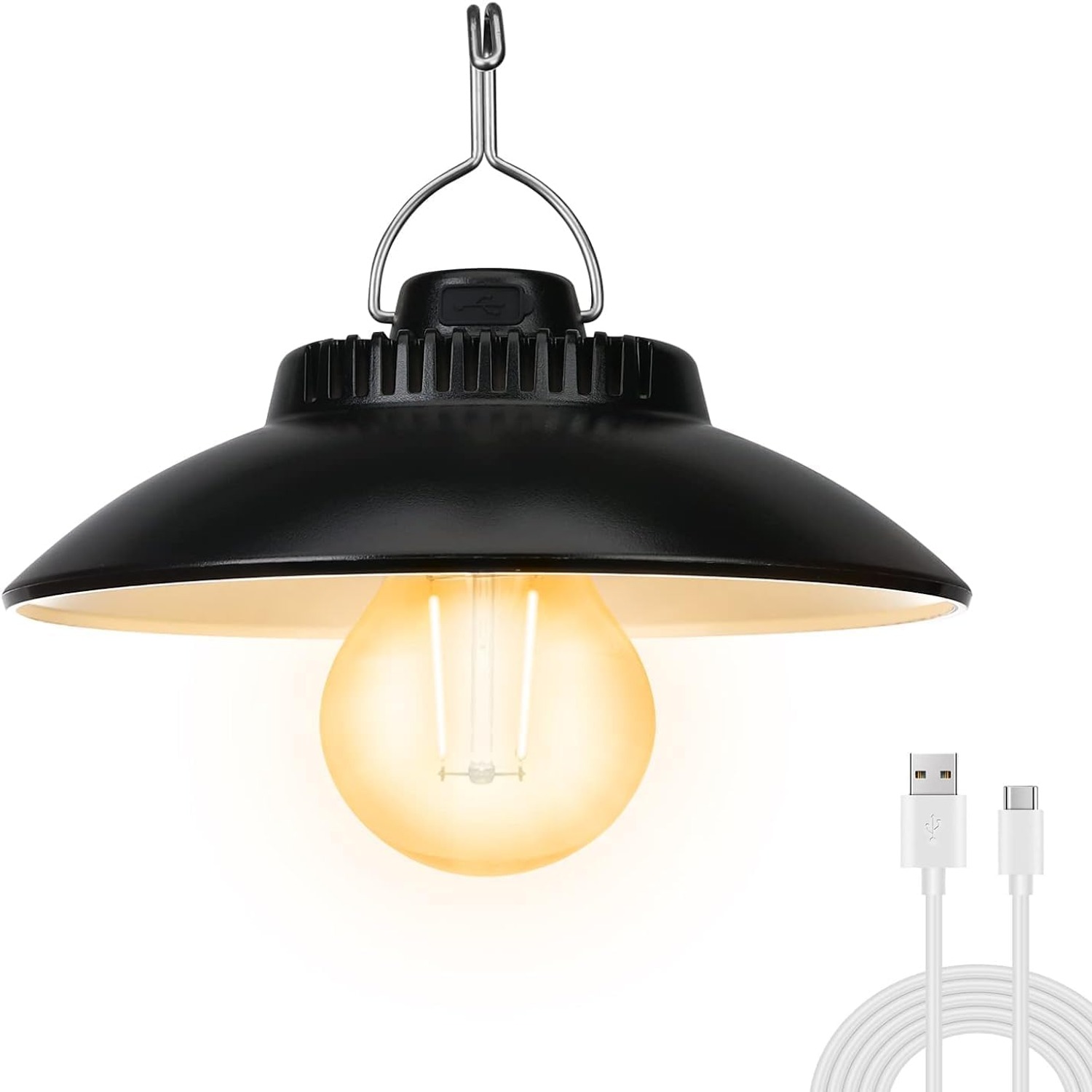
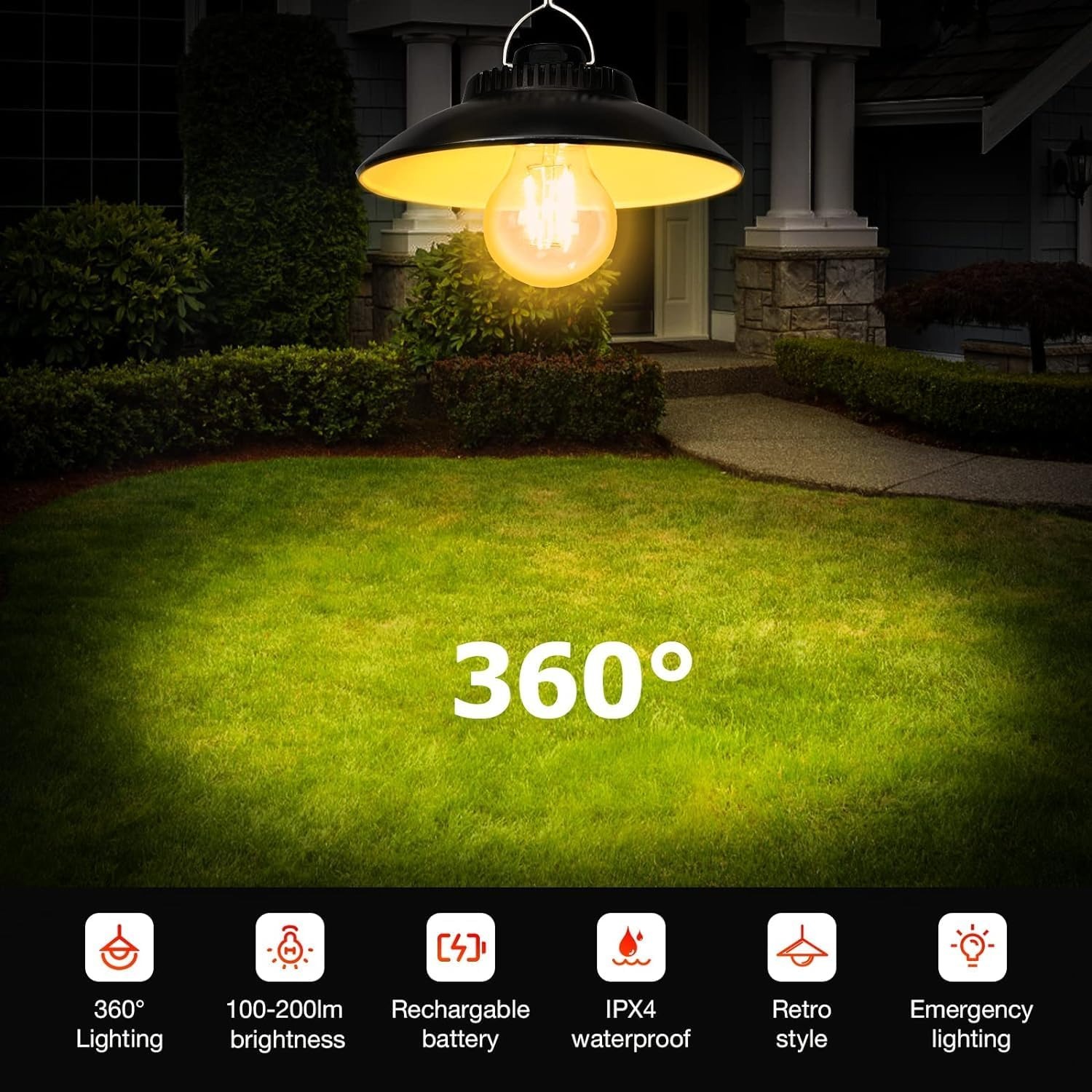
That is what a lantern is for. A retro camping lantern like this one sits in the middle of the table, or hangs from the roof of a tent, and lights everything around it at once. Nobody has to hold it. Nobody has to aim it.
How a rechargeable LED lantern works
The old versions burned fuel. You filled a reservoir, trimmed a wick, lit it and hoped it did not tip over. They gave lovely light and a long list of problems: smell, soot, heat, fuel to carry, and a flame inside a nylon tent.
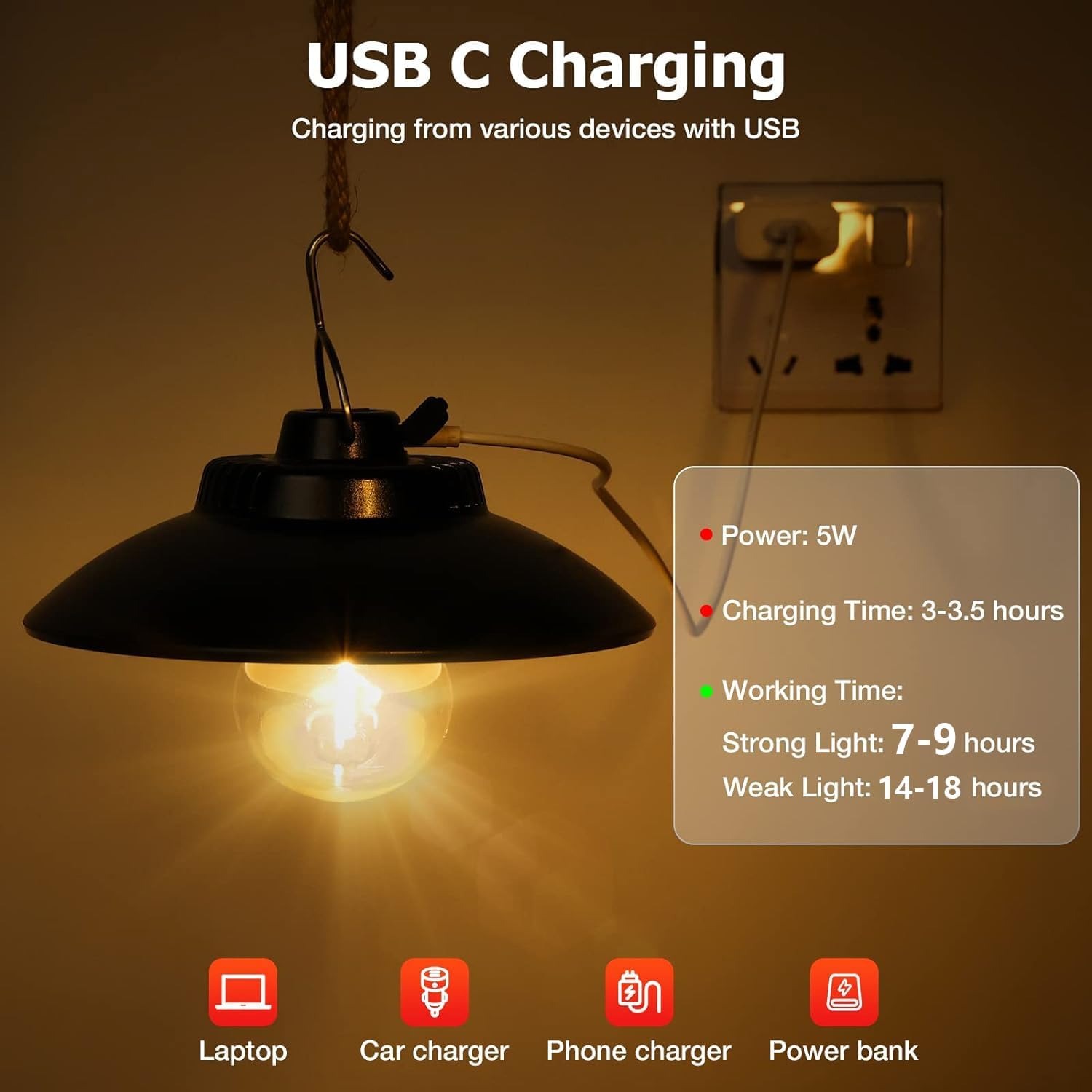
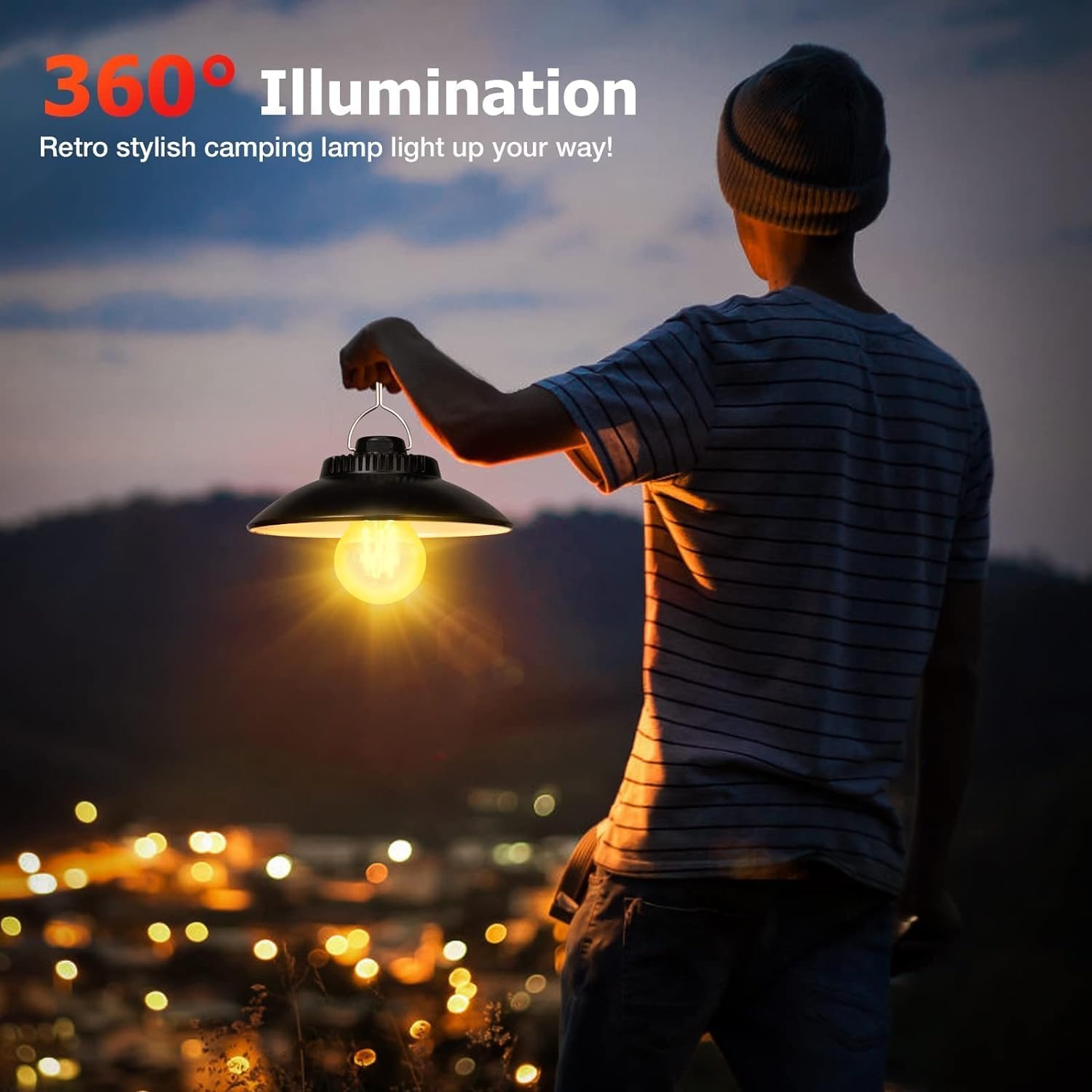
The modern version keeps the shape and throws out the rest. Inside this lantern is a single LED rated at 5 watts, with a 360 degree beam angle so it spreads light in a full circle rather than a cone. Power comes from a lithium battery built into the body, charged through a port at a 5 V 1 A input. The listed battery life is 7.75 hours.
Two things follow from that design. First, nothing gets hot enough to worry about in a tent. Second, you never carry fuel or spare cells. You carry a cable, and that cable is probably already in your bag for your phone.
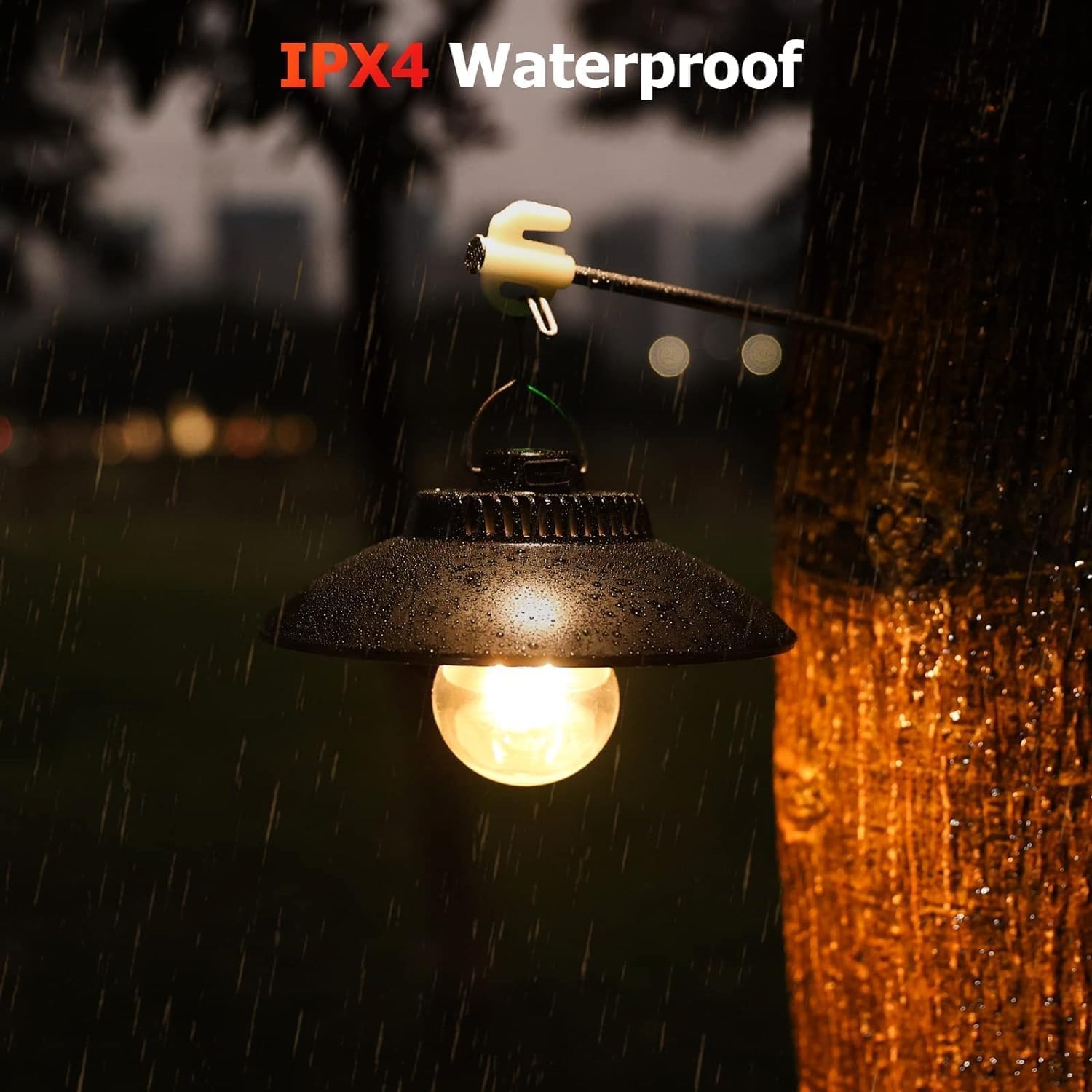
The body is moulded ABS with a powder coated finish, which is the same family of tough plastic used for a lot of outdoor gear. It takes knocks and it does not mind being cold. The rating is water resistant, so dew and light rain are fine, but it is not a diving lamp.
Who this suits
Tent campers get the most out of it. Hang it from the ceiling loop and the whole inner lights evenly, which is far better than a torch bouncing off the roof.
Caravanners and campervan owners use it as a flexible extra. Inside on a bench, outside under the awning, then back on the USB charger overnight.
Anyone who has sat through a power cut will understand the home use. Keep it charged in a kitchen drawer and when the lights go out you have a standing lantern instead of a phone screen. For a lot of households, a charged lantern in a cupboard is the single most useful piece of emergency kit they own.
It also fits a quieter group: people who sit outside. Balcony dinners, garden tables, late barbecues, a shed with no wiring. The warm, even glow of a lantern suits those evenings better than a floodlight.
Night fishing is another natural fit. You want to see your tackle and your hands without blasting a beam across the water.
What to look at when you compare lanterns
Charging method. USB charging is the quiet winner. If a lantern needs its own odd adapter, that adapter will be at home when you are not. A USB-C port means one cable does your phone, your lantern and probably your head torch. This one uses a 5 V 1 A input, so most standard chargers and power banks will handle it.
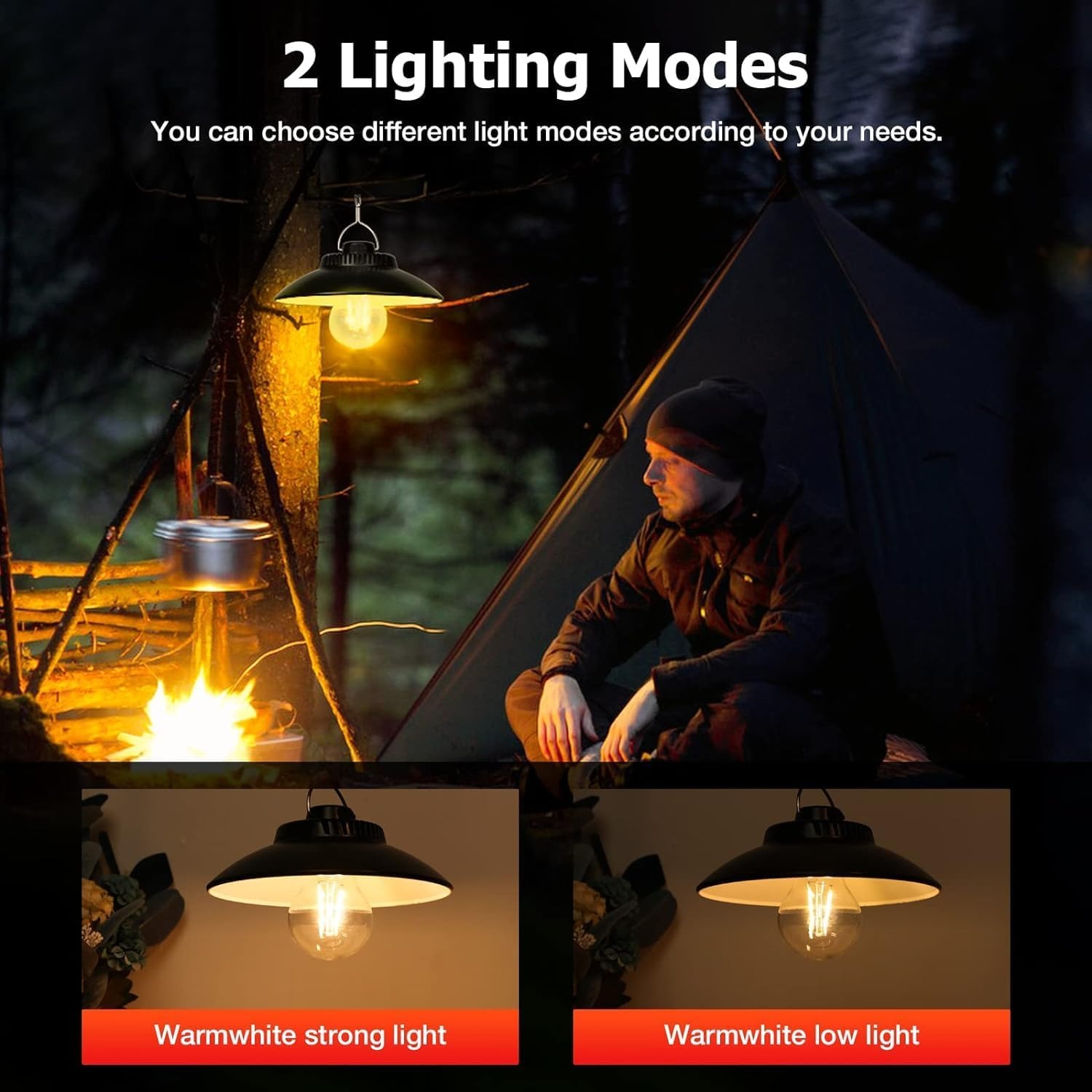
Runtime versus brightness. Every lantern makes a trade. More brightness means more battery used. This lantern lists 7.75 hours of battery life and gives you two modes, full and half. Run it low while you are reading and bright only when you need to see what you are doing, and a charge goes a long way. People who want the best rechargeable camping lantern for a long weekend usually plan around topping up in the car on the drive, rather than expecting one charge to cover four nights.
Beam shape. A 360 degree spread is what makes a lantern a lantern. If a product throws light in one direction only, it is a torch in a different shell. Check this before you buy.
How it hangs. A built-in hook changes how much you use a light. With a hook, a tent loop, an awning rail, a tree branch and a backpack strap all become light fittings. Without one, the lantern lives on a table and that is it.
Size and build. At 14.5 x 11 x 18.5 cm this one is in the sensible range: big enough to light a table, small enough to pack. ABS with a powder coat is a practical combination for gear that lives in a boot.
Simplicity. Two brightness modes on one button is easy to use at midnight. Lanterns with colour cycling, strobe, SOS and five whites look impressive in a listing and annoy you in the field.
Getting the most from it in use
Charge it before you leave, not when you arrive. Flat batteries are the number one reason a good lantern lets someone down.
Hang it high. Light from above spreads better than light from a table, and it keeps your surface clear for cooking.
Use the low mode more than you think you need to. Your eyes adjust, and the softer setting is easier to sit with for hours. Save the full setting for jobs.
If you have more than one lantern, split them. One in the tent, one over the cooking area. Two small lights in the right places beat one bright light in the wrong place.
Keep the charging port clean. Camp dust gets everywhere, and a gritty port is a bad connection waiting to happen.
Looking after it
Care here is simple. Wipe the housing with a soft, damp cloth and dry it before it goes away. Skip solvents and scouring pads, since they will mark a powder coated finish.
Do not store it flat. A lithium battery left empty for months does not do well. Give it an occasional top-up charge between seasons and it will be ready when you want it.
Keep it out of hot, humid storage. A sealed car boot in high summer or a damp shed over winter are both harder on a battery than a kitchen cupboard.
Recharge when the light starts dimming rather than running it all the way down. That habit is the cheapest thing you can do for battery life.
And remember the water rating. Water resistant means it copes with rain and dew. It does not mean it survives being dropped in a creek.
The short version
A rechargeable LED lantern does one job well: it fills a space with light and stays where you put it. This one keeps the old lamp shape, runs a single LED with a 360 degree spread, and charges from a USB cable so you are not hunting for a special adapter or a pack of batteries.
You get two brightness modes, a listed 7.75 hours of battery life, a water resistant ABS body in black, and a built-in hook that turns a tent loop or a branch into a light fitting. It measures 14.5 x 11 x 18.5 cm, which packs easily.
If your camping light plan is currently a phone torch and a head torch, this is the piece that fills the gap. And when the power goes out at home, you will be glad it is in the drawer.