
The complete guide
How to Choose a Roll Top Camping Table That Actually Earns Its Space
The problem with camping without a table
Every camp trip has the same moment. The stove is out, the food is out, and there is nowhere flat to put either. So the stove goes on the ground, the chopping board balances on a cooler lid, and somebody's coffee tips over in the dirt. It is not the end of the world, but it slows everything down and makes cooking outdoors feel like more work than it should be.
A table solves it, but only if you actually bring it. That is the real test. A big rigid folding table is lovely at the site and awful in the boot, so it gets left at home. A roll top camping table exists because somebody looked at that trade-off and decided the table should fold smaller than the gear it supports.
How a roll top table works
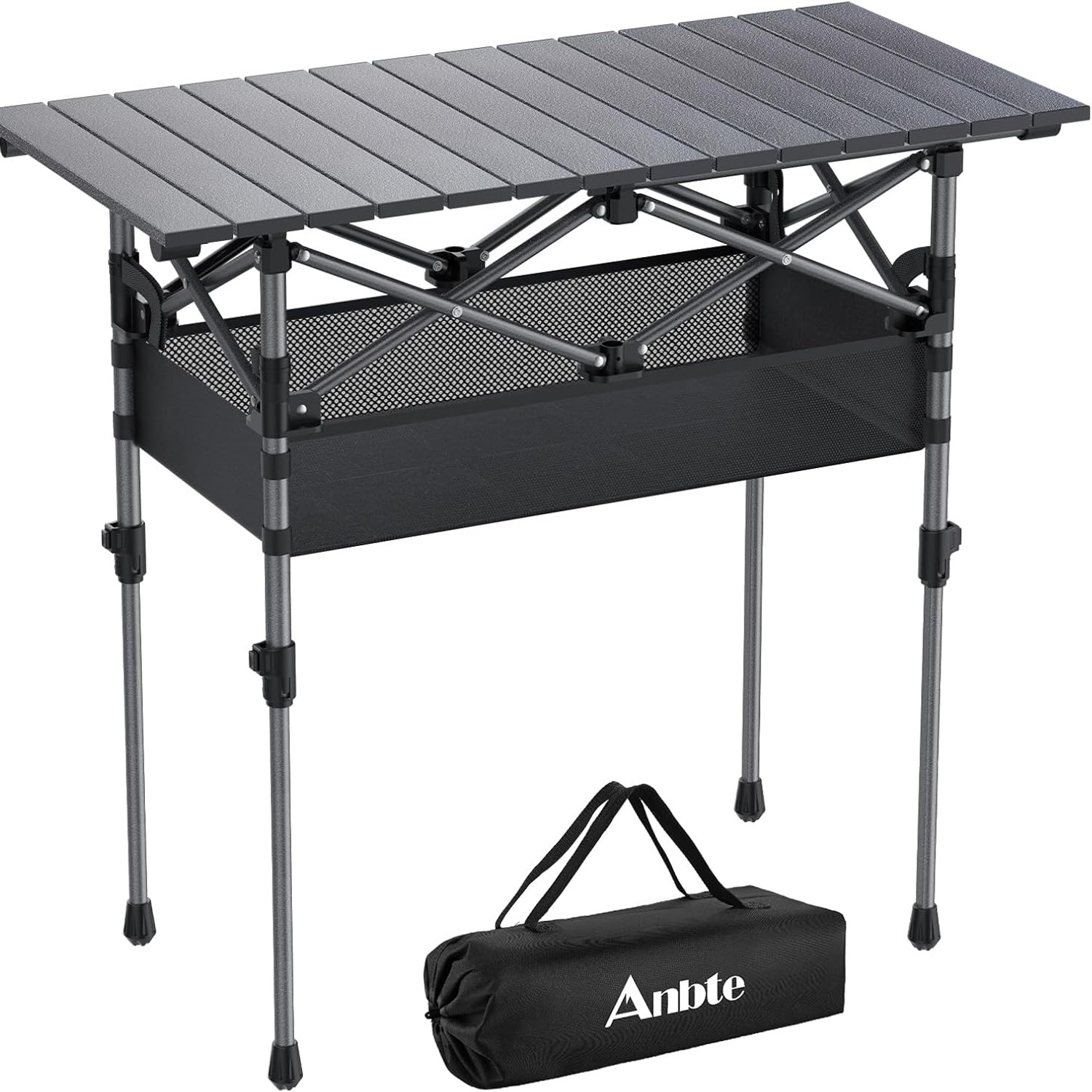
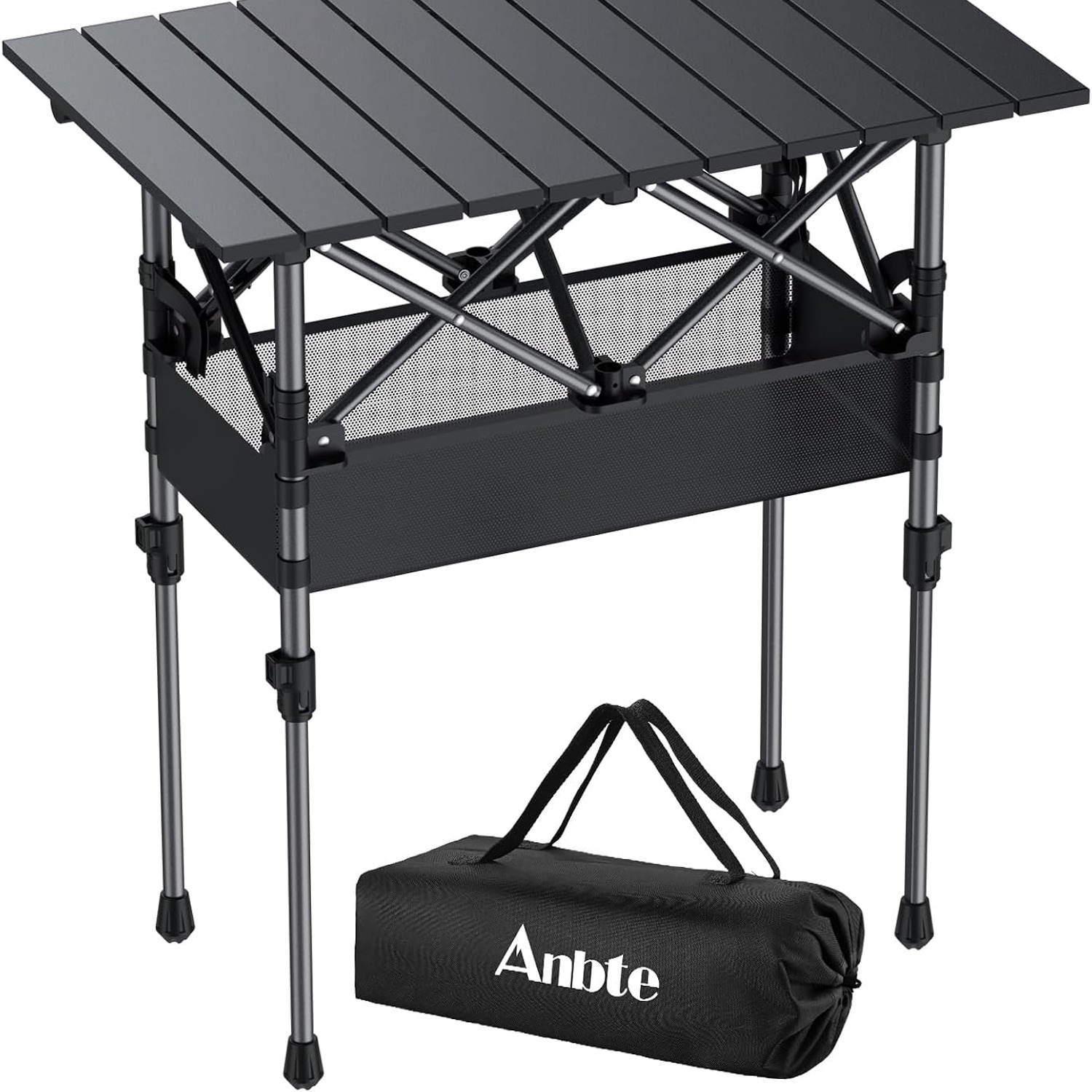
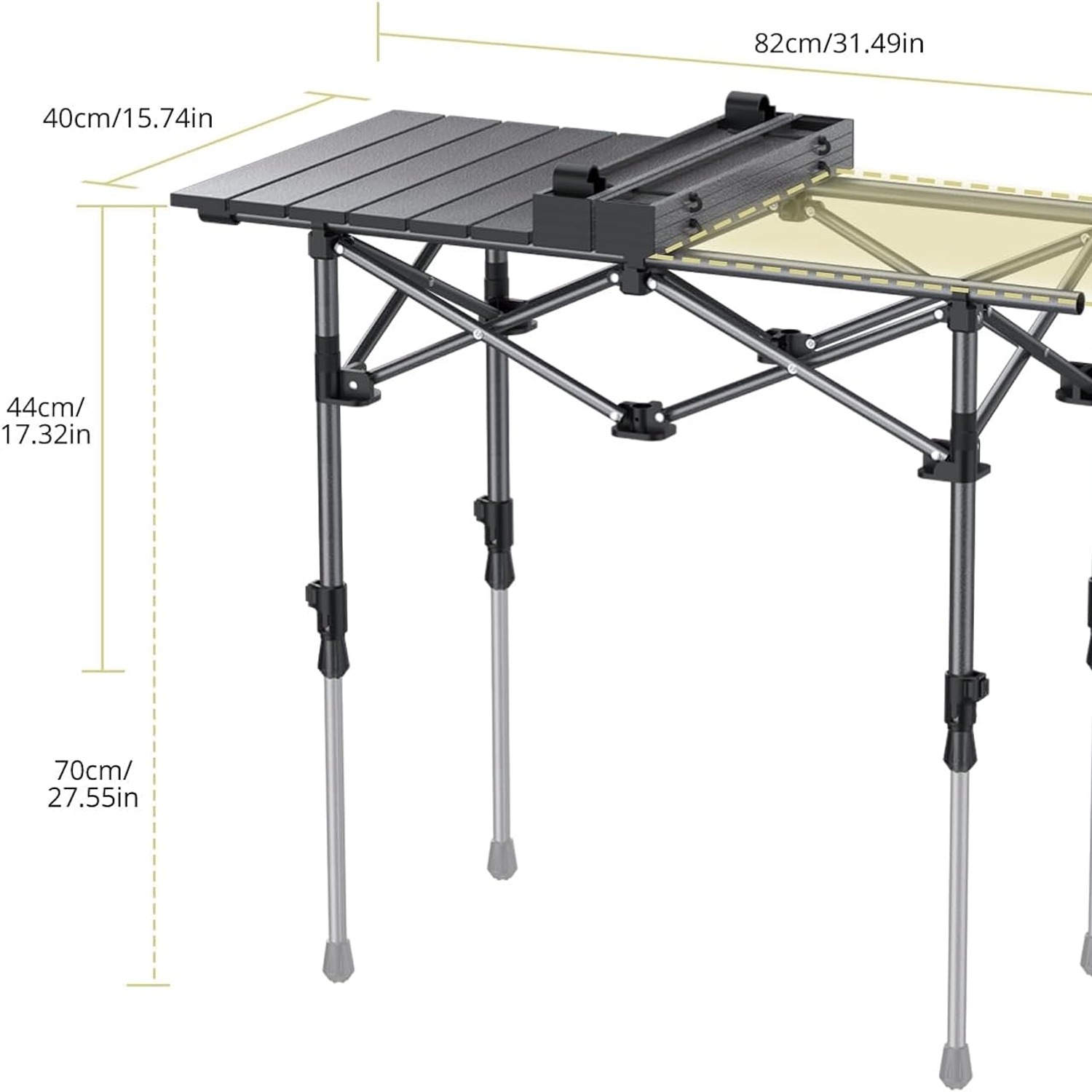
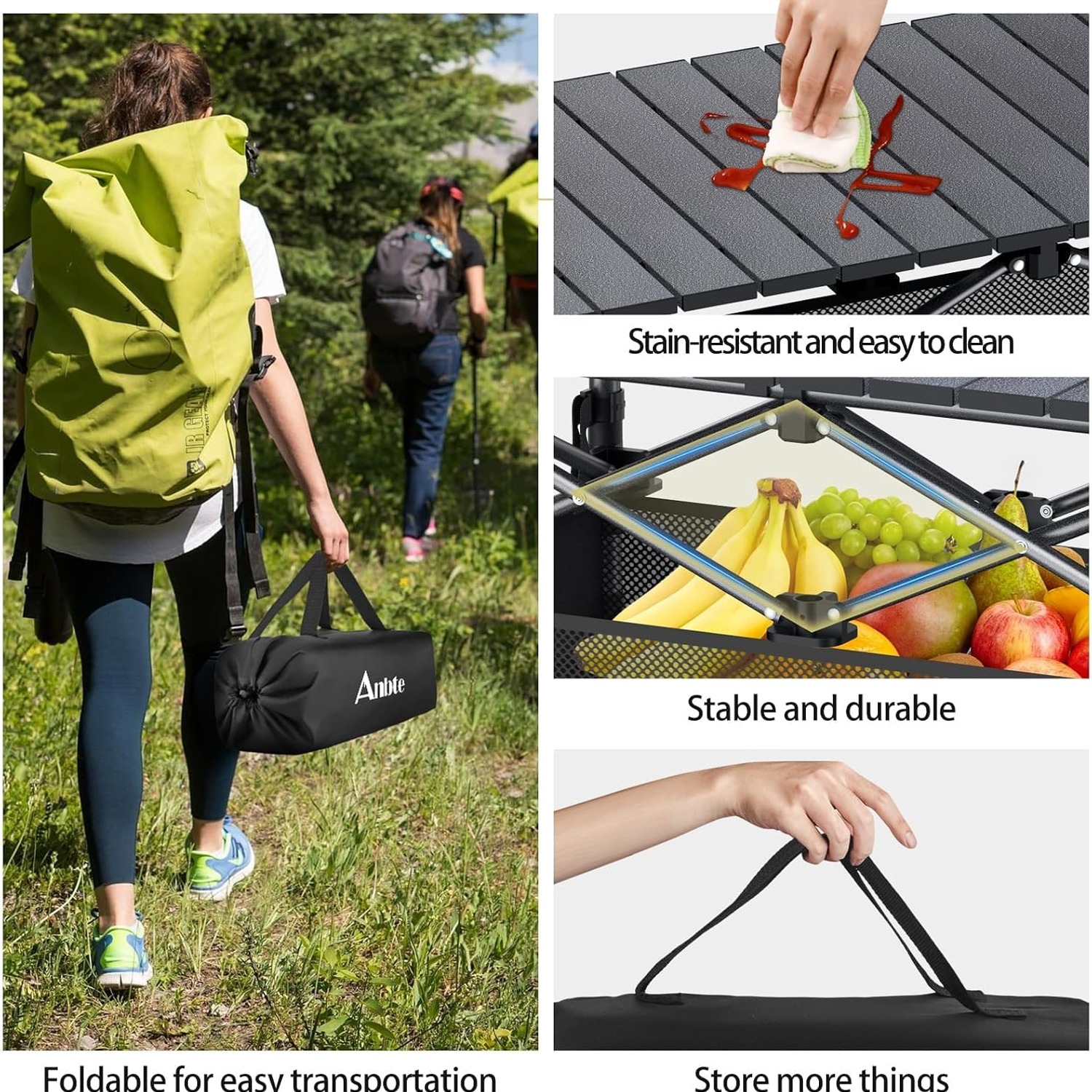
The top is not one solid panel. It is a row of aluminium slats, linked so they lie flat together when the table is open and curl into a cylinder when it is not. Two lateral rods slide across the underside of the slats and lock them in a straight line. That is what stops the surface sagging when you lean on it.
Underneath, four legs attach to an X-braced frame. The X is the quiet hero of the design. A simple rectangle of legs can rack side to side, but triangles cannot change shape without something bending, so the brace turns four loose legs into one rigid unit. On this table the legs are steel while the top and frame are aluminium, which is a sensible split. Steel takes the load and the knocks down low; aluminium keeps the weight off the parts you lift.
Rated load is 45 kg. In practice that is well past what most people put on a camp bench. A two-burner stove, a full pot, a chopping board, plates and drinks will land somewhere well under half of it.
Why two heights matter more than you think
Single-height camp tables force a compromise. Low tables are good for sitting at and terrible for chopping. Tall tables are good for prep and useless for eating in a camp chair.
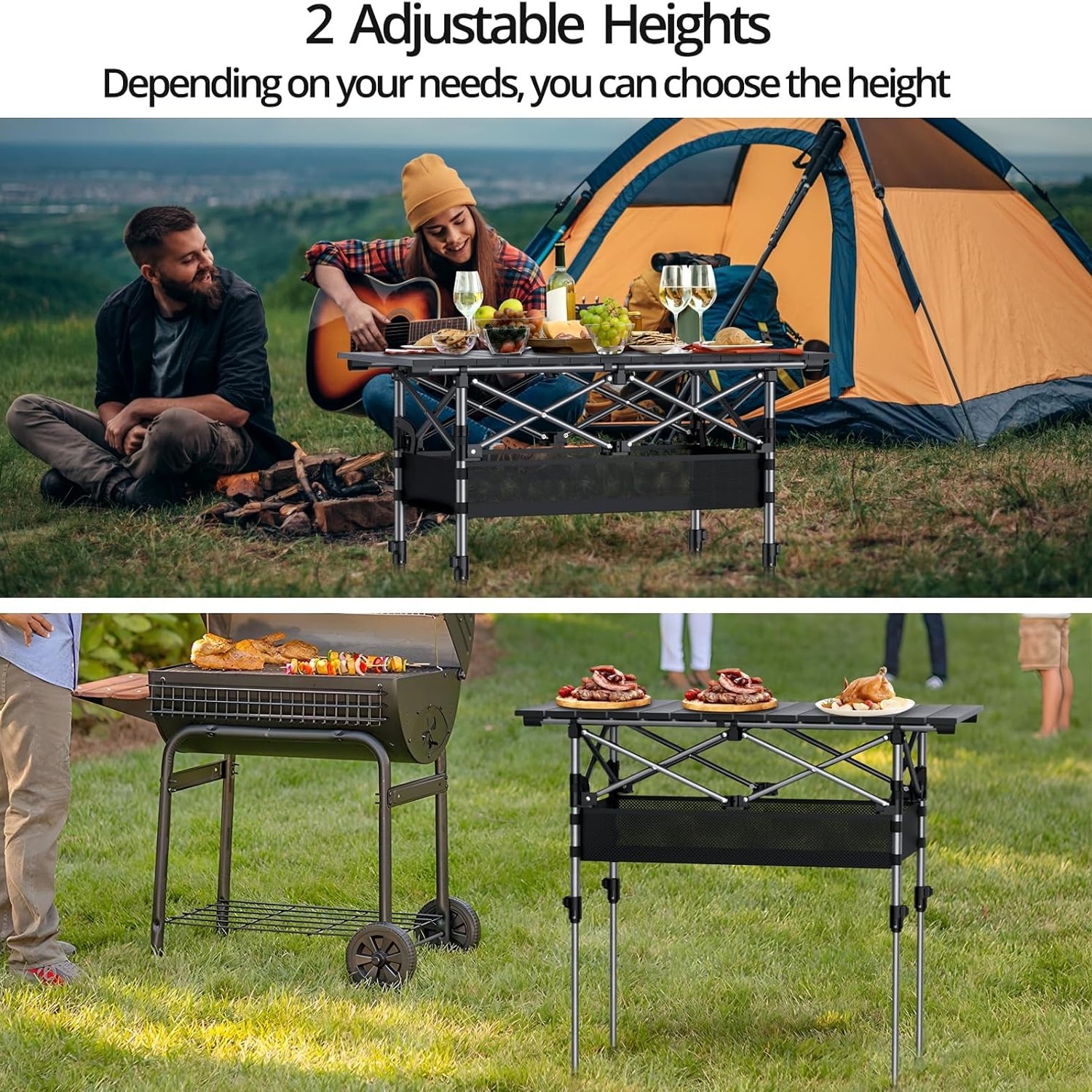
This one has two positions, which covers both jobs. Drop it low in the evening and it is a dining and card table you can sit at properly. Raise it in the morning and it is a standing bench for the stove and the kettle. If you have ever spent half an hour hunched over a low table dicing onions, you already know which one saves your back.
The individually adjustable legs are the other half of that story. Campsites are rarely flat. A table that only sets up at one fixed length per leg wobbles on anything but a slab. Being able to lengthen the two downhill legs turns a sloping patch of grass into a usable kitchen.
Who this table suits
It fits a specific shape of camper rather well. If you drive to a site and cook outside, this is a strong pick. Four-wheel-drive touring, caravan and camper trailer owners get a lot out of it because the packed size disappears into a locker. Tailgaters and day-trip picnickers like it for the same reason: it goes in and out of the car without a struggle.
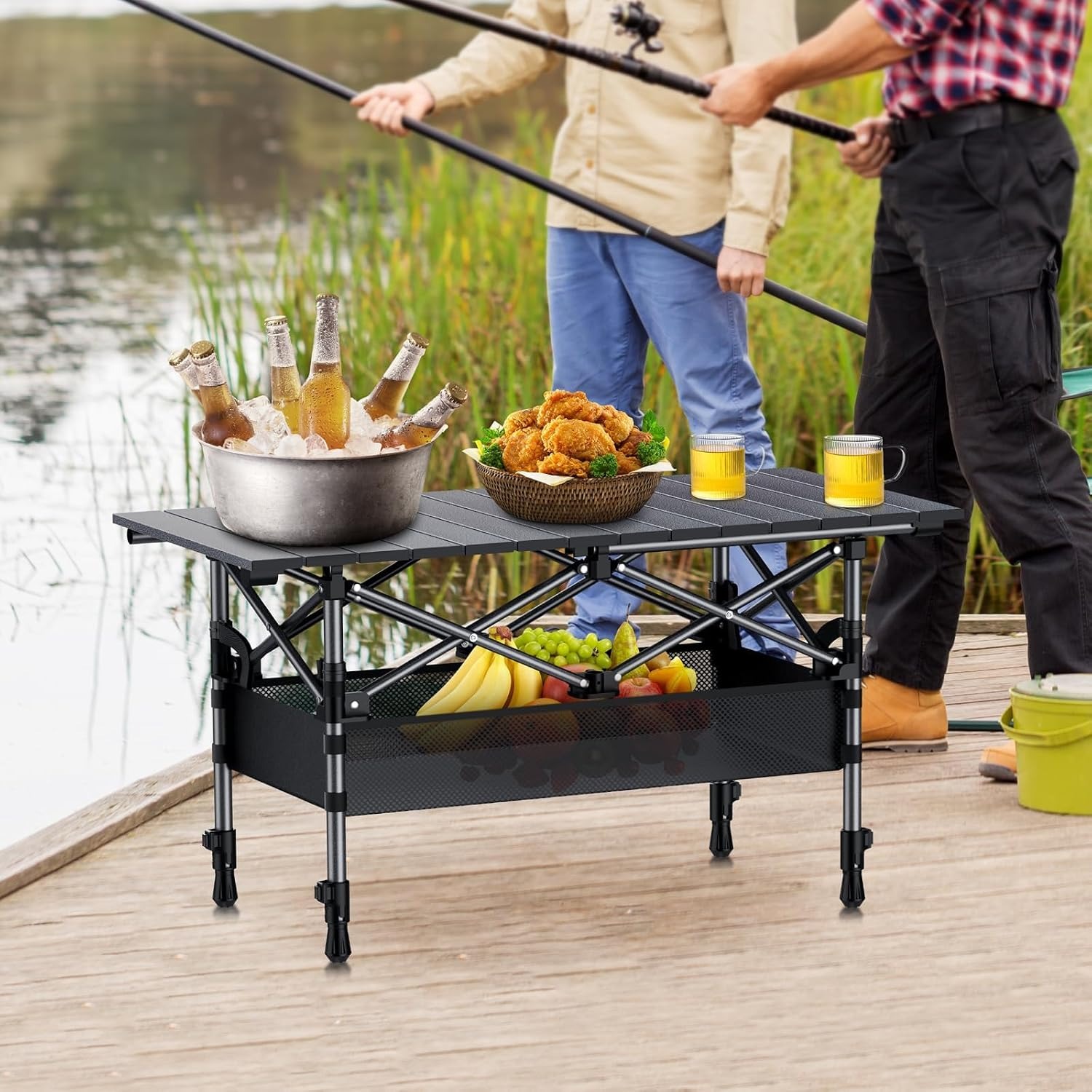
It also works away from camping altogether. People use the best BBQ side table they own as a permanent fixture next to the grill, and this one fits that job at standing height with the storage net handling tongs and sauces. Anglers use it for tackle and a thermos. A few use it as a spare craft or buffet table at home and roll it away afterwards.
Who it suits less well: large groups who want everyone eating at one surface. The top is around 82 by 40 cm and the seating capacity is listed as two. It is a prep bench and a small dining table, not a banquet. If you feed five people every night, buy this as your cook station and add something bigger for eating.
Choosing the right camp table
Start with the boot, not the campsite. Measure the gap you can realistically spare in your vehicle, because that is the number that decides whether the table comes along. At 4.2 kg and a rolled bundle, this one asks for very little.
Then think about height. Ask yourself whether you mostly sit or mostly stand when you use a table outdoors. If the honest answer is both, two height positions are worth paying for. If you only ever eat sitting down, a fixed low table will do and will cost less.
Next, look at the surface material. Aluminium slats shed water, do not rust, wipe clean and tolerate being packed away slightly damp better than fabric or timber. The gaps between slats are a small trade-off, since very small items can tip through, but they are also why water and crumbs clear away so easily. A thin silicone mat on top solves the gap issue on the rare occasions it matters.
Finally, check the storage. The mesh basket under this table sounds like a minor extra until you camp with it. Every small item that lives in the net is an item that is not on the ground, not lost in a bag and not stood on in the dark.
Setting it up and looking after it
There is some assembly out of the box, and one person can handle it with a hex key and a screwdriver. Do that at home, not at the trailhead in fading light. After that, the trip-to-trip routine is just unroll, fit the rods, open the legs and level it.
Care is simple. Wipe the top with a damp cloth and a bit of mild detergent, then dry it. Shake sand and crumbs out from between the slats before rolling, because grit left in the gaps scuffs the finish over time. Let the legs dry fully before the table goes back in the bag, particularly after a trip near salt water, since the steel legs can corrode where the aluminium will not.
Use a trivet for pans straight off a burner. Aluminium takes heat fast and will mark if you keep putting hot cookware directly on it. A small folding trivet costs almost nothing and makes the problem permanent go away.
Common mistakes worth avoiding
Loading one corner is the first. The 45 kg rating assumes a reasonably spread load, so put the heavy pot near the middle and over a leg rather than hanging off an edge.
Leaving it empty in wind is the second. A light table with nothing on it can shift in a gust. Drop a bag of gear into the storage net and it anchors itself.
Packing it wet is the third. Nothing dramatic happens straight away, but a damp table rolled into a closed bag for a month comes out smelling bad and with the steel showing surface rust. Five minutes of drying prevents it.
The short version
If you cook outdoors and keep leaving the table at home because it is too bulky, this is the fix. The aluminium top rolls away, the whole thing weighs 4.2 kg, it carries up to 45 kg, and the two height settings cover both standing prep and sitting down to eat. The storage net underneath is genuinely useful rather than a gimmick.
It is sized for one or two people, so match it to how you camp. As a camp kitchen bench, a BBQ side table or a picnic and fishing table, it does the job and then gets out of the way, which is exactly what you want from camp furniture.