
The complete guide
How To Choose A Rechargeable Camping Light That Actually Earns Its Place
The problem with camp lighting
Anyone who has set up a tent after dark knows the routine. You hold a torch in your teeth, you point it at the pole you are trying to thread, and everything else disappears into black. Then dinner happens by the glow of a phone screen propped against a water bottle, and somebody's headlamp keeps shining directly into somebody else's eyes.
The issue is not brightness. Plenty of small torches are bright. The issue is where the light goes. A beam lights one spot. A camp needs light that falls across a whole area, from above, the way a ceiling light works at home. That is the gap a hanging camping lantern fills, and it is why a good one changes the feel of a campsite far more than another torch ever will.
How a hanging LED lantern works
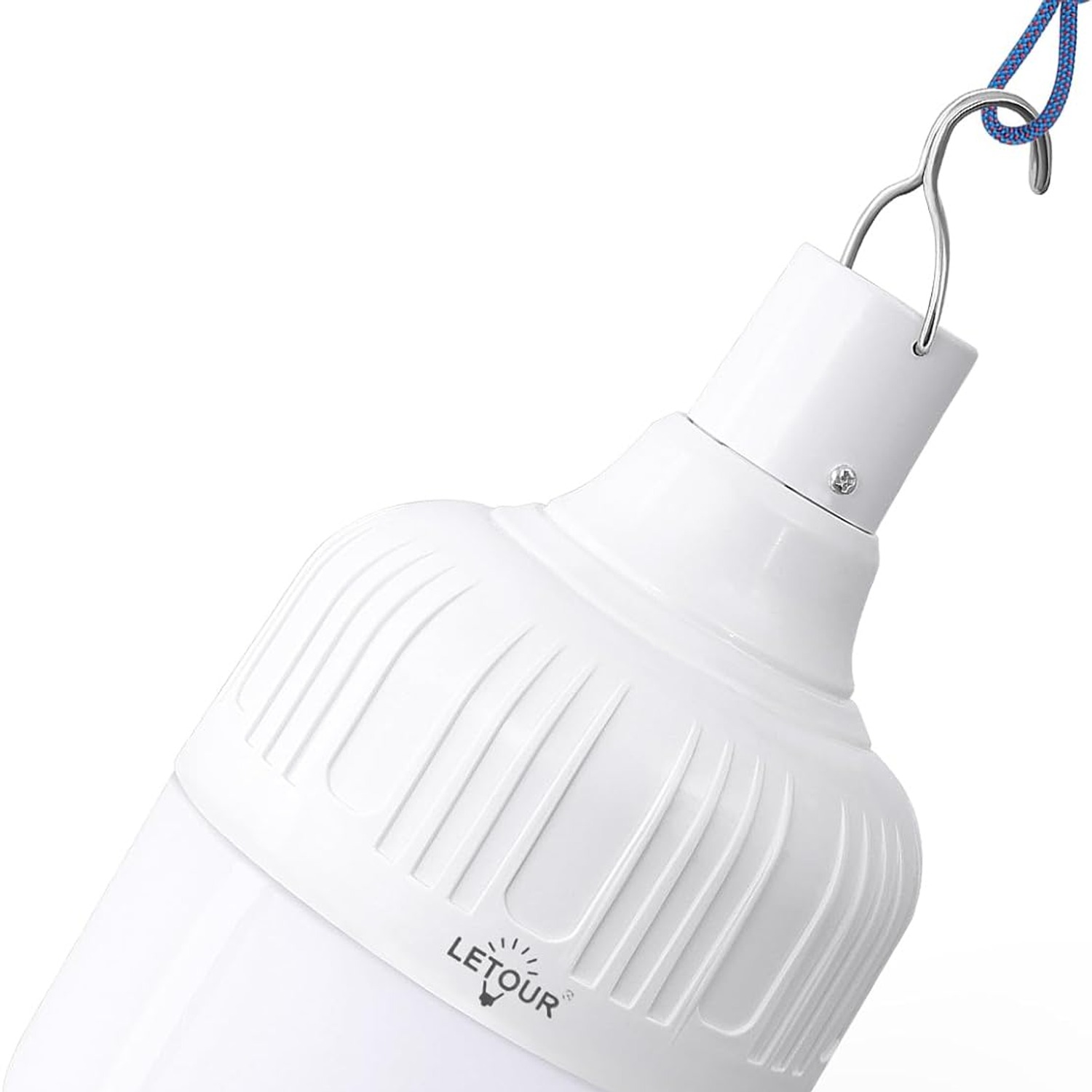
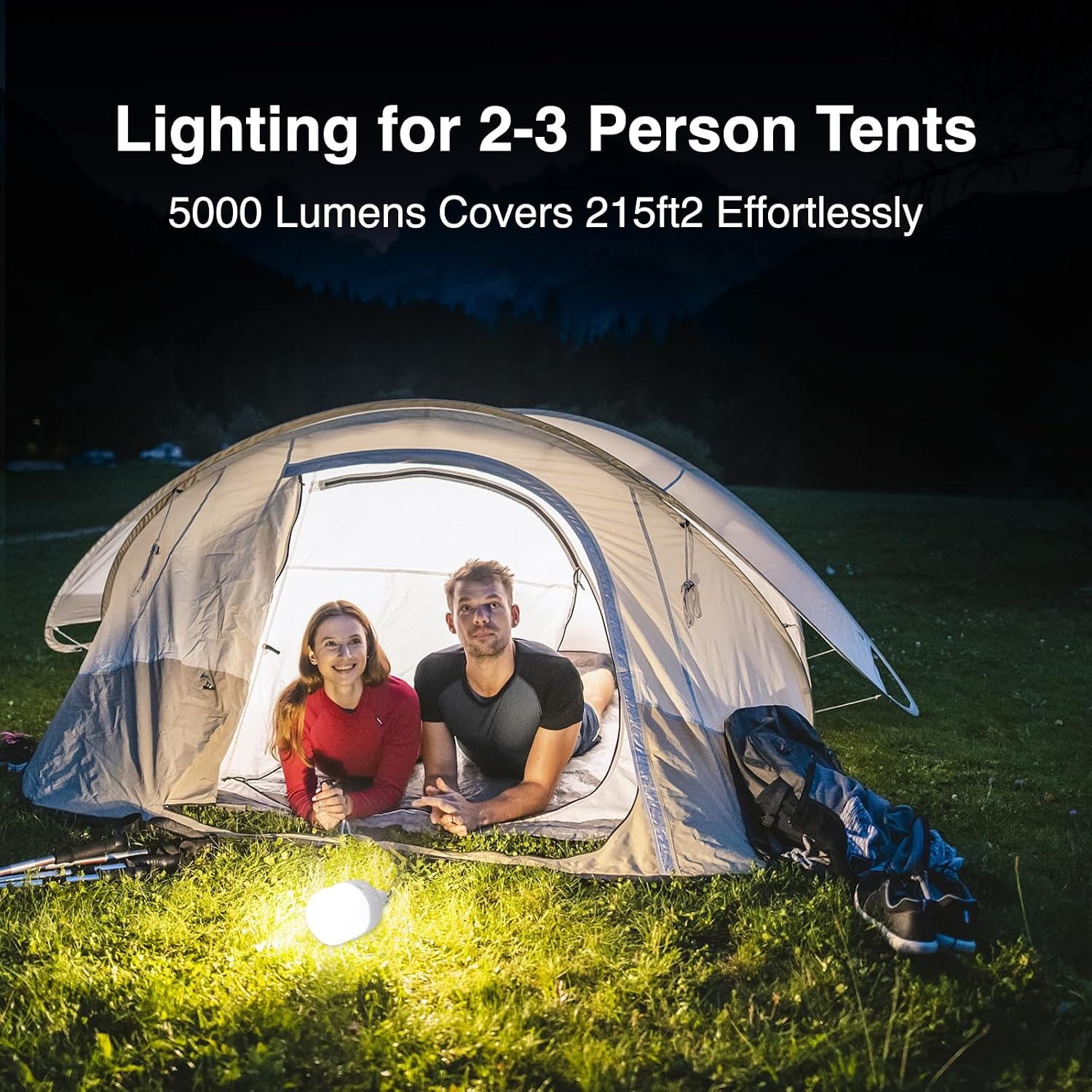
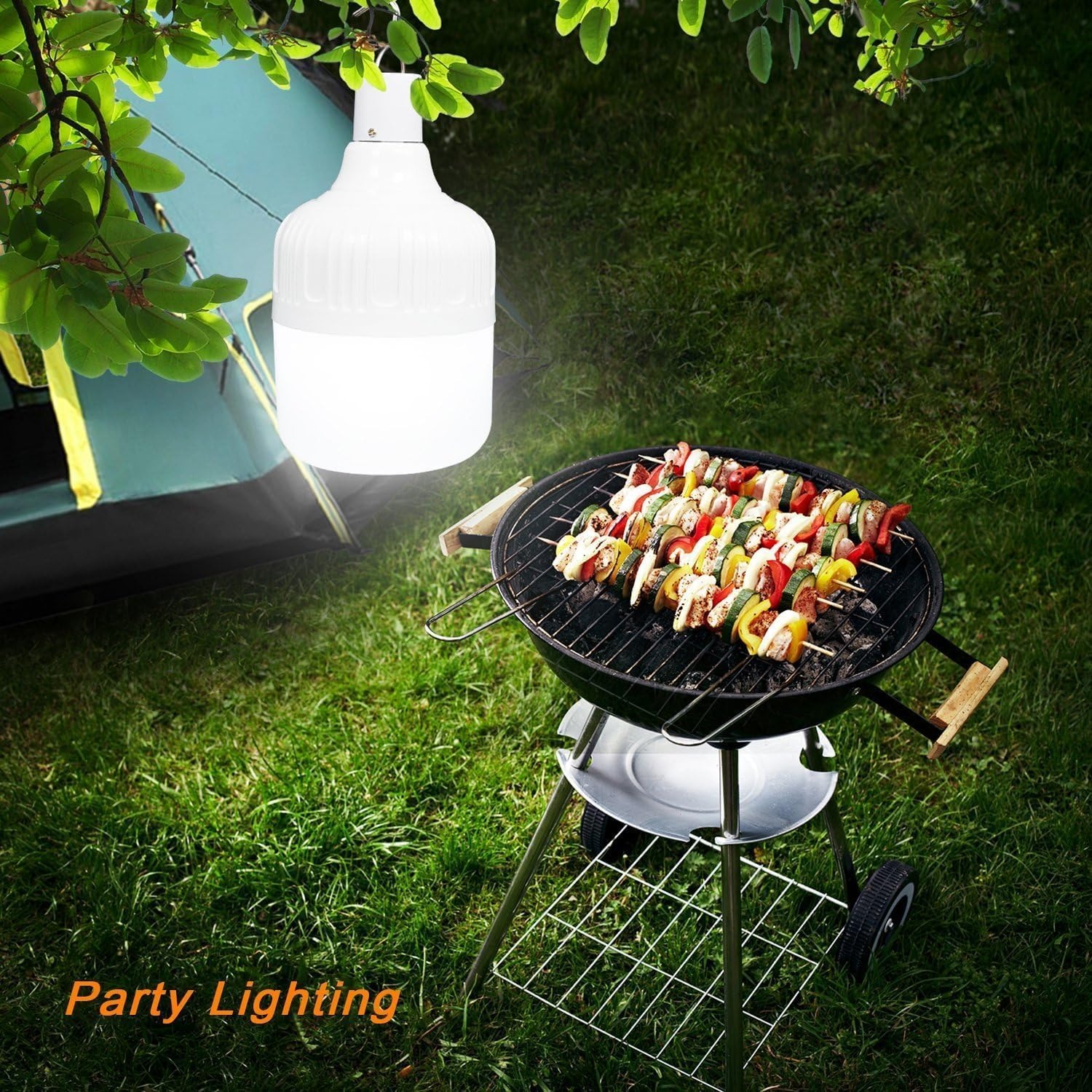
The design is simple. Instead of one bulb and a reflector aimed forwards, this LETOUR lamp uses twenty-four LED beads arranged to throw light outwards and down. The stated maximum output is 5000 lumens, drawing on a 50 watt light source. Hung from a tent loop or a branch, that spreads across a sleeping area or a table rather than pooling in one circle.
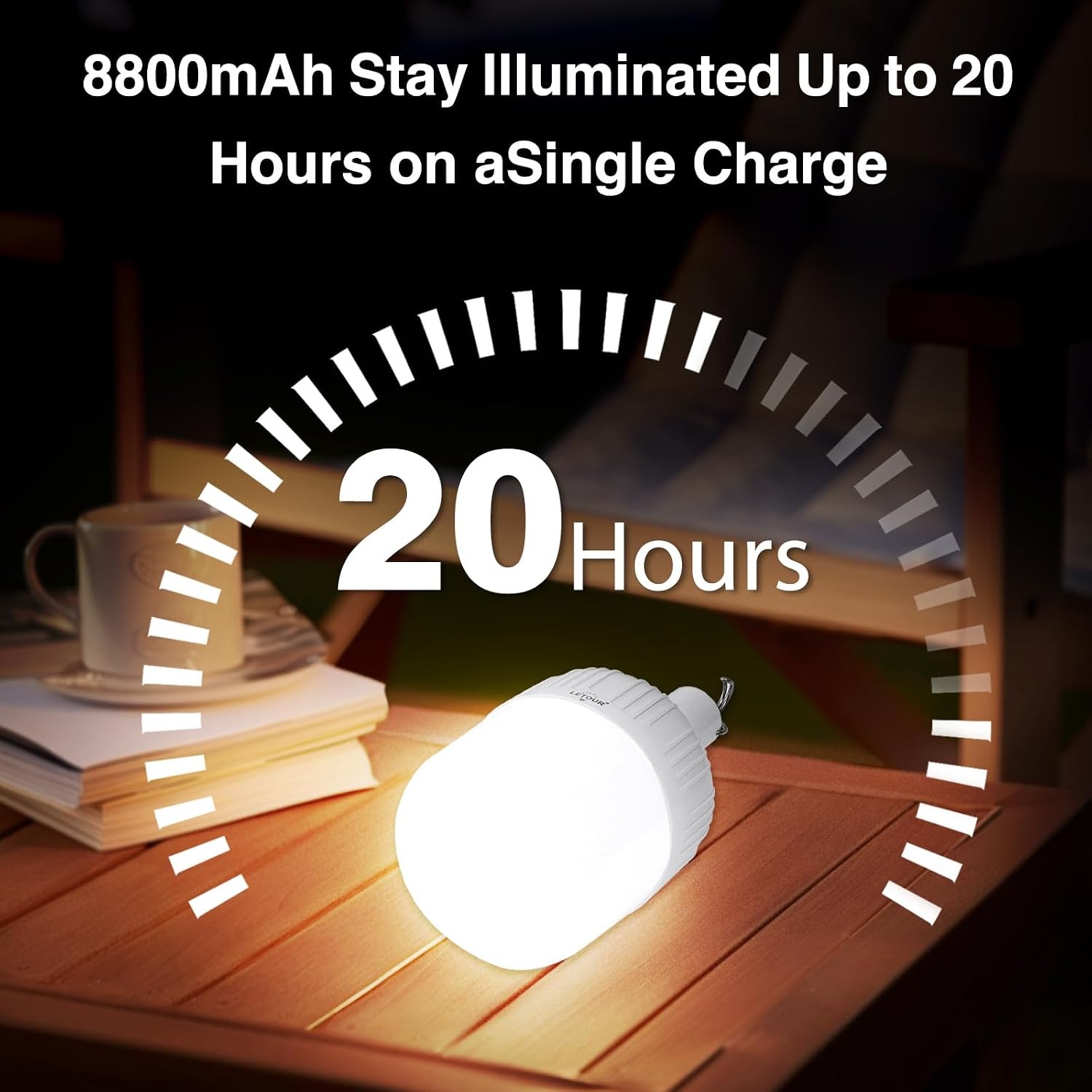
Power comes from a built-in lithium-ion battery charged over USB at 5 volts. From flat it takes roughly four to five hours. That one detail removes a lot of hassle. The cable you already pack for your phone will run your lamp, and a power bank in the car becomes a backup power supply for your lighting as well.
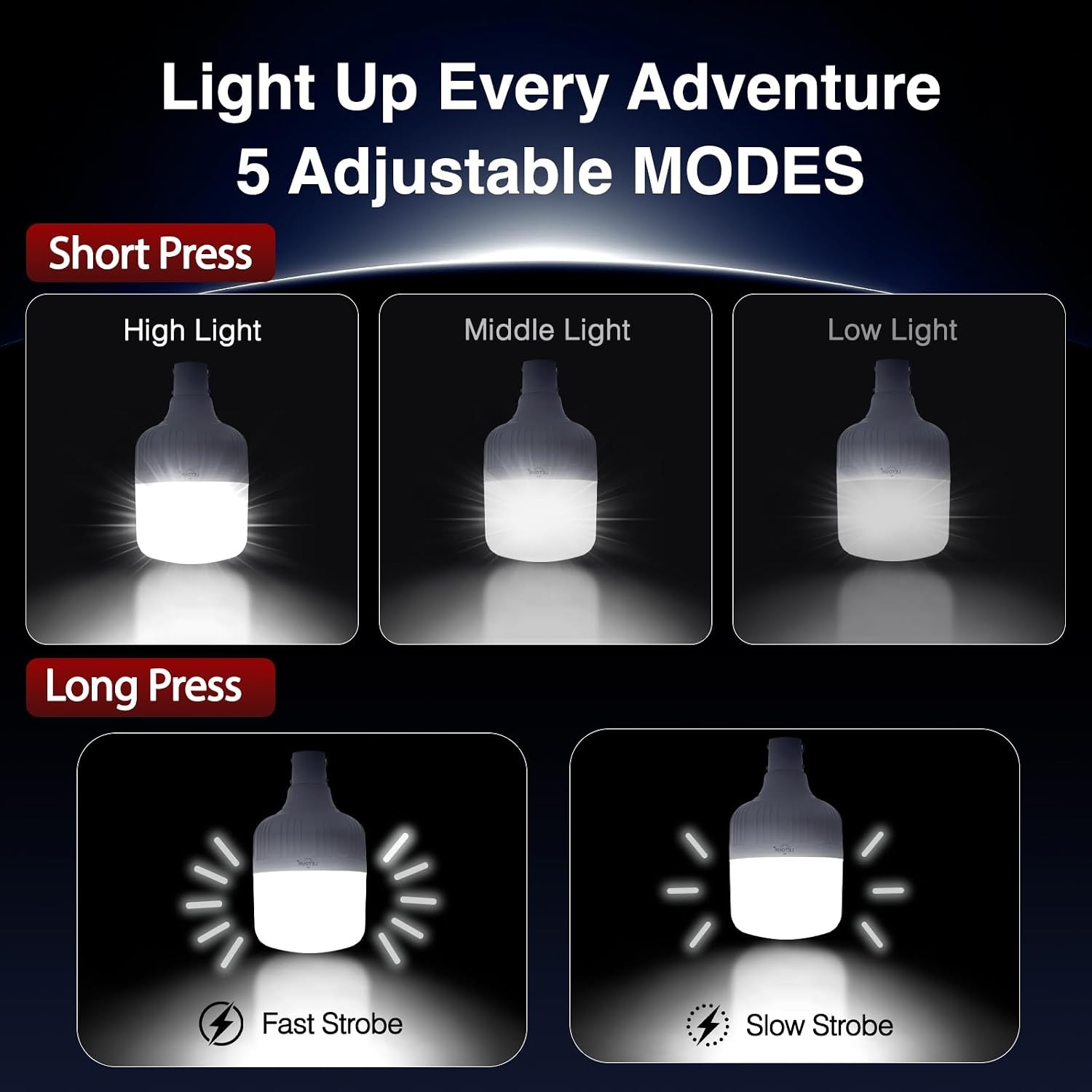
Then there are the five modes. High, middle, low, fast strobe, slow strobe. The dimmable range matters more than most people expect. Full output is great for pitching a tent or finding a dropped tent peg, but nobody wants to sit under it for three hours. Dropping to low turns the same lamp into something you can eat and talk under comfortably. The strobes are there for signalling, or for leaving a marker so people walking back from the amenities block can find the right tent.
The housing is ABS plastic in white, and the whole thing weighs 272 grams. For context, that is roughly the weight of a full can of drink. It will not dominate a pack.
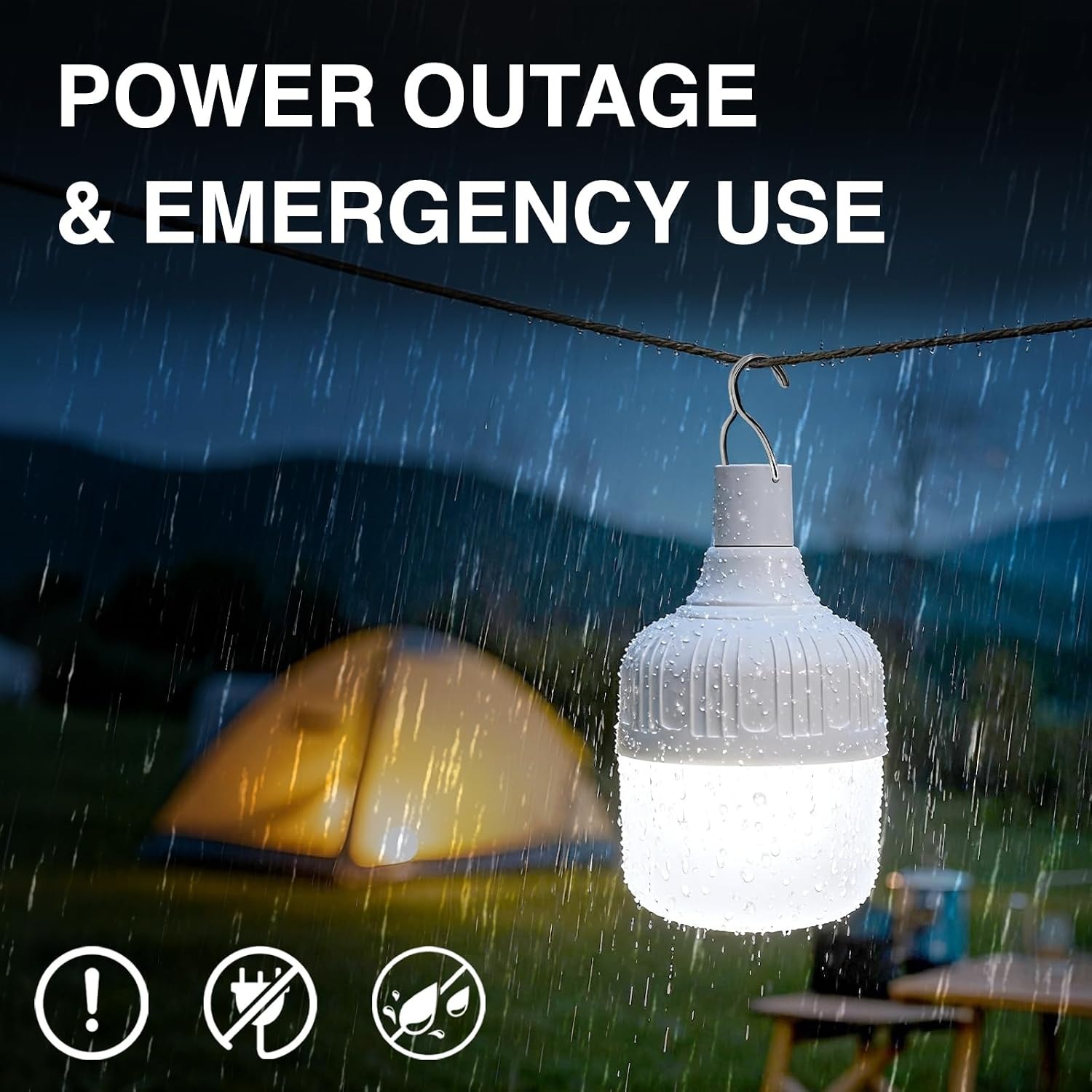
One honest caveat. The water resistance level is listed as not water resistant. This is an under-cover light. Under the fly, in the annexe, in the shed, in the van, inside the house. Not sitting on a picnic table in the rain.
Who it suits
Family campers. If you share a tent with kids, a single overhead lamp with dimming solves several problems at once. Bright while you sort bedding, soft while you read, off when it is time to sleep. No arguments about whose torch is in whose face. A lot of people find this style the best camping light for families purely because it reduces the number of light sources floating around.
Caravanners and van travellers. Annexes and awnings rarely have good lighting built in. A hanging lamp that charges from the van's USB socket covers the gap without wiring anything.
Weekend and car campers. When pack weight is not critical, you can afford a lamp that lights the whole site instead of a minimalist pocket light. This one is still light enough to be no burden.
People who want a backup at home. Keep it charged in a kitchen drawer and it becomes a ready lantern for power cuts. It needs no spare cells, no matches, no candles. Stormy season in a lot of regions makes this reason enough on its own.
Anglers, shed workers and backyard hosts. Anywhere you need broad, adjustable light with no cord, a hanging lamp does more than a torch. Night fishing, garage repairs, a late barbecue on the deck.
Who it does not suit: ultralight hikers counting grams, and anyone who needs a light that can sit out in heavy weather. For those cases, look at a dedicated weather-rated unit.
How to choose between camp lights
Start with coverage, not peak lumens. A big lumen number on a narrow beam is less useful at camp than a modest number spread wide. Multiple LED beads, like the twenty-four here, generally give more even light than a single emitter.
Check whether it dims. This is the feature that decides whether a lamp lives in your car or in a cupboard. A fixed-brightness lantern is either too much or not enough most of the time. Anything described as a dimmable camping light gives you far more use out of one unit.
Look at how it charges. USB charging means one cable type for everything. Disposable batteries mean buying, carrying and disposing of cells all season. Over a few trips, the rechargeable option wins on cost and on convenience.
Work out how you will hang it. A hanging mount is only useful if you have somewhere to hang it. Most tents have a ceiling loop. If yours does not, a short length of cord and a carabiner solves it for very little money.
Be realistic about weather. Read the water resistance rating before you buy, not after. A lamp that is not water resistant is still a great lamp, as long as you plan to use it under cover.
Think about weight only if it matters. For car camping, 272 grams is irrelevant. For a multi-day hike, it is worth weighing against your other gear.
Getting the most from it
Charge it fully before the first trip and before each trip after. It is the simplest habit and it prevents the most common disappointment, which is a flat lamp on night one.
Hang it high. Light falling from above head height spreads further and casts fewer harsh shadows than light sitting on a table. In a tent, use the ceiling loop. Outside, a branch or a gazebo frame works.
Use low more than you think you need to. Your eyes adjust at night, and low output often feels plenty once you have been sitting for ten minutes. It also stretches the charge a long way.
Keep the charging port clean. Sand and dust are the usual enemies of any outdoor electronics. A quick wipe before you pack it away each day takes seconds.
Care and storage
Wipe the ABS housing with a soft, slightly damp cloth, then dry it properly. Do not rinse it, and do not submerge it, because it is not rated for water. If it gets dusty, a dry brush around the lens and port is usually enough.
For storage, cool and dry is the rule. Avoid leaving it in a car on a hot day for weeks at a time, since heat is hard on lithium-ion cells. If it is going into a cupboard over winter, give it a top-up charge every couple of months rather than leaving it flat.
A simple pouch or a soft bag keeps the lens from getting scratched in a gear box. Not essential, but it keeps the light output clean.
The short version
This is a hanging, rechargeable camping light that trades weather resistance for brightness, portability and simplicity. Twenty-four LEDs, a stated 5000 lumen maximum, five modes including three steady brightness levels, USB charging at 5 volts in about four to five hours, and 272 grams of ABS housing in white.
If you camp under a fly or an awning, travel in a van, or just want a dependable light in the house for when the power goes, it fits. If you need something that can sit out in the rain, look elsewhere. For everything else, it does the one job that torches never quite manage, which is lighting the whole space so everyone can see what they are doing.