
The complete guide
How To Choose A 4 Person Dome Tent That Keeps You Dry
The problem with most first tents
Nearly everyone's first camping trip has the same story. The tent went up fine in the sun. Then it rained, and by morning the inside of the fabric was wet, the sleeping bags were damp at the foot, and someone decided camping was not for them.
That is almost never a leak. It is condensation, and it comes from using a single skin tent, or a double skin tent pitched badly. Four people breathing in an enclosed space put out a surprising amount of moisture overnight. If there is only one layer of fabric between you and the cold night air, that moisture has nowhere to go except back onto the inside of the tent, where it runs down and soaks whatever it touches.
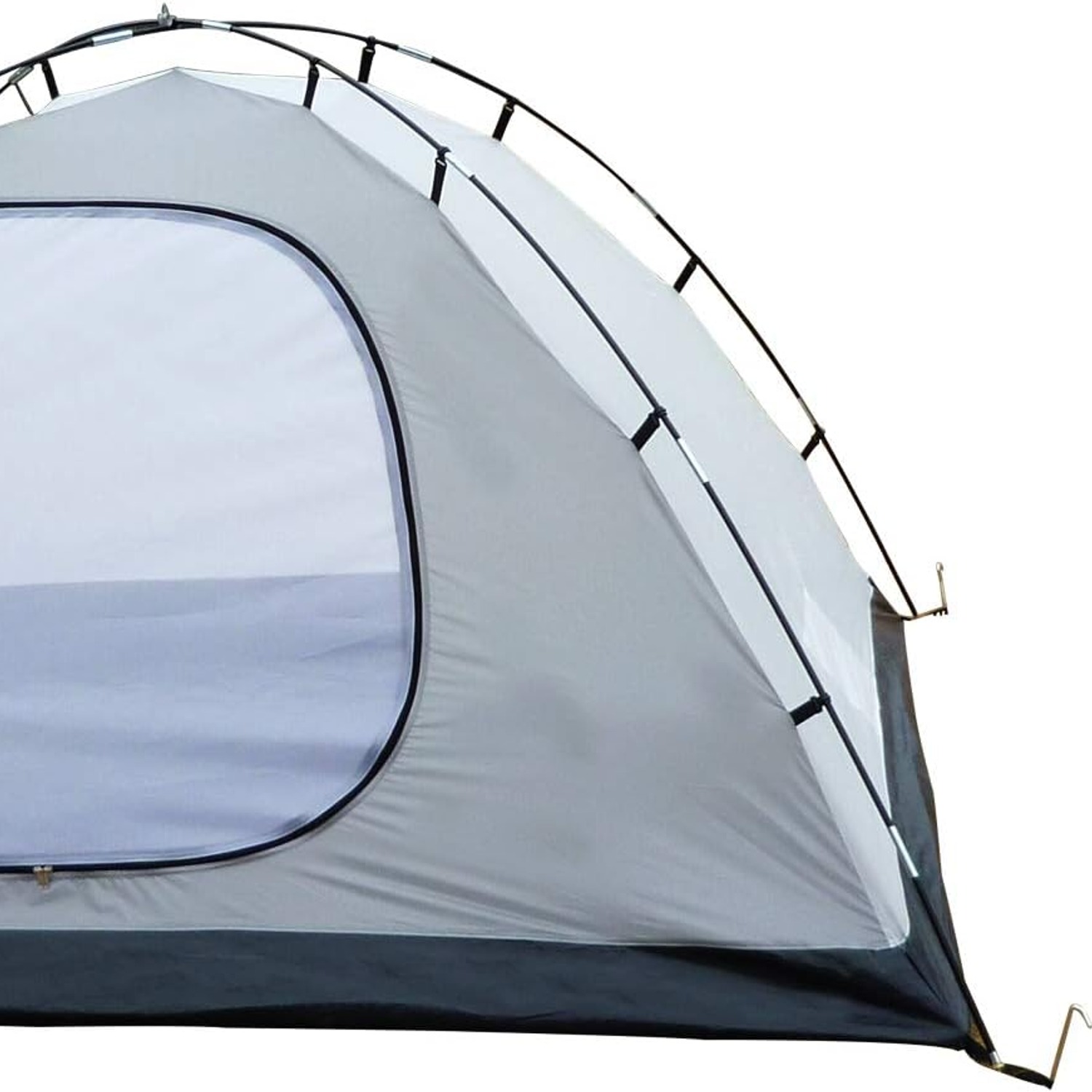
A double layer dome solves this with a simple bit of physics. The inner tent is breathable, so the moist air moves through it. The flysheet above is waterproof, so the moisture condenses there instead and runs off the outside. The gap between the two keeps the wet surface away from your gear. That is the single most useful thing to understand when shopping for a family tent.
How this tent is put together
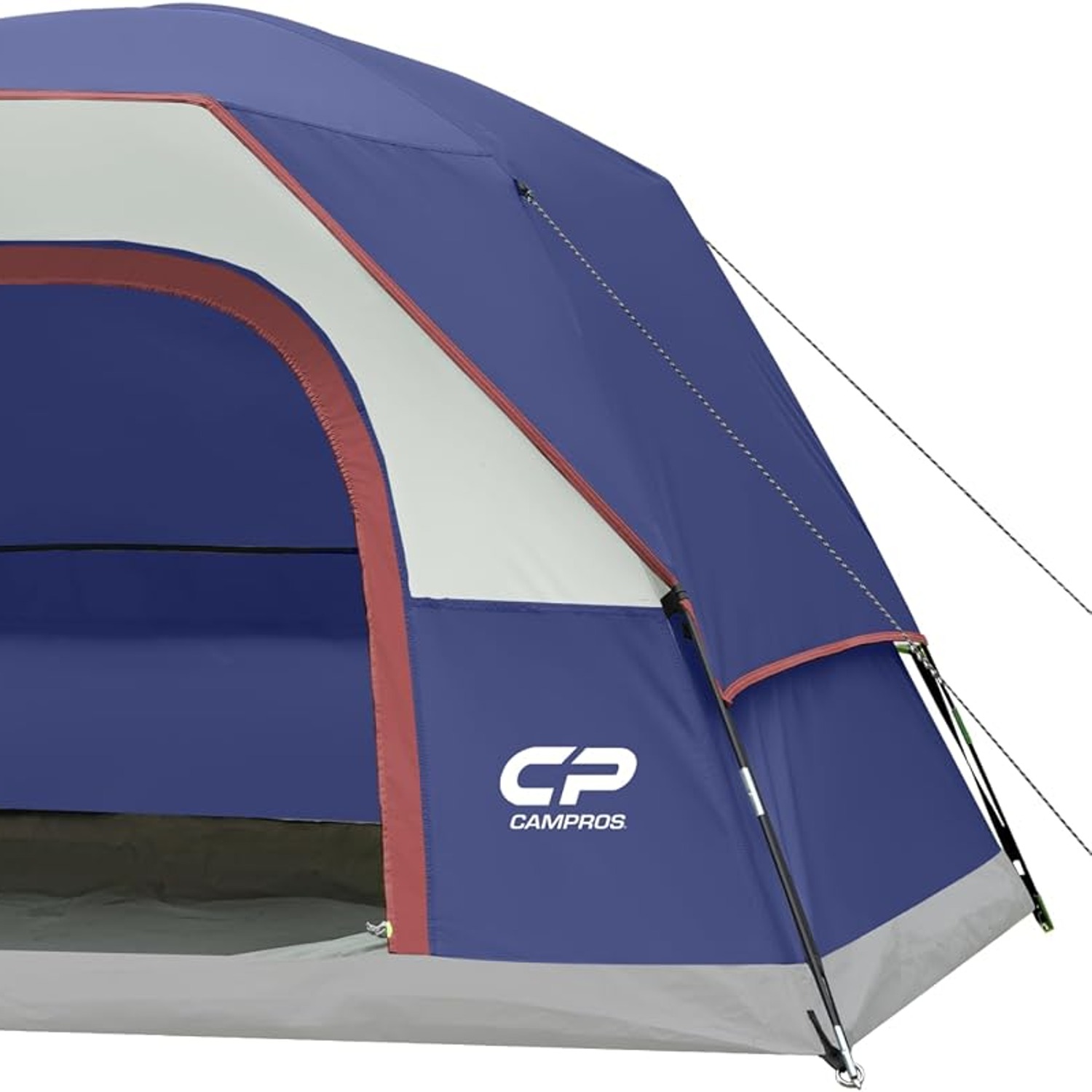
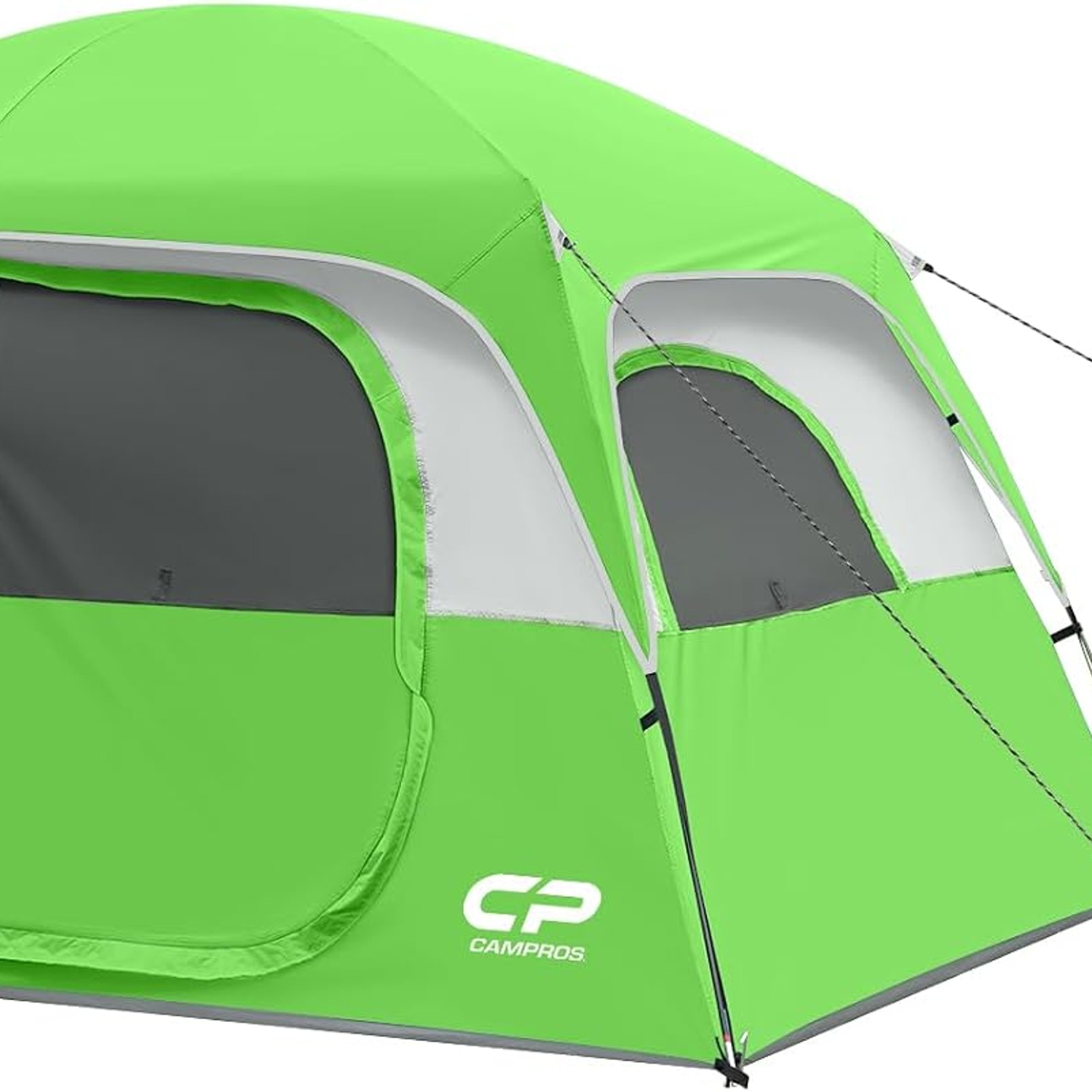
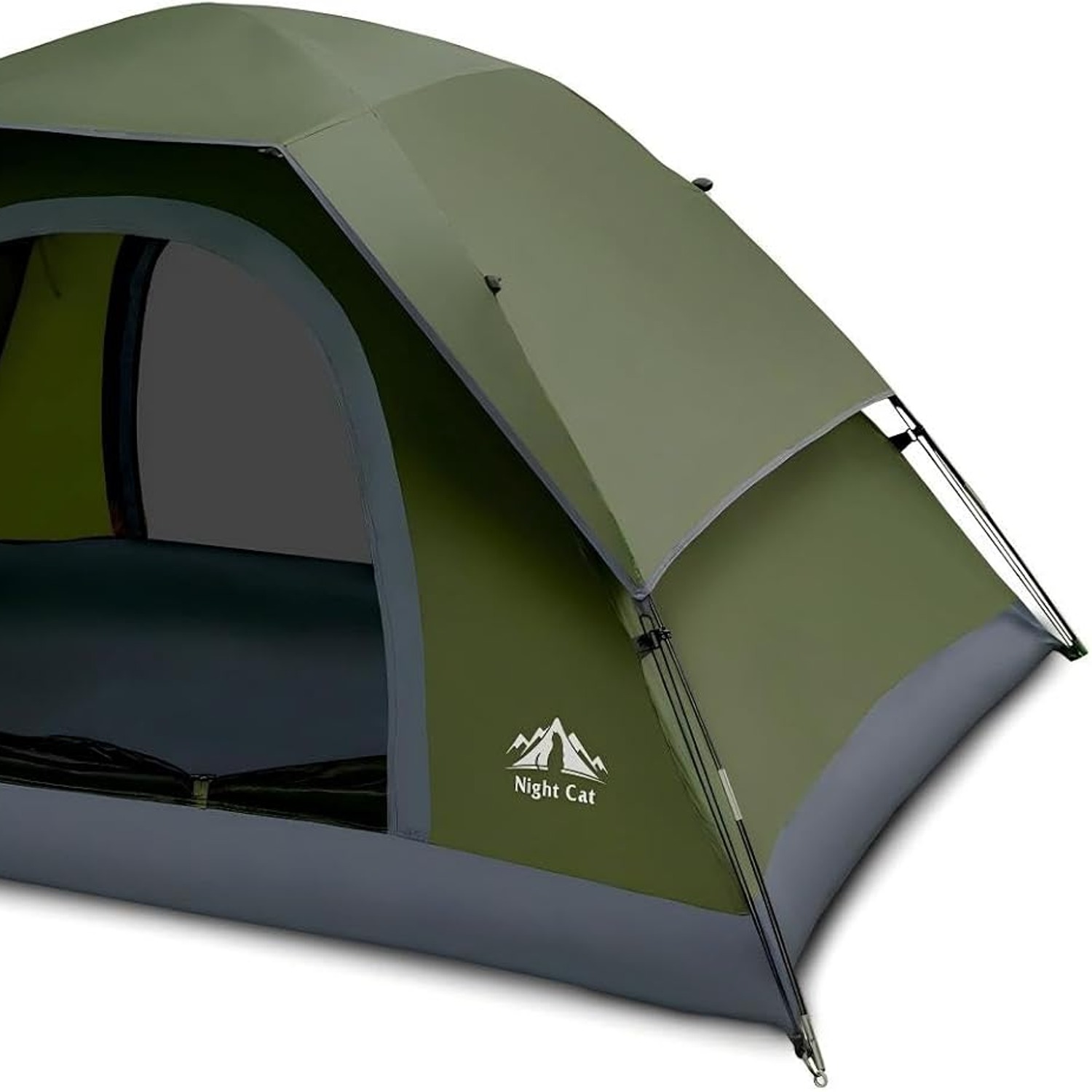
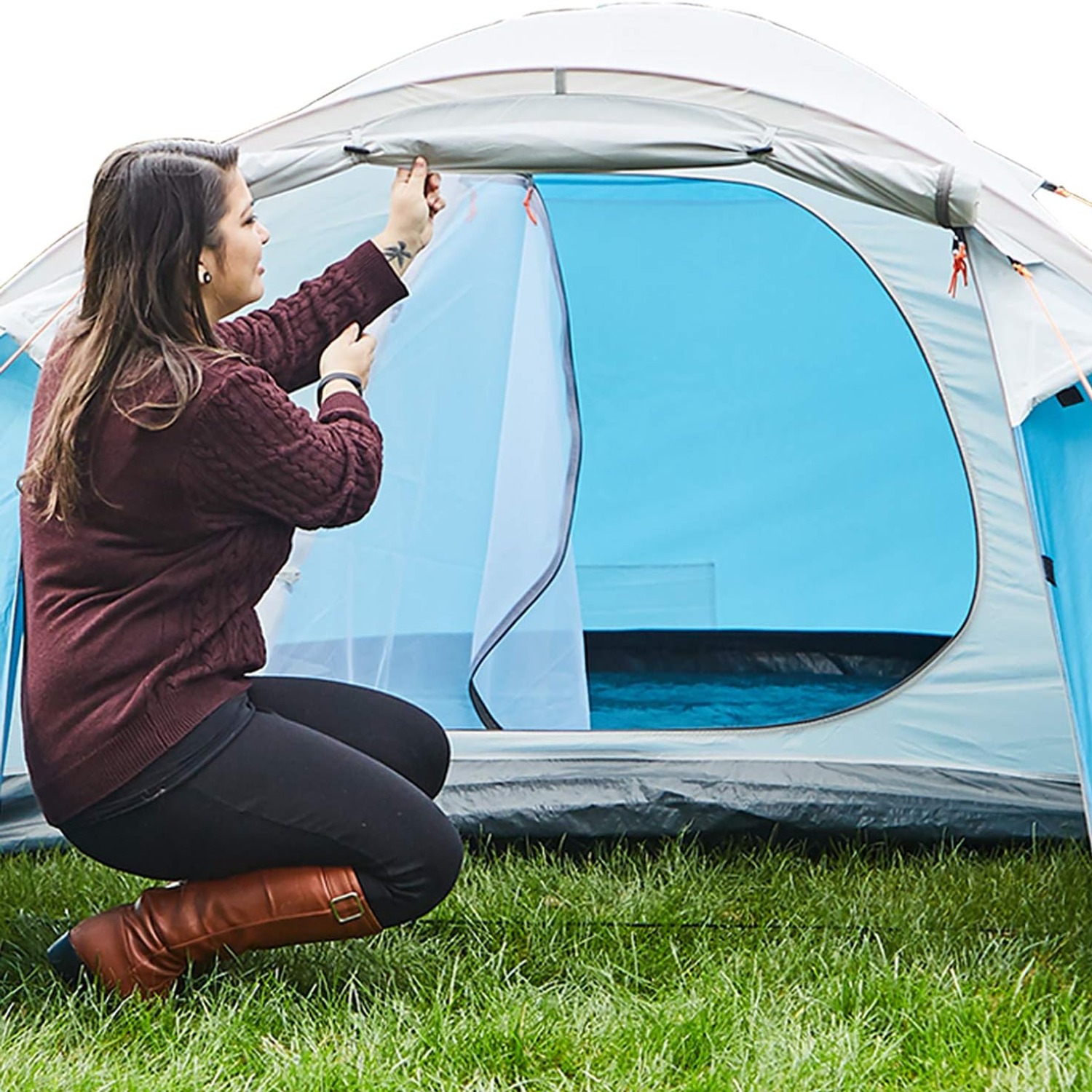
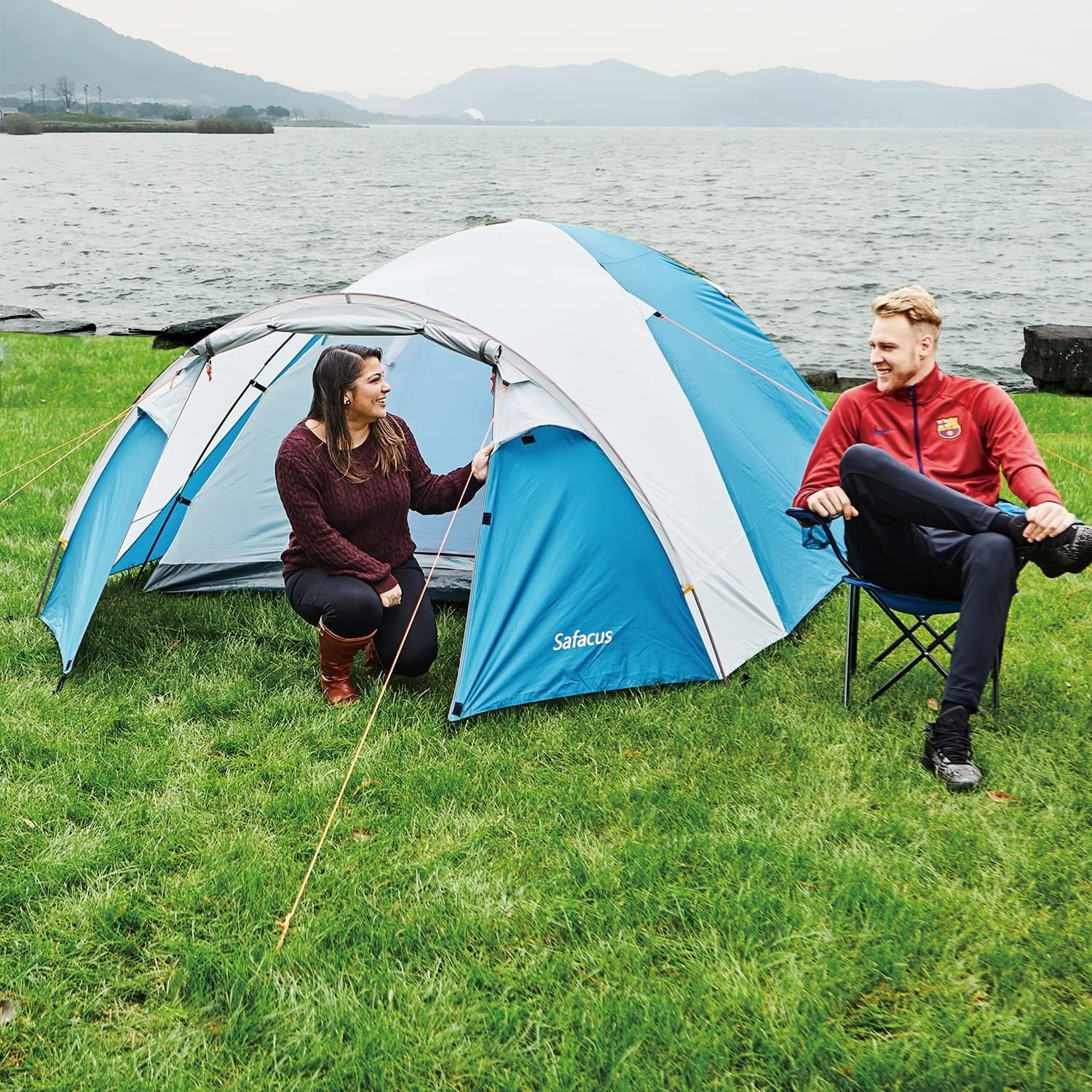
This is a free-standing dome, which means the pole structure holds its own shape before you peg anything down. Two fibreglass poles cross over the top and clip to the tent body. Clips rather than sleeves matter more than people expect. Threading a long pole through a fabric sleeve in the wind is a two person job with a lot of swearing. Clipping is quick and can be done one-handed.
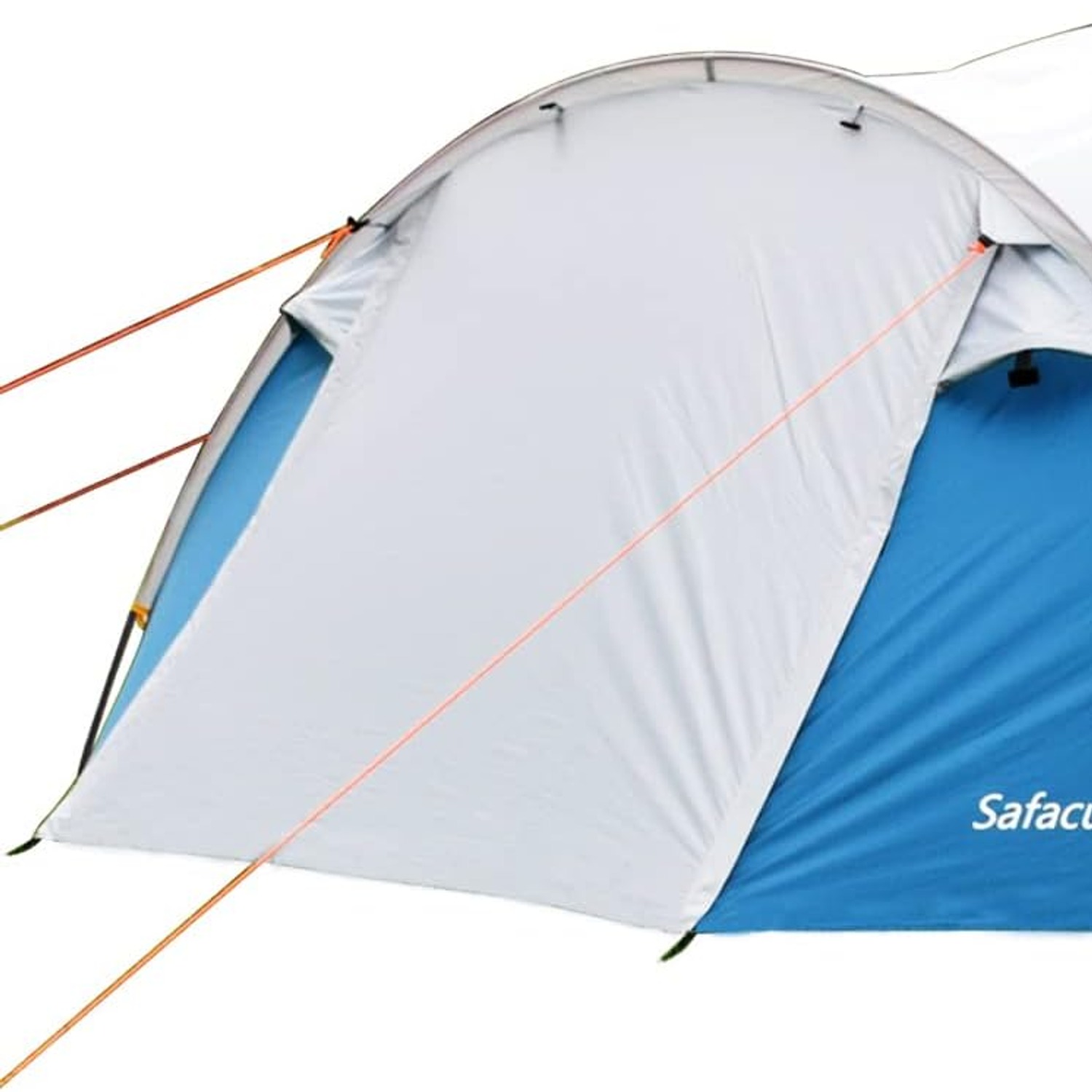
Once the inner is standing, the polyester rainfly goes over the top and you tension it with four guylines. Those guylines are not optional extras. They are what holds the fly away from the inner so the air gap actually exists, and they are what stops the whole thing shaking in a breeze. Peg them out properly every single time.
Underneath, the floor is polyester with a polyurethane coating, so ground moisture stays outside. The same polyurethane water resistance technology is used across the fabric. The listing describes the tent as waterproof, though the precise hydrostatic head number is not specified in this record.
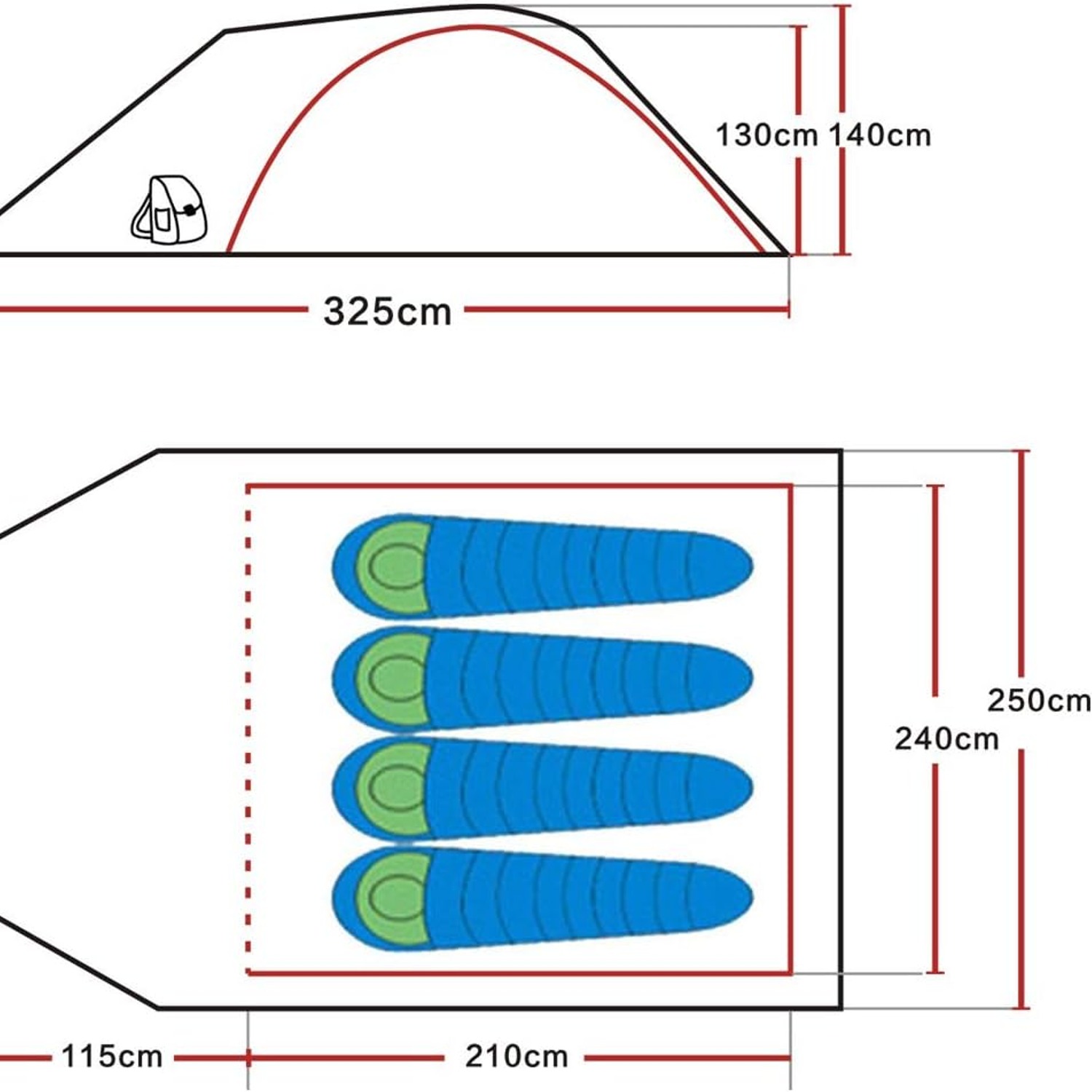
The measurements are straightforward. Floor length is 325 cm, floor area is 81,250 square centimetres, and the peak sits at 140 cm. Total weight is 4.8 kg.
Who it suits
This sits in the sweet spot for family and group camping where you drive to the site or walk a short distance from the car. Listed uses include the beach, camping and hiking, fishing and general travel, which covers most weekend plans.
If you are a couple, a four person tent is a comfortable upgrade. You get space for packs, boots, a camp chair's worth of clutter and somewhere to sit out a wet afternoon. Many people looking for the best lightweight family tent end up oversizing by one person count for exactly this reason.
If you are a family of four, it works, but be realistic about gear. Four adult sleeping mats fill the floor. Children take less room, so two adults and two kids is the easier fit, with bags at the ends.
If you are planning long distance walking with everything on your back, 4.8 kg split between two people is doable but not light. Backpackers chasing minimum weight will want a different category of tent.
Reading the numbers before you buy
Tent specifications can be misleading if you take the occupancy rating at face value. Manufacturers measure capacity by how many bodies fit shoulder to shoulder, not how many people fit with their stuff. A useful rule of thumb is to subtract one from the rating if you want comfort rather than a tight fit.
Height is the other number people misjudge. A 140 cm peak means you can sit up, kneel and move around on your knees, but not stand. Domes keep their height only at the centre, so the usable headroom tapers towards the walls. If standing room is a must, you are looking at a tunnel or cabin tent instead, which will be heavier and harder to pitch in wind.
Door count matters for four people. One zippered door means someone will be climbing past someone else at some point. Plan sleeping positions with that in mind, and put the people most likely to get up in the night nearest the door.
Finally, check packed size against your boot. Listed product dimensions here are 128 x 98.4 x 55.1 cm. Nothing kills a trip start like discovering the tent will not fit alongside the cooler.
Pitching it well
Site choice does more for your night than any specification. Find ground that is flat and slightly raised, not the attractive hollow that will become a puddle. Clear sticks and stones before you lay the tent down, because the coated floor is the part most likely to take damage.
Peg two opposite corners first, especially if there is any wind, so the tent cannot cartwheel away while you are assembling poles. Raise the dome, clip the body on, then throw the fly over and get the guylines out. Tension them so the fly is taut and not touching the inner anywhere. Any point where the two layers touch will transfer water through.
Face the door away from the prevailing wind. This reduces the amount of air driving straight into the tent and makes the door much easier to open in a gale.
On sand, standard pegs do very little. Use sand pegs, bury the pegs sideways in a hole, or weight the corners with bags. The free-standing frame makes this far easier than it would be with a tent that relies on pegs for its shape.
Looking after it
A tent will last years or one season depending almost entirely on how you store it. The rule is simple: never pack it away damp for more than a day. Mould sets in quickly on coated fabric and the smell does not come out.
When you get home, hang both layers until they are completely dry to the touch, including the floor and the pole ends. Shake out sand, grass and grit, particularly from the zips, since grit in a zip is the most common way a tent becomes unusable.
For cleaning, cool water and a little mild soap on a sponge is plenty. Skip the washing machine, the tumble dryer, bleach and dry cleaning, all of which damage the waterproof coating. Store the tent loosely rolled in a dry place rather than crushed flat under heavy boxes.
Carry a roll of tent repair tape and a few spare pegs in the bag. Both weigh nothing and both have saved plenty of weekends.
The short version
A double layer dome is the sensible default for family camping because it deals with condensation, which is the real reason most people wake up wet. This one is rated for four, weighs 4.8 kg, runs 325 cm along the floor with a 140 cm peak, and uses clip-on fibreglass poles so it stands up fast.
Treat four people as the maximum rather than the comfortable number, peg your guylines properly, keep the fly tensioned off the inner, and dry it fully before it goes back in the cupboard. Do those four things and a tent like this will see you through a lot of weekends.