
The complete guide
How to Choose a Camping Cookware Set for Two
The problem with cooking outdoors
Most bad camp meals are not a cooking problem. They are a gear problem.
You get to the site, unpack, and discover you brought one pot. So the pasta boils, then the sauce goes cold while you wash that same pot, then nobody has a bowl so you eat out of the pot in shifts. By the time it is done, the food is lukewarm and somebody is annoyed.
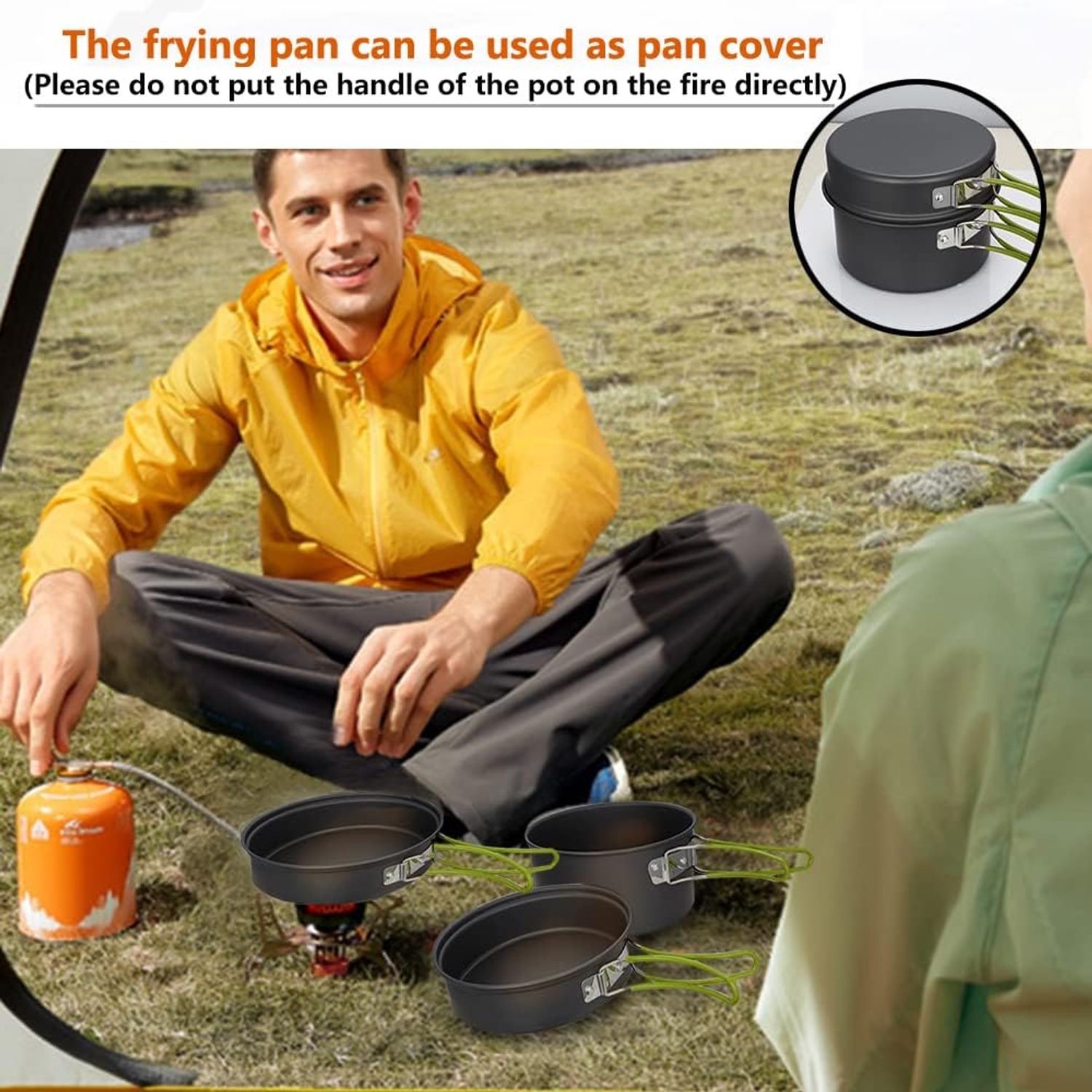
A cookware set sized for your group fixes this quietly. Two pots means two things can happen at once. Pans that double as lids mean water boils faster and you are not carrying extra parts. Bowls and spoons mean people eat at the same time, sitting down, like a meal rather than a salvage operation.
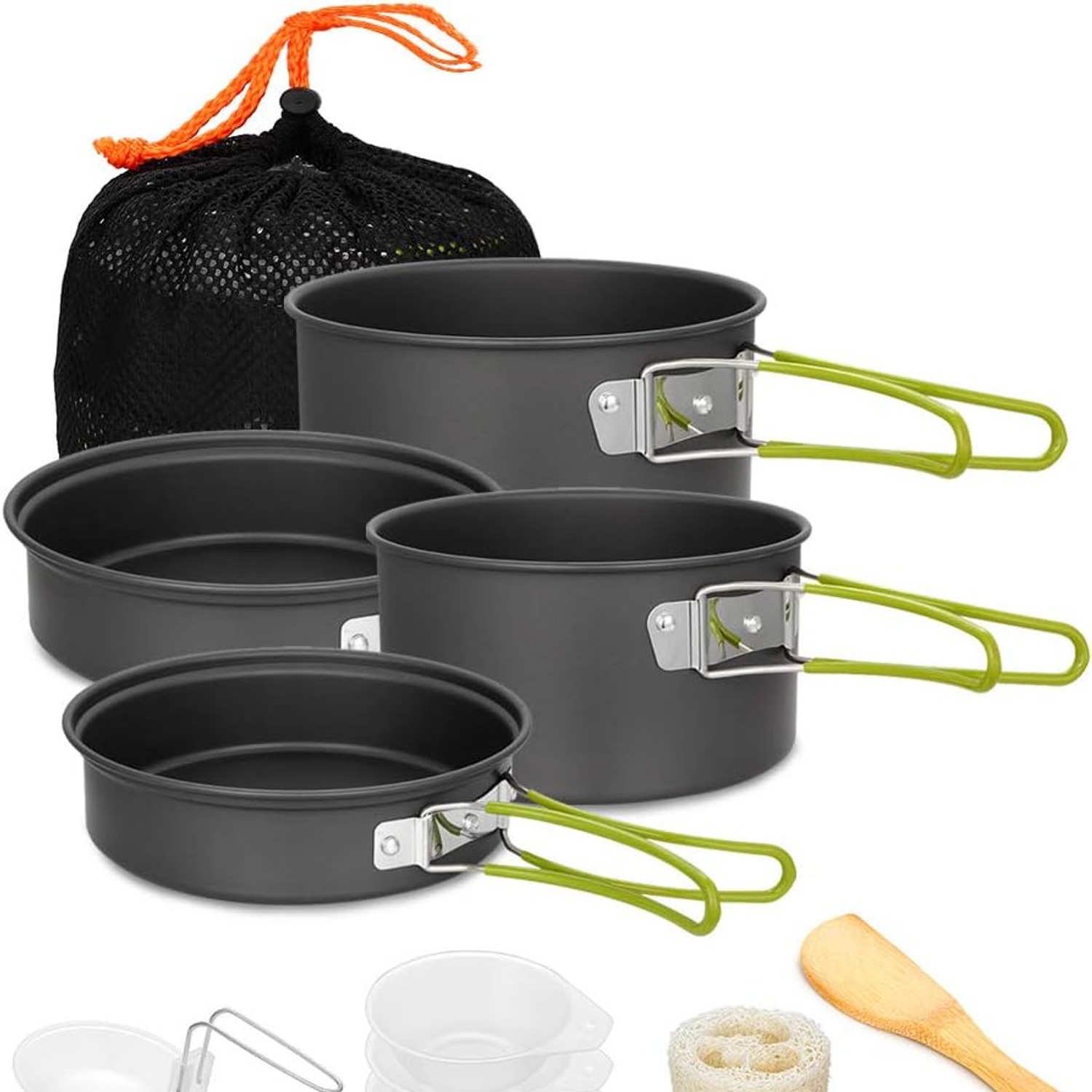
That is the job this set is built for. Eleven pieces for two people, nested into one bundle of roughly 1 kilogram.
What a nesting set actually does
Nesting sounds like a marketing word until you try to pack a car boot or a backpack without it.
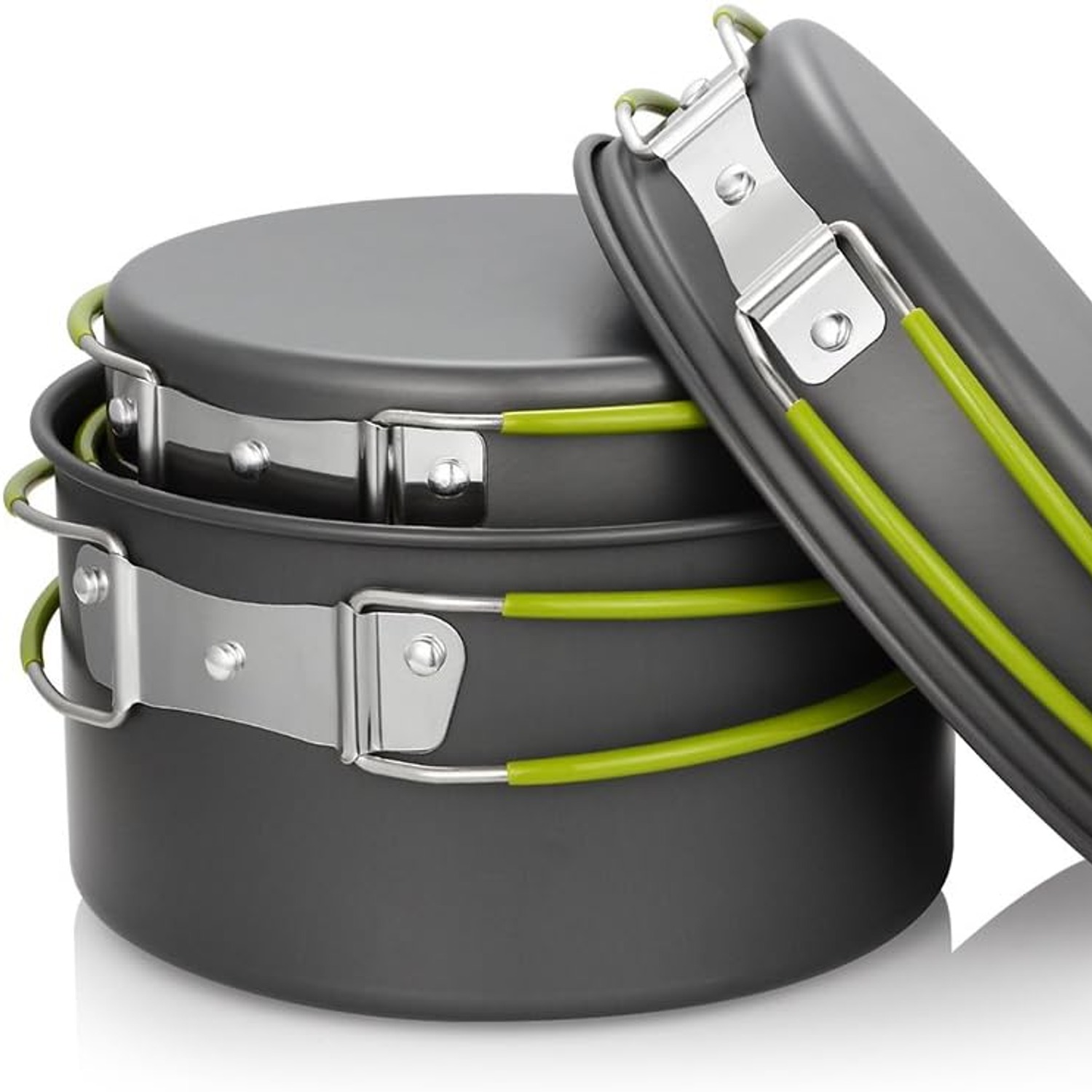
The idea is simple. Every piece is sized so it fits inside the piece above it. The large pot holds the small pot. The pans sit on top as covers. The bowls stack inside, and the spoons and sponge fill the gaps. The handles fold flat against the sides so nothing sticks out and jams the stack.
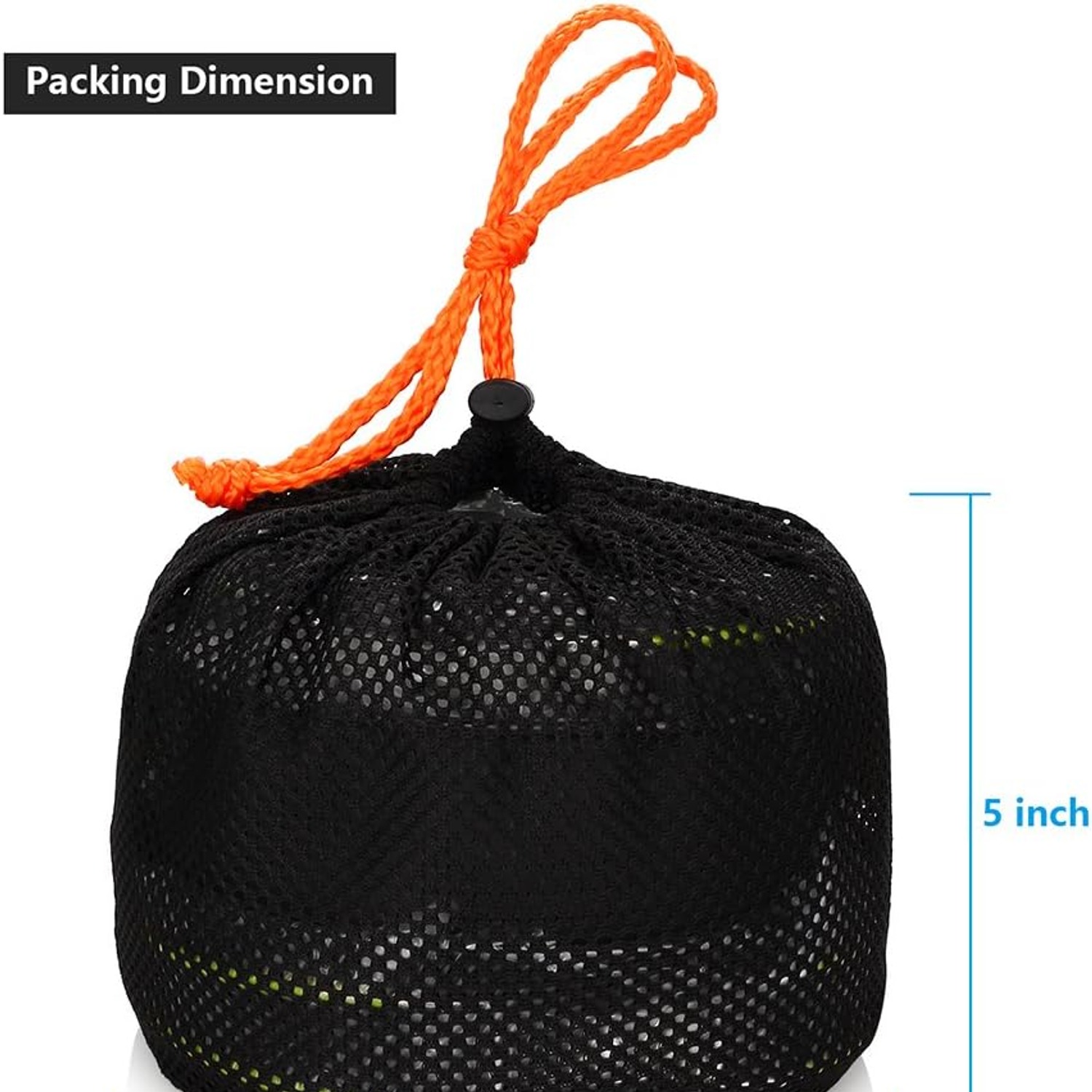
Then it all goes into the nylon travel bag and becomes one object instead of nine loose ones.
The practical result is less rattling, less lost gear, and a kit you can grab in one hand on the way out the door. Anyone who has gone looking for a lid at 7pm in the dark understands why this matters. It is also what makes a set like this one of the best camping pots and pans options for people short on storage.
Why aluminium, and why non stick
The pots and pans here are hard anodised aluminium with a non stick cooking surface. Two separate things, both worth understanding.
Aluminium conducts heat fast. On a camp stove, that is not a luxury, it is fuel economy. A pot that reaches boiling quickly burns less gas, and gas is the thing you cannot top up halfway through a hike. Faster heat also means less waiting around in weather you would rather not be standing in.
Hard anodising is a surface treatment that makes aluminium tougher and more resistant to scratching than plain aluminium. It is the same approach used in a lot of home cookware.
The non stick layer is what saves your evening. Camp food is often the worst kind for sticking, think eggs, oats, rice and anything with sugar in the sauce. On bare metal those weld themselves to the base and you spend twenty minutes scraping with cold water and a stick. On a non stick surface, most of it lifts with a sponge. The set includes a cleaning sponge for exactly this reason.
The trade off is that non stick needs a little respect. Low to moderate heat, soft utensils, no steel wool. Follow those three habits and the coating lasts for years.
Who this suits
Couples and pairs. This is the obvious fit. Two pots, two pans, three bowls, cooking for two with a spare bowl for serving or prep.
Backpackers sharing a load. At about 1 kilogram, one person carries the cookware and the other takes the stove, fuel and food. That is a sensible split for a weekend walk.
Car campers and caravanners. Weight is less of an issue here, but space still is. A nesting set stays tidy in a kitchen box and does not spread out across the whole tub.
Van lifers and road trippers. Compact gear that can live under a seat and come out when needed.
Anyone building a vehicle or emergency kit. A self contained way to boil water and heat food, stored dry in the boot.
It is less ideal for large family groups, where you would want bigger pots, and for solo ultralight hikers counting every gram, who tend to go down to a single titanium mug and pot.
How to choose a set
A few things decide whether a cook set works for you.
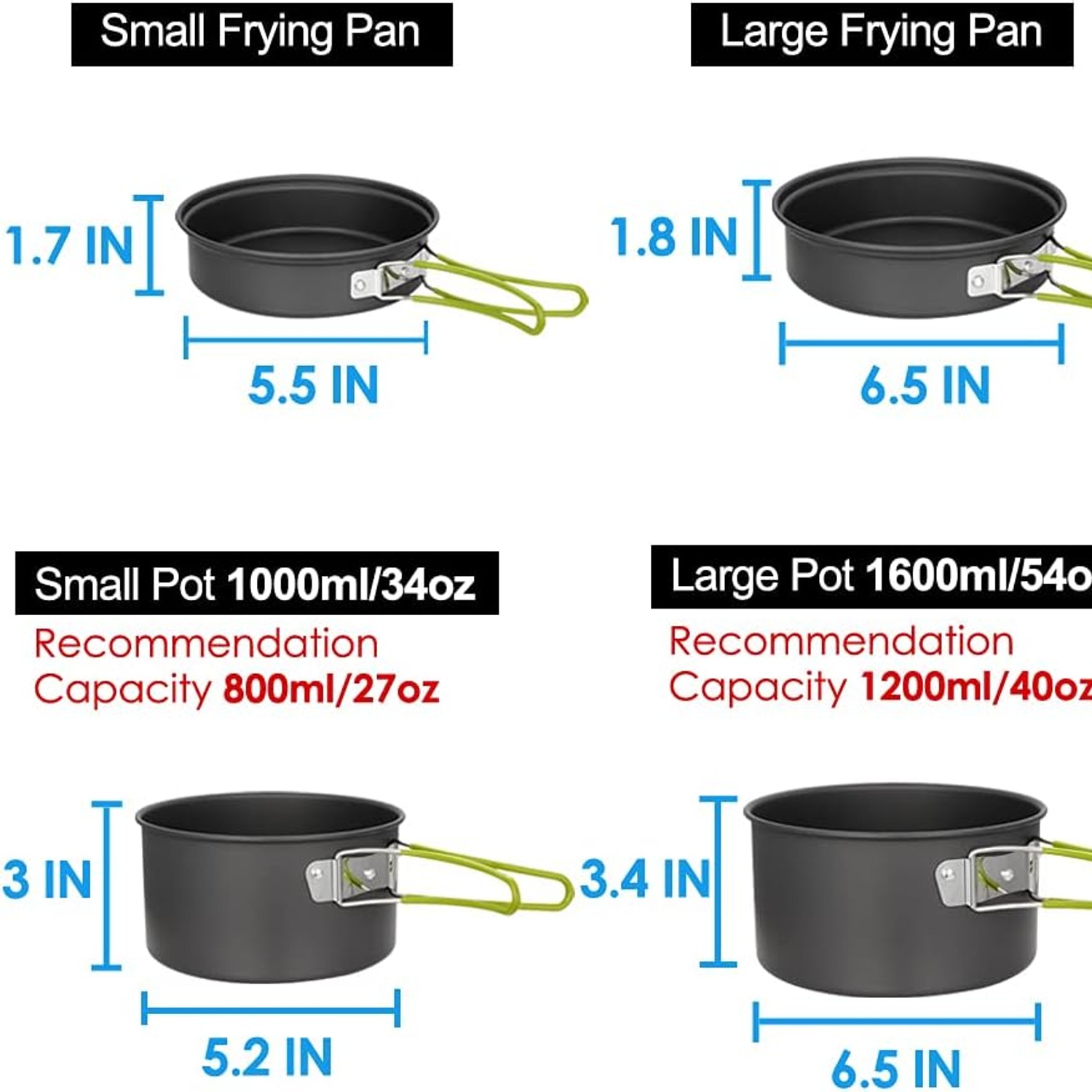
Group size first. Pot volume is the number that matters. Around 1.8 litres suits two people for a main meal. If you regularly cook for four, you want more capacity, not just more bowls.
Count the useful pieces, not the total. Some kits inflate their piece count with items you will never use. Here the eleven pieces break down as four cooking vessels, three bowls, two spoons, a sponge and a bag. That is a sensible split with little padding.
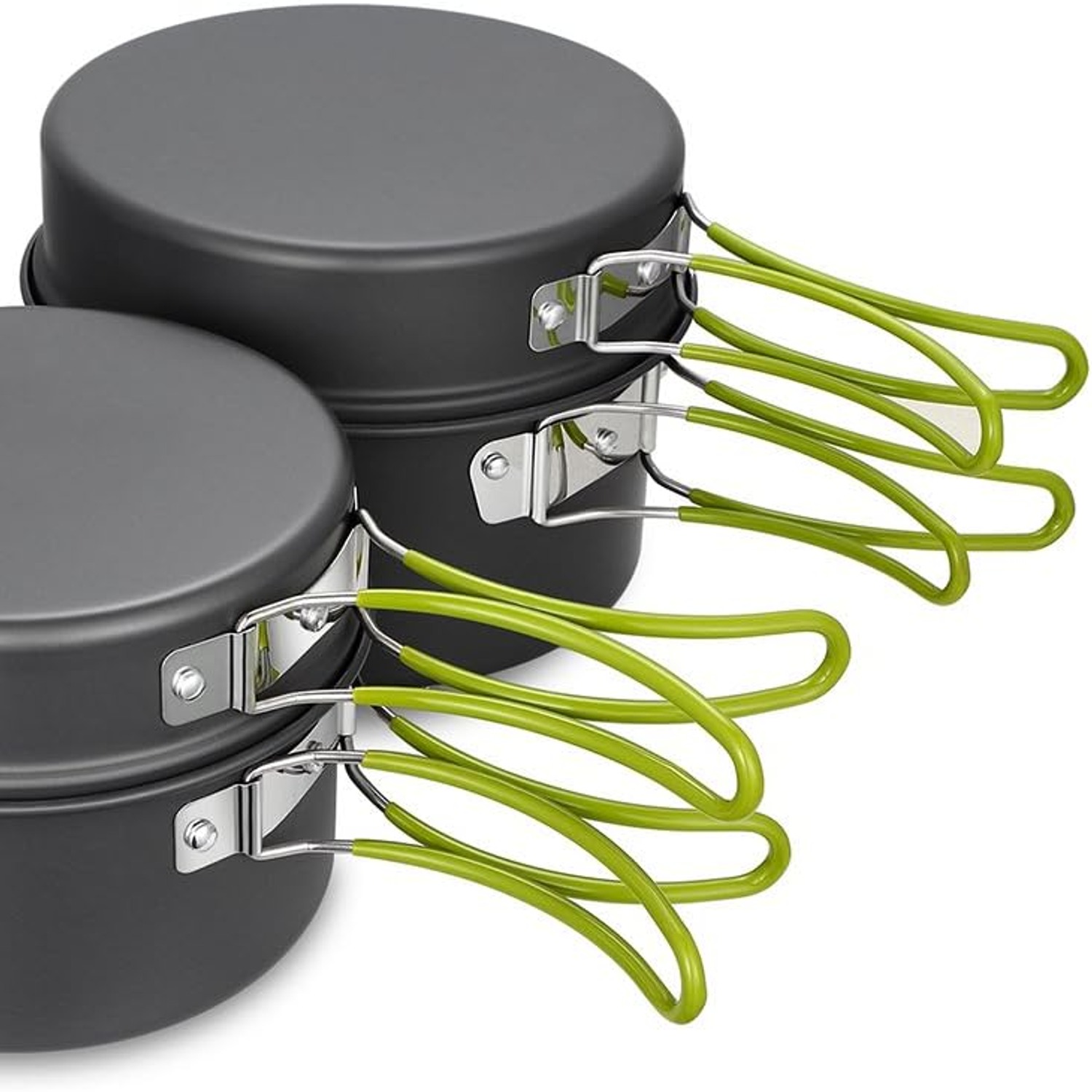
Check the handles. Folding handles are what make nesting possible. Silicone tube covers help with grip and heat. Fixed handles, by contrast, force every piece to sit awkwardly in a pack.
Think about your heat source. Aluminium suits gas burners and fires. It will not work on an induction hob, which is worth knowing if you also hoped to use it at home.
Think about cleanup conditions. If you camp where water is scarce or you are washing up in a creek with a bottle, a non stick surface saves genuine effort. This is where a lot of budget bare metal kits fall down.
Weight, last. Weight only matters in proportion to how far you carry it. For backpacking, 1 kilogram shared between two people is reasonable. For car camping it is basically irrelevant.
Looking after it
A non stick camp set is not fragile, but it does reward a few simple habits.
Before the first use, hand wash the pans in warm water, dry them, and rub a very thin film of cooking oil across the cooking surface. That conditions the coating and gets you off to a good start.
Cook on low to moderate heat. High heat is the fastest way to ruin any non stick finish, and it is rarely needed outdoors anyway, where the wind steals most of your temperature control.
Use the bamboo spoon, a silicone spatula or a smooth plastic tool. Keep metal away from the cooking surface.
Keep the handles out of the flame. They tolerate heat, but sitting a handle directly in a fire for a long stretch is asking too much of it. Centre the pot over the burner or the coals.
Wash with warm water, mild detergent and a soft sponge. Skip the dishwasher and skip the scouring pad. If something burns on, soak it rather than attack it.
Dry everything completely before nesting it. Packing a damp stack into a nylon bag is how gear develops a smell you cannot get rid of. Store the bag somewhere dry between trips.
Small things that make camp cooking better
A few habits pay off regardless of which set you own.
Put the lid on. Covering a pot can cut boil time noticeably, which saves fuel. The pans here double as covers, so you already have one.
Prep before you light the stove. Chop and measure first, because outdoor cooking moves fast once the heat is on and there is no bench space.
Wipe the pan while it is still warm, not hot and not cold. Warm is when food comes away easiest.
Pack a small bottle of cooking oil separately. Even with a non stick surface, a little oil improves flavour and browning.
The short version
This is an 11 piece aluminium cook set built for two people who want real meals outdoors without carrying a kitchen.
You get a 1.8 litre pot, a 1 litre pot, two pans that double as lids, three BPA free bowls, a soup spoon, a bamboo spoon, a cleaning sponge and a nylon travel bag. The cooking surfaces are non stick, the handles fold with silicone covers, and the whole kit nests into one bundle weighing about 1 kilogram.
Treat it with low heat, soft utensils and a hand wash, and it will handle a lot of trips. If you have been making do with one pot and a plastic fork, this is the upgrade that makes camp dinner feel like dinner.