

The complete guide
How to Choose a Camping Pillow That Is Actually Worth Carrying
The problem with sleeping away from home
You can get the tent right. You can get the mat right. You can have a sleeping bag rated for colder nights than you will ever actually see. And then you lie down, fold a jumper under your head, and spend six hours slowly waking up every time it slides out from under your ear.
That is the gap a camping pillow fills. It is the smallest part of the sleep setup and usually the first thing people cut when they are packing. It is also the thing that decides whether you get up feeling rested or get up with a stiff neck and a bad attitude about day two.
The frustrating part is that most of the alternatives have an obvious flaw. Rolled clothing is lumpy and unpacks itself. Inflatable pillows are light but they squeak, they slide on a mat, and they feel like sleeping on a balloon. A pillow from home is comfortable and completely impractical to carry. What you actually want is something that compresses for the journey and behaves like a proper pillow once you are lying down.
How a compressible foam pillow works
Shredded memory foam is the key. Instead of one moulded slab, the pillow is filled with small pieces of foam that move independently. That matters twice.
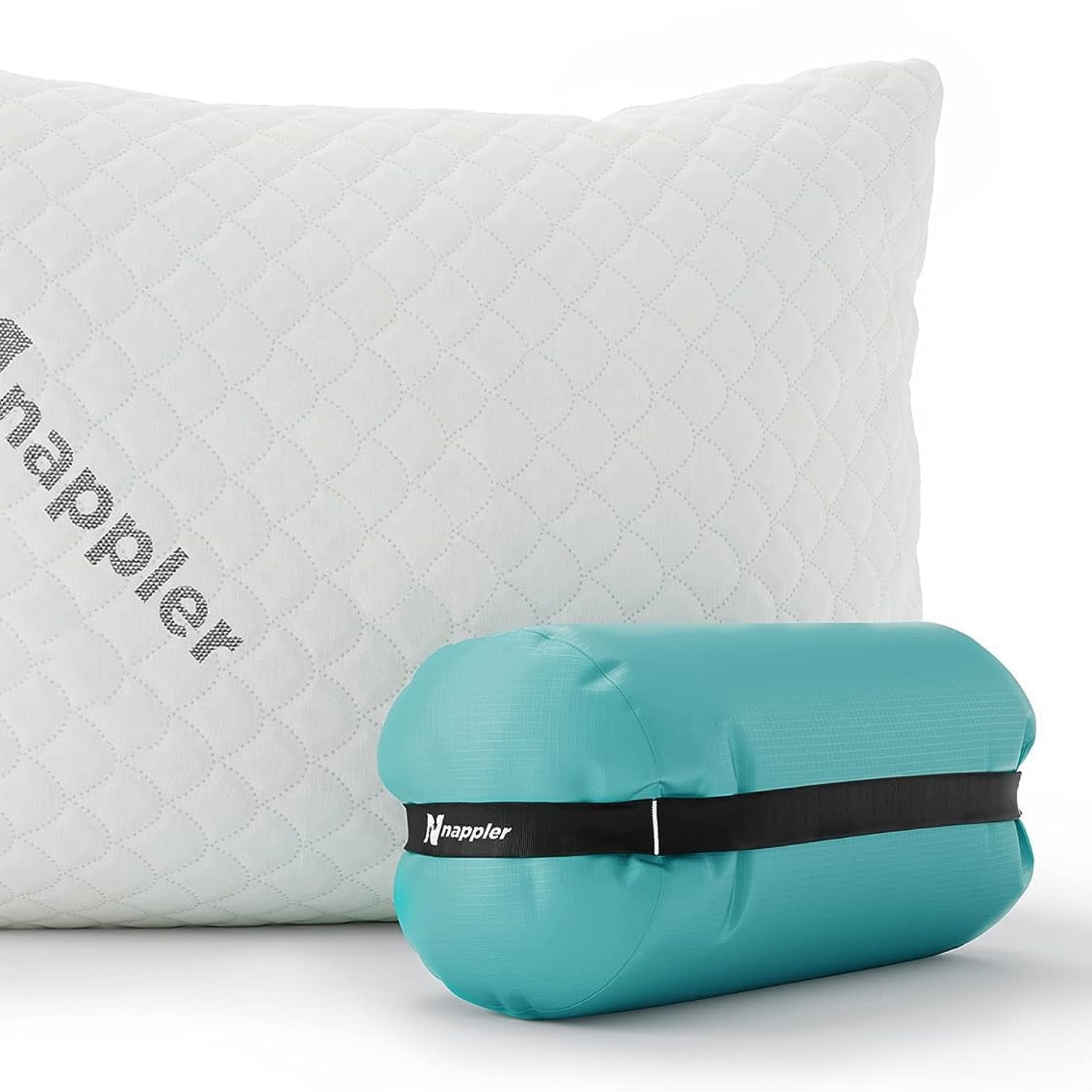
First, it means the pillow can be squashed. Push the air out, stuff it into its carry case, and the volume drops a long way. Pull it out, shake it, and the pieces separate again and the loft comes back.
Second, it means you can shape it. Bunch the fill towards one end and you get a taller edge for side sleeping. Spread it evenly and you get a flatter surface for sleeping on your back. A solid foam pillow gives you one shape and asks you to live with it. Shredded fill lets you make small adjustments with your hands in the dark, which is exactly when you need them.
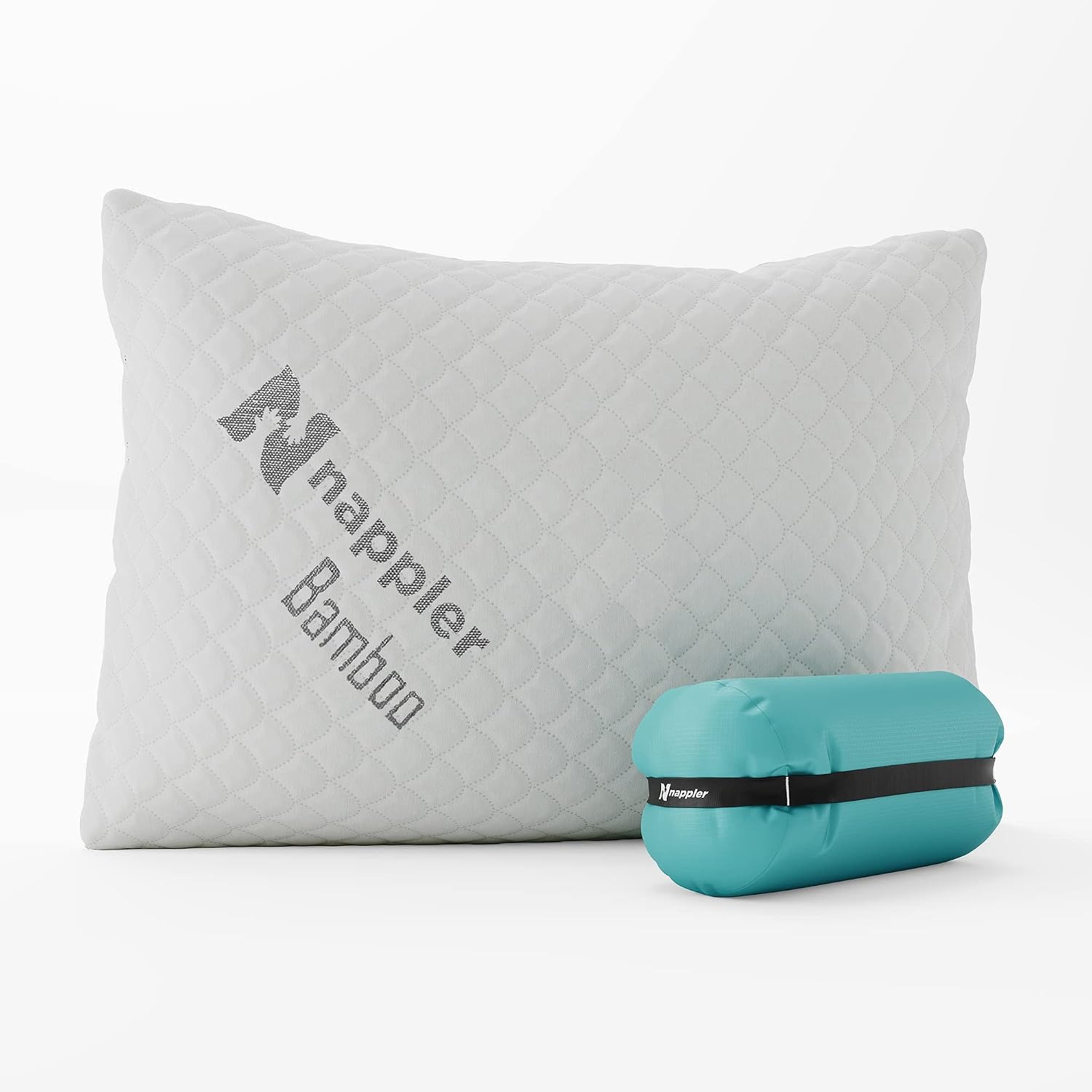
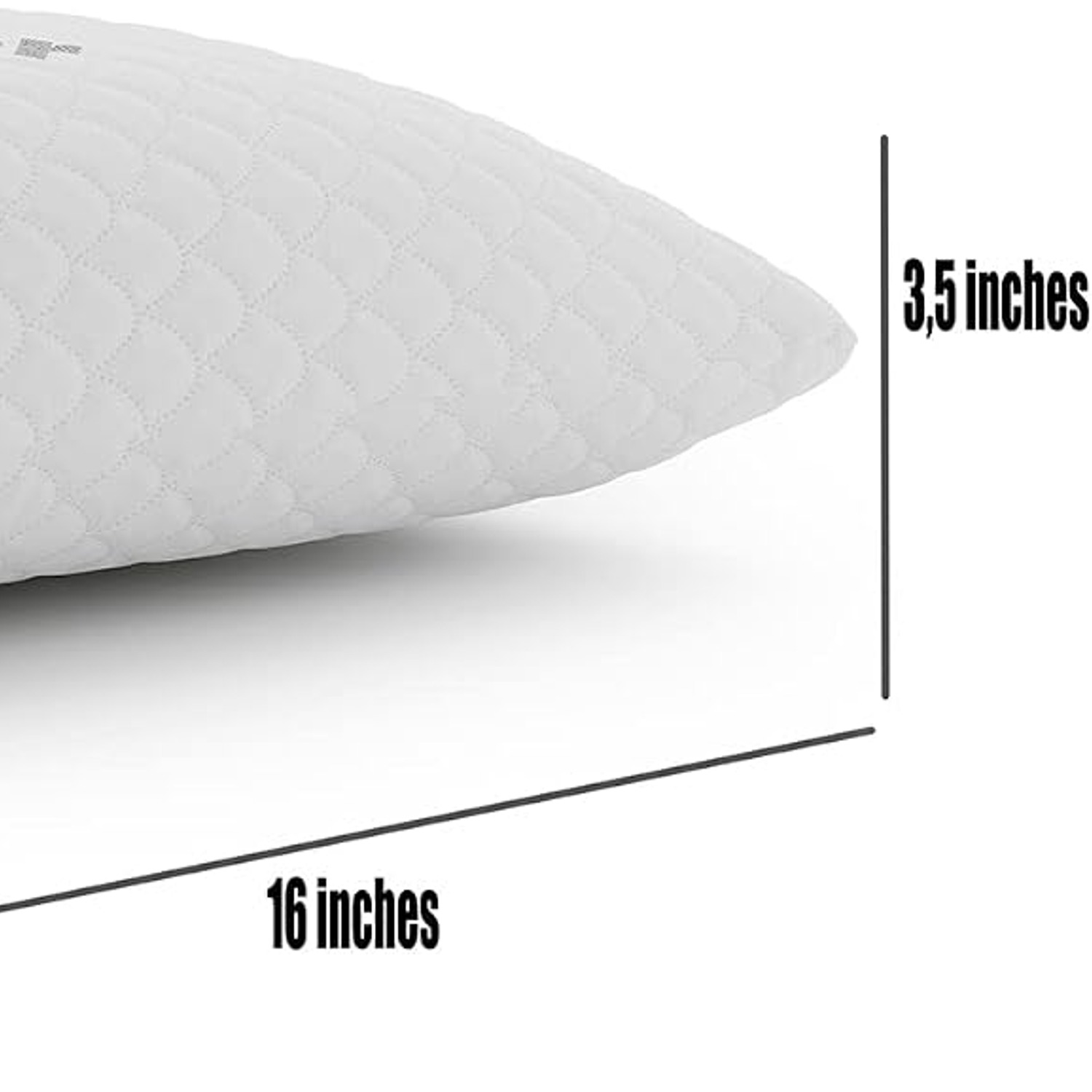
This particular pillow measures 48.3 cm by 33 cm and is rated medium firm. That size is worth noticing. A lot of travel pillows are so small that your head rolls off the edge the moment you shift. This one is closer to a small bed pillow, which means your ear, your jaw and part of your shoulder all have somewhere to go.
Weight is 0.23 kg. For context, that is less than a full water bottle and roughly the weight of a paperback. It is not the lightest object you will carry, but for a pillow that is this close to a normal one, it is a fair trade.
Who it suits
Campers and backpackers. If you are walking in with everything on your back, pack size matters more than weight, and that is where the carry case earns its place. Compressed, it tucks into a gap. Set up, it is a real pillow.
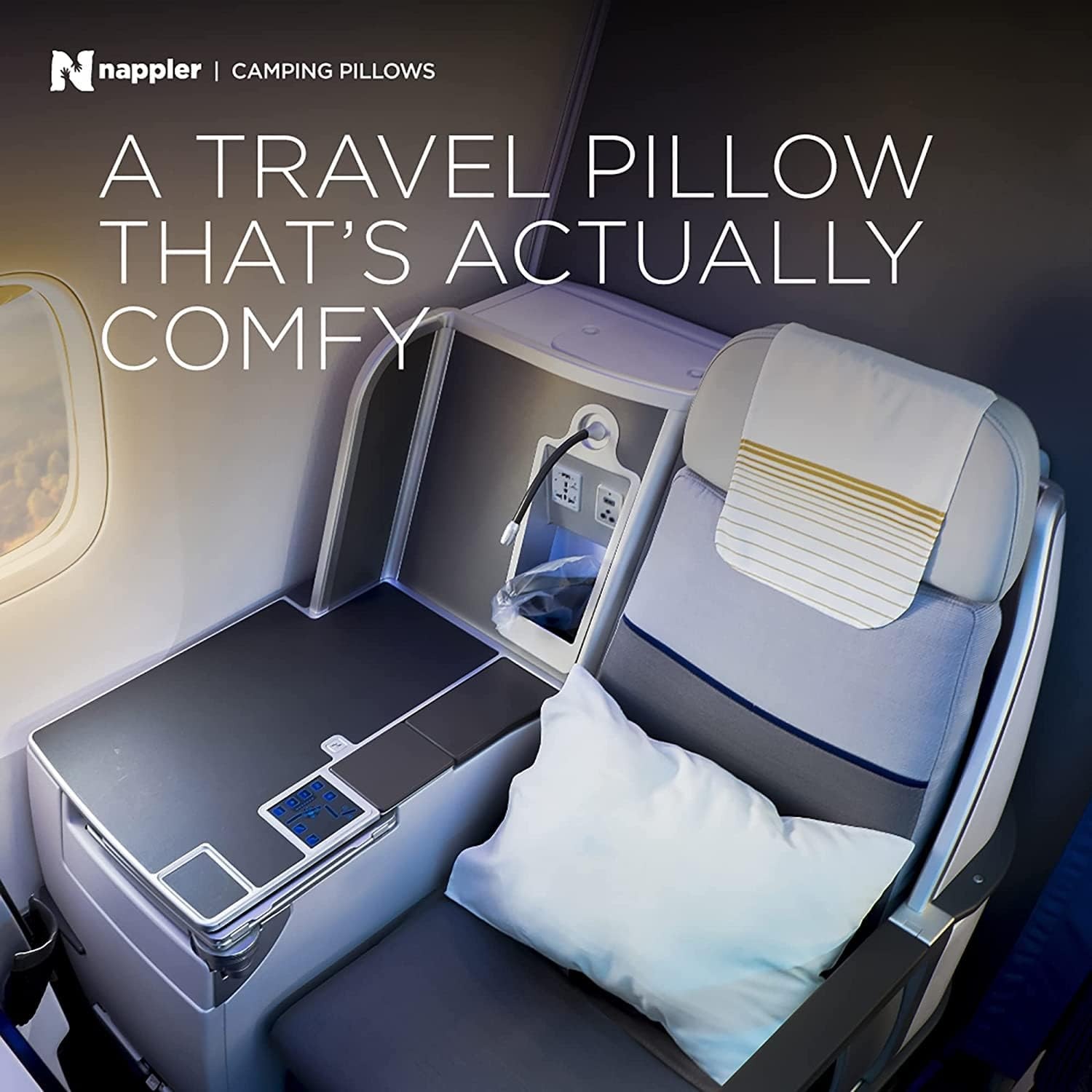
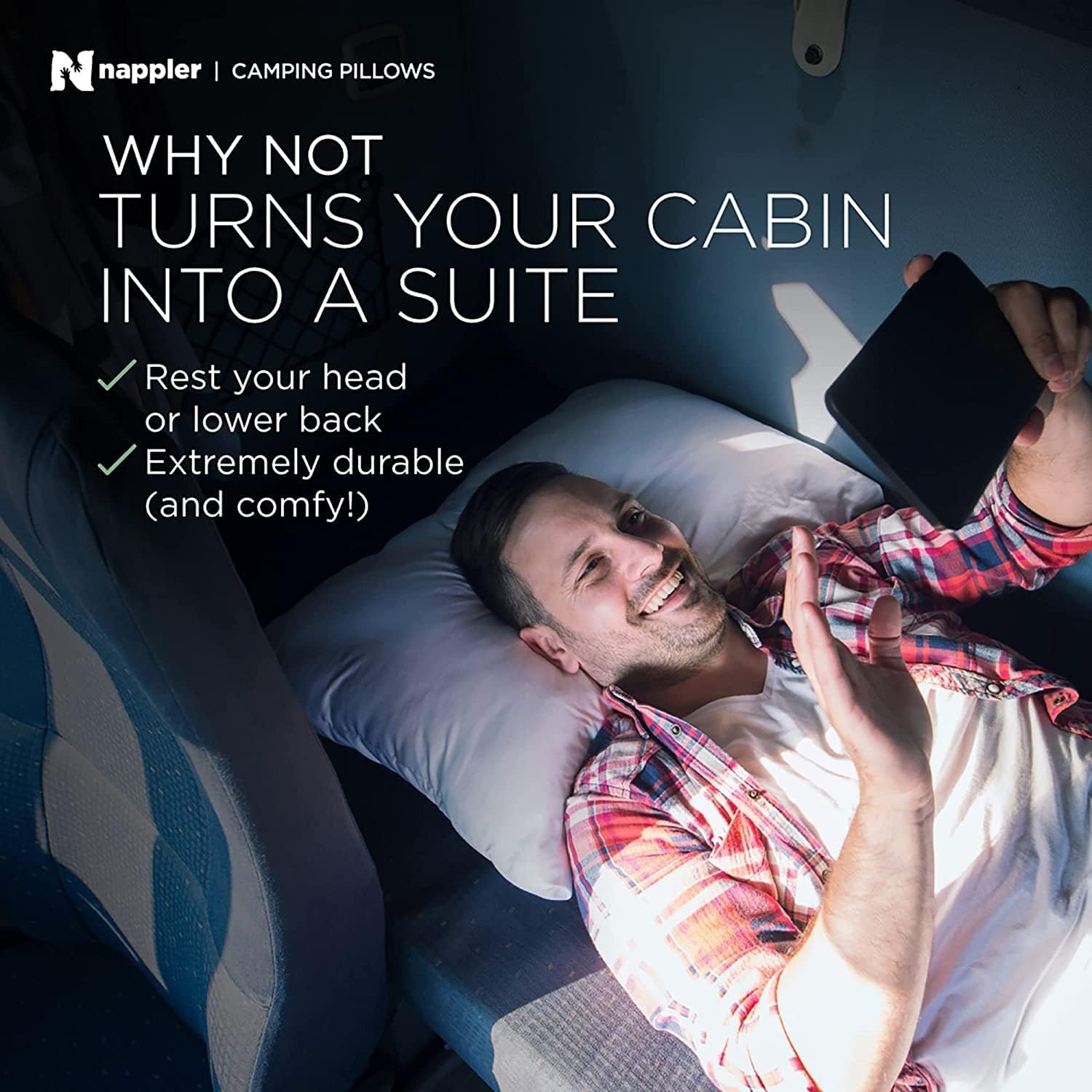
People who fly a lot. A rectangular pillow is more flexible than a U-shaped neck cushion. You can wedge it against the window, fold it in half for a higher stack, or put it behind your lower back when your spine has had enough of the seat shape.
Road trippers and anyone who sleeps in a car. The snap loop on the back is the detail that makes this work. Clip it to a grab handle and it is off the floor, out of the footwell, and reachable without unbuckling.
Festival and event sleepers. Tents, grass, dust, and gear that will not be treated kindly. The removable machine washable cover is doing the heavy lifting here. You can get it genuinely clean afterwards instead of just airing it out and hoping.
People who want a spare pillow at home. It stores small, it does not take up a shelf, and it is useful for reading in bed or propping up a guest on a couch.
How to choose between the options
There are really only four kinds of camping pillow, and they each fail in a different way.
Inflatable pillows win on packed size and weight by a huge margin. They lose on feel. Air has no give until it suddenly has all the give, so your head sinks or bounces rather than settling. They also tend to be noisy and slippery on a nylon sleeping mat.
Compressible foam pillows, like this one, sacrifice some packed size to get a surface that feels like bedding. If you have ever been annoyed by an inflatable at 2am, this is the category you move to next.
Hybrid pillows put a foam layer on top of an air bladder. They are a reasonable compromise but you end up carrying both systems and relying on the valve not failing.
Stuff sacks that you fill with clothing weigh almost nothing but they are only as comfortable as whatever you shove inside, which is usually damp socks by day three.
Once you have picked the category, there are a few things worth checking. Look at the open dimensions, not just the packed ones, because that is what determines whether your head stays on the pillow. Check whether the cover comes off, because a pillow you cannot wash becomes unpleasant faster than you expect. Look at the fabric, since ventilation holes and a breathable blend make a noticeable difference in a closed tent. And check for an attachment point, because gear that clips to something gets used and gear that lives at the bottom of a pack does not.
Getting the firmness right
Medium firm covers most people, but how you use it still matters.
If you sleep on your side, your head sits further from the mat, so you need more fill under your neck. Push the shredded foam towards the edge you are lying on and let it build up there. If you sleep on your back, flatten it out. Too much height will tip your chin towards your chest and give you a sore neck by morning.
If you are using an inflatable sleeping mat, remember the mat itself has give. A pillow that feels perfect on a firm floor can feel too tall on a soft mat, so adjust once you are actually in position rather than before you lie down.
Looking after it
The rules here are simple and they matter.
The cover comes off and goes in the washing machine. Wash it on a normal cycle and let it air dry.
The shredded memory foam insert does not go in the washer or the dryer. Ever. Water gets trapped inside the foam pieces, takes days to leave, and will leave you with a pillow that smells. If something spills on the insert, spot clean it with a damp cloth and a little mild detergent, then let it dry fully in a well ventilated spot.
Between trips, store it loose rather than compressed. Foam that spends months squashed into a stuff sack loses some of its bounce. Use the carry case for travel, not for storage.
Before each use, give it a shake and squeeze the fill a few times with your hands. It takes about thirty seconds and makes a real difference to how it feels.
If it arrives with a faint new-foam smell, leave the insert out in open air for a day or two. That is normal for foam products and it fades.
The short version
A good camping pillow is the cheapest upgrade to your sleep setup and the one most people skip. This one uses shredded memory foam so it compresses into a carry case for travel and shapes to your head once you are lying down. It is 48.3 cm by 33 cm, which is big enough to be useful, and 0.23 kg, which is light enough to stop arguing about.
The cover is a viscose and polyester blend with ventilation holes and it comes off for machine washing. The foam insert stays out of the washer. There is a snap loop on the back for clipping it to a pack, a suitcase or a car handle.
If you camp occasionally and travel the rest of the year, one pillow that handles tents, planes and back seats is simpler than owning three that each do one job badly.